Author

Saturday, December 06, 2025 | Daily Newspaper published by GPPC Doha, Qatar.
 Pratap John
Pratap John
Pratap John is Business Editor at Gulf Times. He has mainstream media experience of nearly 30 years in specialties such as energy, business & finance, banking, telecom and aviation, and covered many major events across the globe.
In an advisory Sunday, Qatar Central Bank  urged public to use OTP to enhance security of their online transactions.
Qatar
QCB urges people to safeguard passwords, use OTP to enhance online security

Qatar Central Bank (QCB) has urged general public to safeguard passwords for their online transactions and not to share one-time password (OTP) with anyone.In an advisory Sunday, QCB urged public to use OTP to enhance security of their online transactions.“OTP, QCB said is a security code that is used only once to verify the user’s identity. It is randomly generated and only valid for a short period of time or for a single login.“OTPs help protect accounts from unauthorised access, even when passwords are compromised, by being sent in different ways.”These ways, QCB noted, are text messages (SMS), special authentication applications and emails.On ways to protect the OTP, Qatar Central Bank noted, “Be cautious and do not share your OTP with anyone. Public should ensure that all applications and programs used to generate or receive OTPs are up to date. Change your password immediately if you notice any unusual activity in accounts that use OTPs. Enhance the security of your online transactions with one-time passwords.”Meanwhile, in line with Qatar's efforts to enhance awareness of cybersecurity risks and its vision towards building a cyber-resilient society, Qatar Central Bank has already launched a large-scale national campaign to raise awareness of information security under the slogan “Stay Aware" in cooperation with the Ministry of Interior, National Cybersecurity Agency, and Qatar Financial Center Regulatory Authority.The campaign aims to build an information security culture within the society that can face challenges that accompany the accelerating technological revolution.Mainly, the campaign seeks to spread awareness amongst the public on the importance of data privacy and dangers of financial fraud, highlighting cyber threats that may arise in light of the rapid technological and digital development.By identifying emerging and critical risks in the digital landscape, the campaign identifies the main channels of cyber fraud, which include phone calls, social media, emails, SMS messages and URL links. The campaign also provides the public with best practices and practical strategies to avoid falling victim to such threats.Qatar Central Bank, along its partners in this campaign, emphasise the vital role of the ongoing awareness efforts in building a safer electronic society capable of responding to such threats.As such, the campaign aims to empower and protect individuals and institutions, establish a culture of electronic vigilance, and protect citizens from ever changing cyber threats.Ends

QIIB CEO Dr Abdulbasit Ahmad al-Shaibei.
Business
$300mn QIIB sukuk's 'favourable' pricing reinforces Qatar's global appeal, economic strength: Al-Shaibei

The favourable pricing of QIIB’s $300mn Tier 1 sukuk on the London Stock Exchange reinforces the global appeal and strength of the Qatari economy, which continues to enjoy exceptional investment attractiveness, noted CEO Dr Abdulbasit Ahmad al-Shaibei.“Qatar’s strong and attractive economy plays a pivotal role in supporting the country’s institutions, especially the banks. The significant demand for our sukuk reflects the financial strength and credit worthiness of QIIB, which is backed by the assets quality, strong liquidity, robust capitalisation, and high efficiency in the banking sector,” Dr al-Shaibei said in an interview with Gulf Times.“We are proud to celebrate another significant milestone in our journey towards growth and innovation as we list our $300mn Tier 1 sukuk on the London Stock Exchange. This is particularly notable as it marks the fourth time QIIB has listed a sukuk on this esteemed exchange and the second time in 2024, following the successful issuance of our $500mn sustainability sukuk in January this year.”The CEO explained: "Issuing the sukuk within the Tier 1 capital framework is a strategic move to bolster QIIB’s financial strength and meets our growth ambitions. This also enhances our presence in international markets and strengthens relationships with global investors and financial institutions.""Earlier this year, QIIB issued a $500mn sustainable sukuk, listed on the LSE. As Qatar’s first institution to issue sustainable sukuk, we received a phenomenal response from investors across the globe. The $500mn sustainability sukuk represents a source of immense pride for QIIB, highlighting our commitment to sustainability and ethical financing.”Acknowledging the strong demand for QIIB’s sukuk, Dr al-Shaibei stated: “The overwhelming interest in our $300mn issuance, with subscriptions exceeding eight times the offering, reaffirms our strategic direction and reinforces our confidence in pursuing further growth.“We are also pleased that the pricing of this issuance ranks among the most competitive for similar offerings both regionally and locally, with a final return of 5.45% per year.”Dr al-Shaibei expressed his gratitude to the partner banks and advisors who played a pivotal role in the successful issuance, including Standard Chartered Bank as sole global coordinator, along with Al Rayan Investment, Citibank, Doha Bank, Dubai Islamic Bank, Dukhan Bank, Emirates NBD Capital, HSBC, Bank Lesha, Mashreq, QNB Capital, and Warba Bank as joint lead managers.

An American Airlines flight lands at Logan International Airport in Boston, Massachusetts, US. The global airline industry will need to spend an average of $128bn in annual capital expenditure if it is to achieve its ambitious net-zero emissions goal by 2050, according to trade body IATA.
Business
Airlines’ energy transition feasible, but costs and challenges remain huge

The global airline industry will need to spend an average of $128bn in annual capital expenditure if it is to achieve its ambitious net-zero emissions goal by 2050, according to trade body IATA.The updated ‘IATA Policy and Finance Net Zero Roadmaps’ say that decarbonisation by 2050 is indeed possible.Success, however, would be facilitated by governments redirecting subsidies away from fossil fuels and toward renewable energy production, of which sustainable aviation fuel (SAF) is just one type of product.Annual transition cost, meaning the cost that comes on top of that of jet fuel as a result of procuring SAF, hydrogen, and other key levers, is estimated at $1.4bn in 2025.In 2050, the transition cost could be as high as $744bn, based on IATA’s analysis. These numbers highlight the need for speed and scale in bringing solutions to market so that net zero CO2 emissions can be achieved.The air transport industry’s energy transition is feasible on the 2050 horizon, although, IATA says it success in the transition depends critically upon policymakers’ unity of purpose.The association also sounds a warning bell that, to achieve this, all stakeholders, particularly policymakers, must collaborate more broadly and act with greater urgency.Transition involves huge expenditure and is a costly affair. And transitioning to low-carbon technologies, such as SAFs, electric aircraft, or hydrogen-powered planes, requires significant investments in new infrastructure (fuelling stations, manufacturing facilities, etc.). Many airports are not equipped to handle these new technologies yet.Industry experts say the research and development required to bring these technologies to market are costly, and airlines, already operating on thin profit margins, will face challenges funding these innovations.Green technologies, especially SAFs, are significantly more expensive than traditional jet fuels. This price gap needs to narrow for widespread adoption, but market mechanisms to ensure affordability remain underdeveloped.Also, the Covid-19 pandemic had severely affected the financial health of airlines, leaving many companies struggling to fund the transition to greener technologies, which are often more expensive.“To be successful, we need clear policy and financial frameworks that will support air transportation’s needs in a way that is realistic and coherent with the massive changes that must take place simultaneously in all economic sectors,” noted Willie Walsh, IATA’s Director General.According to IATA’s chief economist Marie Owens Thomsen, “The costs and challenges associated with the energy transition are large, but the opportunities are even greater. Countries have an opportunity to build new industries in agriculture and energy, and to benefit from the catalytic growth impact of sustainable air transport. To realise the opportunities, we need all minds to unite in this mission, and all policymakers, multilateral organisations, investors, solution providers, and the air transport industry to work together.“Such transformative collaboration can pool resources and target meaningful action for greater impact. This is what is needed to deliver a sustainable air transport industry by 2050.”While advancements in fuel efficiency have been made, the fact remains that the current aircraft models rely heavily on fossil fuels.The development and widespread deployment of zero-emission aircraft, such as electric or hydrogen-powered planes, are still in the experimental or early development phases. It may take decades to bring these to market at scale.SAFs are able to reduce emissions, but they are not yet produced at scale, and their costs too are significantly higher than traditional jet fuel. Scaling production while maintaining environmental sustainability is a huge challenge.Aviation is a global industry, so decarbonisation efforts need international co-operation. Different countries have varying levels of commitment and regulatory environments regarding climate change, leading to inconsistent policies and goals.These challenges highlight the complexity of achieving net-zero for the aviation industry, which will require co-ordinated efforts from governments, businesses, technology developers, and consumers.Pratap John is Business Editor at Gulf Times. X handle: @PratapJohn

Rajyavardhan Rathore, Minister for Industry and Commerce, Government of Rajasthan, in an interview with Gulf Times in Doha. PICTURE: Shaji Kayamkulam
Business
Rajasthan provides incentives to foreign investors, including from Qatar, GCC: Indian minister

The Indian state of Rajasthan is providing incentives and benefits to attract foreign investors, particularly from GCC countries including Qatar, noted Rajyavardhan Rathore, Minister for Industry and Commerce, Government of Rajasthan.“A complete overhaul of the existing administrative order and policy framework has been undertaken by the Rajasthan government to make the state more business friendly. The government is cutting the regulatory red-tape and bringing the cost of doing business in Rajasthan substantially down in comparison to the other Indian states,” Rathore said in an interview with Gulf Times in Doha.Rajasthan has launched online portal ‘Rajnivesh’ to eliminate the need of any physical interface with the officials and departments concerned. The single-window mechanism will ensure that the proposals are processed and approved digitally in a seamless, time-bound and transparent manner.“Eight focus sectors under the Rajasthan Investment Promotion Scheme (RIPS) have also been provided a number of fiscal incentives that will bring the cost of setting-up business substantially down for the investors from around the world including the Qatar and other countries from the region,” Rathore said.Highlighting flagship projects in Rajasthan that are geared towards foreign investment, he said over 58% of the state falls in the vicinity of Delhi Mumbai Industrial Corridor (DMIC), which is going to emerge as one of the biggest economic arteries of the country. Similarly, a large part of Rajasthan falls in proximity with the Western Dedicated Freight Corridor of the Indian Railways. Additionally, a refinery and petrochemical complex is also being constructed in Rajasthan’s Barmer district that is going to supplement the existing energy-based infrastructure in the state in a substantial manner.The state hosts about 415 well-developed industrial areas across the state that are well connected to major infrastructural nodes. Rajasthan is also developing one of the largest solar parks in the world with a capacity of 2,245MW.Rajasthan is going to get a major push with the incorporation of key growth drivers that are going to be developed in the coming years such as the proposed Medical Devices Park in Jodhpur and Fintech Park in Jaipur.He said Rajasthan is among the largest state economies in India with an edge across several sectors that could prove extremely beneficial to the investors.Rajasthan has the highest share in installed solar generation capacity in India with the state receiving over 320 days of sunshine.It is the leading onshore producer of crude oil in India, second largest producer of natural gas in the country.Asked whether Rajasthan was looking at corporate investments, such as Qatar’s sovereign wealth fund (SWFs) to invest in the state's industrial sector, Rathore said, “In an economy like Rajasthan, which has huge reservoir of natural resources, basic infrastructure and a young workforce, the foreign investment by sovereign wealth funds will give the required push to the domestic investors to collaborate with the foreign investors and boost the economic potential of the state.“Foreign investment in any form reduces the pressure on the credit infrastructure in an economy and leaves the pool of credit available to the domestic and small-scale investors at an affordable cost.“We have been trying to work out a series of engagements in Qatar including with a number of government dignitaries. We hope to fructify those engagements and invite government as well as private investors to visit Rajasthan for the ‘Rising Rajasthan’ Global Investment Summit 2024 in Jaipur from December 9”.So far as the ‘Rising Rajasthan’ Global Investment Summit 2024 is concerned, he said, the government of Rajasthan is aiming at securing domestic and foreign investments in key sectors including renewable energy, chemicals and petrochemicals, agri-processing, real estate, health and pharma, tourism, textile, skill development and education among others.Rathore explained that Rajasthan is improving its infrastructure, such as roads, ports, and airports, to support increased foreign investment and trade.The state already hosts the third largest road network and fifth largest rail network in the country and seven airports that offer direct international and national connectivity. It boasts of about 20 Highways, nine inland container depots, one air cargo complex and close to 415 well-developed industrial areas across the states.In addition to close proximity with the Kandla and Mundra ports of Gujarat, Rajasthan is also a major conduit between the commercial ports on the western coastline and northern part of India, noted Rathore, who was in Doha leading a delegation from his state to showcase foreign investment opportunities in his state.

Gulf Times
Business
Qatar PoS transactions total QR6.94bn; e-commerce at QR3.4bn in August, says QCB

Point of sale transactions (PoS) were valued at QR6.94bn in Qatar in August, according to the Qatar Central Bank (QCB).In August last year, the PoS valuations stood at QR6.74bn. And in August 2022, these totalled QR6.19bn.The total number of PoS transactions in Qatar stood at 32.24mn in August compared with 27.7mn in the same period last year and 24.02mn in August 2022.QCB data showed that there were 74,621 PoS devices in Qatar (as of August this year) compared with 68,898 in August last year and 53,241 in the same period in 2022.A point of sale transaction is a payment for goods or services, usually made in a retail setting. PoS transactions can be conducted in person or online and are typically completed using credit or debit cards.According to the QCB, debit cards far outnumbered credit cards in the country.As of August this year, the number of debit cards in Qatar exceeded 2.32mn while credit cards stood at 731,514 and pre-paid cards at 712,870.E-commerce transactions in Qatar totalled QR3.4bn in August this year compared to QR3.19bn in August 2023 and QR2.65bn in August 2022.The volume of e-commerce transactions in the country exceeded 6.98mn in August this year compared with 5.46mn in August last year and 4.51mn in August 2022.The QCB introduced the National Network System for ATMs and Points of Sale (NAPS), which is the central payment system, in 1996 to facilitate the acceptance of cards transactions (debit cards and prepaid) on ATM, PoS and e-commerce terminals throughout the GCC region and Egypt.Additionally, the system accepts cards issued by the QCB, GCC and Egypt regulated banks.According to the QCB, NAPS is one of the first switches in the region to achieve full (EMV) compliance both as an acquirer and issuer.The system was upgraded in 2023 in line with the latest global standards in cards industry. It is a round-the-clock service, which supports card tokenisation and card-less payments. All banks in Qatar are members of the National Network System for ATMs and Points of Sale.

Moody's commended Qatari banks for their successful efforts in expanding and attracting deposits from the domestic private sector while also drawing in foreign and international deposits.
Qatar
Moody's praises Qatari banks’ growth, resilience

Qatari banks’ resilience has been praised by international credit rating agency Moody's, which highlighted their robust growth, asset quality, and substantial capacity to navigate various challenges.In its recent report, Moody's noted Qatari banks have demonstrated impressive liquidity coverage ratios and successfully attracted significant financial inflows through diverse deposits.The report notes that, during the recent period, Qatari banks have been primarily funded by customer deposits, which accounted for approximately 52% of total assets as of June this year.In its recent report, international credit rating agency noted Qatari banks have demonstrated impressive liquidity coverage ratios and successfully attracted significant financial inflows through diverse depositsMoody's specifically pointed out the substantial level of deposits from government and government-owned entities, which represented around 36% of total deposits as of June 2024.Moody's commended Qatari banks for their successful efforts in expanding and attracting deposits from the domestic private sector while also drawing in foreign and international deposits.The agency also highlighted the ongoing expansion in the credit sector, which is in line with the country's economic growth trajectory.In particular, Moody's observed that credit extended to the private sector is projected to see notable growth this year, reflecting the sustained momentum in implementing large-scale projects within the country.Moody's forecasts that private sector credit growth will be around 3% to 4%.Moreover, Moody's emphasised the reduced credit risks faced by Qatari banks.The agency noted that Qatari banks have effectively mitigated the risks associated with unexpected economic shocks due to their loan portfolios and credit exposures and their ability to manage associated challenges.A significant portion of credit is directed towards the public sector, which significantly reduces the risk of credit defaults.The report also underscores the pivotal role of prudential regulations issued by Qatar Central Bank (QCB) and aimed at curbing Qatari banks' over-reliance on foreign funding.These regulatory frameworks have reinforced financial stability and helped decrease foreign liabilities to 33% of total liabilities (as of end-June), down from a peak of approximately 39% as of year-end 2021.Additionally, banks have successfully diversified their foreign liabilities across various maturities and geographies.Moody's also anticipates that Qatari banks will shift toward a longer-term funding structure in a lower interest rate environment. At the end of March this year, Qatari banks' stocks of liquid assets stood at around 24.7% of total assets, providing a sound buffer against potential market fluctuations and risks and supporting their growth trajectory.

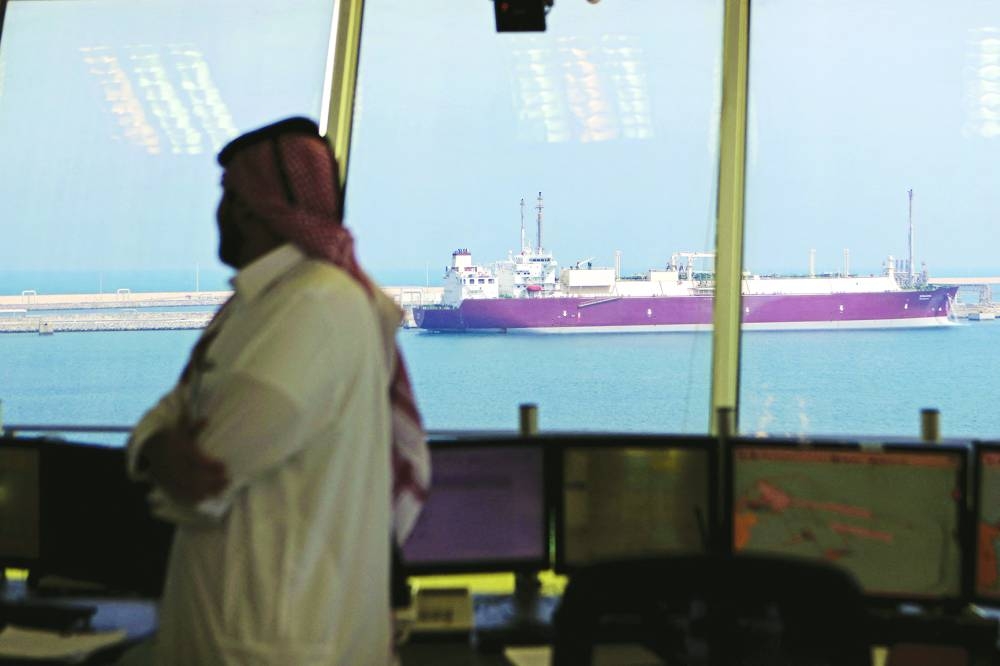
QatarEnergy has named two of the 12 conventional-size LNG vessels contracted with China’s Hudong-Zhonghua Shipyard: 'Rex Tillerson' and 'Umm Ghuwailina'
Business
QatarEnergy to maintain leadership in global LNG market with historic fleet expansion

QatarEnergy’s historic LNG fleet expansion programme will help the energy major maintain its leadership position in the global LNG market.Recently, QatarEnergy signed an agreement with China State Shipbuilding Corporation (CSSC) for the construction of six additional state-of-the-art QC-Max vessels, bringing the total number of LNG vessels on order under its fleet expansion programme to 128, including 24 QC-Max mega vessels.The QC-Max vessels, which will be built at China’s Hudong-Zhonghua Shipyard, a wholly-owned CSSC subsidiary, are the largest LNG vessels ever built with a capacity of 271,000 cubic metres each. The new advanced carriers are scheduled to be delivered between 2028 and 2031.The new ship order is a testament to QatarEnergy’s focus on quality and reliability. The six new advanced vessels are in addition to 18 QC-Max vessels recently ordered from Hudong-Zhonghua Shipyard.This brings the total number of QC-Max vessels ordered by QatarEnergy to 24, with a total value of about $8bn.The QC-Max vessels, designed with cutting-edge technology, will enhance QatarEnergy’s capacity to meet the growing global LNG demand while reinforcing its dedication to operational excellence and environmental sustainability.HE the Minister of State for Energy Affairs, Saad bin Sherdia al-Kaabi said, “The signing of the agreement is underscored by the strategic importance of QatarEnergy’s historic LNG fleet expansion programme and its commitment to maintaining a leadership position in the global LNG market.”Minister al-Kaabi added, "We are very pleased to expand our excellent working relationship with CSSC and Hudong-Zhonghua, one of the world’s premier shipbuilders. We look forward to receiving these advanced LNG vessels and expanding our role in providing the world with the cleaner energy needed for a realistic and practical energy transition.”Recently, QatarEnergy named two of the 12 conventional-size LNG vessels contracted with the Hudong-Zhonghua Shipyard- 'Rex Tillerson' and 'Umm Ghuwailina'.All these vessels will be equipped with the latest maritime technology, ensuring optimal operational efficiency and compliance with the most stringent environmental regulations reflecting QatarEnergy’s commitment to sustainability and environmental stewardship.The two vessels, set to be delivered ahead of their contracted delivery schedule, are under long-term charter by QatarEnergy Trading (QET).With the highest and most advanced safety, technical, and environmental standards, the vessels are equipped with state-of-the-art dual-fuel engines, generators, and boilers to further reduce both fuel consumption and emissions.

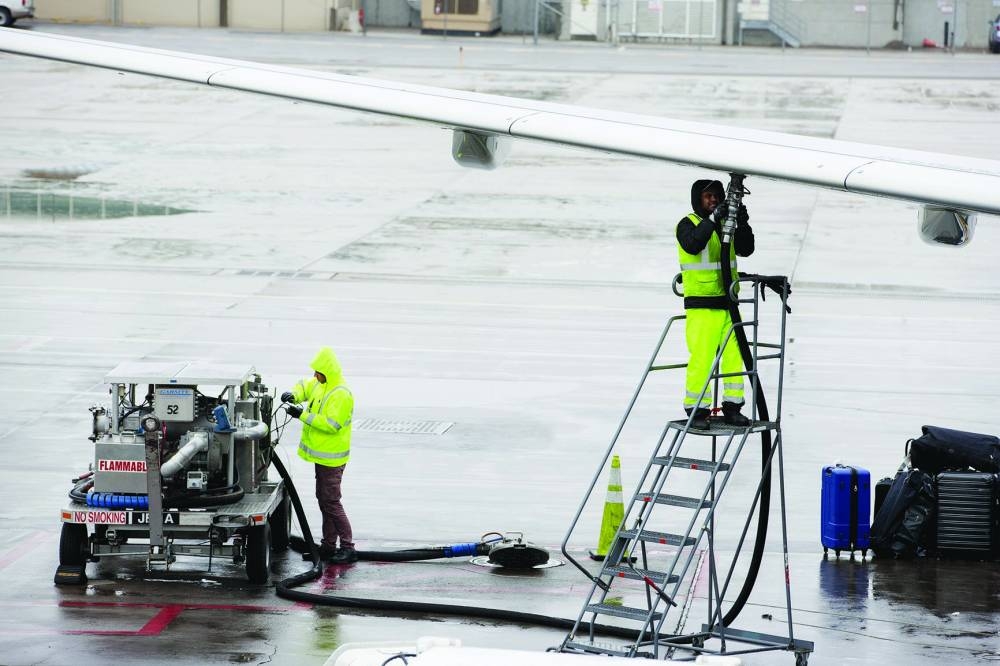
Ground operations employees fuel a plane. European Union countries are considering delaying the introduction of EU-wide taxes on polluting aviation fuels for 20 years, as they seek a breakthrough on tax reforms that have been negotiated for years with little progress.
Business
Timing delicate to slap extra tax on jet fuel on emission concerns

An increase in the price of air tickets for travel to and from the European Union based on a tax proposal may be delayed with EU putting it on hold for the foreseeable future.The European Commission proposed an overhaul of energy tax rules in 2021 to make them more climate-friendly, including by gradually introducing taxes on fuels for flights within the 27-nation bloc, which currently escape EU-wide levies.European Union countries are considering delaying the introduction of EU-wide taxes on polluting aviation fuels for 20 years, as they seek a breakthrough on tax reforms that have been negotiated for years with little progress, a recent Reuters’ dispatch showed.Levying a tax on jet fuel due to pollution concerns, however, is a complex issue, especially given the current global context, market analysts say."Since currently there is not enough sustainable aviation fuel (SAF) on the market, the taxation of aviation fuels would result in price increases of air tickets and not in a general switch from fossil fuels to SAF,” the agency said.After countries could not agree on earlier proposals that would introduce a minimum EU tax rate for jet fuel from 2028, they are now considering exempting both aviation and maritime fuels from these taxes for a further 20 years, a draft compromise seen by Reuters showed.Only small aircraft with a maximum of 19 seats, and boats used for “private pleasure navigation” would face minimum EU taxes before the 20 years are up, it said.For other aircraft and vessels, countries can introduce national levies if they choose – but they are not obliged to.Under the draft compromise, EU countries would reconsider in 15 years whether to start applying EU minimum tax rates to aviation and maritime fuel once the 20-year holiday ends.Other fuels, such as petrol used in cars, as well as electricity, already face minimum EU tax rates.The compromise was reportedly drafted by Hungary, which holds the EU’s rotating presidency and therefore chairs negotiations among EU countries until the end of the year.EU country diplomats will discuss the proposal later this month.Changing EU tax policy is fiendishly difficult because it requires unanimous approval from EU countries – meaning any one government can block it.Climate campaigners, who have long called for an end to jet fuel’s EU tax holiday, said a 20-year delay would be at odds with the EU’s target to reach net zero emissions by 2050.“By the time this tax would be in effect, the world is meant to have reached climate neutrality,” said Jo Dardenne, aviation director at non-profit group Transport & Environment.A fuel tax on airlines would generally increase the cost of airline tickets, as airlines invariably pass higher operating costs, including taxes, on to consumers.In all likelihood, airlines operating in the EU region would have raised ticket prices to offset the additional cost of the proposed fuel tax.But the extent of the price increase would depend on the tax rate and the competitiveness of the airline market.The airline industry is still recovering from the devastating impact of the Covid-19 pandemic. Airlines have faced massive losses, and a fuel tax will undoubtedly increase their operating costs, potentially hampering recovery.The aviation sector accounts for approximately 2-3% of global CO2 emissions, and its share is only expected to grow given the industry’s rapid growth.Taxing jet fuel, therefore, could incentivise airlines to adopt cleaner technologies, reduce fuel consumption, and promote sustainable aviation fuels.While there may be a strong environmental case for taxing jet fuel to curb emissions, the timing is delicate given the global economic uncertainty, airline industry recovery, and inflationary pressures.A phased or globally coordinated approach, combined with incentives for green innovation, may be more suitable at this moment. The EU’s rethink on the issue might be on those lines.Pratap John is Business Editor at Gulf Times. X handle: @PratapJohn

Gulf Times
Business
Opec+ delays in production increase to help put floor under price, says report

Opec+ delay in production increase will help put a floor under prices but any rally needs to be sparked by demand, Emirates NBD has said in a report. The Opec+ countries that have been making additional voluntary cuts agreed to delay returning production by two months in an unscheduled meeting.Output was meant to be moving higher from October and over the course of the year into the end of 2025 but now that process will only begin in December.Production levels at the end of 2025 are unchanged from what had been agreed in June this year when the production cut phase-out was initially announced.The delay looks to have been a response to the sell-off in oil that has taken hold over the last few months and the deteriorating macro conditions for oil demand for the remainder of 2024 and for potentially the early months of 2025.“As we noted previously, Opec+ had given itself the room to adjust their production plans based on market conditions and in their latest statement on September 5, the grouping of countries making the voluntary adjustments said they would maintain the flexibility to pause or reverse the adjustments as necessary,” Emirates NBD noted.The statement also again stressed the need for those countries that have “overproduced” to make compensatory adjustments, highlighting in particular Iraq and Kazakhstan which have missed production targets since the start of the year.Both countries will reportedly put more fields on maintenance as well as cancelling sales that had been agreed in August.The delay to production increases was widely expected by markets and immediate price reaction has been limited. Brent futures are holding just under $73/b while WTI remains below $70/b.Slowing down the pace of increase will likely help to set a floor under prices rather than necessarily spark a bump in oil back up to $80/b for Brent in the short term.For a more sustained rally in oil markets, positive signals would need to come from the demand side of balances, Emirates NBD added.

Gulf Times
Business
Qatar hospitality stock estimated at 39,915 keys as of second quarter: ValuStrat

The total hospitality stock estimated by Qatar Tourism was 39,915 keys as of second quarter this year, researcher ValuStrat said in a report.Hotel rooms accounted for 74% of the hospitality stock and 26% are hotel/services apartments, it said.According to ValuStrat, 66% of the total stock comprised 4 to 5-star hotels, whereas 8% was classified within the 3-4 star segments.The report said Mercure Grand Hotel Doha (175 rooms) was re-branded to Treffen House Doha in Msheireb (Zone 4).Another development in the segment during the quarter was the Ministry of Municipality & Environment announcing the Simaisma Project, a mega entertainment district spanning 8mn sq m.The project will feature luxury resorts, an amusement park, residential villas, yacht club, marina, golf course, restaurants, and shops.The report said total international arrivals exceeded 2.9mn in the second quarter, achieving a jump of 26% year-on-year.GCC countries accounted for 43% of foreign arrivals, while 19% and 23% were from other Asian and European countries respectivelyAs of June this year, the average daily rate (ADR) was QR454, an increase of 7% year-on-year.On the other hand, the revenue per available room (RevPAR) was QR312, up 38% yearly.Hotel occupancy rose by 29% compared to last year and stood at 69%.The ADR for 5-star hotels was QR630, while the ADR for 3 and 4-star hotels was QR215 and QR263 respectively, ValuStrat noted.Meanwhile, the report also noted that retail stock remained unchanged at 2.5mn sq m GLA as there was no major addition during the quarter.The median monthly rent for shopping centres recorded a decline of 2% QoQ and 5% compared to the same period last yearRetail outlets across Qatar experienced increased footfall as they participated in festivities leading up to Eid.Inside Doha, the monthly median asking rent for street retail declined to QR125 per sq m, reducing by 5% compared to last quarter and 18% year-on-year.For street retail outside Doha Municipality, the median monthly rent remained unchanged (on a quarterly basis) at QR145 per sq m, while increasing by 2% annually.The second quarter recorded in the region of 1,500 commercial lease contracts, declining by 9.3% year-on-year.Al Wukair, Al Mashaf, and Al Thumama saw the highest concentration of rental activity with some 189 contracts during the quarter, ValuStrat said quoting the Ministry of Municipality & Environment.

Travellers at San Francisco International Airport. Supply chain disruptions have affected the availability of spare parts, leading to delays in aircraft maintenance and repairs. This results in longer ground times for aircraft, reducing the number of operational planes and the overall capacity airlines can offer.
Business
Supply chain disruptions create ripple effects across global aviation industry

Air passenger demand hit an all-time high for the industry, and in all regions except Africa in July, with clear signs that many markets are returning to long-term growth trends after the post-pandemic bounce back. Total demand, measured in revenue passenger kilometres (RPK), was up 8.0% compared to July 2023, data provided by the International Air Transport Association (IATA) reveal.Total capacity, measured in available seat kilometres (ASK), was up 7.4% year-on-year. The July load factor was 86.0% (+0.5ppt compared to July 2023). There was no significant negative demand impact from the CrowdStrike IT outage in the third week of July.International demand rose 10.1% compared to July 2023. Capacity was up 10.5% year-on-year and the load factor fell to 85.9% (-0.3ppt compared to July 2023).Domestic demand rose 4.8% compared to July 2023. Capacity was up 2.8% year-on-year and the load factor was 86.1% (+1.7ppt compared to July 2023).“But persistent supply chain bottlenecks have made deploying the capacity to meet the need to travel more challenging,” noted IATA Director General Willie Walsh.Industry analysts say the global airline industry has faced several challenges in deploying adequate capacity due to supply chain bottlenecks.Aircraft manufacturers including heavyweights Boeing and Airbus have experienced significant delays in production due to shortages of key components, such as engines and avionics. These delays mean that their customers (airlines) cannot receive new aircraft on schedule, limiting their ability to expand or update their fleets.Supply chain disruptions have also affected the availability of spare parts, leading to delays in aircraft maintenance and repairs. This results in longer ground times for aircraft, reducing the number of operational planes and the overall capacity airlines can offer.The aviation industry has also been hit by labour shortages, particularly in skilled positions such as pilots, mechanics, and ground staff. These shortages, compounded by supply chain issues, further strain the industry’s ability to deploy adequate capacity.Airports and other critical infrastructure projects have also been hit due to shortages of materials and equipment. This has prevented many airlines from expanding their operations or adding new routes, limiting capacity.Supply chain disruptions have also driven up the costs of aircraft parts, fuel, and other operational necessities. Higher costs make it difficult for airlines to afford expanding their capacity, particularly as they recover from the financial impact of the Covid-19 pandemic.In some cases, supply chain issues have led to delays in regulatory approvals for new aircraft or modifications to existing ones.This, market analysts say, prevent airlines from deploying new planes or configurations that would help increase capacity.“The winding down of the peak northern summer season is a reminder of how much people depend on flying. As the mix of travellers shift from leisure to business, aviation’s many roles are evident—reuniting families, enabling exploration, and powering commerce. People need and want to fly. And they are doing that in great numbers. “Load factors are at the practicable maximum. But persistent supply chain bottlenecks have made deploying the capacity to meet the need to travel more challenging. As much of the world returns from vacation, there is an urgent call for manufacturers and suppliers to resolve their supply chain issues so that air travel remains accessible and affordable to all those who rely on it,” Walsh remarked. The global nature of the aviation industry means that even small disruptions in the supply chain will have a ripple effect, causing delays in aircraft deliveries, maintenance, and other critical operations. This interconnectedness, obviously, exacerbate capacity challenges.These challenges create a complex environment, where airlines must navigate not only their own operational limitations but also external factors beyond their control.n Pratap John is Business Editor at Gulf Times. X handle: @PratapJohn

Gulf Times
Business
Public sector loans drive Qatar banks’ credit growth in July: QNBFS

Credit facilities extended by banks in Qatar increased by 0.9% during July to reach QR1,336.4bn, according to QNB Financial Services (QNBFS). Loans’ gain in July was mainly due to a rise by 1.9% in the public sector and 0.5% in the private sector, QNBFS said in its latest ‘Qatar Monthly Key Banking Indicators’.Loans went up by 3.8% in 2024, compared to a growth of 2.5% in 2023. Loans grew by an average 6.5% over the past five years (2019-2023), it said. Loan provisions to gross loans stood at 4.0% in July, compared to 4.1% in June this year.Total public sector loans went up by 1.9% MoM (+5.8% in 2024) in July 2024. The government institutions’ segment (represents 66% of public sector loans) was the main driver for the public sector, with an increase by 2.2% MoM (+7.0% in 2024), while the government segment (represents 29% of public sector loans) moved up by 1.3% MoM (+5.9% in 2024) and the semi-government institutions segment pushed up by 0.7% MoM (-8.5% in 2024) in July.The real estate sector was the main driver for the rise in private sector loans in July. The real estate segment (contributes 21% to private sector loans) went up by 1.9% MoM (+6.3% in 2024), while general trade (contributes 22% to private sector loans) moved up by 0.5% MoM (+3.5% in 2024).Deposits with commercial banks in Qatar edged up 0.1% during July to reach QR1,032.6bn.Deposits rise in July was mainly due to an increase by 1.3% in non-resident deposits.Deposits increased 4.7% in 2024, compared to a decline by 1.3% in 2023. Deposits grew by an average 4.1% over the past five years (2019-2023), QNBFS noted.Non-resident deposits pushed overall deposits higher during the month of July, with a gain by 1.3% MoM (+11.4% in 2024).Public sector deposits edged lower by 0.2% MoM (+6.9% in 2024) in July 2024. Looking at segment details, the government institutions’ segment (represents 56% of public sector deposits) dropped by 0.9% MoM (+5.5% in 2024), while the semi-government institutions’ segment fell by 3.0% MoM (-16.5% in 2024).However, the government segment (represents 32% of public sector deposits) increased by 2.2% MoM (+22.5% in 2024) in July 2024. Private sector deposits moved lower by 0.2% MoM (+0.6% in 2024) in July 2024. On the private sector front, the companies & institutions’ declined by 1.3% MoM (-5.5% in 2024).However, the consumer segment went up by 0.6% MoM (+5.9% in 2024).Loans to deposits ratio for commercial banks in Qatar went up to 129.4% in July, QNBFS noted. Total assets of commercial banks in Qatar declined by 0.6% during July 2024 to QR1.987tn, QNBFS said. Total assets drop in July was mainly due to a fall by 5.2% in foreign assets.Total assets was up by 0.9% in 2024, compared to a growth of 3.4% in 2023. Assets grew by an average 6.8% over the past five years (2019-2023), QNBFS said.Liquid assets to total assets went down to 29.9% in July, compared to 30.7% in June.“The key highlights for July is the decline in total assets by 0.6%, which went down mainly due to the drop in foreign assets as due from banks abroad dipped 11.7% during that month,” an analyst told Gulf Times.The analyst said, “The 0.9% increase in the overall loan book came from a 2.2% gain from the government institutions in the public sector and from a resurgence by 1.9% from the real estate segment in the private sector.“On the deposits side, non-resident deposits maintained an upsurge in July rising by 1.3%.”

HE the Minister of State for Energy Affairs, Saad bin Sherida al-Kaabi at a media event at the QatarEnergy headquarters on Sunday. PICTURE: Shaji Kayamkulam
Business
QatarEnergy 'always ready' for expansion of urea production portfolio: Al-Kaabi

QatarEnergy is “always ready for expansion” of its urea production portfolio, noted HE the Minister of State for Energy Affairs, Saad bin Sherida al-Kaabi.Doubling Qatar’s annual urea production capacity to 12.4mn tonnes, QatarEnergy announced a world-scale urea fertiliser complex at Mesaieed Industrial City, which will make Qatar the world’s largest urea exporter by 2030.Speaking to Gulf Times on Sunday, al-Kaabi said, “QatarEnergy is always ready for this expansion...the market I hope will be ready. As part of the expansion, four trains will be sequentially added. We are confident that the market can withstand the volumes... and it needs that volume. That is why we are embarking on this project. By God’s grace, we have been so far right in our prediction of the markets. Urea will not be any different in our view.”“When we looked at the market for urea in the future, with the growth of humanity today, with 1.5 to 2bn people that will be joining us in the next 20-30 years, the urea requirement for food production will be exponentially increasing," al-Kaabi said.Minister al-Kaabi said, “We have been producing ammonia and urea in Qatar for over 50 years. Today, we are expanding our experience and further solidifying our position by this unprecedented mega project that will make the State of Qatar the world’s largest urea producer, playing a crucial role in ensuring food security for hundreds of millions of people around the globe, day after day.”He noted: “Developing this project in Mesaieed Industrial City will ensure the optimum utilisation of the excellent existing infrastructure for the petrochemical and fertiliser industries, including the city’s export port, which is one of the largest fertiliser and petrochemical export facilities in the Mena region. It will also establish Mesaieed as the urea production capital of the world.”Al-Kaabi added the construction of four new production lines for urea, a key ingredient in fertilisers, would boost output by 106%. He said the first production line would begin before 2030.

Al-Kaabi said, “I am pleased to announce that, in line with our Sustainability Strategy, we will more than double our solar power production capacity to about 4,000 megawatts by 2030 through the world-scale, 2,000 megawatt Dukhan Solar Power Plant.”
Qatar
QatarEnergy announces new 2,000 megawatt solar project at Dukhan

New solar power mega project to more than double Qatar’s solar power production capacity to 4,000 megawatts World-scale solar power plant at Dukhan expected to be operational by 2030QatarEnergy has announced that it will build a new solar power mega project at Dukhan, which will more than double the country’s solar energy production, significantly contributing to lower carbon emissions in the framework of a realistic energy transition.The new project will boost Qatar’s PV solar power production capacity to about 4,000 megawatts by building one of the world’s largest solar power plants in the Dukhan area, with a production capacity of 2,000 megawatts.The announcement was made by HE the Minister of State for Energy Affairs, Saad Sherida al-Kaabi, who is also the President and CEO of QatarEnergy, at a press conference Sunday.Al-Kaabi said, “I am pleased to announce that, in line with our Sustainability Strategy, we will more than double our solar power production capacity to about 4,000 megawatts by 2030 through the world-scale, 2,000 megawatt Dukhan Solar Power Plant.”“I would like to emphasise that developing solar power plants is one of Qatar’s most crucial initiatives to reduce CO2 emissions, develop sustainability projects, and diversify electricity production, reducing carbon dioxide emissions by more than 4.7mn tons per year.”The new solar project will be added to QatarEnergy’s solar power portfolio, which includes the existing Al-Kharsaah solar power plant, which was inaugurated in 2022 with a capacity of 800 megawatts of electricity, and to two solar power projects that QatarEnergy is building in Ras Laffan and Mesaieed industrial cities with a total production capacity of 875 megawatts, and which are expected to start production before the end of this year.With the addition of the new Dukhan Solar Power Plant, QatarEnergy’s portfolio of solar power projects in Qatar will reach a capacity of about 4,000 megawatts by 2030. This represents approximately 30% of Qatar’s total electrical power production capacity.Minister al-Kaabi concluded his remarks by expressing sincere thanks and gratitude to His Highness the Amir, Sheikh Tamim bin Hamad al-Thani for his wise leadership and the continued support of Qatar’s energy sector.

HE the Minister of State for Energy Affairs, Saad Sherida al-Kaabi announcing Qatar's new world-scale urea fertiliser complex at Mesaieed Industrial City. Picture: Shaji Kayamkulam
Qatar
QatarEnergy to build world-scale urea fertiliser plant at Mesaieed

New urea complex will make Qatar the world’s largest urea exporter by 2030 besides doubling country's annual urea production capacity to 12.4mn tonsProject set to establish Mesaieed as world's urea production capital Besides achieving continued economic growth for Qatar and the world, new mega-scale urea plant will ensure enhanced energy and food security for global populationDoubling Qatar’s annual urea production capacity to 12.4mn tons, QatarEnergy has announced a world-scale urea fertiliser complex at Mesaieed Industrial City, which will make Qatar the world’s largest urea exporter by 2030.Unveiling the project at a press conference at the QatarEnergy headquarters Sunday, HE the Minister of State for Energy Affairs, Saad Sherida al-Kaabi said the new mega project entails building three ammonia production lines that will supply feedstock to four new world-scale urea production trains in Mesaieed Industrial City.“The new facilities, which are planned to be built, will more than double the State of Qatar’s urea production from about 6mn tons per year currently to 12.4mn tons per year. Production from the project’s first new urea train is expected before the end of this decade,” al-Kaabi noted.The construction of four new production lines for urea, a key ingredient in fertilisers, would boost output by 106%.Besides achieving continued economic growth for Qatar and the world at large, al-Kaabi said the new mega-scale urea plant at Mesaieed will ensure enhanced energy and food security of people around the globe through a balanced approach to meeting ever-growing demand and the sound management of the country’s natural resources.Al-Kaabi said, “We have been producing ammonia and urea in Qatar for over 50 years. Today, we are expanding our experience and further solidifying our position by this unprecedented mega project that will make the State of Qatar the world’s largest urea producer, playing a crucial role in ensuring food security for hundreds of millions of people around the globe, day after day."Minister Al-Kaabi added: “Developing this project in Mesaieed Industrial City will ensure the optimum utilisation of the excellent existing infrastructure for the petrochemical and fertiliser industries, including the city’s export port, which is one of the largest fertiliser and petrochemical export facilities in the MENA region. It will also establish Mesaieed as the urea production capital of the world.”Al-Kaabi who is also the President and CEO of QatarEnergy, stressed, “Today’s announcement is another concrete step in our efforts and everlasting commitment to supply the world with the energy products needed to achieve continued economic growth and enhanced energy and food security of people around the globe through a balanced approach to meeting ever-growing demand and the sound management of our natural resources.”Minister al-Kaabi concluded his announcement by expressing sincere thanks and gratitude to His Highness Sheikh Tamim bin Hamad al-Thani, the Amir of the State of Qatar, for his wise leadership and the continued support of Qatar’s energy sector.

Vodafone Qatar's ‘Instant SIM’, which is powered by AI’s Electronically Know You Customer (EKYC) feature, is currently available at some 2,600 locations across the country.
Business
Vodafone Qatar’s world first ‘Instant SIM’ to be available at more locations shortly

Vodafone Qatar’s world first ‘Instant SIM’, which helps customers activate postpaid or prepaid connection within seconds, will be available at more outlets across the country shortly, noted Simon O'Rourke, Consumer Business Unit director at Vodafone Qatar.Speaking to Gulf Times Wednesday, O'Rourke said the ‘Instant SIM’, which is powered by AI’s Electronically Know You Customer (EKYC) feature, is currently available at some 2,600 locations across Qatar.These include AlMeera, Grand Mall, LuLu, Monoprix and Safari hypermarkets, Woqod and Hamad International Airport. Customers can even order an ‘Instant SIM’ from online delivery platforms including Talabat mart and Snoomart.“Our partners will increase over time, which help customers get access to the ‘Instant SIM’ at more convenient locations across the country. As we speak, many customers are availing of the benefits of our ‘Instant SIM’, which is first of its kind in the world. Nowhere else can you get such a product, not even on our global network. So, customers in Qatar will be the first to benefit from Vodafone’s ‘Instant SIM’,” O'Rourke noted.O'Rourke noted that with a Vodafone ‘Instant SIM’, customers can “get connected in seconds”. Only a nominal charge will be levied for the card, which can be recharged based on customer requirements through the smart phone.“Customers can simply self-activate a new Vodafone prepaid or postpaid connection anywhere, anytime in Qatar. All you need is your smartphone and Vodafone’s ‘Instant SIM’ pack. Customers do not have to queue up at our locations to avail of a connection anymore. These are the advantages of the new product,” O'Rourke said.However, O'Rourke noted that customers could still use any of the Vodafone outlets to avail of the company’s service.Instant SIM provides a seamless experience without having to use their data or Wi-Fi to connect.The Vodafone official noted that activation is simple and straightforward - users simply need to insert their new Instant SIM into a smartphone and scan the QR code provided.From here, they can choose their line type, either prepaid or postpaid.Prepaid customers will need their passports and for postpaid packages, QID will be required.A first for mobile customers in the world, Vodafone Qatar’s innovative new technology means that customers are empowered to take control of when and how they use their smartphones, requiring just an Instant SIM pack to get themselves connected.Users can go through the entire verification process - including plan selection and line activation -, offering the ultimate in ease of use and connection anytime and anywhere in Qatar.Furthermore, Vodafone customers can opt for either a physical SIM or an eSIM and do not require a credit or debit card in order to activate their line, enjoying a simple and hassle-free way to get connected without the need to visit stores.At a media roundtable Wednesday, Vodafone Qatar chief executive officer Sheikh Hamad Abdulla Jassim al-Thani commented, “This is a pivotal launch for Vodafone Qatar - one in which we are revolutionising consumer connectivity with a truly seamless digital journey. In today’s fast-paced world, staying connected is essential and we are committed to providing solutions that mean our customers are empowered to stay connected, anywhere and anytime.“We are proud to be pioneers of new and innovative technology and we hope that the new Instant SIM will transform the way residents and visitors to Qatar choose to connect.”At the event, Vodafone team demonstrated how the ‘Instant SIM’ can be installed in a smart phone, quickly and hassle-free.

Gulf Times
Business
Qatar's budget for fiscal 2024 head to 'significant' surplus

Qatar’s budget for the current fiscal is set to generate “significant surplus” as Qatari crude oil averaged $83.10 per barrel year to date.For 2024 budget, Qatar had lowered oil price assumption to $60/b compared to $65 per barrel in 2023.Qatari crude price (Dukhan and Marine combined) averaged $81.90 per barrel in January this year, according to Bloomberg.In February, Qatari crude averaged $80.20 per barrel, $86.89 in March, $87.90 (April), $82.90 (May), $86.46 (June), $80.44 (July) and $78.10 (so far in August).The average price (per barrel) fetched by Qatari crude (Dukhan) is as follows: $81.50 (January), $80.20 (February), $86.74 (March), $87.80 (April), $82.77 (May), $86.01 (June), $80.06 (July) and $77.82 (so far in August).The average price (per barrel) fetched by Qatari crude (Marine) is as follows: $82.30 (January), $80.20 (February), $87.04 (March), $88.00 (April), $83.02 (May), $86.91 (June), $80.81 (July) and $78.37 (so far in August).Last month, Ministry of Finance announced that Qatar's budget for the second quarter (Q2) of 2024 recorded a surplus of QR2.6bn.The Ministry of Finance also said the surplus would be directed to reducing the country’s public debt.The total budget revenues for the Q2 of 2024 amounted to QR59.9bn, of which QR41.1bn was oil and gas revenue, while non-oil revenue amounted to QR18.7bn, reflecting a decrease of 12.4% compared to the second quarter of 2023.The total expenditures during the second quarter of this year amounted to about QR57.3bn, of which QR16.5bn was earmarked for salaries and wages, and QR21.2bn for current expenditures.The Ministry of Finance noted that secondary capital expenditures amounted to QR1.3bn and major capital expenditures amounted to QR18.1bn, representing a decrease of 1.8% compared to the Q2 of 2023.Solid fiscal surpluses have been forecast for Qatar in 2024 and 2025 (around 7-8% of GDP) mainly on account of “modest projected increases” in hydrocarbon revenues, according to the National Bank of Kuwait.In its last country report, Kuwaiti bank NBK said the country’s gross public debt, consequently, is expected to continue to decline to an estimated 45% of GDP in 2025 from above 60% in 2021.Qatar's nominal GDP has been forecast at $211.7bn this year and $218.8bn in 2025.Budget balance (as a percentage of Qatar's GDP) has been forecast at 8.1% this year and 6.9% in 2025.Current account balance (as a percentage of country's GDP) has been forecast at 13% this year and 11.7% in 2025.Qatar’s non-oil growth is expected to accelerate to 2-3% in 2024 and 2025, having dipped last year in the aftermath of the FIFA World Cup Qatar 2022.Year-on-year inflation has been forecast at a meagre 2.5% this year and 2.2% in 2025.

A passenger wheels a luggage trolley inside the departures terminal at OR Tambo International Airport in 
Johannesburg. Africa’s aviation industry holds significant potential for growth and development, given the continent’s rising population, economic prospects, increasing urbanisation and the need for improved connectivity.
Business
Clear potential for Africa’s aviation industry growth; demand-supply gap needs to be closed

Africa accounts for nearly 18% of the global population, but just 2.1% of air transport activities, cargo and passenger segments combined.Clearly, the potential for aviation in Africa is huge. By closing the demand-supply gap, Africa can benefit from the much-needed connectivity, jobs and overall economic growth that aviation enables. Africa’s aviation industry holds significant potential for growth and development, given the continent’s rising population, economic prospects, increasing urbanisation and the need for improved connectivity.Africa has one of the fastest growing populations in the world. A burgeoning middle class with rising disposable incomes is expected to increase demand for air travel.Undoubtedly, many African countries are experiencing rapid economic growth, which boosts both business and leisure travel. This growth will potentially lead to increased investments in the continent’s aviation infrastructure.Africa is home to numerous tourist attractions, including wildlife reserves, historical sites, and beautiful landscapes. Improved air connectivity, therefore, will enhance tourism, which is a vital sector for many African economies. However, the continent also faces several challenges that need to be addressed to fully realise these opportunities.Many African countries lack adequate aviation infrastructure, including modern airports, efficient air traffic control systems, and maintenance facilities.Safety and security are also critical concerns in the African aviation industry. Ensuring compliance with international safety standards and improving security measures are essential for gaining passenger trust. The development of air connectivity in Africa also requires certainty that markets will abide by global standards with respect to the repatriation of funds from sales activities. Airlines still struggle with the inability to repatriate blocked funds efficiently and in line with international agreements and treaty obligations in several African markets.The amount of blocked funds in African countries as of June this year stood at $880mn, just over 52% of the $1.68bn in blocked funds globally. This is an improvement following Nigeria clearing 98% of the total funds blocked ($831mn). Recently IATA, the global trade body of airlines, announced that Africa’s airlines are expected to earn a collective net profit in 2024 for the second year in a row.That is a welcome and hard-won result reflecting the sector’s resilience in its post-Covid recovery. The expected $100mn profit, however, translates into just 90 cents per passenger — well below the global average of $6.14.“The demand to travel is there. To meet it, the African airline sector needs to overcome many challenges, not least of which are infrastructure deficiencies, high costs, onerous taxation, and the failure to broadly implement a continent-wide multilateral traffic rights regime,” Kamil Alawadhi, IATA’s regional vice-president (Africa and the Middle East) noted recently.Tuesday’s announcement by Qatar Airways that it will pick up a 25% stake in Airlink, which is a privately-owned, premium, full-service regional airline based in South Africa, shows the huge potential for aviation in the African continent. The announcement is a continuation of the national airline’s ambition to further develop its operations across the African continent.The investment in Airlink, which flies to more than 45 destinations in 15 African countries will enhance a code-sharing partnership between the two airlines.The deal will bolster Qatar Airways’ Africa growth strategy and cement its role as a key driver to the continent’s economic success.Speaking to Gulf Times on Tuesday, Qatar Airways Group Chief Executive Officer Badr Mohamed al-Meer said: “Qatar Airways cannot cover the whole of Africa as an airline. The idea of having this partnership with Airlink is basically to cover as many destinations as possible, where we are not currently operating.“But we can now make sure we will be able to serve those passengers as well through Airlink. So, Airlink will be the airline that will be bringing all those passengers from that part of the continent where we don’t fly to.Qatar Airways fresh equity in Airlink will enable it to “shift to a high gear and grow faster”, noted the South African airline Chief Executive Rodger Foster.“This investment by Qatar Airways echoes Airlink’s faith in these markets and which we plan to add to our network in future. Crucially, Qatar Airways investments are set to bolster Airlink’s growth trajectory.The fresh equity will enable us to shift to a high gear, enabling the airline to grow faster, to unlock opportunities that enhance our competitiveness across all areas of our business,” Foster added.