
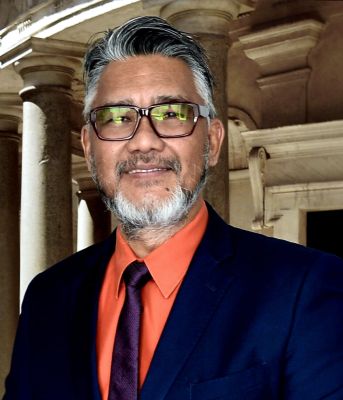


Deploying unified digital business services offers a practical method to bring informal enterprises into the regulated economy while increasing national revenue collection, according to a trade and development expert.
In a keynote presentation on small enterprise development, Boris Titov, Special Representative of the President of the Russian Federation for Relations with International Organisations to Achieve the Sustainable Development Goals, detailed how digital administration transforms business environments.
He explained that small and medium-sized enterprises (SMEs) constitute 90% of global businesses and account for more than half of worldwide employment.
However, enterprise growth across many developing nations remains constrained by heavy informal operations, administrative pressure, and corruption.
“Instead of paying taxes, they are forced to pay primes,” Titov pointed out, noting that cross-border barriers add further operational hurdles.
To address these structural challenges, Russia created an integrated “one-stop” digital portal that links corporate registration, tax management, and commercial banking functions, according to Titov.
The implementation streamlined daily accounting, simplified payment processing, and expanded private sector access to commercial bank credit, he said. Following the platform rollout, the share of informal SMEs operating in Russia dropped from 80% to under 10%, he said.
The overall number of registered small businesses grew by 1mn between 2018 and 2024, while registered self-employed individuals reached 15mn, representing over 10% of the national population.
Annual tax revenue generated from the small business sector doubled to $119bn, while access to business loans expanded nearly threefold and suspicious financial transactions fell by 64%, Titov pointed out.
Titov noted that international transfers of the system are already yielding positive outcomes in neighbouring markets.
“For example, in Kyrgyzstan, our expertise helped double the SME sector’s tax base in just two years,” he emphasised, noting that similar integrated portals operate in China, India, and Europe.

