
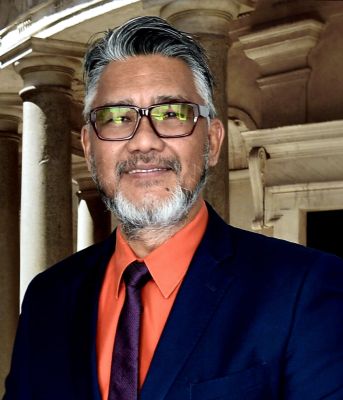



The country’s push towards a knowledge-based economy is gaining measurable ground, with nearly 95% of the university’s recent graduates choosing to remain and work in Qatar, according to Carnegie Mellon University in Qatar (CMU-Q) dean Michael Trick.
Trick told Gulf Times that building such an economy requires a full ecosystem rather than isolated components, and that Education City, Qatar’s universities, and CMU-Q itself collectively function as a talent pipeline for that transition.
“We now have two decades of graduates from CMU-Q, most of whom stay in Qatar and contribute to the knowledge economy. When we attend conferences, summits, and industry events within Qatar, we are proud to see so many of our alumni attending, presenting, networking, and leading the conversations,” Trick said.
He said the primary remaining gap is not structural but time-related, noting that a transformation of this scale cannot happen overnight.
Asked about the sectors most ripe for disruption in the next five years, Trick said any discussion on disruption must start with artificial intelligence (AI), which he described as capable of fundamentally transforming industries through the optimisation of core business processes.
He said Qatar is already seeing innovation-led disruption across education, energy, food security, and sports. “In the area of sports and large-scale sporting events, Qatar has the potential to lead globally through technological innovation,” Trick noted.
On whether Qatar is producing enough homegrown entrepreneurial talent, Trick distinguished two models for meeting workforce demand. The first, he explained, involves paying foreign firms a premium to set up a temporary presence — a model that was essential when Qatar’s educational system could not yet keep up with demand. The second model, which he described as more organic, is education-led.
“Through significant investments in higher education, Qatar attracts exceptional minds, both Qatari and international. Our students are exceptionally gifted, and often the top students in their schools and home countries,” he said.
Trick said international students who come to study in Qatar often choose to stay after graduating, drawn by four years of growing attachment to the country. “They want to stay, and they hope to make a lasting economic impact,” he said.
He added: “This second model takes longer, but it is a more organic approach: introduce brilliant young people to a country that values the development of human capital, foster their connection to Qatar, encourage their entrepreneurial aspirations, and allow them to build their futures here.”

