




Msheireb Downtown Doha’s (MDD) integrated urban model is creating new opportunities for artists, designers, cultural institutions, and creative businesses in Qatar and beyond, as it continues to evolve into a hub for art, design, culture, and the creative economy.
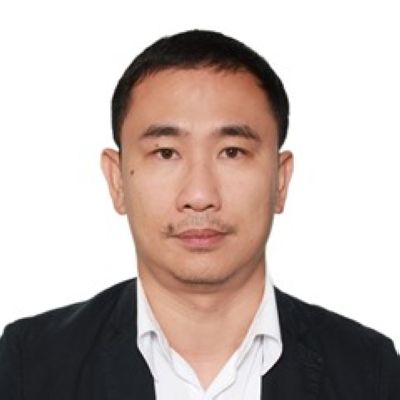
In an exclusive interview with Gulf Times, Noura Al Qubaisi, manager of Communications and Public Relations at Msheireb Properties (MP), discusses how the downtown district has developed into a connected creative ecosystem, the role of its cultural institutions and creative hubs, and its efforts to connect Qatari talent with regional and international audiences.
GT: How do you see MDD’s evolution into an integrated ecosystem for art, design, culture, media, and the creative economy, and what made that possible?
Al Qubaisi: It began with a decision about how a city should be organised. Rather than zoning culture into one quarter and business into another, we planned for overlap, so that art, media, design and commercial life would share the same streets and the same audiences. That thinking goes back to the master plan, and it is why these sectors interact today rather than simply sit alongside one another.
The model is meant to serve the creative practitioner, the visitor and the investor at the same time, and to put culture where it belongs, at the heart of economic and social life.
The strength of a connected ecosystem lies less in how many cultural institutions it contains than in how those institutions work together to open opportunities for local talent, businesses, visitors and investors.
GT: What are the key elements that have allowed MDD to become one of Qatar’s most important incubators for cultural and creative industries?
Al Qubaisi: Three things, essentially. The first is infrastructure. Msheireb Museums, Doha Design District, M7 and Media City Qatar sit within a few minutes’ walk of one another, alongside public spaces and a mix of retail, hospitality and business uses. The second is audience: the city welcomed 15 million visitors in 2024 and more than 16 million in 2025, which gives creative work immediate reach. The third is permanence, in the sense that these are year-round institutions rather than a seasonal programme.
When culture, talent, infrastructure and a steady audience occupy the same ground, creative activity can settle into a continuous economic cycle instead of remaining confined to individual events or seasons.
GT: How do the creative hubs and outlets, such as Doha Design District, Msheireb Museums, and Media City, work together within MDD to create a single environment that serves creatives?
Al Qubaisi: Each has its own mandate, and proximity does much of the rest. Doha Design District and Msheireb Museums are part of Msheireb Properties, while M7 and Media City Qatar are independent organisations that chose MDD as their home. M7 alone offers levels of studios, shared workspaces and digital laboratories, together with mentorship programmes for emerging designers.
Those organisations chose to establish themselves here and that says a good deal about their confidence in the environment we have built.
For a designer, a film-maker or a curator, it means expertise, facilities and audiences are all within a short walk of the studio.
GT: What role do Msheireb Museums play in preserving Qatari cultural memory while connecting it to contemporary artistic and creative practice?
Al Qubaisi: Our four heritage houses, Bin Jelmood House, Company House, Mohammed Bin Jassim House and Radwani House, tell the story of this place and its people in a language that reaches new generations. Over a decade they have welcomed more than 600,000 visitors, worked with over 200,000 students, and built partnerships with more than 300 schools and universities in Qatar and abroad.
Preservation is only half of the work. We invite researchers and artists to examine that material, question it and reimagine it in their own terms, so that heritage becomes an ingredient in contemporary practice rather than a record kept behind glass. Our dialogue programmes carry the same idea further, addressing questions of identity, society and the future.
Two publications released for the tenth anniversary, Building on Tradition and Msheireb Museums: Transforming Doha’s Heritage Houses, take that approach into print, the first setting out the Seven Principles behind contemporary Qatari architecture, the second documenting how the houses themselves were restored.
GT: How can the creative economy in MDD help connect Qatari talent with the wider world?
Al Qubaisi: The traffic has to run in both directions: Qatari creatives reaching international audiences, and international talent finding good reasons to engage with Qatar.
The city’s programme of art and design events is built around that exchange, including Art and Design Weeks alongside Art Basel Qatar, and the presence of Media City Qatar extends those conversations well beyond the people in the room.
The Doha Design District public art open call drew around 200 submissions from 52 countries, which tells us Doha now registers with creatives who have never set foot here.
GT: How do the events, exhibitions and programming hosted in MDD help build a broader public audience for art and design, rather than a specialised one alone?
Al Qubaisi: Culture belongs in the street as much as in the gallery. Barahat Msheireb, at 3,800sq m the largest covered open-air square in the region, and Sikkat Wadi Msheireb put art and design in the path of anyone crossing the city on an ordinary afternoon.
Audiences should also have a hand in shaping what surrounds them. Inviting the public to assess and vote on shortlisted public art projects turns a visitor into a participant, which is a different relationship altogether.
GT: How can MDD’s location and visibility be used as a platform to introduce international visitors to Qatari art, design, and culture?
Al Qubaisi: We can offer exhibition space in a destination that draws local and international visitors, introductions to the national and international institutions passing through, and production support through Doha Design District that carries work from drawing to public installation.
The purpose behind all of it is straightforward. A Qatari or Qatar-based creative should be able to build a career of international standing without leaving home.
GT: Do you see Msheireb Downtown Doha becoming a Qatari model that could be exported globally for managing cultural cities and developing the creative economy?
Al Qubaisi: Our ambition is for the creative economy to become one of the pillars of economic life in the city, opening real opportunities for citizens and residents alike, supporting local production and contributing to the diversification of the national economy in line with Qatar National Vision 2030.
What MDD demonstrates is that culture, creativity and the built environment can be planned together rather than in sequence. The city holds one of the world’s highest concentrations of LEED-certified buildings while keeping culture in everyday circulation, and the Seven Principles that guided its architecture came out of studying how Qataris have always built.
What we would want to share is not a blueprint to be copied, but a method: how a city can hold on to its identity while creating the conditions for creativity, innovation and economic opportunity to take root.

