
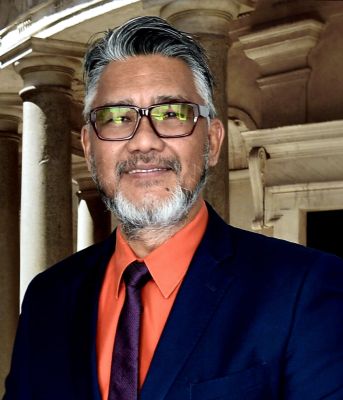



Applying strict financial analysis and risk management to agricultural technology is essential for building economically viable farming systems in arid regions, a local founder has said.
Jeacim Francis Adaya, chief executive of Hydrovest Technology, noted that commercial agriculture in the Gulf must move beyond basic production metrics and focus on long-term cost structures. The shift requires treating technology choices as capital investments that directly impact operating margins, he said.
“Agriculture today is no longer just about planting crops. It involves technology, resource management, innovation, and sustainability. Financial discipline helped me understand how to build solutions that are both environmentally sustainable and economically viable,” he explained to Gulf Times in an exclusive interview.
Operating within climates such as that of Qatar’s involves high resource inputs. Extreme summer temperatures, substantial cooling energy requirements, and limited freshwater supplies generate significant overheads for indoor and controlled-environment farms. Early operational trials often expose vulnerabilities in commercial models.
“People often think finance and agriculture are completely different fields, but I see many similarities,” Adaya stated, adding that his background in finance taught him how to analyse data, manage risks, create sustainable business models, and make informed long-term decisions”.
Adaya pointed out that technical setbacks encountered during initial trials were treated as data points to refine operational models. Analysing expenditure patterns alongside crop yield metrics enabled the venture to isolate specific financial burdens associated with desert farming.
Standard international agricultural solutions frequently fail to deliver expected returns when imported directly into extreme climates without modification. Tailoring systems specifically for regional environmental conditions helps lower energy consumption and reduce capital depreciation over time, he said.
“Those experiences convinced me that Qatar doesn’t need to copy farming methods from other countries. We need technologies specifically designed for desert environments. That belief continues to drive our research and development today,” he said.
Establishing viable unit economics remains the primary hurdle for tech-driven farming enterprises, Adaya pointed out, noting that financial frameworks must balance upfront technology costs against long-term operational savings to attract institutional investors and private sector capital.
He said, “Financial discipline helped me understand how to build solutions that are both environmentally sustainable and economically viable. Most importantly, finance taught me to look beyond short-term results and focus on creating lasting value.”
Adaya further explained, “Agriculture today is no longer just about planting crops...it involves technology, resource management, innovation, and sustainability.”
The company continues its research and development operations at the Qatar Science and Technology Park. The objective is to refine specialised hydroponic models into scalable, commercially viable products suitable for local and regional deployment, Adaya said.
“That belief continues to drive our research and development today...being part of the Qatar Science and Technology Park today is a proud milestone because it allows us to transform that original vision into technologies that can contribute to Qatar’s future,” he added.

