
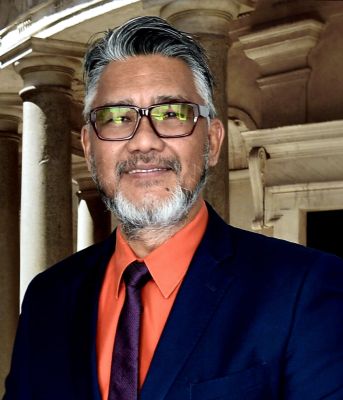



The founder of an AgTech startup based inside the Qatar Science and Technology Park (QSTP) has revealed that deploying controlled-environment agriculture alongside traditional farming methods offers the company a practical strategy to overcome severe land and water limitations in hyper-arid climates.
“Hydroponics is not meant to replace traditional agriculture—it is meant to complement it,” Jeacim Francis Adaya, founder and CEO of Hydrovest Technology, told Gulf Times in an exclusive interview.
He explained that traditional farming remains essential, but hydroponics allows food production in locations where conventional farming is difficult. “A diversified agricultural system is always stronger than relying on one approach alone,” he further pointed out.
According to Adaya, the integration of soilless cultivation techniques provides commercial growers with a viable mechanism to stabilise local food production without overextending natural resources.
Rather than seeking to displace open-field agriculture, tech-driven systems serve as targeted tools to expand output into non-arable areas and maintain year-round production cycles, he emphasised.
Adaya noted that modern soilless systems address two of the most pressing agricultural bottlenecks in Qatar: Acute freshwater scarcity and a lack of fertile soil. He highlighted that being headquartered at QSTP has helped the firm develop agricultural equipment specifically engineered for high-heat, desert conditions.
From an operational standpoint, closed-loop hydroponic systems capture and recycle water within closed circuits. This process drastically reduces overall consumption compared with conventional soil irrigation, providing a predictable output model for commercial operators facing high input costs, Adaya explained, noting that “these advantages make hydroponics an important component of sustainable agriculture in arid regions.”
Beyond commercial-scale facilities, Adaya stressed that decentralised production models offer secondary supply chain support across the domestic market.
Establishing small-scale setups in urban environments, residential clusters, schools, and community centers helps build regional resilience against broader import and logistics disruptions, he said.
Adaya highlighted that grassroots education and widespread resident participation remain essential for driving long-term adoption. Building public awareness around modern farming methods ensures that state investments in agricultural technology yield measurable, community-wide results, he continued to explain.
He said, “Food security begins at the community level. Individually, these projects may seem small, but collectively they create a more resilient food system. When residents understand where food comes from and participate in growing it, they become partners in achieving national sustainability goals.”
Combining advanced resource management with existing farming infrastructure creates a balanced, flexible production framework, he said. At the same time, optimising input costs while maintaining steady yields aligns directly with national sustainability directives and long-term economic planning under Qatar National Vision 2030, he stressed.
Adaya said the focus over the next decade remains on advancing desert-tailored agricultural innovation, expanding research partnerships, and fostering a commercial ecosystem that makes tech-driven farming economically viable across the Gulf region.
“Our aim is to develop technologies designed specifically for desert agriculture, support local food production, collaborate with research institutions, and inspire the next generation of AgriTech entrepreneurs,” Adaya added.

