
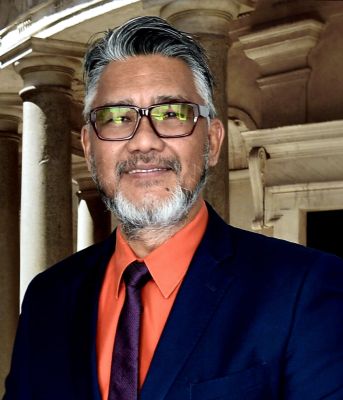



Entrepreneurs who conduct meticulous analysis or risk assessment before making key business decisions are better positioned to withstand shocks, an entrepreneurship advisor has emphasised.
“Founders who have done the diagnostic work before scaling, before entering new markets, before committing significant resources, are the ones who discover they have a foundation worth protecting when disruption arrives,” Dr Hanan el-Basha, strategic advisor and founder of The Business Doctor, told Gulf Times in an exclusive interview.
Those who have not done this groundwork often find themselves reacting without clarity, making decisions they later reverse, el-Basha pointed out. “Those who haven’t done that work often find themselves making reactive decisions — cutting, pivoting, pausing — without fully understanding what they’re actually responding to,” she explained.
El-Basha further explained that founders who navigate instability most coherently tend to have three things in place: “A clear and personal ‘why’ that sustains conviction when conditions shift, a lean and honest understanding of their financial position so they're not surprised by what the disruption surfaces, and a small number of trusted relationships they can think out loud with.”
These elements, she stressed, cannot be installed during a crisis but must be built beforehand. “And they all contribute to building entrepreneurial resilience over time,” el-Basha pointed out.
On the most immediate challenges small and medium-sized enterprises (SMEs) and startups face during uncertainty, el-Basha pointed to three layers that consistently surface: operations, finance, and grit.
She explained: “Operationally: supply chains, client pipelines, and hiring decisions all go into a holding pattern. Financially: cash flow (current and future) becomes unpredictable precisely when it needs to be most managed. Psychologically: and this one is underestimated — the founder's nervous system is the business's nervous system, especially in early-stage ventures.
“When the leader is dis-regulated, the organisation reflects it. The challenge is maintaining enough internal stability – on the strategic, executional, and human capital fronts – to make sound decisions when external conditions are anything but stable,” she continued.
El Basha also emphasised that resilience is “not built during instability but revealed by it.”
“This is precisely why the diagnostic work matters before decisions are made. The framework I apply consistently — diagnosis before prescription, clarity before growth, integration before expansion — is not just a business methodology. It is a resilience framework,” she emphasised.
She noted that lessons from past crises remain relevant for today’s entrepreneurs. “The most consistent lesson from Covid-19, from the 2017 blockade, and from the current period of regional uncertainty is this: the businesses that survived, and possibly thrived, were not necessarily the strongest before the crisis.”
According to el-Basha, businesses that endured were those with clear foundations, founders who understood their purpose, businesses that understood what they were actually solving for their customers, and teams with shared values that enabled coherent decisions when standard playbooks no longer applied.
She added: “Foundation is not built during a crisis. It is what you discover you have — or don't — when one arrives. The lesson is to build and adapt it now, not when you need it.”

