



Micro, small, and medium enterprises (MSMEs) in Qatar’s construction sector stand to unlock deeper supply chain opportunities by building structured referral networks that connect them directly with contractors, consultants, and procurement officers, according to a business networking expert.
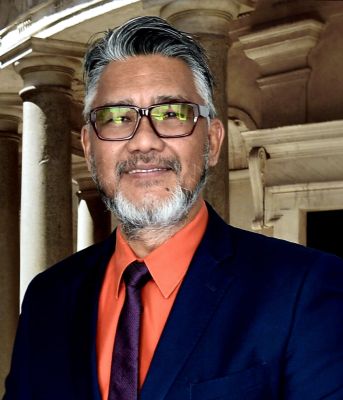
“Qatar already has a strong referral culture; it is just not labelled as one. Business in this market has always moved through trust, relationships, and personal endorsement. The question is not whether referrals happen; it is whether they happen predictably enough for a small business to plan around,” Mohammed Shabeeb, national director of BNI Qatar, told Gulf Times.
Shabeeb said the construction sector’s supply chain runs considerably deeper than most MSMEs recognise. He identified three entry points where smaller enterprises consistently win over established suppliers: niche specialisation in a single product or service that major contractors prefer not to manage in-house; speed of response when projects hit deadline pressure; and the post-handover facilities management and maintenance layer, where established players are typically already focused on the next large project.
On Qatar’s referral economy, Shabeeb described a market where business has always moved through trust and personal endorsement, but where the networks that carry those referrals remain largely closed to smaller enterprises outside established circles.
“In the construction and building materials sector specifically, the relationships are dense but closed. A handful of trading houses, contractors, and consultants refer work to each other in patterns established over decades. For an MSME outside those circles, the referral economy looks invisible because it is not advertised,” he said.
He said three behavioural shifts are needed for MSMEs to convert informal goodwill into structured referral flow: asking for specific introductions rather than general visibility; reciprocating before making any request; and understanding that the referral itself is not the win — the trust transfer behind it is.
On Qatar’s broader MSME environment, Shabeeb acknowledged that conditions have improved considerably since the early 2000s, pointing to the role of institutions, such as Qatar Development Bank (QDB), Qatar Financial Centre (QFC), and Qatar Free Zones Authority (QFZ), in building a more structured support framework for smaller enterprises. “What has changed is significant and worth acknowledging. In 2003, an MSME in Qatar had limited access to formal financing, almost no structured business education, and very few peer networks outside informal community ties. Today, there is real infrastructure — financial support, SME-focused programmes, free zones, government procurement set-asides for local suppliers, business coaching, structured networking, digital platforms,” Shabeeb said.
What has not changed at the same pace, he said, is the operating model inside many MSMEs themselves, particularly the tendency towards owner-operator dependency, which limits growth to whatever the founder can personally manage, and the persistent difficulty of attracting and retaining mid-level managers.
“Qatar National Vision 2030 has changed the environment around the MSME. It has not yet changed the operating system inside it. That is the work still ahead, and it is the work my team and I have dedicated to through BNI and ActionCOACH,” Shabeeb added.

