



Qatar is increasingly being cast as a pivotal hub for global commerce, with Indian industry leaders and diplomats underscoring its role as a trusted gateway for investment, startups, and sectoral collaboration.
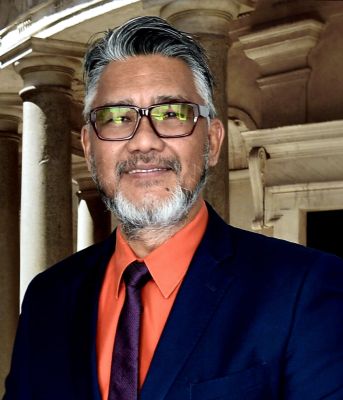
Speaking at a recent business-to-business (B2B) meeting between Qatar Chamber and the PHD Chamber of Commerce and Industry (PHDCCI) held at Qatar chamber’s Lusail headquarters Wednesday, Anuj Khanna, co-chairman of the Housing and Urban Development Committee at PHDCCI, described Qatar as the “next 10-decade window for Middle East and Africa and global gateway”.
Khanna noted that while Dubai’s fundraising capacity has reached saturation, Qatar offers stringent legal frameworks and financial trust comparable to Singapore. He urged collaboration in real estate and technology, pointing to new opportunities created by India’s liberalisation of foreign direct investment in property.
In his remarks delivered in the presence of board member Mohamed bin Ahmed al-Obaidli, Qatar Chamber second vice-chairman Rashid bin Hamad al-Athba lauded the strong relations between Qatar and India “at all levels”, particularly in the trade and economic fields, citing bilateral trade reaching “QR47bn” in 2024, making India “one of Qatar’s key trading partners”.
Highlighting the wide range of business opportunities in both countries, al-Athba called on Qatari and Indian businessmen to explore new areas of co-operation and benefit from Qatar’s attractive investment environment, which features advanced infrastructure, free zones offering numerous incentives to investors, and supportive business legislation.
Deepak Pundir, commercial attache at the Indian embassy in Qatar, emphasised that bilateral ties have been elevated to a strategic partnership. He recalled high-level visits in 2025, beginning with His Highness the Amir Sheikh Tamim bin Hamad al-Thani’s state visit to India, followed by ministerial exchanges.
“The present trade between both countries is around $14bn, mostly in favour of Qatar because of energy exports,” Pundir stated in his speech. Both sides, he added, are committed to doubling trade to nearly “$28bn” by 2030, with Qatar pledging “$10bn in investments in India and the opening of a Qatar Investment Authority (QIA) office in India. He added that Indian exports are dominated by food products, electrical equipment, gems and jewellery, and pharmaceuticals.
Dr Jatinder Singh, senior secretary at PHDCCI, proposed institutionalising ties through formal agreements, saying: “Probably we can have a set of MoUs with Qatar Chamber, so that whenever there is any delegation movement, it becomes more predominant, gets more traction, and the optics become more trustworthy.”
Singh noted that the delegation included experts in AI, PropTech, fintech, sustainability, and gems and jewellery, all of whom had already studied Qatar’s business climate. “There is a lot of trust, a lot of credibility we are seeing in Qatari companies,” added Singh, who expressed optimism on “excellent bilateral trade in the years ahead”.
Wednesday’s meeting marked the second PHDCCI delegation visit to Qatar within six months, reflecting strong private sector interest, according to Pundir. He described these exchanges as “very fruitful”, giving Indian companies deeper insight into Qatar’s business environment.
Khanna noted that Qatar’s credibility and legal parameters “make it a marquee base for global expansion”, while Singh emphasised that “trust and institutional frameworks will be key to sustaining momentum”.

