



Qatar does not simply adopt new tools but embeds innovation across organisations and ecosystems in line with national priorities and Qatar National Vision 2030, a top official of a Qatari tech company has said.
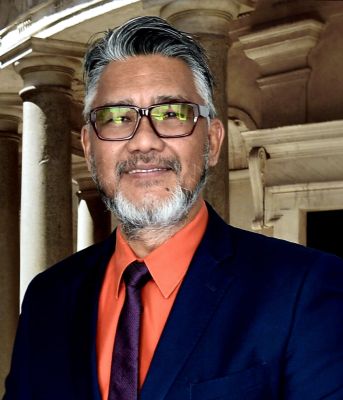
“We see artificial intelligence (AI) not just as a technology, but as a catalyst to solve real challenges and create meaningful, impactful outcomes,” engineer Nayef al Ibrahim, co-founder and CEO of Ibtechar, told Gulf Times in an exclusive interview.
Al-Ibrahim’s statement comes ahead of the upcoming Web Summit Qatar 2026, which will host a major gathering of global founders, innovators, and policymakers as Doha strengthens its position as a global technology hub. AI is expected to dominate the agenda, and local voices are set to highlight the country’s approach to responsible, impact‑driven innovation, event organisers announced earlier.
According to al-Ibrahim, the summit is an opportunity to showcase how AI-integrated innovation labs can enable experimentation, drive scalable solutions, and reinforce the company’s role in elevating the conversation on AI and innovation.
“While global discussions often focus on AI tools, our perspective is unique: we integrate AI across innovation labs and ecosystems, accelerating return on investment (ROI) and delivering impactful solutions that showcase Qatar’s leadership in digital transformation globally,” he explained.
Al-Ibrahim noted that during Web Summit Qatar, Ibtechar’s ‘Coffee x Co-Founders’ happening at its booth will provide a strategic space for founders, thought leaders, and innovators to exchange ideas directly with the company’s co-founders, explore AI-driven projects, and share best practices.
“By combining thought leadership, practical experience, and collaboration, we amplify Qatar’s voice as a global leader in responsible, impact-driven AI innovation,” al-Ibrahim further pointed out.
Asked how the company balances the rapid adoption of AI with the need for ethical safeguards, especially in education and public services, al-Ibrahim pointed out that rapid adoption and ethical safeguards “must go hand-in-hand.”
“AI has the potential to transform education, healthcare, and public services, but its value is realised only when applied responsibly,” said al-Ibrahim, citing the Ibtechar Academy, which trains individuals and organisations to identify AI opportunities and risks, embedding ethical considerations at every stage, from design to deployment.
He said this approach fosters a culture of responsible innovation, ensuring that AI is applied in ways that protect privacy, promote fairness, and deliver meaningful benefits to citizens.
Al-Ibrahim further said the company’s consultancy services also help organisations develop clear strategies and innovation spaces that integrate ethical AI seamlessly across their DNA. “Additionally, we design AI-powered solutions that drive ideas to execution while remaining human-centred and aligned with societal values, ensuring innovation creates tangible, responsible impact,” he noted.
Al Ibrahim emphasised that clear strategies are needed to integrate ethical AI across governance, business, and society, underscoring that the company’s approach is aligned with the National Artificial Intelligence Strategy and Qatar National Vision 2030. “Through global partnerships, we bring world-class AI capabilities to Qatar, enabling organisations to navigate AI adoption, build new skills, and develop a future-ready workforce—supporting the country’s vision for a diversified, knowledge-based economy,” he said.
As startups are expected to play a prominent role at this year’s edition of Web Summit Qatar, al Ibrahim said innovation labs in the country are evolving into strategic hubs for experimentation, collaboration, and rapid solution development.
With the influx of global founders attending the summit, he said these labs provide opportunities for knowledge exchange, mentorship, and partnerships where local and international innovators co-create solutions, test emerging technologies, and scale ideas rapidly.
Asked what lessons from Ibtechar’s lab model can be applied to accelerate fintech and startup growth in Qatar, al-Ibrahim emphasised that innovation “works best when it is structured, progressive, and outcome-focused.”
“Startups in fintech and other high-growth sectors benefit from rapid prototyping, data-driven experimentation, and continuous feedback. Ibtechar’s lab model demonstrates that combining mentorship, AI-enabled insights, and multidisciplinary collaboration helps startups refine ideas faster and bring scalable solutions to market. Such an approach accelerates growth and strengthens Qatar’s position as a hub for innovation.” He explained.
According to al Ibrahim, Ibtechar has developed “70%” of Qatar’s innovation spaces, combining local expertise, international best practices, and human-centred AI strategies. He said this ensures Qatar’s voice is not only part of the global AI conversation but also sets benchmarks for impact-driven and sustainable innovation worldwide. Al-Ibrahim also cited collaboration with AI Crafters, which enables AI-powered interventions across national sectors.

