tag

Sunday, June 28, 2026 | Daily Newspaper published by GPPC Doha, Qatar.

Tag Results for "#qatar" (360 articles)

Gulf Times
Qatar

Sidra medicine launches specialized Microbiome Service to advance precision care for women and children

Sidra Medicine, a member of Qatar Foundation, has announced the launch of a new specialized Microbiome Service. The service will provide access to advanced microbiome testing and analysis to support precision medicine, clinical research, and personalized healthcare for women, children and young people.Combining cutting-edge sequencing technologies with multidisciplinary research expertise, the private-paid service will be provided to academic and industry investigators. It will help identify the role of the human microbiome in health and disease. By analyzing the complex communities of microorganisms that naturally inhabit the body, the service supports clinicians and researchers in advancing diagnosis, treatment strategies, and disease prevention across a range of conditions.Building on this momentum, Sidra Medicine has announced that it will be hosting its second MENA Microbiome Conference from 17 to 18 October 2026.The launch of the Microbiome Service reflects Sidra Medicine's continued investment in precision medicine and translational research, while strengthening Qatar's position as a regional hub for scientific innovation and personalized healthcare.The service was launched by the Laboratory of Microbiome and Biomarkers Discovery to support researchers particularly in the MENA region, who either lack the expertise or the infrastructure to process their samples. 

Michael Trick, dean, Carnegie Mellon University in Qatar.
Business

Private sector engagement strengthens academic links, says educator

Private sector leaders and major Qatari corporations have stepped up engagement with local universities. However, the region’s business community has yet to embrace academic institutions as primary engines for research and development.In an exclusive interview with Gulf Times, Carnegie Mellon University in Qatar (CMU-Q) dean Michael Trick explained the gap between practice and potential.Highlighting “outstanding” private sector engagement, Trick said QNB, the Qatar Investment Authority (QIA), technology platform Snoonu, and “numerous other companies” have been strong partners to CMU-Q, collaborating with students on practical projects and hiring its graduates. “These entities have been highly supportive of our educational mission, collaborating with our students on practical projects, hiring our graduates, and deeply valuing their skill sets,” he said.“When compared to highly mature markets like the US, there is still room to grow. While financial and collaborative support exists, regional companies do not yet fully view universities as primary engines for core research and development.” He said, however, that this mindset is steadily shifting and corporate research collaboration is consistently increasing,” Trick also said. The “most significant barrier,” Trick pointed out, is not unique to Qatar but is a global challenge — “a fundamental misalignment in goals, expectations, and timelines between the two sectors.” Trick noted, “Academia operates on a long-term, reflective cycle, which frequently clashes with the rapid, immediate demands of the business world. Corporate entities are often unaware of the full spectrum of capabilities and expertise that academic institutions can offer.” “Overcoming this requires fostering more frequent, structured interactions to bridge the gap between these two distinct organisational cultures,” Trick further pointed out.On whether business graduates in Qatar and the Gulf more broadly are equipped with the skills employers actually need, Trick said higher education must balance immediate industry requirements against foundational principles, and that not every concept taught at university is designed to be applied from day one. He said CMU-Q graduates enter the workforce with a thorough understanding of AI and modern business methodologies, making them ready assets to employers. “If a company needs to train a graduate on specific proprietary software, the most valuable skill our students develop is the capacity to learn rapidly. This adaptability allows them to swiftly master any specific tools required by industry,” Trick said. On how artificial intelligence (AI) is changing what a business education needs to deliver, Trick said the essential skill set now centres on integrating AI into personal workflows, leveraging data to optimise business operations, and navigating a rapidly evolving digital economy. “Students require a sophisticated understanding of both the capabilities and the inherent limitations of artificial intelligence,” he said. Trick explained that this focus is embedded in the curriculum. While CMU-Q’s Computer Science and Artificial Intelligence students are trained to build advanced AI architectures, its Business Administration and Information Systems graduates are equipped to apply these technologies to solve complex business challenges, he added.

Qatar's forward Akram Afif reacts after a missed chance during the FIFA World Cup match against Bosnia and Herzegovina in Seattle on Wednesday. (AFP)
Sport

World Cup burden proves too heavy for Qatar talisman Afif

When Qatar squad arrived in North America for only their second FIFA World Cup, one name carried the weight of a nation's expectations.Akram Afif arrived as one of Asia's finest footballer - a two-time AFC Player of the Year, reigning Qatar Football Association Best (QFA) Player and the man who had inspired back-to-back Asian Cup triumphs. If Qatar were to finally make their mark on football's biggest stage after the disappointment of 2022 at home, the 29-year-old was expected to lead the way.Just weeks before the tournament, after collecting his sixth QFA Best Player award, Afif made clear where his priorities lay. "The individual awards is not my first priority. We did not perform at the required level at 2022 World Cup and the results were not acceptable to me. We will try our best to prove that we deserve to be at the World Cup with a strong performance," he said.Instead, his second World Cup ended much like his first.Afif finished the tournament without a goal or an assist as Qatar exited in the group stage with one point from three matches. For a player who scored eight goals to win the Golden Boot at the 2023 Asian Cup after supplying a record 10 assists during Qatar's 2019 triumph, it was another frustrating tournament where his influence never translated into numbers.But the statistics also paint a more nuanced picture than the score sheet suggests. **media[461341]**Afif was asked to shoulder almost all of Qatar's creative burden, yet he often found himself isolated high up the pitch. Across 239 minutes, he managed just two shots, neither on target, while accumulating an Expected Goals (xG) value of only 0.09 - evidence that he rarely received the ball in dangerous scoring positions.Only two of his 128 touches came inside the opposition penalty area, highlighting how frequently he had to drop into midfield simply to get involved in Qatar's build-up.Despite finishing without an assist, his Expected Assists (xA) stood at 0.34 after creating four chances, including one classified as a big chance. One of those moments nearly changed Qatar's fortunes against Bosnia and Herzegovina when his intelligent pass released Pedro Miguel, whose effort struck the post.His passing accuracy remained a healthy 80.2 percent, while he completed almost half of his long passes, but too often there was little movement ahead of him to convert possession into genuine attacking threat.Afif also found himself battling physically against defenders, winning just five of his 12 duels and being dispossessed four times as opponents focused much of their defensive attention on neutralising Qatar's biggest weapon.His performances mirrored Qatar's campaign. He showed flashes of quality in the opening 1-1 draw with Switzerland, struggled as the team's structure collapsed in the 6-0 defeat to Canada following two red cards, and worked tirelessly against Bosnia without receiving enough support in the final third.Head coach Julen Lopetegui rejected suggestions that Afif had underperformed. "Today, I cannot agree with the criticism,” the Spaniard said, after Qatar’s 1-3 loss to Bosnia had crushed their knockout hopes.“I think Akram Afif played a very good match. I need to review it again, but my first impression is that he did many things well for us. Every time he touched the ball he improved our attacking play. Of course, I would like to have two or three more players like him. He did not score, but he contributed a lot to the team and helped us in many ways. That is my opinion," the coach added.Lopetegui's defence of his star player also reflects the broader challenge facing Qatar.Afif himself is now 29 - the same as the average age of Qatar's World Cup squad. Ten of the 26 players were over 30, underlining how heavily the national team still relies on the generation that transformed Qatari football.Veteran captain Hassan al-Haydos, now 35, even returned from international retirement last year to help Qatar through qualification, further highlighting the dependence on an ageing core that delivered successive Asian Cup titles and the country's greatest footballing achievements.That generation succeeded in elevating Qatar to the top of Asian football. Reproducing that success against the world's elite has proved a far tougher challenge.Lopetegui believes the tournament should now serve as the bridge towards Qatar's next generation. "Overall, the experience has been very positive. Never before in our history had we qualified for this tournament. Never before had we won a point at a World Cup. And never before had we had a match where we competed on equal terms with an opponent and arguably deserved more,” he said."Of course, people can have different opinions, but that is my summary. The most important thing now is for the young players in Qatar to learn from the experienced players in this squad. Unfortunately, many of those senior players are nearing the end of their careers and I do not know if this was their last match for the national team."The younger generation must take their example and learn from their professionalism and behaviour. Hopefully, that will help Qatar have another opportunity like this in the future. I do not know when it will happen again, but I hope it does."For all the scrutiny surrounding Afif's tournament, expecting one player to carry Qatar on football's biggest stage was always an enormous ask.At the Asian Cup, he thrived in a settled side that dominated possession against regional opponents. At the World Cup, facing faster, stronger and deeper squads, he became the focal point of every opponent's defensive plan while often lacking runners around him and sustained attacking support.Qatar undoubtedly needed more from their biggest star. But they also needed far more than just their biggest star.Afif's World Cup in statsAkram Afif's individual match ratings steadily declined as the group stage progressed, mirroring Qatar's team collapse vs Switzerland (1-1 draw): He played the full 90 minutes, benefiting from a structured team setup vs Canada (6-0 loss): He was substituted early after 59 minutes as the team structure completely broke down following two red cards vs Bosnia and Herzegovina (3-1 loss): He played the full 90 minutes, showing an improved work rate but lacking the final-third support to overturn the deficit. Afif was heavily involved in Qatar's build-up play but struggled significantly with attacking efficiency and final-third execution. Across 239 minutes at tournament play, Afif accumulated a total Expected Goals (xG) of just 0.09. This indicates that the shots he took were from highly unfavorable, low-probability positions. He attempted only 2 shots during the entire tournament, with both failing to hit the target (0% shot accuracy). Both attempts were struck with his left foot — one from inside the box during regular play and one from a fast break outside the area. Despite registering 0 assists, his tournament xA sat at 0.34. This metric demonstrates that he was creating legitimate scoring opportunities for his teammates that ultimately went unfinished. He created 4 distinct chances, including 1 designated "big chance." He successfully completed 3 out of 11 attempted crosses (27.3% completion rate) and maintained a decent long-ball accuracy of 46.2% (6 out of 13). He recorded 128 touches over the three matches but only 2 of those touches occurred inside the opposition's penalty box. This highlights that he was forced to drop deep into midfield to retrieve the ball rather than operating in dangerous advanced positions. He maintained an overall passing accuracy of 80.2%, completing 73 passes. This shows he kept possession well in non-threatening zones. Afif struggled heavily in physical duels, winning only 41.7% of them (5 out of 12). He was dispossessed 4 times and managed to win 4 fouls for his team. 

Carnegie Mellon University in Qatar (CMU-Q) dean Michael Trick
Qatar

'95% of CMU-Q grads stay behind to build Qatar's knowledge economy'

The country’s push towards a knowledge-based economy is gaining measurable ground, with nearly 95% of the university’s recent graduates choosing to remain and work in Qatar, according to Carnegie Mellon University in Qatar (CMU-Q) dean Michael Trick.Trick told Gulf Times that building such an economy requires a full ecosystem rather than isolated components, and that Education City, Qatar’s universities, and CMU-Q itself collectively function as a talent pipeline for that transition.“We now have two decades of graduates from CMU-Q, most of whom stay in Qatar and contribute to the knowledge economy. When we attend conferences, summits, and industry events within Qatar, we are proud to see so many of our alumni attending, presenting, networking, and leading the conversations,” Trick said.He said the primary remaining gap is not structural but time-related, noting that a transformation of this scale cannot happen overnight.Asked about the sectors most ripe for disruption in the next five years, Trick said any discussion on disruption must start with artificial intelligence (AI), which he described as capable of fundamentally transforming industries through the optimisation of core business processes.He said Qatar is already seeing innovation-led disruption across education, energy, food security, and sports. “In the area of sports and large-scale sporting events, Qatar has the potential to lead globally through technological innovation,” Trick noted.On whether Qatar is producing enough homegrown entrepreneurial talent, Trick distinguished two models for meeting workforce demand. The first, he explained, involves paying foreign firms a premium to set up a temporary presence — a model that was essential when Qatar’s educational system could not yet keep up with demand. The second model, which he described as more organic, is education-led.“Through significant investments in higher education, Qatar attracts exceptional minds, both Qatari and international. Our students are exceptionally gifted, and often the top students in their schools and home countries,” he said.Trick said international students who come to study in Qatar often choose to stay after graduating, drawn by four years of growing attachment to the country. “They want to stay, and they hope to make a lasting economic impact,” he said.He added: “This second model takes longer, but it is a more organic approach: introduce brilliant young people to a country that values the development of human capital, foster their connection to Qatar, encourage their entrepreneurial aspirations, and allow them to build their futures here.” 


Amir Hamid El-Mubarak
Qatar

Winners capture Qatar’s spirit through the lens

Winners of Visit Qatar’s inaugural Qatar Through Your Lens competition say the contest has inspired them to continue capturing the country’s beauty, culture and everyday life through photography, film and creativity. The award ceremony, held at Qatar Tourism headquarters in Msheireb, honoured winners of the first edition of the photography and videography competition, which highlighted Qatar as a destination for visual storytelling and creative expression. For many of the winners, the recognition was more than an award. It was a personal milestone and a motivation to continue sharing Qatar’s story with wider audiences. Amir Hamid El-Mubarak, first-place winner in the photography category, said he was proud to be recognised in a competition that celebrated creativity and Qatar’s visual identity. “I was born in Sudan but raised in Qatar my whole life. I feel very glad for this opportunity with Visit Qatar. It was a very nice challenge for me”, he said. El-Mubarak, a civil engineer by profession, said photography began as a hobby in 2020 and later became a more serious creative pursuit. “My background does not have anything related to art. I’m a civil engineer, so I started doing it just in terms of free time,” he said. He added that competitions helped him gain confidence in his talent. After winning first place in another photography competition organised by the Ministry of Culture, he decided to enter more contests. “I was like, okay, let’s hunt this. Maybe it will be a good way to validate your talent,” he said, adding that the Visit Qatar award would not be his last milestone. Second-place winner Paula Blanche Valencia said her success came as a surprise, as photography had been only a hobby during her visit to Qatar in December. “I did not expect to win this competition,” she said. “It was actually the best day of my life, to be honest.” Her winning image showed a boy casting a net at sunset. Valencia encouraged others to take part in future editions, saying: “Go out of your house, take a photo, take a video everywhere, because Qatar is very amazing and a very beautiful place.” Hady Abi Warde, who won 10th place in the video category, said the competition encouraged him to explore Qatar through film.**media[461372]**“I’m so happy that I won this competition, 10th place for a video,” he said. “I feel very excited to continue and to see more about Visit Qatar.” A director and photographer, Abi Warde, said his winning video came from a simple family moment. “While I was walking around with my daughter, I decided to make a video about Qatar,” he said. “It was not easy because you need to go to many places and take many pictures and videos with a small girl, but all was good.” Khalid Yousif Saqer, who placed fifth, described the award as an honour, especially as part of the competition’s first edition.**media[461373]**“I am super happy that I won this competition,” he said. “It is an honour for me to win the first edition of Qatar Through Your Lens.” He said receiving recognition from Visit Qatar added personal and professional value, and he hopes to participate again next year. The competition, which drew more than 1,300 participants, brought together photographers, filmmakers, residents and visitors who captured Qatar from different angles — from cultural scenes and daily life to landscapes, family moments and tourist attractions. 

Moutaz al-Khayyat, Group chairman, and Ramez al-Khayyat, president & Group CEO, of Power International Holding (PIH).
Business

Qatar places 3rd in Forbes Middle East’s top 100 Arab family businesses list

Qatar ranked third in Forbes Middle East’s Top 100 Arab Family Businesses 2026 list, with 10 Qatari companies featured, trailing Saudi Arabia’s 32 entries and the UAE’s 31.Together, the six GCC states accounted for 86 of the 100 companies on the list, which also included businesses from Egypt, Jordan, Morocco, Lebanon, and Algeria.Citing figures from the Arab Investment and Export Credit Guarantee Corporation (Dhaman), Forbes Middle East reported that the Arab region’s GDP reached approximately “$3.8tn” in 2025 and is forecast to exceed “$4tn” in 2026.According to Forbes Middle East, Power International Holding (PIH), chaired by Moutaz al-Khayyat with Ramez al-Khayyat as president and Group CEO, was the highest-placed Qatari company at seventh overall.PIH operates across energy, mining, construction, healthcare, banking, telecommunications, real estate, and food industries. Last year, a consortium led by PIH subsidiary UCC Holding signed a “$4bn” build-operate-transfer concession to redevelop and operate Damascus International Airport, alongside a “$7bn” programme to develop 5,000MW of power capacity in Syria.Al Faisal Holding, ranked eighth, has 3,800 employees and interests spanning hospitality, real estate, trading, and industrial services. Founded by Sheikh Faisal bin Qassim al-Thani, the group holds a majority stake in Aamal Company on the Qatar Stock Exchange and operates more than 30 hotels across the Middle East, Europe, and the US through Al Rayyan Tourism Investment Company.**media[461440]**Last year, the group completed the full acquisition of Hepworth PME Qatar. Sheikh Faisal’s net worth was estimated at “$1.7bn” as of May 2026, according to Forbes Middle East.Ranked 28th, Darwish Holding oversees more than 800 international brands, with 90% of those partnerships spanning more than 75 years. The group founded Fifty One East in 1949 and operates across real estate, retail, wholesale, malls, and technology.Last year, chairman Bader al-Darwish expanded the group into the food and beverage sector and launched new commercial and residential real estate projects. “The group is also a shareholder in QNB Group, where al-Darwish serves on the board,” stated Forbes Middle East.**media[461445]**Alfardan Corporation, at 58th, was founded in 1954 and operates across hospitality, properties, automotive, heavy machinery, jewellery, exchange, investment, marine services, agriculture, and medical sectors. Last year, the group separated its Qatar operations under Alfardan Corporation and its global business under Alfardan International.**media[461446]**Abu Issa Holding, which placed 70th in the list, traces its origins to Blue Salon, Qatar’s first luxury department store, established in 1981 by the late father of chairman Ashraf Abu Issa. The group now manages more than 50 businesses across retail, energy, sports management, and technology.Mohamed bin Hamad Holding Company (MBHH), ranked 73rd and chaired by Sheikh Jassim bin Mohamed al-Thani, has interests in healthcare, real estate, hospitality, petrochemicals, and pharmaceuticals. The group operates Doha Clinic Hospital, Ibn Al Haytham Pharmacies, and the Crowne Plaza and Holiday Inn hotel brands. Last year, its subsidiary Trans Orient Travel and Tourism became the exclusive general sales agent for Somon Air in Qatar.**media[461443]**Almuftah Group, 77th on the list, was founded in 1963 and now operates across automotive, electronics, construction, manufacturing, education, lifestyle, retail, and services. “Last year, the group opened a new auto service centre in Al Wakra, expanding Sterling Restaurants with new Pizza Hut and TCBY locations, and launched Almuftah Maison, a cosmetics and perfumes brand,” stated the Forbes report.Ranked 78th, Almana Group was founded in 1960 and represents more than 100 international brands, including Coca-Cola, Ford, Jeep, and Hertz, across real estate, automotive, oil and gas, industrial, exchange, and engineering sectors. Last year, the group added XPENG electric vehicles to its Qatar portfolio.Jaidah Group, at 89th, operates across automotive distribution, heavy equipment, electrical and power solutions, technology, and energy services. Last year, the group delivered and commissioned more than 120 specialised SANY cranes, including units exceeding 1,250 tonnes, for Qatar’s North Field East and North Field South developments, completed the acquisition of Cummins’ Qatar operations, and partnered with Ashghal and Schneider Electric to manufacture and install Qatar’s first domestic smart electrical switchgear panels.Marzooq Shamlan Al Shamlan Holding, ranked 94th, was founded in the 1950s and now operates across retail, services, automotive, and trading through subsidiaries, including Qatar Trading Company, Q-Tire, and International Tire Centre, with a portfolio of more than 180 international brands. Between March and November last year, Q-Tire opened its first branch at Woqod Mesaimeer in Qatar and a new branch in Bahrain’s Karranah district. 

Gulf Times
Qatar

Ehsan launches Council of Elders’ summer programme

The Centre for Empowerment and Care of the Elderly (Ehsan) – under the Qatar Foundation for Social Work – has announced the launch of the summer programme of the Council of Elders in co-operation with youth centres.  The summer programme encompasses a range of cultural, social, recreational, and awareness-raising activities targeting various age groups, aimed at strengthening communication and interaction among community members and reflecting the importance of partnerships with youth centres.  The Council of Elders explained that the programne is an extension of its mission to support purposeful community initiatives and enhance the role of elders in passing on their experiences and authentic values to younger generations.  The council commended the fruitful co-operation with youth centres and the resources they provide, which contribute to the success of the various events and activities.  The programme is scheduled to run throughout the summer, featuring a variety of events, workshops, and meetings designed to enrich the participants’ intellectual and social experiences and reinforce values of belonging and intergenerational communication.

Gulf Times
Qatar

Mexico shares long, strong relations with Qatar: envoy

 Mexico shares very long and strong bilateral relations with Qatar that have been strengthened over five decades, noted Mexican ambassador Jose Guillermo Ordorica Robles. The ambassador also said that Mexico offers a lot of technologies in the agricultural sector and his country is ready to share them with Qatar to ensure food security. Mexico and Qatar started bilateral relations in 1975, and we have completed 50 years of friendship and co-operation. Mexico was one of the first countries to set up diplomatic relations with Qatar. This is the 51st anniversary of our bilateral relations, and we are very proud of it,” Robles told the Gulf Times. The envoy stated that since the beginning of the bilateral relations, both countries have achieved several milestones. “We are sharing several common values and ideologies as we are committed to peace and dialogue. We are also committed to strengthening co-operation and multilateral diplomacy. We are very close to each other in so many practices,” the ambassador said. “We are very far in distance, but we are really very close in our values and ideologies and on several other fronts. There are several common grounds for both countries to be together, and we respect and value the relationship and hope we continue developing these beautiful bilateral relations in the years to come,” he continued. According to the envoy, the volume of trade between the two countries is growing year on year, and Mexico has many technologies to share with Qatar, especially in the agricultural sector. He underlined: “We are using several innovative technologies and ideas in agriculture, and we can share these with Qatar. Last year, we participated in the AgriteQ exhibition. Mexico has a lot of potential for co-operation in the agricultural sector. This is a great opportunity, and we are committed to it. We can share our experiences with Qatar to better the agriculture sector and to ensure food security in Qatar.” Meanwhile, Robles noted that trade between the two countries is mainly in metals and technology. “We also share many technologies, and I guess both countries are going in the right direction in this regard,” he underlined. Another area of similarity that the ambassador highlighted is the art and culture sector, as Mexico is part of the Years of Culture initiative this year, along with Canada. The Qatar Canada and Mexico 2026 Year of Culture sets the stage for all three countries to celebrate their rich traditions and contemporary cultures. Mexic is renowned for its colourful celebrations, renowned muralists and exceptional craftsmanship. “The current exhibition brings together Mexico and Qatar. The exhibition through artistic elements, ‘Sand and Corn, One Sun’ invites us to reflect on the connections that unite our people and their vision about art as a way for strengthening international understanding,” he highlighted.“The idea is to share common values and arts practices of Qatar and Mexico. At a time when the world faces growing challenges and divisions, art and culture continue to offer a space for dialogue, empathy and mutual respect,” Robles said. “Art, I am certain, allows us to express different stories, emotions and visions. This is one way of fostering common artistic features and identity of both the countries,” concluded the ambassador. 

Qatar coach Julen Lopetegui consoles captain Hassan al-haydos after their loss to Bosnia and Herzegovina in Seattle. (Reuters)
Sport

Qatar's World Cup dream ends with defeat to Bosnia and Herzegovina

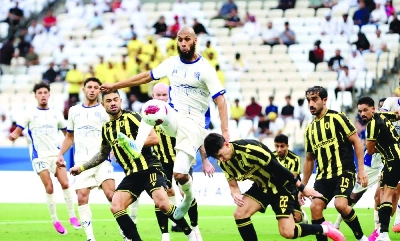
Twelve days ago, Qatar were celebrating a historic milestone. A dramatic stoppage-time equaliser against Switzerland had secured the Asian champions their first-ever FIFA World Cup point and kept alive hopes of reaching the knockout rounds in what would have been one of the greatest achievements in the nation's football history. That optimism now feels a distant memory. Two defeats later, Qatar's World Cup campaign is over after a humiliating 6-0 loss to co-hosts Canada in Vancouver which was followed by a 3-1 defeat to Bosnia and Herzegovina in Seattle on Wednesday. **media[461020]** Needing not only a victory but a convincing one to stand any chance of progressing as one of the tournament's best third-placed teams, Julen Lopetegui's side instead found themselves chasing the game for long periods. The Spaniard made several changes following the Canada defeat, with veteran Hassan al-Haydos returning to captain the side in place of Yusuf Abdurisag. Issa Laidouni was deployed in defence, while Karim Boudiaf started in midfield. Pedro Miguel returned at right-back and Ahmed Fathy and Sultan al-Braik came into the starting line-up following the suspensions of Assim Madibo and Homam al-Amin. But the reshuffle did little to stem Bosnia's momentum. Bosnia flew out of the blocks and could have been ahead inside the opening minutes, forcing goalkeeper Mahmoud Abunada into a series of saves. Qatar struggled to contain the Europeans' intensity and fell behind in the 29th minute when 18-year-old Kerim Alajbegovic produced a moment of individual brilliance, weaving past several defenders before unleashing an unstoppable strike into the top corner. Things went from bad to worse 10 minutes later. A deep cross from Sead Kolasinac found captain Edin Dzeko at the far post and, on his 150th appearance for Bosnia, the veteran striker volleyed the ball back across goal, with a deflection off al-Braik resulting in an unfortunate own goal. **media[461018]** At 2-0 down and staring at elimination, Qatar finally showed signs of life. Al-Haydos – Qatar’s most-capped player – reduced the deficit just before the break with a close-range finish, after a pass from Edmilson Junior, to offer a glimmer of hope. Qatar nearly found an equaliser in stoppage time when Pedro Miguel struck the post, but it proved to be their best chance of a comeback. Bosnia remained in control throughout the second half. While Qatar pushed forward in search of a route back into the contest, the Bosnians looked the more threatening side. Qatar's hopes suffered another blow when al-Haydos was forced off injured in the 55th minute, bringing a disappointing end to what is almost certainly his final international appearance. **media[461019]** The contest effectively ended when Ermin Mahmic struck 10 minutes from time to make it 3-1, sparking wild celebrations among the Bosnian players and supporters. As the final whistle sounded, Qatar's players sank to the turf in disappointment while Lopetegui moved from one player to another, offering words of encouragement and consolation. The defeat not only ended Qatar's hopes of advancing from Group B but also extended an unwanted record. Despite arriving in North America as back-to-back Asian Cup champions, the 2022 World Cup hosts remain without a victory on football's biggest stage, having failed to win any of their six World Cup matches across two tournaments. For a team that briefly dared to dream after holding Switzerland – arguably the toughest side in the group – the campaign ultimately ended not with a charge towards history, but with a sobering reminder of the gap that remains at the highest level. 

Gulf Times
Qatar

QU announces minimum admission requirements for undergraduate programs starting Fall 2027

Qatar University (QU) announced its new minimum admission requirements for undergraduate programs, setting the minimum high school average at 75 percent, with the changes set to take effect starting in the Fall 2027 semester.Under the updated requirements, the minimum admission average for the College of Medicine and the College of Dental Medicine will remain at 90 percent, while the minimum requirement for the College of Pharmacy will remain at 80 percent.The minimum admission average for all other colleges has been set at 75 percent.Meeting the minimum required average does not guarantee admission, as applicants must also satisfy all other admission requirements, including completing any standardized tests required by their respective colleges.QU emphasizes that the changes will not affect students applying before the new requirements come into effect. The update is part of the University's regular review of admission policies and procedures and is being announced well in advance to provide students and parents with ample time to plan and prepare for university admission requirements.The new requirements will apply to students enrolling beginning in the Fall 2027 semester (August 2027).The early announcement is intended to provide high school students with greater clarity regarding future admission requirements and to enable them to plan their academic pathways at an early stage.QU also reaffirms its commitment to providing students and parents with the information and guidance needed to navigate the admission process and encourages everyone to follow the University's official channels for any updates or additional details. The update comes as part of QU's ongoing efforts to develop its admission policies in line with its academic objectives and educational mission.

Gulf Times
Qatar

Qatar Armed Forces graduate 15th Military Science Diploma cohort

Qatar's Candidate Training Center has graduated the 15th cohort of its Military Science Diploma program for university graduates during a ceremony held under the patronage of HE Deputy Prime Minister and Minister of State for Defense Affairs Sheikh Saoud bin Abdulrahman bin Hassan Al-Thani.The event was attended by HE Chief of Staff of the Qatar Armed Forces, Lt Gen (Pilot) Jassim bin Mohammed Al Mannai, along with senior military officials.The nine-month program provided candidates with military training, field exercises, awareness lectures and joint exercises with various armed forces units, aimed at developing their combat and leadership capabilities.At the conclusion of the ceremony, HE the Chief of Staff presented graduation certificates to the participants.Among those attending were Major General (Pilot) Salem Abdullah Al Dosari, Deputy Chief of Staff for Education; Major General (Engineer/Air) Adel Hassan Fakhro, Chief of the Education Authority; Brigadier General (Dr.) Mohammed Abdullah Al Henzab, Commander of the Candidate Training Center, and a number of senior officers from the Qatar Armed Forces.

Gulf Times
Qatar

Qatar Post showcases e-commerce strategy at Arab Postal Leaders Forum

Qatar Postal Services Company (Qatar Post) has outlined its vision for the future of postal services amid the rapid shift towards e-commerce during the Third Arab Postal Leaders Forum in Rabat, Morocco.The two-day forum, held under the theme "Transforming Postal Supply Chains and Digital Trade Networks for an E-Commerce-Driven Future", brought together senior postal and logistics leaders and experts from across the region and beyond.Qatar Post stressed the importance of developing modern, digital-driven operating models and redesigning supply chains to meet the demands of the digital economy.During the forum's opening session, CEO of Qatar Post Hassan Jasim Al Sayed delivered a presentation on reinventing postal networks for the e-commerce economy. He highlighted the need for postal networks to evolve into integrated logistics ecosystems focused on parcel delivery and digital trade services, supported by digital transformation, automation and upgraded operational infrastructure.Qatar Post said its participation reflects its ongoing commitment to developing the postal and logistics sector, strengthening regional and international cooperation, and supporting the growth of a modern digital ecosystem capable of keeping pace with the rapidly evolving e-commerce industry.