tag

Saturday, April 25, 2026 | Daily Newspaper published by GPPC Doha, Qatar.

Tag Results for "#talks" (20 articles)

Gulf Times
International

Pakistan voices hope for constructive US-Iran engagement in Islamabad talks

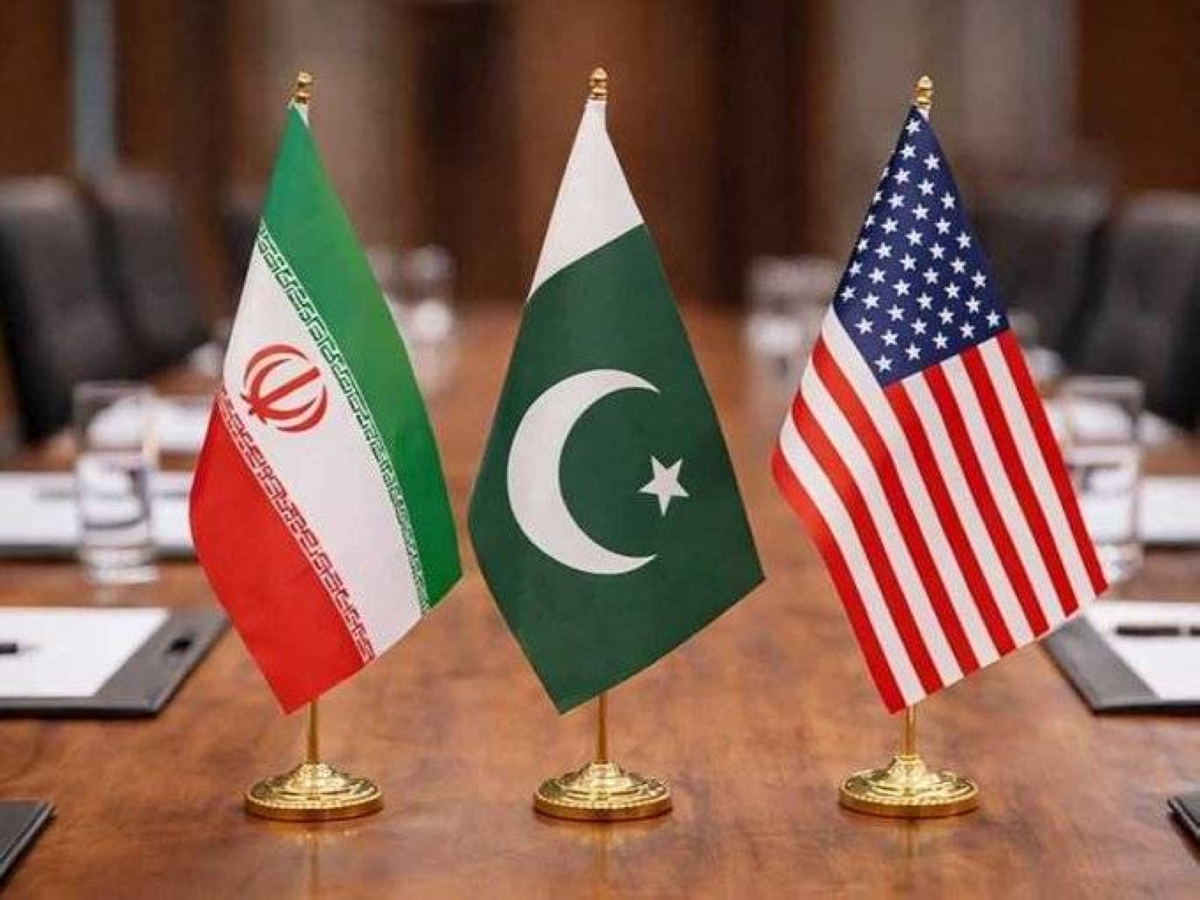
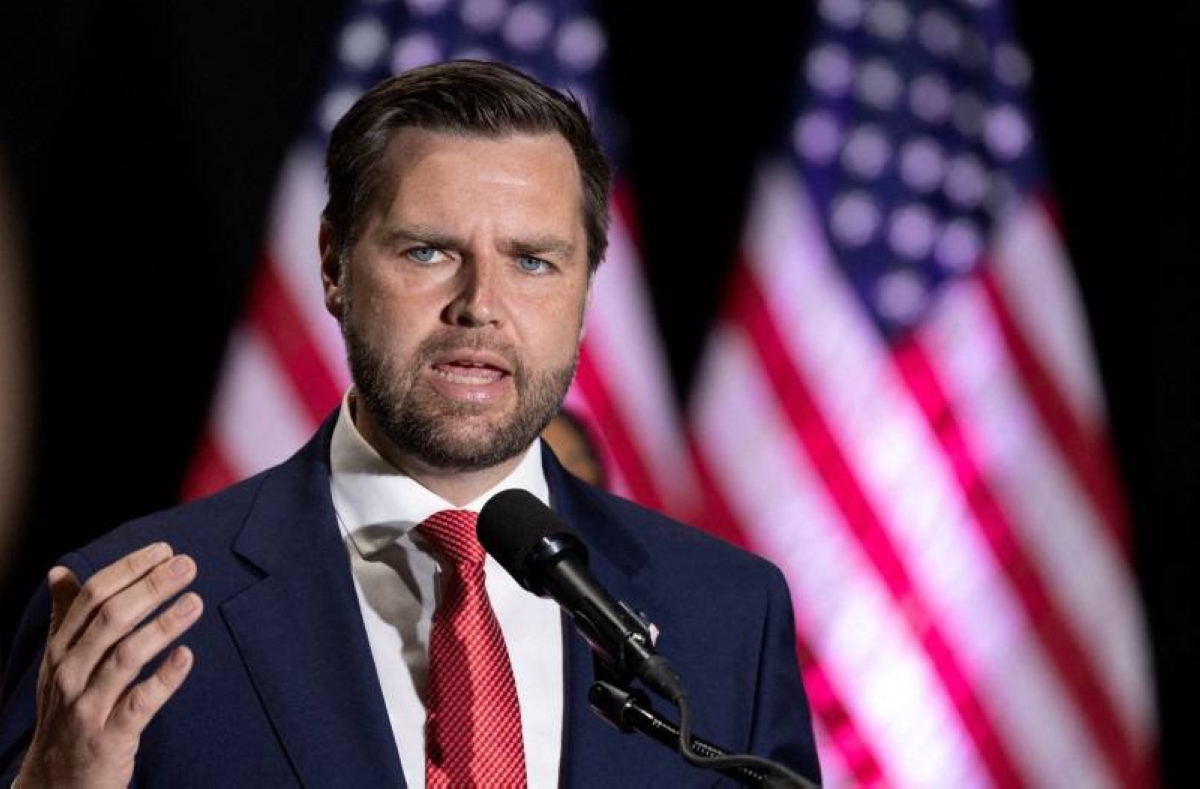
Pakistan on Saturday expressed hope that the United States and Iran would engage constructively in talks hosted in Islamabad, aimed at easing regional tensions.Pakistan's Foreign Minister Ishaq Dar said in a statement that Pakistan remains committed to facilitating dialogue between the parties to help achieve a lasting and sustainable resolution.A high-level US delegation, led by Vice President JD Vance and including Special Envoy Steve Witkoff and Jared Kushner, arrived in Islamabad to take part in talks scheduled for later on Saturday.On the Iranian side, the delegation is headed by Parliament Speaker Mohammad Bagher Ghalibaf and Foreign Minister Abbas Araghchi.The talks follow a recently announced ceasefire agreement between the United States and Iran after weeks of heightened tensions since late February, in a move aimed at de-escalating the situation and safeguarding energy flows through the Strait of Hormuz. 

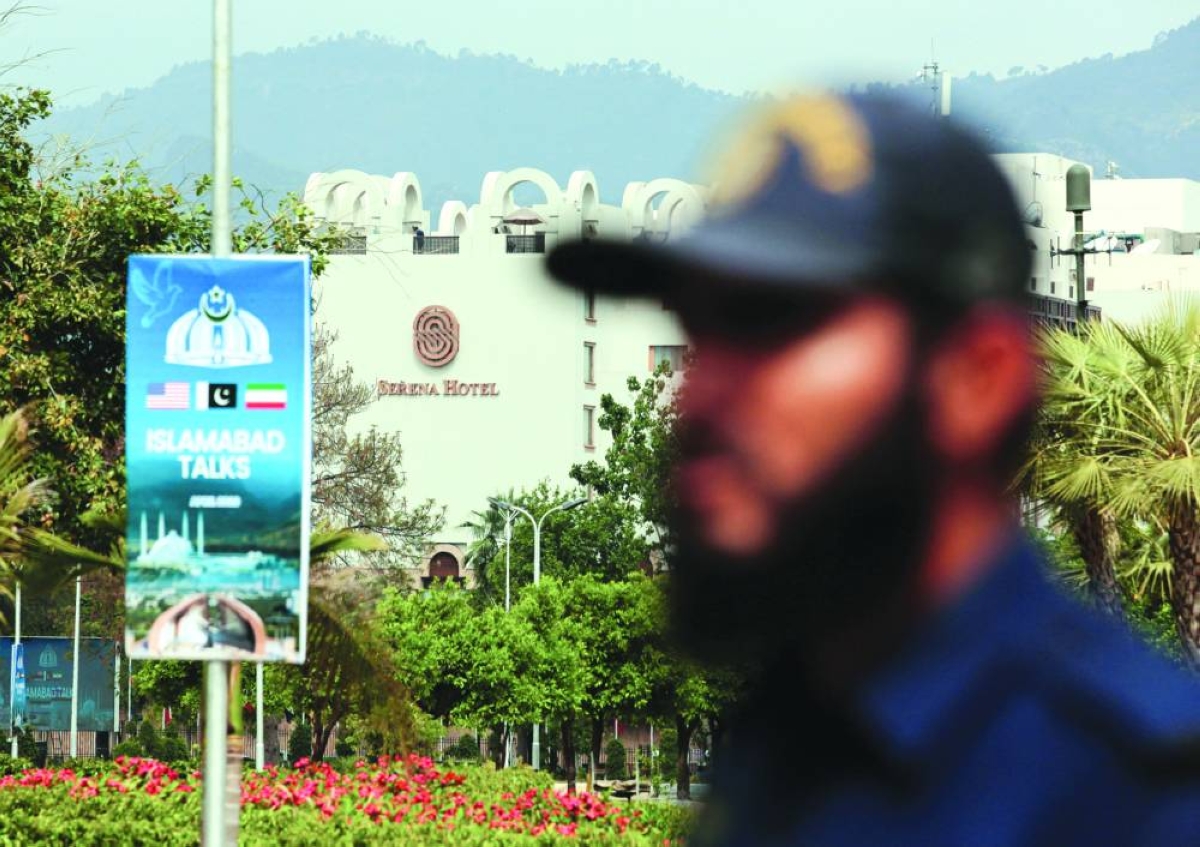
A security officer stands guard outside the media centre near the road leading to Serena Hotel in Islamabad. – Reuters
International

Five-star hotel becomes unlikely site for US-Iran talks

The luxury five-star Serena Hotel in Pakistan's capital has become the unlikely venue for peace talks aimed at ending the Iran war, cementing its status as one of Islamabad's most heavily fortified buildings.The city is under unprecedented security ahead of the talks, with shops and offices shut for two days ahead of the arrival of US Vice-President JD Vance, who is leading the American delegation, and senior Iranian officials.**media[434464]**Thousands of security personnel, including paramilitary and army troops, have set up checkpoints and blockades across the capital, cordoning off the Red Zone where government offices and embassies are located.**media[434465]**The Serena may appear to be an odd choice to host the high-stakes talks, particularly since Islamabad's worst militant attack took place in 2008 at the nearby Marriott hotel, but its picturesque grounds and Moorish architecture belie what security officials describe as a well-oiled security setup.They and former police chiefs pointed to its strategic location close to the diplomatic zone and years of maintaining the safety of high-profile guests."Its security staff is well trained as most of them are retired security officials," said former Islamabad police chief Tahir Alam Khan. "The entry and exit points are at an adequate distance from the main compound, which enhances its security.”“And the most important factor is its smooth access from the important places such as the Prime Minister's House, Parliament House,” he added.A government security source said the hotel's 15-acre premises – which include over 400 rooms, multiple banquet halls, conference rooms and an office complex – can house hundreds of guests, ideal for the US and Iran delegations which comprise more than 150 people."It has multi-layered, strict security checks... lastly it has strong co-ordination with the state's security agencies," said Kaleem Imam, another former police chief. 

Gulf Times
International

What is at stake in the Islamabad talks

The US and Iran are set to hold peace talks in Pakistan, which has been mediating, but remain deeply divided on key issues, even though President Donald Trump has said proposals presented by Tehran were a "basis" for talks. Each side is sticking to competing demands for a deal to end the war, with the fate of shipping access through the Strait of Hormuz and Israel's war in Lebanon key issues to resolve. How the talks progress could shape the Middle East for generations. Where do both sides stand?An Iranian delegation is due in Islamabad for talks based on a 10-point proposal, which ⁠shows little overlap with a 15-point plan Washington previously put forward, suggesting there will be major gaps to bridge. For example, Iran's proposal includes a demand to enrich uranium, which Washington previously ruled out and Trump has insisted ⁠is non-negotiable. The 10 points also do not address Iran's missile capabilities, which Israel and the US have both said must be dramatically curtailed. Tehran has said its formidable missile arsenal is non-negotiable, although it is unclear how many of those weapons remain after the war. One Pakistani official in the region said Iran could expect to secure many of its demands, with a focus on reconstruction, reparations and sanctions relief, but could not expect to secure an agreement on uranium enrichment. What will top the agenda? Previous talks have focused on Iran's nuclear programme and missiles. Those issues have now been overshadowed by the fate of the Strait of Hormuz, a chokepoint through which a fifth of the world's oil and liquefied natural gas flows. Iran's effective closure of the waterway since the beginning of the war on February 28 has rattled the global economy, pushing up oil prices. Tehran has indicated that under a permanent peace deal, ⁠it would seek to charge a fee for ships transiting the strait, which is just 34 km (wide at its narrowest point between Iran and Oman. Trump had threatened to devastate Iran if Tehran did not agree to a ceasefire deal and to reopen the strait. There was no sign Iran had lifted its blockade of the waterway, which has caused the worst disruption to global energy supplies in history, and Tehran said there would be no deal as long as Israel was striking Lebanon. How do Iran and US plans compare? Iran's Supreme National Security Council said in a statement that Washington had agreed to accept Iran's 10-point plan and that "the United States has, in principle, committed to": non-aggression; continued Iranian control over the Strait of Hormuz; acceptance of enrichment; lifting all primary and secondary sanctions; termination of all resolutions passed by the UN Security Council and Board of Governors of the International Atomic Energy Agency; withdrawal of US combat forces from the region; and cessation of war on all fronts, including against the Islamic resistance in Lebanon. According to Israeli sources, Trump's ⁠15-point proposal, previously sent to Iran via Pakistan, called for removing Iran's stocks of highly enriched uranium, halting enrichment, curbing its ballistic missile ⁠programme and cutting off funding for regional allies.As the two ⁠sides prepare to hold negotiations, Trump vowed to retain military assets in the Middle East until a peace deal with Iran is reached and warned of a major escalation in fighting if it failed to comply. What are the chances of reaching a lasting settlement?Although Trump has declared victory, Washington did not achieve the aims he had announced to justify the war at its outset: to eliminate Iran's ability to attack its neighbours, destroy its nuclear programme and create conditions that would make it easier for Iranians to topple their government. Iran is unlikely to make major concessions on those points and it has indicated it can patiently keep on fighting, with the Strait of Hormuz giving it economic leverage over an enemy with superior firepower. What is Israel's position and where does Lebanon fit in?Israel, which has been pounding Iran's ally Hezbollah in Lebanon in a parallel conflict, sees Tehran as an existential threat. Israeli Prime Minister Benjamin Netanyahu would like regime change in Iran even though that would probably require boots on the ground and there are no guarantees of stability afterwards. The question of whether the ceasefire covers Israel's war against Hezbollah has become a sticking point that threatens the truce. The US and Israel say Lebanon is not included in the agreement, while Iranian President Masoud Pezeshkian has said a halt in hostilities in Lebanon was an essential condition of Tehran's deal with Washington. Israel said it had agreed to a ceasefire with Iran, but said the deal did not include halting military action in Lebanon.

 Kuomintang Chairperson Cheng Li-wun (left) sitting in the cockpit of a display aircraft with Song Tao, Director of the Taiwan Work Office of the Communist Party of China Central Committee and Taiwan Affairs Office of the State Council, during a visit to the Commercial Aircraft Corporation of China in Shanghai. (AFP)
International

Taiwan opposition leader talks peace with China as her party skips defence talks in Taipei

Birds not missiles ‌should fly in the skies, Taiwan opposition leader Cheng Li-wun said Thursday in ​Shanghai in a plea for ‌peace, as government lawmakers in Taipei expressed anger at her party for ‌skipping crucial defence budget ⁠talks.Cheng, chairwoman of ‌Taiwan's largest opposition party, the Kuomintang (KMT), is ‌in China on what she has called a "peace" mission to lessen tensions at a time ⁠when Beijing has stepped up military pressure against the island it calls its own. China refuses to talk to Taiwan President Lai Ching-te, saying he is a "separatist". Lai's administration has called on Cheng to tell China to stop its threats, and says Beijing should engage with the democratically elected government in Taipei.Speaking to reporters at Shanghai's Yangshan Port, Cheng said she was fond of how ancient Norse sailors described the sea as the "road ​of the whale"."These words are spoken with such humility, and they are entirely right. What should fly in the sky are birds, not missiles. What should swim in the water are fish, ‌not warships," she said, in comments carried ⁠live on Taiwanese ​television stations.Cheng, who flies to Beijing later Thursday for a possible meeting ​with Chinese President Xi Jinping, also quoted, in English, part of John McCrae's World War One poem "In Flanders Fields" — "If ye break faith with us who die, We shall not sleep"."We may not have been able to give our ancestors peace, but we can certainly still give peace to the people of today and the people of the future," she said.In Taipei, lawmakers from the ruling Democratic Progressive Party (DPP) condemned the KMT for skipping talks in parliament on how to progress with stalled plans to spend an extra $40bn on defence."Don't intentionally put this off because ‌of the meeting with Xi Jinping tomorrow. ‌Don't link this to the ⁠Chinese communists," said the DPP's Chen Kuan-ting, who is joint head of the defence and foreign ⁠affairs committee.Neither China nor the KMT ⁠has confirmed Cheng is meeting Xi today.The KMT, which says it supports the defence spending but will not sign "blank cheques", said in response that Cheng's "Peace Visit to the Mainland has no connection whatsoever with the special defence budget".Liang Wen-chieh, spokesperson for Taiwan's China-policy-making Mainland Affairs Council, said he hoped Cheng could tell China to stop military harassment and to respect the Taiwanese ​people's wish to determine their own future.Beijing has maintained its daily military activities around Taiwan despite Cheng's presence in China. Taiwan's defence ministry said Thursday morning that during the previous 24-hour period it had detected six Chinese military aircraft and eight warships around the island."The facts prove that the Chinese communists' military threat against Taiwan is intensifying," DPP spokesperson and lawmaker Michelle Lin wrote on her Facebook page."Cheng Li-wun has been on her trip for two days, and the Chinese communists still have a knife at Taiwan's throat."Lai has repeatedly ‌offered talks with ​Beijing, whose sovereignty claims he rejects, saying only the island's people can decide their future. 

Gulf Times
International

Pakistan to host US-Iran peace talks Friday following ceasefire

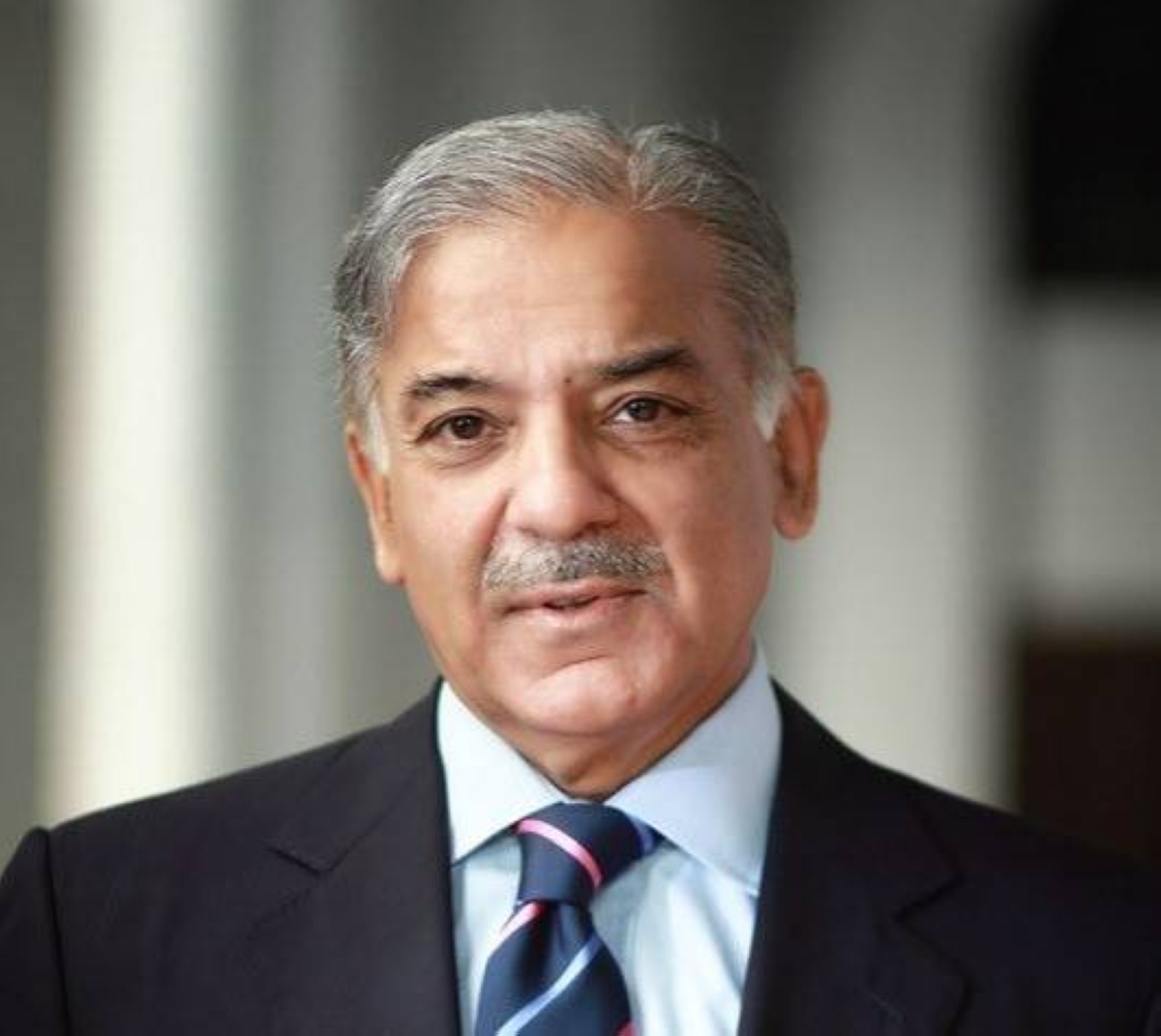
Pakistani Prime Minister Muhammad Shehbaz Sharif announced Wednesday that Islamabad will host high-level delegations from the United States and Iran on Friday to negotiate a definitive peace agreement."I am pleased to announce that the Islamic Republic of Iran and the United States, along with their allies, have agreed to an immediate ceasefire in all theaters, including Lebanon and elsewhere, effective immediately," Sharif posted on X.He expressed hope that the upcoming "Islamabad Talks" would achieve sustainable peace, adding, "We look forward to sharing more good news in the coming days."Late Tuesday, US President Donald Trump agreed to a two-week suspension of military operations against Iran.On Tuesday, Pakistani Prime Minister Shehbaz Sharif urged US President Donald Trump to extend the deadline for Iran to reach an agreement by two weeks. He also encouraged Iran to reopen the Strait of Hormuz during this period as a gesture of goodwill, amid intensified diplomatic efforts to secure a peaceful resolution to the ongoing conflict.

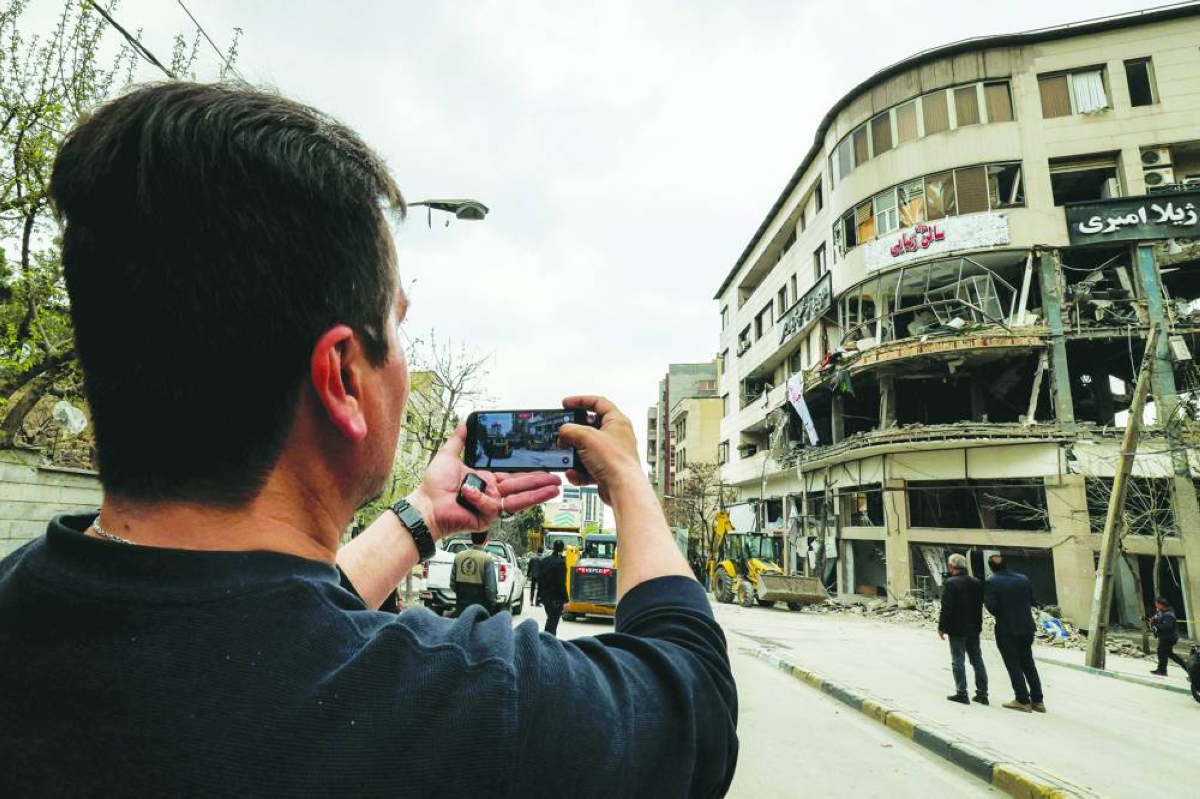
A man films with a phone from the street the destruction on an office building that housed the Tehran offices of the Al Araby TV network, following a missile strike earlier in the day. – AFP
International

Pakistan hosts regional powers for Iran talks

Iran has said that it is ready to respond to any US ground attack, accusing Washington of preparing a land assault while seeking talks, as regional powers met in Pakistan Sunday to try to bring the two sides together.The initial discussions in Islamabad with Saudi Arabia, Turkiye and Egypt focused on proposals to reopen the Strait of Hormuz to shipping, sources familiar with the matter said.More talks will be held today.Iran's effective blockade of oil and gas shipments through the strait since the US and Israel began attacking the country on February 28 is spreading economic pain around the world.Food and energy security and supply chains were among issues discussed in Pakistan, Egypt's foreign ministry said.As the conflict entered its second month, Israel's military said it had launched over 140 air strikes on central and western Iran, including Tehran, over the 24 hours to evening Sunday, hitting ballistic missile launch sites and storage facilities, among other targets.A chemical plant in southern Israel near the city of Beer Sheva was hit by a missile or missile debris as Israel fended off multiple salvos from Iran, prompting official warnings to the public to stay away due to "hazardous materials".Another missile hit open ground near homes in Beer Sheva, located near several military bases, injuring 11 people.The war has killed thousands of people and affected countries across the Middle East, with major aluminium plants in Bahrain and the United Arab Emirates damaged by air strikes over the weekend.The UAE, which has faced more Iranian missile and drone attacks than any other country, is seeking reparations from Iran for attacks on civilians and vital facilities and clear guarantees to prevent any repetition, an adviser to the president said.Pakistan has offered to host peace talks, but the United States, Israel and Iran have set out maximalist positions to end the warfare, complicating the path to a solution.Iran's parliament speaker Mohammad Baqer Qalibaf accused the US of sending messages about possible negotiations while at the same time planning to send in troops, adding that Tehran is ready to respond if US soldiers were deployed."The enemy publicly sends messages of negotiation and dialogue while secretly planning a ground attack," he said in a statement carried by the official IRNA news agency. "Our men are waiting for the arrival of the American soldiers on the ground to set them on fire and punish their regional allies once and for all.""As long as the Americans seek Iran's surrender, our response is that we will never accept humiliation," Qalibaf added.Yemen's Iran-aligned Houthis joined the conflict on Saturday, launching their first attacks on Israel and raising the prospect that they could target and thus block a second key shipping route, the Bab el-Mandeb Strait.Analysts say renewed attacks there would pile further pressure on the world economy.Washington has dispatched thousands of Marines to the Middle East, with the first of two contingents arriving on Friday aboard an amphibious assault ship, the US military has said.The *Washington Post quoted US officials as saying that the Pentagon was preparing for weeks of ground operations in Iran, adding that it was not yet clear if President Donald Trump would approve such plans.Reuters has reported that the Pentagon has considered military options that could include ground forces.Trump faces a stark choice between seeking a negotiated exit or escalating militarily that risks a protracted crisis, and would likely weigh further on his already low approval ratings."President Trump has poor options all around to end the war," said Jonathan Panikoff, former US deputy national intelligence officer for the Middle East. "Part of the challenge is the lack of clarity related to what a satisfactory outcome would be."Washington said last week that it had offered a 15-point ceasefire plan, with a proposal to reopen the Strait of Hormuz and restrict Iran's nuclear programme, but Tehran has rejected the list and put forward proposals of its own.An Israeli official said Israel would continue carrying out strikes against Iran on what were described as military targets, adding that there is no intention to scale back the campaign ahead of any possible talks between Washington and Tehran.Weeks of unrelenting strikes have taken a heavy toll on ordinary people in the country."I miss a peaceful night's sleep," an artist in Tehran told AFP, adding that night-time strikes were "so intense it felt like all of Tehran was shaking".Farzaneh, a 62-year-old woman in Iran's western city of Ahvaz contacted by AFP from Paris, said: "People wake up each day worried about an uncertain future."A university in Iran's central city of Isfahan said it was hit by US-Israeli airstrikes Sunday for the second time since the war erupted.A building housing Al Araby TV in Tehran was hit Sunday, the semi-official Mehr news agency reported, with video showing walls and windows blown out of the multi-storey block."The missile hit. The ceiling and everything fell on our heads. Unfortunately, we couldn't continue to work. It was a real miracle we survived," said Al Araby camera operator Mohammadreza Shademan. "There was no military target here."With US midterm elections due in November, the increasingly unpopular war has weighed on Trump's Republican Party.Demonstrators took to city streets across the US on Saturday in protests against the conflict.Trump has threatened to hit power stations and other energy infrastructure if Iran does not open the Strait of Hormuz, though he has extended a deadline by 10 days through April 6.A European diplomat warned that any further military escalation could make it harder to bring the two sides together, potentially delaying the possibility by weeks, if not longer.Iranian threats against ships have kept most oil tankers from attempting the waterway.Iran has agreed to let an additional 20 Pakistani-flagged vessels pass through the strait, with two ships permitted to transit daily, Pakistan's Foreign Minister Ishaq Dar has said, calling it a "harbinger of peace". 

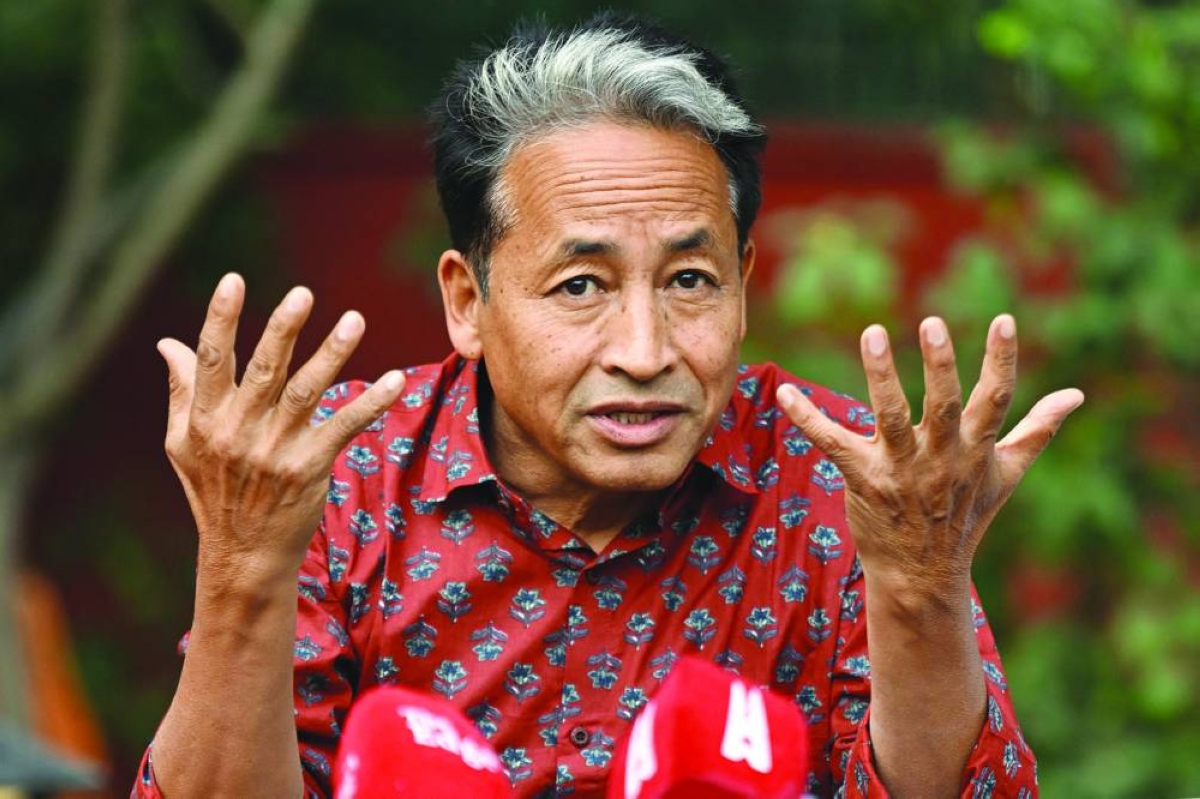
Environmental activist and former detainee Sonam Wangchuk addresses a press conference in New Delhi Tuesday. (AFP)
International

Freed Ladakh activist renews calls for talks with Indian govt

Prominent Ladakh activist Sonam Wangchuk called for fresh talks Tuesday with India's government, just days after being released from prison where he had been held for six months over deadly protests in the Himalayan region.Wangchuk, 59, an environmental advocate who became a key figure in Ladakh's movement for greater autonomy, was arrested and charged in September under India's National Security Act following protests that left four people dead and dozens wounded.On Saturday, India's home ministry said it had decided to end Wangchuk's detention "with immediate effect" after "due consideration".Wangchuk told reporters Tuesday the government had offered "constructive meaningful dialogue", and that is "what we wanted right from the start.""Talk(s) are a give and take process, both sides have to be flexible," the 59-year-old said, adding that it should not be a "loss" for one side.On Monday, several thousands rallied in Ladakh repeating long standing demands for statehood and the inclusion in the "Sixth Schedule" of India's constitution, which would allow a local legislature to make laws on land use and jobs.Wangchuk said "all movements in Ladakh are appealing to start talks and dialogue process", including Monday's demonstrations.An engineer by training, Wangchuk is best known for pioneering water conservation projects in the Himalayas.He received the prestigious Ramon Magsaysay Award in 2018 for his environmental work and contributions to reforming local schooling in Ladakh.India's government under Narendra Modi split Ladakh off from Indian-administered Kashmir in 2019, imposing direct rule on both.India's army maintains a large presence in Ladakh, which includes disputed border areas with China.Troops from the two countries clashed there in 2020, killing at least 20 Indian and four Chinese soldiers. 

The foreign funds were seen net profit takers as the 20-stock Qatar Index plunged 1.91% to 11,055.18 points, although it touched an intraday high of 11,287 points.
Business

Foreign funds resort to heavy selloff as QSE index plummets 215 points; M-cap erodes QR14.04bn

Amid heightened geopolitical tensions ahead of a third round of US-Iran talks, the regional bourses, including Qatar Stock Exchange, Thursday witnessed heavy selloff, leading to its key index plummet 215 points and capitalisation erode in excess of QR14bn.The foreign funds were seen net profit takers as the 20-stock Qatar Index plunged 1.91% to 11,055.18 points, although it touched an intraday high of 11,287 points.The real estate, banking and telecom counters witnessed higher than average selling pressure in the main market, whose year-to-date gains truncated further to 2.72%.About 76% of the traded constituents were in the red in the main bourse, whose capitalisation eroded QR14.04bn or 2.09% to QR658.18bn mainly on account of large and midcap segments.The Gulf institutions were seen increasingly net profit takers in the main bourse, whose trade turnover and volumes were on the rise.However, the local retail investors turned bullish in the main market, which saw 0.01mn exchange traded funds (sponsored by AlRayan Bank and Doha Bank) valued at QR0.06mn trade across 14 deals.The domestic funds were increasingly net buyers in the main bourse, which saw no trading of sovereign bonds.The Islamic index was seen declining faster than the other indices of the main market, which saw no trading of treasury bills.The Total Return Index tanked 1.86%, the All Share Index by 1.87% and the All Islamic Index by 1.98% in the main bourse.The realty sector index plummeted 3.77%, banks and financial services (2.44%), telecom (1.97%), consumer goods and services (1.8%), industrials (0.75%), and transport (0.66%); while insurance gained 0.79%.As many as 41 declined, while only 12 gained and one was unchanged.Major shakers in the main market included Ezdan, Barwa, Lesha Bank, Qatar Oman Investment, Qamco, QNB, Qatar Islamic Bank, AlRayan Bank, Medicare Group, Woqod, Mannai Corporation, Estithmar Holding, Ooredoo and Gulf Warehousing.In the juniour bourse, Techno Q saw its shares depreciate in value.Nevertheless, Beema, Qatar General Insurance and Reinsurance, Meeza, Qatar National Cement and Qatar Insurance were among the gainers in the main market.The foreign institutions turned net sellers to the tune of QR152.91mn against net buyers of QR34.55mn on Wednesday.The Gulf institutions’ net selling increased noticeably to QR19.19mn compared to QR7.32mn the previous day.The foreign individual investors’ net buying weakened marginally to QR1.3mn against QR2.2mn on February 25.However, the local individuals were net buyers to the extent of QR119.35mn compared with net sellers of QR6.19mn on Wednesday.The domestic funds turned net buyers to the tune of QR33.53mn against net profit takers of QR18.03mn the previous day.The Arab individuals were net buyers to the extent of QR14.7mn compared with net sellers of QR2.94mn on February 25.The Gulf retail investors turned net buyers to the tune of QR3.23mn against net profit takers of QR2.27mn on Wednesday.The Arab funds had no major net exposure for the fourth consecutive session.The main market saw more than doubling of trade volumes at 346.75mn shares and almost tripling of value to QR1.18bn on 76% surge in deals to 42,291.In the venture market, as many as 7,000 equities valued at QR0.01mn changed hands across one transaction. 

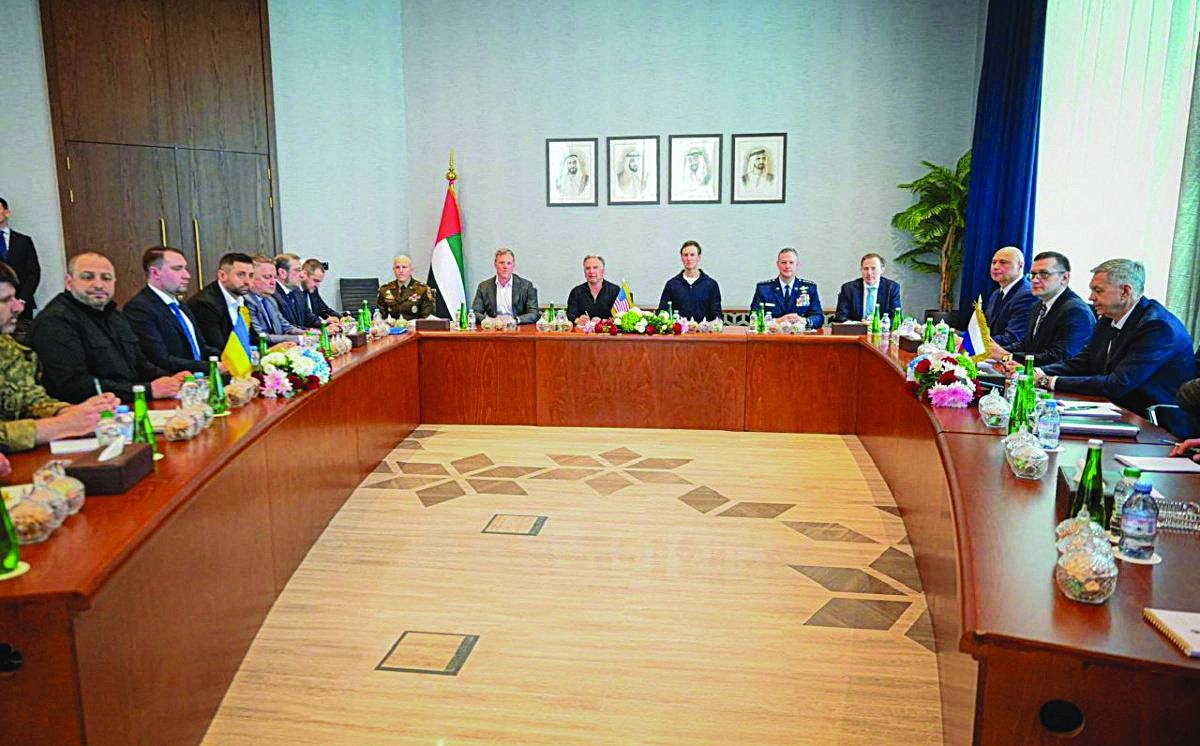
Members of the US, Russian and Ukrainian delegations attend the second round of trilateral talks in Abu Dhabi, Wednesday. Ukrainian and Russian officials wrapped up a “productive” first day of new US-brokered talks, Kyiv’s lead ‌negotiator said, as fighting in Europe’s biggest conflict since World War Two ‌raged on. - Reuters
International

Ukraine, Russia wrap up ‘productive’ first day of US-backed peace talks

Ukrainian and Russian officials wrapped up a “productive” first day of new US-brokered talks in Abu Dhabi, Kyiv’s lead ‌negotiator said Wednesday, as fighting in Europe’s biggest conflict since World War Two ‌raged on. The two-day trilateral meetings come after ‍Ukraine’s President Volodymyr Zelensky said Russia had exploited a US-backed energy truce last week to stockpile munitions, attacking Ukraine with a record number of ballistic missiles on Tuesday. “The work was substantive and productive, focused on concrete steps and practical solutions,” Rustem Umerov, the head of Ukraine’s National Security and Defence Council, ‍wrote on X.Shortly after the talks began, Russian forces struck a crowded market in eastern Ukraine with cluster munitions, killing at least seven people and wounding 15, the Donetsk region’s Governor Vadym Filashkin said. Umerov said he would prepare a report for Zelensky, and talks were expected to continue on Thursday, a source familiar with the matter told Reuters. Photographs released earlier in the day by the United Arab Emirates’ foreign ministry showed the three delegations sitting around a U-shaped table, with US officials seated at the centre, ‌including special envoy Steve Witkoff and US President Donald Trump’s son-in-law Jared Kushner. Trump’s administration has pushed both Kyiv and Moscow to find a compromise to end the four-year-old war, but the two sides remain far ‍apart on key points despite several rounds of talks with US ‌officials. The most sensitive issues are Moscow’s demands that Kyiv give up land it still controls and the fate of the Zaporizhzhia nuclear power plant, Europe’s largest, which sits in a Russian-occupied area. Moscow wants Kyiv to pull its troops out of all of the Donetsk region, including a belt of heavily fortified cities regarded as one of Ukraine’s strongest defences, as a precondition for any deal. Ukraine said the conflict should be frozen along the current front line and has rejected any unilateral pullback of its forces. Kremlin spokesperson Dmitry Peskov said on Wednesday that Russian troops would keep fighting until Kyiv made “decisions” that could bring the war to an end. Russia currently occupies about 20% of Ukraine’s national territory, including Crimea and parts of the eastern Donbas region seized before the 2022 invasion. Analysts say Russia ​has gained about 1.5% of Ukrainian territory since ‌early 2024. “Russia is not winning its war against Ukraine,” Ukrainian Foreign Minister Andrii Sybiha told online media outlet Liga on Tuesday. He argued that Moscow was paying a heavy price in termsof ‍battlefield casualties and economic harm for small territorial advances. Polls show that the majority of Ukrainians oppose a deal that hands Moscow more land. Kyiv residents told Reuters on Wednesday they were sceptical that the new round of talks would bring any major breakthroughs. “Let’s hope that it will change (something), of course. But I don’t believe it will change anything now,” Serhii, 38, a taxi driver, told Reuters. “We will not give in, and ​they will not give in either.” The first round of talks was held in the UAE last month, marking the first direct public negotiations between Moscow and Kyiv. Chinese President Xi Jinping and Russian President Vladimir Putin hailed their ties during a video call on Wednesday held in the run-up to the fourth anniversary of Moscow’s war in Ukraine. 

Gulf Times
Qatar

Qatar engaged with Iran to de-escalate tensions

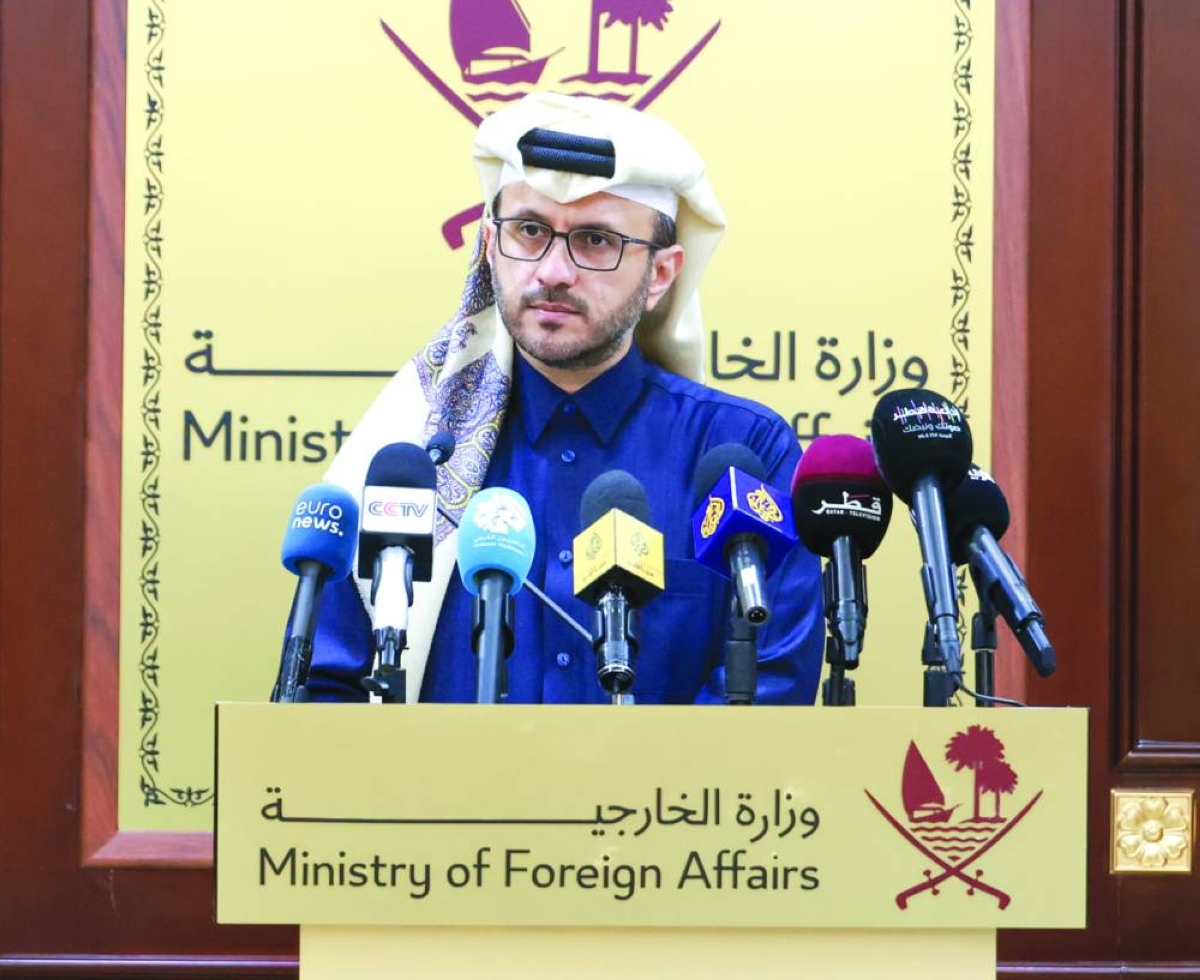
His Excellency Dr Majed Mohamed al-Ansari, Advisor to the Prime Minister and Official Spokesperson of the Ministry of Foreign Affairs (MOFA), Tuesday disclosed that diplomatic talks and high-level visits between Qatar and Iran leaderships were ongoing to de-escalate the situation and maintain regional stability.Speaking at Tuesday's MoFA weekly briefing, Dr al-Ansari stressed that all regional and international stakeholders are engaged in continuous discussions aimed at returning to diplomatic solutions and the negotiating table. The goal is to prevent any escalation and preserve stability and peace across the region.Qatar, he said, has consistently implemented all necessary precautionary measures to safeguard its security, sovereignty and citizens amid potential regional escalations. Prolonged disputes and rising tensions serve no-one's interests, particularly given Iran's status as a neighbour with shared historical ties. A tense regional future would harm everyone involved.Dr al-Ansari noted that all parties — including Iran, the US and Turkiye — are collaborating closely with Qatar, which has always prioritised diplomatic and peaceful dispute resolution for the benefit of all.On the Gaza Strip, he emphasised the urgent need to fully reopen the Rafah Crossing to enable free movement for Palestinians seeking treatment, education and other humanitarian needs. The crossing must also stay open for aid deliveries, as humanitarian issues should remain separate from political disputes.While welcoming the partial reopening as a positive development, Dr al-Ansari said it falls far short of requirements. Over 20,000 patients urgently require medical care but cannot access it due to the ongoing standoff.Qatar, he added, is working tirelessly with partners — including Egypt, the US, the European Union and various international entities — to alleviate suffering and halt what he termed a "full crime against humanity."Addressing repeated accusations against Qatar from Israeli Knesset members, Dr al-Ansari declared: "We completely reject all attempts to use Qatar's name in the internal political conflicts of the Israeli government."He pointed out that Qatar's name is routinely dragged into Israel's domestic disputes, despite Qatar never attacking Israel. Israel, by contrast, launched an unprovoked assault on Qatar, killing civilians and damaging civilian infrastructure — for which its prime minister later formally apologised, pledging never to repeat such actions.Qatar, Dr al-Ansari reaffirmed, consistently promotes peace and stability while rejecting hostile posturing, having no involvement whatsoever in Israel's internal political matters. 

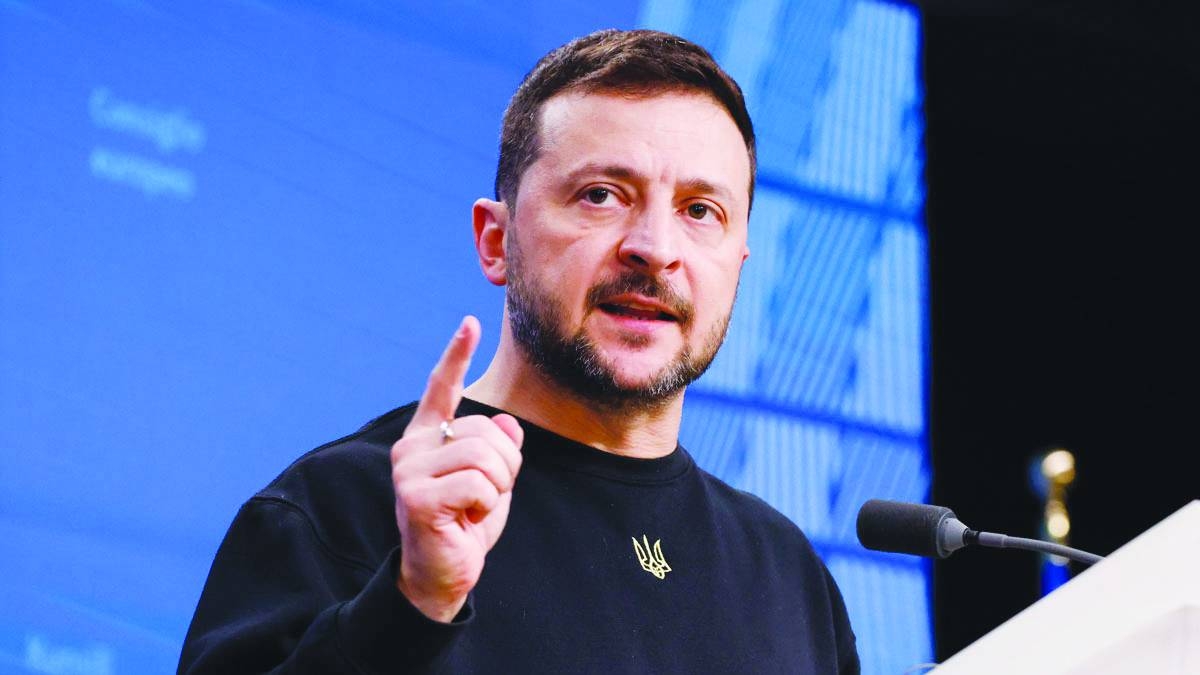
Volodymyr Zelenskiy.
International

Ukraine war talks delayed to Wednesday, says Zelensky

A second round of talks between Russian, Ukrainian and US officials on a US-drafted plan to end the nearly four-year Ukraine war will begin on Wednesday, instead of on Sunday, President Volodymyr Zelensky said.Zelensky did not give a reason for the delay.The announcement comes a day after one of Russian President Vladimir Putin's top envoys held surprise talks with US officials in Florida without Ukraine."The dates for the next trilateral meetings have been set -- February 4 and 5 in Abu Dhabi," Zelensky said in a post on X.Neither the Kremlin nor the United States have confirmed the new dates.The United States says it is close to brokering a deal to end the conflict -- Europe's deadliest since World War II -- but neither Moscow nor Kyiv have been able to find a compromise on the key issue of territory.Russia, which occupies around 20 percent of its neighbour, is pushing for full control of Ukraine's eastern Donetsk region as part of any deal. It has threatened to take it by force if talks fail.Ukraine has warned ceding ground will embolden Moscow and that it will not sign a deal that fails to deter Russia from invading again. Many Ukrainians find the idea of surrendering territory that their soldiers have defended for years unconscionable.The first round of talks on the US plan, held in Abu Dhabi last Friday and Saturday, failed to yield a breakthrough.A day ahead of Zelensky's announcement, Russia's top economic envoy Kirill Dmitriev met with US officials in Florida for separate talks on the war.Among those US officials were President Donald Trump's peace envoy Steve Witkoff, Treasury Secretary Scott Bessent, son-in-law Jared Kushner, and White House Senior Advisor Josh Gruenbaum."We are encouraged by this meeting that Russia is working toward securing peace in Ukraine," Witkoff said, though neither side released details of what was discussed.Russia invaded Ukraine in February 2022, describing it as a "special military operation" to prevent the expansion of NATO -- a war aim that Kyiv has called a pretext for an illegal land grab.The conflict has since resulted in a tidal wave of destruction that has left entire cities in ruins and tens of thousands of soldiers and civilians dead.Russian attacks on Ukraine overnight and early Sunday killed at least two people and injured seven others, regional authorities said.Among the attacks was a drone strike on a maternity hospital in the southern city of Zaporizhzhia that injured two women undergoing a medical examination, the region's governor and rescuers said.Ukraine's defence minister on Sunday thanked Elon Musk after the US tycoon said efforts to stop Russia from using Starlink satellites for drone attacks seemed to have worked."The first steps are already delivering real results... Thank you for standing with us. You are a true champion of freedom and a true friend of the Ukrainian people," said Defence Minister Mykhailo Fedorov. 

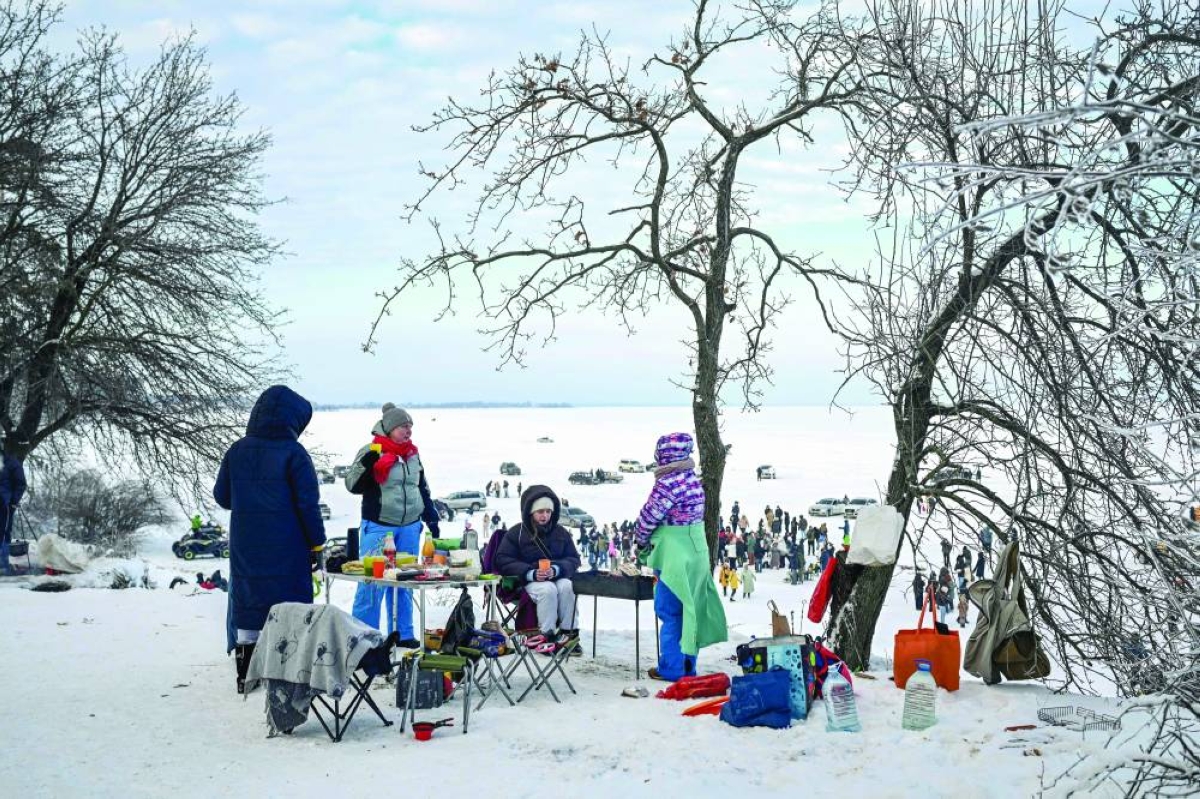
People attend an outdoor party on the frozen Kyiv Reservoir, also known as the Kyiv Sea, to stay warm and lift spirits after a night of mass Russian missile and drone attacks on the Ukrainian capital, amid the Russian invasion of Ukraine in Lyutizh Saturday. (AFP)
International

US says Russia, Ukraine took 'big step', will meet again next week

Ukraine and Russia agreed Saturday to hold a second round of US-brokered direct peace talks next weekend after a two-day meeting in Abu Dhabi, despite Ukrainian complaints negotiations were undermined by a barrage of deadly strikes.The trilateral talks in the UAE will resume on February 1, a US official said, adding: "I think getting everyone together was a big step."I think it's a confirmation of the fact that, number one, a lot of progress has been made to date in really defining the details needed to get to a conclusion."Russian and Ukrainian negotiators are last known to have met face-to-face in Istanbul last summer, in talks that ended only in deals to exchange captured soldiers.This week was the first time they have faced each other to talk about a plan being pushed by US President Donald Trump to end the nearly four-year war.Ukrainian President Volodymyr Zelensky said "a lot was discussed, and it is important that the conversations were constructive".On the eve of day two, Russian drones and missiles cut off millions from electricity in sub-zero temperatures. Kyiv accused Moscow of undermining the negotiations by launching yet another "night of Russian terror".AFP journalists saw people running through the streets to find shelter as explosions lit up the night sky over the capital Kyiv.After another sleepless night, weary Kyiv residents had little hope for a breakthrough in the nearly four-year war."They'll just say that everything is fine, that again, nothing has been agreed, and again there will be rockets," said Anastasia Tolkachov, who had to spend a night in a car park.'Again and again'A United Arab Emirates government spokesperson said the meetings, which involved top military officers from both sides, were held in a "constructive and positive atmosphere".The talks focused on "outstanding elements of the US-proposed peace framework as well as confidence-building measures", the spokesperson said.According to Zelensky, "the central focus of the discussions was the possible parameters for ending the war".Both warring sides say the fate of territory in the eastern Donbas region is the main unresolved issue in the search for a settlement.Over a million people in Kyiv and Chernigiv were left without electricity in sub-zero temperatures due to Russian strikes. About half of Kyiv's apartment blocks were cut off from heating, Ukrainian authorities said."This night in Kyiv, it's really all happening again and again," Iryna Berehova, 48, told AFP, adding: "These explosions, these sleepless nights, these worries for our children, for our safety, they are very exhausting.""These negotiations that are taking place don't even give us any hope for the better."The European Union, which has sent hundreds of power generators to Ukraine, has accused Moscow of "deliberately depriving civilians of heat".Zelensky last week declared a state of emergency in the energy sector, which has been battered by relentless Russian strikes on heat and electricity supplies.The Moscow-installed governor in the occupied Kherson region, Vladimir Saldo, said a Ukrainian drone strike killed three people in an ambulance van heading to a sick man.While diplomacy to end Europe's worst conflict since World War II has gained pace again, Moscow and Kyiv appear deadlocked over the issue of territory.Donbas territory disputeTrump met Zelensky at the World Economic Forum in Davos on Thursday and US Steve Witkoff later held talks with President Vladimir Putin in the Kremlin.Hours after Putin met Witkoff - and Trump's son-in-law Jared Kushner - in Moscow, the Kremlin said its demand that Kyiv withdraw from the eastern Donbas region still stood, calling it "a very important condition".Kyiv rejects it. "The Donbas is a key issue," Zelensky told reporters on Friday, ahead of the talks in the UAE.Zelensky said he and Trump had agreed on post-war security guarantees in Davos.An initial US draft drew heavy criticism in Kyiv and western Europe for hewing too closely to Moscow's demands, while Russia rejected later versions because they proposed European peacekeepers in Ukraine.Putin has repeatedly said Moscow intends to get full control of eastern Ukraine by force if talks fail.Trump has in the past pressured Ukraine to agree to terms that Kyiv sees as capitulation.