
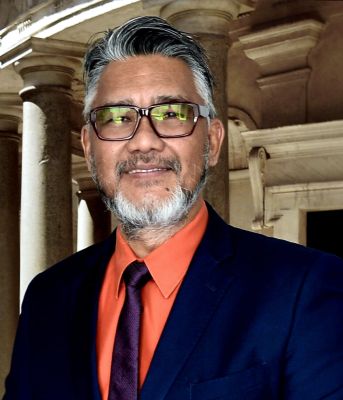


Deepening economic ties between Asia and the Middle East are accelerating Qatar’s diversification agenda, opening up two-way capital flows and multi-sector partnerships across energy transition, logistics, aviation, and digital infrastructure.
“Qatar National Vision 2030 provides a clear framework for building a more diversified and internationally competitive economy, and that creates meaningful opportunities for cross-border collaboration.
“We see strong potential in sectors such as infrastructure, technology, advanced industries, financial services and the energy transition,” HSBC co-CEO of Asia and the Middle East Surendra Rosha told Gulf Times in an exclusive interview.
Rosha noted that the Asia–MENAT (Middle East, North Africa and Turkiye) corridor sits at the heart of HSBC’s international strategy, supported by shifting global trade patterns.
“It’s very important because it plays to HSBC’s strengths as an international bank, connecting clients through trade, payments, financing, capital markets, treasury and wealth,” he explained.
Citing HSBC Global Investment Research, Rosha pointed out that Asia–Middle East goods trade is projected to reach $1.9tn by 2035, while Gulf–China trade has already surpassed Gulf trade with the West.
Investor appetite across Asia reflects this momentum, according to Rosha. He said HSBC’s ‘New Networks of Capital: MENAT Infrastructure’ research found that 68% of Asia-based business leaders and 60% of Asia-based investors view MENAT as “critical or very important” to their growth and infrastructure strategies, while 29% of Asia-based investors expect the China–MENAT corridor to grow the most through 2030.
Within this landscape, Rosha emphasised that Qatar occupies a central position owing to its strategic location, liquefied natural gas (LNG) sector and sustained investments in infrastructure, logistics, aviation and digital capabilities.
Rosha highlighted HSBC’s support for a Japanese Operating Lease with Call Option (JOLCO) financing for Qatar Airways as a practical demonstration of pairing Japanese capital with a strategic Qatari asset, describing it as “a practical example of the strength of the Asia–Middle East corridor.”
Beyond aviation, the renewable energy transition represents one of the strongest avenues for bilateral collaboration. HSBC’s research indicates that 56% of Qatar business leaders identify the renewable energy transition as a driver of capital expenditure, compared with a global average of 47%, while 98% of Qatar-based investors believe MENAT will be central to the global energy transition.
“That creates natural opportunities for collaboration with Asian markets that have deep capabilities in renewables, grid technology, batteries, industrial manufacturing and supply chains.
“Asian companies can bring capital, technology, engineering capability and supply-chain depth, while Qatar offers strategic demand, long-term investment capacity and a supportive environment for growth,” he said.
Rosha emphasised that the broader diversification push under Qatar National Vision 2030 is not confined to a single industry, enabling international firms to establish a foothold in Doha while helping Qatari enterprises expand overseas.
According to Rosha, Global business leaders and institutional investors are maintaining strong confidence in Qatar’s economic trajectory, viewing the country’s macroeconomic fundamentals and deepening capital markets as anchors of stability amid regional geopolitical uncertainty.
HSBC’s ‘New Networks of Capital: MENAT Infrastructure’ study also shows that 96% of global business leaders and 95% of institutional investors rate Qatar as an attractive destination for infrastructure investment over the next four years.
The study also found that domestic sentiment mirrors that international conviction. Among Qatar’s business leaders, 89% consider MENAT “critical or very important” to their strategy and 94% expect their regional exposure to increase by 2030, while 89% of Qatar-based investors anticipate raising their equity exposure, with 40% expecting an increase of more than 25%, more than double the global average.
Rosha observed from his client meetings in Doha that Qatari corporates are balancing operational vigilance with long-term capital deployment rather than retreating from growth.
He said, “Clients are focused on maintaining continuity - operating smoothly, managing liquidity, sustaining supply chains, protecting execution and staying close to regional developments. At the same time, they continue to see strong potential in infrastructure, trade, energy sustainability, logistics, aviation, and manufacturing.”
To absorb rising inbound capital, Rosha said Qatar has been modernising its financial market infrastructure, including developing sovereign and sukuk markets, refining its local-currency primary dealer framework and advancing market digitisation.
Rosha cited QNB’s $500mn digital native bond, issued in 2025 on the HSBC Orion platform, as a milestone demonstrating how Qatari issuers can leverage international digital infrastructure to reach global investors.
Rising private wealth creation and the increasingly international ambitions of Qatari family businesses and entrepreneurs are driving demand for integrated cross-border banking, prompting HSBC to expand its physical and advisory footprint in Doha, Rosha pointed out.
Rosha noted that wealth management has become a core global growth pillar for the bank, particularly across Asia and the Middle East, where expanding wealth pools are generating demand for sophisticated advice, succession planning, international diversification, and access to global products
Rather than operating as a standalone offering, Rosha said wealth management in the region increasingly intersects with corporate banking, capital markets, and international connectivity as business owners seek to manage commercial and private assets holistically.
“Qatar fits naturally into this strategy. Its strong fundamentals, long-term ambition, and growing base of internationally connected clients are creating demand for integrated support across personal wealth, family businesses, international expansion, governance, succession, and capital allocation.”
Rosha said to capture this growth, HSBC has anchored its local operations in Msheireb Downtown Doha and launched HSBC Qatar’s first dedicated Premier Wealth Centre to deliver tailored in-market advisory services.
Rosha added that the bank’s ability to link Qatari families and enterprises directly to opportunities across Asia and other global financial hubs gives it a distinct advantage in serving clients whose personal and commercial interests span multiple jurisdictions.

