
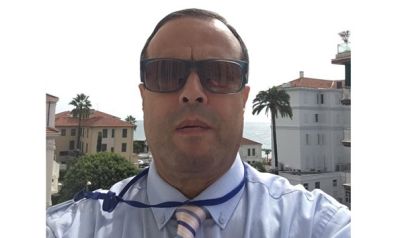




More than 1,600 speakers and creatives from around the world have applied to take part in Qatar Foundation (QF)’s Bil-Arabi 2026 initiative, which will be held in Doha on September 19-20, programme director Dr Zaidoun al-Kinani has said.
He said the strong response reflects both the depth of emerging creative talent and a growing desire among innovators to present original ideas and experiences in Arabic.
This year’s edition, under the theme Building with Our Ideas, is founded on the belief that innovation is the first step towards a better future, al-Kinani told reporters.
Ideas fulfil their value, he said, when they become practical projects and solutions with a tangible and lasting effect on people’s lives.
The initiative seeks to demonstrate the Arabic language's ability to carry new thinking in science, technology, entrepreneurship and innovation, alongside its established role in literature and heritage.
Al-Kinani described Arabic as a bridge between communities and a language through which creativity can cross borders.
Bil-Arabi, he added, brings together innovators from diverse fields to exchange knowledge and explore solutions linking technology with cultural heritage.
Turning that vision into daily practice, al-Kinani said, requires Arabic to be used to produce knowledge, debate contemporary issues and create content.
Making scientific and technological resources available in Arabic, he continued, while developing supportive digital tools, would enable young people to research and innovate in their mother tongue.
The 2026 programme will address issues shaping people’s lives and futures, including media, technology, artificial intelligence (AI) ethics, genomics, precision medicine, entrepreneurship, economic innovation, peacebuilding, community resilience, environmental sustainability, heritage and cultural identity.
It will also examine science fiction as a way of understanding the future, as well as sports and social work.
Speakers are selected primarily on the originality of their ideas and their potential to deliver positive impact or offer solutions to societal challenges, producing a programme of diverse regional and international voices.
Keynote speeches, panel discussions, workshops and exhibitions will create an interactive setting that combines listening, experimentation and participation.
Main-stage talks will present experiences and ideas, while workshops and exploratory sessions will give visitors practical exposure to innovation, digital storytelling, debating and critical thinking.
Beyond Doha, the “Bil-Arabi” series has taken the initiative to cities and communities through smaller events adapted to local contexts.
Activities have been held in Damascus, Amman and Djerba, alongside participation in events in Riyadh, Istanbul and Oxford.
The three-stop 2026 tour brought together 14 speakers and more than 1,000 participants from 15 countries, supported by 10 strategic partners.
Al-Kinani said that the expansion created local spaces for dialogue, amplified community-led ideas and reinforced Arabic as a language of creativity and innovation.
Young role models in science, technology and entrepreneurship will also share their experiences, while specialist-led sessions will help participants develop critical thinking and express their ideas with confidence.
Organisers hope participants will leave with new ideas, opportunities for collaboration and the motivation to turn discussion into action.
Al-Kinani said the wider ambition is to make Arabic a natural medium for thought and innovation, enabling young people to discuss science, technology and entrepreneurship with the same confidence they bring to culture, heritage and literature.
Bil-Arabi ultimately aims, he stated, to inspire ideas in Arabic that can enter technology ecosystems, genomics research, sustainability projects and cinema, allowing Arab communities to contribute more fully to knowledge, innovation and a shared human future.

