



Securing Qatar’s rapidly expanding digital infrastructure requires a cybersecurity workforce trained through realistic scenarios rather than relying solely on academic qualifications.
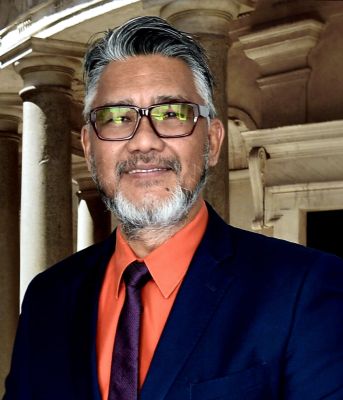
CyberX founder and CEO David de Paula Santos Silva said the country is investing heavily in smart-city technologies and e-government platforms, making the need for capable local talent increasingly urgent.
While Qatar has established a strong research foundation in locations like Education City, Silva noted there is a clear opportunity to connect this academic base directly with actual cybersecurity operations.
According to Silva, theoretical knowledge is insufficient to protect national networks. He said people become proficient penetration testers and incident responders only by facing realistic situations repeatedly.
To bridge this gap, he suggested investing in cyber ranges, industrial control system laboratories, cybersecurity events, and capture-the-flag environments.
Silva also recommended internships and establishing regular incident exercises that bring together government agencies, universities, and critical infrastructure operators. Students need early opportunities to work alongside experienced professionals before they are expected to manage a national-level incident, Silva pointed out.
“Students should have opportunities to work alongside experienced penetration testers, red teamers, incident responders and threat researchers before they are expected to handle a national-level incident,” pointed out Silva, who explained that offensive security training is highly important in this development phase.
“If you want someone to defend infrastructure against a sophisticated attacker, they need to understand how attackers think, how they combine vulnerabilities and how they move through an environment after the initial compromise,” Silva said.
According to Silva, these local defenders will face complex challenges as malicious actors adopt new technologies. He noted that artificial intelligence (AI) is changing the economics of cyberattacks by making reconnaissance faster and allowing attackers to process large volumes of public information.
“Critical infrastructure operators also need to recognise that their threat model is different from that of an ordinary company. The concern is not only ransomware or someone stealing credit-card information,” he emphasised.
Silva warned that state-sponsored operations often involve espionage and gaining persistent access to infrastructure that could become strategically useful during geopolitical conflicts.
“The smarter and more connected a country becomes, the more systems begin to depend on each other,” he said, noting that transport, telecommunications, energy, and cloud platforms increasingly become part of the same ecosystem.
This interconnectedness “creates enormous opportunities” but also means cybersecurity cannot be treated as an afterthought, he stated.
Discussing the role of foreign professionals, Silva noted that international expertise helps accelerate the learning process, provided it includes knowledge transfer. The ultimate objective is not to eliminate all external experts, he explained.
“It should be to make sure Qatar is never critically dependent on external expertise when an incident is actually happening,” Silva said.
Silva said he established his firm’s presence at the Qatar Science & Technology Park (QSTP) to be close to researchers and the broader innovation ecosystem. He said Qatar has the national ambition and technology investment required to develop these capabilities locally.
“Qatar has the universities, research environment, technology investment and national ambition to develop some of that capability locally rather than simply importing cybersecurity solutions from abroad,” he emphasised.
Building this workforce from within ensures that a highly connected country also becomes a highly tested and secure country, noted Silva, who recently won the ‘Cybersecurity Leader of the Year’ award at ‘Cysec Qatar 2026’.

