
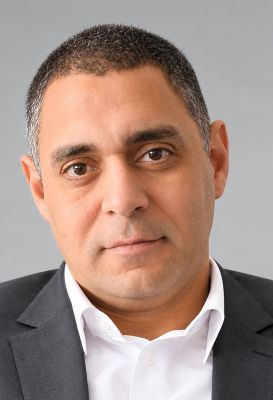




Between 1995 and 2013, Qatar emerged as an influential diplomatic, economic and strategic actor under the leadership of HH the late Father Amir Sheikh Hamad bin Khalifa al-Thani.
The defining feature of this transformation was the pursuit of an independent foreign policy built on diversified international partnerships, mediation in regional conflicts, close security co-operation with major powers, strong relations with Arab and Islamic countries and expanding ties with Europe and Asia.
Qatar also deployed its growing economic resources in support of its diplomatic objectives. Together, these policies established Doha as a centre of international diplomacy capable of maintaining channels between adversaries and bringing conflicting parties to the negotiating table.
The expansion of Qatar’s natural-gas industry provided the economic foundation for this strategy. Development of the North Field and the rapid growth of liquefied natural gas exports generated the resources to invest internationally, expand the country’s diplomatic presence and support development, reconstruction and humanitarian initiatives.
Qatar’s growing economic importance also gave governments around the world a stronger incentive to build relations with Doha.
At the same time, the country developed instruments of influence extending well beyond conventional diplomacy. The establishment of Al Jazeera in 1996 gave Qatar an unprecedented media presence in the Arab world. The network became one of the region’s most influential sources of news and political debate, dramatically expanding Qatar’s international visibility.
This combination of energy resources, international investment, media influence, humanitarian engagement and active diplomacy created what became widely known as Qatar’s soft-power model.
Mediation as statecraft
Under the late Father Amir, peaceful mediation became a central instrument of Qatari foreign policy.
Doha offered a secure venue for negotiations, maintained communication with competing parties and used its political and financial resources to keep talks alive. Qatar’s ability to engage actors across ideological and geopolitical divides often enabled it to reach parties that other governments could not — or would not — approach directly.
During the 2000s, Qatar became involved in mediation concerning Palestinian factions, Yemen, Lebanon, Sudan and Chad, Darfur, and the border dispute between Djibouti and Eritrea. It also began facilitating talks involving Afghan parties in 2013.
The Lebanese crisis of 2008 provided one of the clearest demonstrations of this emerging diplomatic role.
After months of political confrontation culminating in armed clashes, Lebanon’s rival factions travelled to Doha for negotiations. Six days of intensive Qatari and Arab mediation produced the Doha Agreement on May 21, 2008.
The agreement paved the way for the election of Michel Suleiman as president, the formation of a national unity government and agreement on elements of a new electoral framework. It helped pull Lebanon back from the danger of renewed civil conflict.
The United Nations recognised the intensive efforts of the late Father Amir, then prime minister and foreign minister Sheikh Hamad bin Jassim bin Jabr al-Thani and Arab League secretary-general Amr Moussa in helping the Lebanese parties reach an understanding.
The achievement demonstrated that Qatar could convert access, persistence and political credibility into concrete diplomatic results.
Darfur represented another significant chapter in the development of Qatar’s international profile.
In September 2008, the Arab League mandated Qatar to mediate peace talks between the Sudanese government and Darfur’s armed movements. Doha subsequently hosted more than two years of negotiations involving the African Union, the United Nations and other international stakeholders.
The process produced the Doha Document for Peace in Darfur in July 2011. The agreement addressed power and wealth sharing, human rights, justice and reconciliation, compensation and the return of displaced people.
Although it did not bring every armed group into the peace process or end all violence in Darfur, the document established an important framework for addressing the conflict and its consequences.
Qatar complemented its mediation with commitments to development and reconstruction. This combination of negotiation, financial support and post-conflict assistance became a recurring feature of its diplomatic approach.
The United Nations publicly acknowledged Qatar’s diplomatic, political and material contribution to the process, while then UN secretary-general Ban Ki-moon praised the country’s role under the leadership of the late Father Amir.
A carefully constructed balance
Qatar’s relationship with the United States also developed substantially during HH Sheikh Hamad’s rule.
The two countries had signed a defence co-operation agreement in 1992, before he assumed power, but security co-operation expanded considerably during his tenure. Qatar invested heavily in developing Al Udeid Air Base, which became a major hub for US military operations in the region.
The partnership gradually developed into a broader strategic relationship and became an important element of Qatar’s national-security architecture.
Yet Qatar combined its close relationship with Washington with an independent approach towards other regional actors. It preserved channels with Iran, maintained contact with Palestinian groups and cultivated relations with European and Asian powers.
This balancing strategy enabled Doha to speak to parties that often refused direct contact with one another. Rather than defining its partnerships in exclusively ideological terms, Qatar sought to maintain sufficient access across opposing political camps to remain relevant during periods of crisis.
Relations with European countries, particularly France and the United Kingdom, also expanded. French companies increased their involvement in Qatar’s energy, infrastructure and industrial sectors, while a visit by then French president Nicolas Sarkozy to Doha in 2008 produced agreements and memoranda spanning electricity, energy and other areas of co-operation.
These relationships were not limited to commerce. European governments increasingly regarded Doha as a potentially valuable interlocutor in the Middle East because of its access to political actors who were difficult for Western governments to approach.
Qatar’s engagement with multilateral institutions grew simultaneously. It served a two-year term as a non-permanent member of the United Nations Security Council in 2006-07, gaining a formal role in deliberations on international peace and security.
The country’s growing participation in international organisations reinforced the diplomatic standing being built through mediation, economic partnerships and humanitarian initiatives.
Palestine and the Arab Spring
The Palestinian cause remained a central component of Qatar’s foreign policy during the late Father Amir’s tenure.
Qatar maintained relations with both the Palestinian Authority and Hamas, enabling Doha to act as an intermediary between rival Palestinian factions. Its efforts included mediation between Fatah and Hamas in 2006 and the Doha Agreement of 2012, although the latter was never fully implemented.
Following the 2008-09 Gaza war, Qatar called for stronger Arab diplomatic action and sought an emergency summit in Doha. The late Father Amir spoke forcefully about the human cost of the conflict and pressed for more concerted Arab engagement.
In October 2012, he made a historic visit to the Gaza Strip, becoming the first head of state to visit the territory under Hamas rule. He inaugurated reconstruction projects worth hundreds of millions of dollars, combining a highly visible political gesture with support for housing and infrastructure.
That fusion of political access, humanitarian assistance and reconstruction support became another defining feature of Qatari diplomacy.
The Arab Spring of 2011 brought a more activist phase in Qatar’s foreign policy. Doha backed political movements challenging established governments in Tunisia, Egypt, Libya and Syria.
In Libya, Qatar supported anti-Gaddafi forces and participated in the international coalition enforcing the no-fly zone. It consequently became an active participant, rather than a mediator, in one of the region’s most consequential conflicts.
Qatar said its position reflected support for the aspirations of Arab peoples for dignity, political participation and better lives. Its approach increased the country’s influence but also generated controversy and demonstrated that Qatari policy was not uniformly neutral across every regional crisis.
Nevertheless, the broader diplomatic architecture remained consistent: a strong security relationship with Washington, open channels with Iran and Palestinian movements, extensive European and Asian partnerships and a preference for preserving communication wherever possible.
The modern Qatari mediation system — which would later play a central role in negotiations involving Afghanistan, the United States and the Taliban — was built on foundations established during the Father Amir’s rule.
Influence beyond geography
Qatar’s diplomatic rise cannot be separated from its economic transformation.
The growth of the LNG industry supplied the resources needed to finance international investment, humanitarian assistance, reconstruction programmes and diplomatic initiatives. It also made Qatar increasingly important to the energy security of countries across Asia and Europe.
Humanitarian action strengthened this international approach. In conflict-affected countries, particularly Sudan and Palestine, Qatar frequently combined political engagement with development and reconstruction commitments.
By the end of the late Father Amir’s tenure, Qatar had assembled several mutually reinforcing sources of influence: energy, international investment, strategic partnerships, media, humanitarian engagement and access to competing political actors.
This model enabled the country to exercise an influence far greater than its geographical or demographic size might have suggested.
The international response following the death of the Father Amir on July 12, 2026, offered a revealing measure of the standing he had acquired beyond Qatar.
Condolences came from presidents, monarchs, prime ministers, international organisations and diplomatic missions. Senior leaders and representatives from across the Arab and Islamic worlds, Europe, Africa, Asia and Central Asia travelled to Doha to offer their condolences to HH the Amir Sheikh Tamim bin Hamad al-Thani, the ruling family, the government and the people of Qatar.
The scale and diversity of those tributes reflected the multidirectional foreign policy that had become one of the defining characteristics of modern Qatar.
Among diplomats in Doha, attention repeatedly turned to the late Father Amir’s standing as both a nation-builder and an international statesman.
Türkiye’s ambassador to Qatar Dr Mustafa Göksu said he had left an “enduring legacy of nation-building and achievement”, describing him as an exceptional figure whose leadership had left an indelible mark on the modern history of the region.
Pakistan’s ambassador to Qatar Muhammad Aamer described him as “the architect of modern Qatar”, saying his wisdom, courage and foresight had transformed the nation and laid the foundations for its prosperity and international standing.
Aamer said the late leader’s legacy lived on through the institutions he established, the generations he empowered and the respect Qatar commanded around the world.
India’s ambassador to Qatar Vipul similarly highlighted the international dimension of that legacy. He recalled the late Father Amir’s transformational leadership and the enduring friendship he helped build between Qatar and India. The ambassador said HH Sheikh Hamad’s foresight had laid the foundations for a prosperous and globally respected Qatar, while his official and personal visits to India had helped deepen bilateral relations and people-to-people ties.
These tributes were rooted in decades of diplomatic engagement. During his years in power, the late Father Amir dealt directly with world leaders, senior international officials and negotiators as Qatar moved from the margins of international diplomacy to become an increasingly sought-after interlocutor.
What emerged between 1995 and 2013 was more than a successful foreign-policy brand. It was a durable system of international influence founded on economic strength, strategic partnerships, political access and the ability to keep dialogue alive during periods of conflict.
Under HH the late Father Amir Sheikh Hamad bin Khalifa al-Thani, Qatar’s geography no longer defined the limits of its influence.
Doha became a place where adversaries could meet, difficult messages could be delivered and agreements once considered improbable could be pursued. That diplomatic role remains one of the most enduring dimensions of his legacy — and one of the foundations of Qatar’s place in the world today.
