
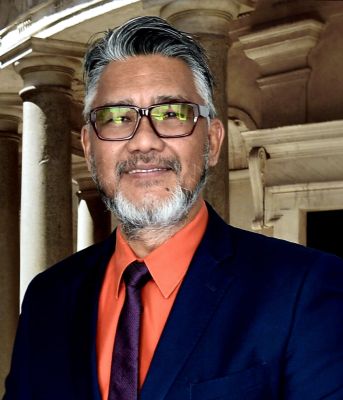



A Doha-based venture capital (VC) firm is moving to connect Gulf institutional investors with China’s fast-growing artificial intelligence (AI) and deep technology sectors, noting that the region has yet to fully tap one of the world’s most dynamic innovation markets.
Rawdat Capital founder and managing partner Dalia al-Khalaf told Gulf Times that access to Chinese innovation has historically been limited not by the quality of technology on offer, but by the difficulty of navigating differences in language, culture, regulation, and commercial relationships.
“The challenge has been navigating differences in language, culture, relationships, regulation, and market understanding. Rawdat Capital was created specifically to bridge that gap,” she said in an exclusive interview.
Al-Khalaf said China has moved well beyond its traditional reputation as a global manufacturing hub and now leads in sectors such as electric vehicles, battery technologies, industrial automation, medical technology, renewable energy, and applied AI.
“While much of the world’s AI investment capital continues to flow into North America, some of the most significant advances in artificial intelligence, robotics, advanced manufacturing, healthcare technology, clean energy, and industrial automation are increasingly emerging from China,” she noted.
She said Rawdat Capital is “the first China-focused AI and deep technology investment platform founded by a GCC national” that aims to provide Gulf investors structured access to that ecosystem through trusted local relationships, market knowledge, and on-the-ground execution.
She clarified that the firm does not operate as a deal introducer. “We help companies localise, build partnerships, win business, and deliver meaningful outcomes for regional stakeholders,” she explained.
According to al-Khalaf, the platform aligns directly with Qatar National Vision 2030’s emphasis on economic diversification and knowledge-based growth. She said the firm focuses on technologies shaping the next generation of economic activity, including AI, healthcare innovation, robotics, advanced manufacturing, climate technologies, energy innovation, and digital infrastructure.
On technology transfer, she said many of the world’s most advanced solutions in precision agriculture, smart farming, industrial automation, and resource optimisation are being developed in China, areas that are directly relevant to Qatar’s food security and sustainability priorities.
“Our objective is not simply investment. It is enabling meaningful technology transfer, commercial partnerships, and practical deployment opportunities that create lasting value within Qatar,” al-Khalaf said.
Rawdat Capital previously announced that it has secured an exclusive partnership with Sinovation Ventures, one of China’s leading AI-focused investment firms. The firm has appointed Dr Kai-Fu Lee, “widely recognised as a founding figure of modern AI,” as chairman of its Advisory Committee, al-Khalaf said.
The firm also recently signed a strategic partnership with Guolian Industry Investment Fund Management, a Chinese private equity manager with an accumulated fund scale of approximately RMB60bn (around US$8.5bn). Al-Khalaf said the agreement reflects the confidence that major Chinese institutions have in Qatar’s role as a gateway to regional opportunity.
She said Qatar’s combination of stability, infrastructure, and access to decision-makers positions Doha as the natural base for a China-MENA technology corridor, noting that the country “provides more than a market.”
“Qatar provides a platform from which they can access the broader GCC and MENA region while working with partners who understand how to navigate local commercial, regulatory, and institutional environments,” al-Khalaf added.

