



Qatar is striving to establish itself as a leading global hub for food security and innovative agricultural technologies, according to a Qatar Chamber official, who urged the EU to explore potential partnerships to meet this objective.
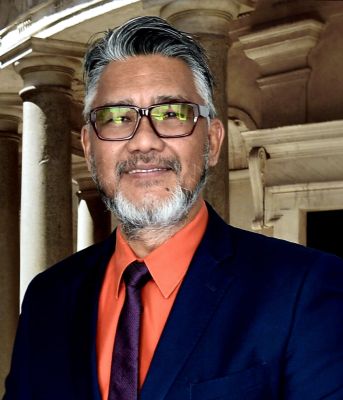
“Our goal is to make Qatar a leading global hub for food security and technology,” board member Mohamed bin Ahmed al-Obaidli announced Monday during a fireside chat titled ‘Resilient by Design: Qatar’s Journey Towards Food Security and Trade Resilience’.
The session, held on the sidelines of the ‘EU Qatar Dialogue on Safe and Resilient Food Trade in Doha’, was joined by Jose Iralde, chief strategy officer at Hassad Food, and moderated by Omar Naim of Roland Berger.
Dr Cristian Tudor, the EU’s ambassador to Qatar, opened the dialogue, which also discussed the need to support a stable access for European food and agricultural exports to markets, to align with international standards for sanitary and phytosanitary measures, and to enhance regulatory transparency in import procedures.
The dialogue also brought together policymakers, regulatory authorities, industry leaders, and experts from the EU and Qatar to exchange perspectives on food security, food safety systems, resilient supply chains, and international trade.
According to al-Obaidli, Qatar’s food security experience is no longer confined to theoretical plans but has matured into practical expertise shaped by the nation’s crisis response.
Al-Obaidli explained that Qatar seeks to be recognised not only as a consumer market but as a reliable partner capable of building integrated ecosystems with international stakeholders.
He highlighted the importance of genuine partnerships with the EU, noting that Europe requires energy while Qatar needs technology, research, and advanced expertise in agriculture, supply chains, and food safety.
Al-Obaidli pointed to successful international models such as the Netherlands’ agribusiness system, stressing that Qatar aims to develop a similar framework in cooperation with European partners.
He emphasised that Qatar’s food security strategy is built on strong public private partnerships, which helped unify efforts, secure supply sources, and strengthen logistics capabilities.
Al-Obaidli noted that Qatar has tested multiple supply routes by land, sea, and air, developed strategic reserves, and now enjoys a surplus in some products, encouraging exports.
He also underscored the importance of digital transformation and the use of artificial intelligence (AI) to improve efficiency in food trade, while balancing the interests of producers, distributors, importers, and retailers.
Cooperation between the public and private sectors is necessary for food security, al-Obaidli stressed, adding that the focus on developing a robust food supply chain, improving agricultural productivity, and fostering partnerships with key stakeholders in the agricultural sector underscores Qatar's ambition to play a pivotal role in ensuring global food security.
The fireside chat formed part of a wider programme of presentations, panel discussions, and stakeholder exchanges designed to foster best practices and identify opportunities for enhanced EU Qatar cooperation in support of safe, sustainable, and resilient food trade.

