
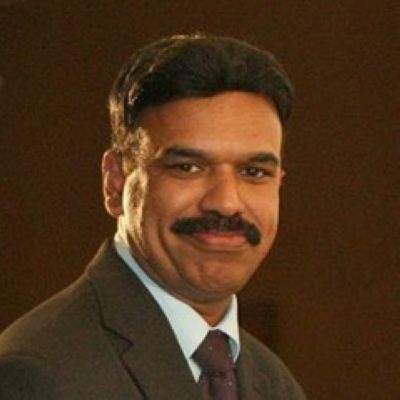



Qatar has called for a fundamentally stronger and broader military deterrence framework for the region, warning that the assumptions underpinning Gulf security have been upended by the current conflict.
The need for establishing a far more comprehensive military deterrence in the region was highlighted Tuesday by Dr Majed bin Mohamed al-Ansari, adviser to the Prime Minister and official spokesperson at the Ministry of Foreign Affairs.
Taking part in a webinar organised by The Middle East Council on Global Affairs, Dr al-Ansari said: “One thing we are sure of, is that we need to establish a military deterrence in the region that goes beyond whatever was there in the past. We need to find a way of diplomatic engagement with all the parties in the region, and we need to take back our agency when it comes to making decisions about regional security over here.”
The online open discussion 'Navigating Iran War in the region: Qatar’s Position and Strategic Perspectives' also included Dr Mohammed al-Hashemi, an energy expert and Rashid al-Mohanadi, a nonresident fellow at the Middle East Council on Global Affairs and the session was moderated by Dr Cinzia Bianco, visiting fellow, European Council on Foreign Affairs.
The session noted that the escalating confrontation between Iran, the United States, and Israel has resulted in a period of heightened uncertainty in the Middle East, with significant implications for regional stability, security, and global energy markets.
Despite these pressures, Gulf governments have exercised restraint, prioritising de-escalation and diplomacy while managing increasing security risks and economic disruptions.
Dr al-Ansari recalled that Qatar was attacked last year by Israel and by Iran. He continued: “Now we are part of this war that we have never been asked to be part of. We have never been consulted on this war. And we have to live through the results. If the US ends this war now, we will be left with an Iran that sees us as a direct threat, that has a vengeance against everybody in the region, including our countries, and we will be the ones left to deal with the neighbourhood post this war.”
The official said that two main assumptions have been challenged. He explained: “Assumption number one is that having a strong contingency of US forces in the region would be a deterrent to any other actor attacking the Gulf countries. The second was the main threat that we have always had was non-state actors and countries who have hegemonic tendencies towards the region. Now, both of these assumptions have been challenged.”
Dr al-Ansari also spoke about the need for a US-plus security strategy. “It means you do not move away from the United States, but you diversify along with the United States when it comes to security. And I think one of the realisations of the world that is taking place right now is the invaluable role of Europe,” he stressed.
He pointed out: “What this war has shown is that when we are faced with war, the main burden of defending ourselves will be on us, not our partners. If you look at the interception rates here in Qatar, almost all of the interceptions have been by the Qatari armed forces. You look at the fighter jets that are protecting our skies right now and almost all of them are Qatari fighter jets with the joint squadron from the United Kingdom, without anything from anywhere else.”

