




- Qatar set to be among top five best countries in precision health revolution
- Lifestyle, behaviour changes can help ‘turn on’ good genes, suppress harmful ones
- Nationals now make up 31% of WCM-Q graduates
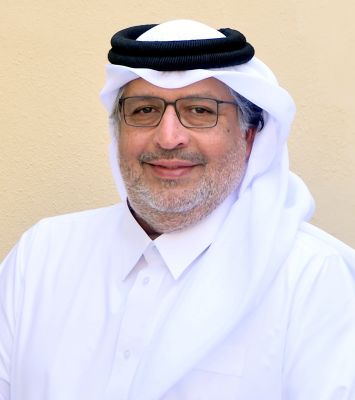
Qatar is poised to test gene therapy and cellular therapy, the dean of Weill Cornell Medicine Qatar (WCM-Q) has disclosed in an exclusive interview with Gulf Times.
“With all the world class infrastructure in place in Qatar, gene therapy as well as cellular therapy, will be tested here very soon. Cellular therapy is even better because it is unique. It goes down to the cellular level to look at what can be done for an individual in a personalised way. And that will be done here. We are working with Sidra Medicine to put together those programmes,” revealed, Dr Javaid Sheikh, dean of WCM-Q.
Dr Sheikh emphasised that ‘Qatar will be a model’ in the top five best countries in precision health revolution.
“When looking at all the data from an individual perspective by sequencing the genome, and with the multi-omics analysis, we should be able to tell what risk factors that you might have for your health in your life. Once you know the risk factors, then you can prevent it,” he highlighted.
Dr Sheikh underlined that genes are not the destiny but the tendencies. He explained: “Tendencies that you are at risk for developing diabetes or other such diseases. We will help you change your behaviour so that you do not meet that destiny. You look at the risk factor and you change your behaviour.”
He continued, "There are some unique rare disorders and certain genetic risk factors are unique in the population. However, the genes can be made to change their own behaviour. In science, we call it, turning the genes on and off. However, there are certain unfortunate genetic disorders and there is not much one can do about them. But they are rare.
“You can definitely change your behaviour to change the turning on or off of the gene. So you can turn on good genes and you can turn off bad genes. This is what we are working on.”
Dr Sheikh said the university has been making great efforts in attracting Qatari students to the medical filed and become doctors.
He described: “We put together some outreach programmes to the community. We have now more than a dozen programmes and we identify the best students in 9th and 10th grades in public schools who want to become doctors. We bring them to the university and work with them during summer, winter, sometimes over the weekend and sometimes online. And during those years, those who really want to become doctors, become more committed.
“Then we bring in those students to the university, and they spend one-year full time in studying English, math and sciences. And then, they are ready for the medical school, and they do exceedingly well at that time.”
The dean said the number of Qatari students in the university has gone up considerably over the years. He explained: “Before 2010, Qataris were overall around 10%. In the last two graduating classes, we have around 31% Qataris. Overall, if I look at the 641 alumni that we have graduated so far, Qataris are 22% but in the last two years, it is 31% and in another six years it will be about 38% and above.”
He stated that there is a plan for bringing all the graduates of the university back to Qatar: “This is a challenge and we are working on it. We are working very closely with Hamad Medical Corporation, Sidra Medicine and Aspetar- orthopaedic and sports medicine hospital in this regard. We have a committee representing all three institutions and the Ministry of Public Health to attract as many of our alumni as we can.”
The dean also said the university is keen to contribute to Qatar’s national vision of developing human capital. “From our point of view as healthcare providers and educators, we help people in taking care of their health and getting educated in healthy practices. We are contributing in this in a very major way.
“Then all the breakthroughs and the patents which will come from our biomedical research, will contribute to Qatar establishing a very thriving entrepreneurial activity and biomedical companies, which will bring in revenue from other parts of the world.”

