
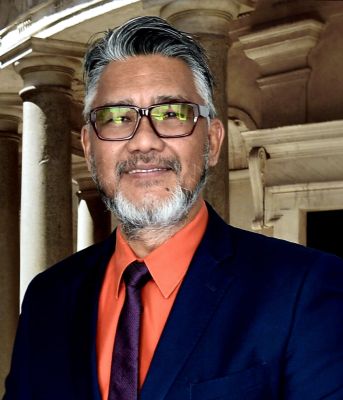



A Doha-based financial technology solutions provider has urged small and medium-sized enterprises (SMEs) to reassess their approach to investors and adopt adaptability as a key survival strategy in today’s fintech-driven economy.
Daniel Sansano, the CEO of Daniel Sansano Capitals Inc, noted that many SMEs in the region are facing different challenges due to their dependence on traditional bank loans. He explained that these loans frequently come with high interest rates that can pose many challenges to the financial health and growth potential of these businesses.
“As a result, many SMEs find themselves in a difficult position, struggling to access affordable financing options that would enable them to invest in expansion, innovate their products or services, and ultimately enhance their competitiveness in the market,” Sansano addressed a previously held panel discussion.
According to Sansano, his firm introduced a simplified funding model that requires only a pitch and identification, thus eliminating the paperwork that usually puts off entrepreneurs. “No matter how great your idea is, if it lacks funds, then that is a problem,” he pointed out.
But Sansano was also quick to add that “funding alone is not enough.” He highlighted common misconceptions among SMEs seeking investment, warning against treating investors as charity organisations.
He said, “You don’t ask for a huge sum of money and offer only a little equity. When entrepreneurs or startups ask for capital, they are also asking us to take the risk with them.” Sansano urged founders to balance equity offers with realistic funding requests and to be transparent about how capital will be used.
“Education and mentorship,” he pointed out, “are critical gaps in the ecosystem.” He further said, “It’s not just about supporting them through money or incubation; we have to go further with mentorship and updating training in finance, compliance, and operations. Fintech is progressive and requires continuous learning.”
Sansano also underscored the role of artificial intelligence (AI) in reshaping fintech services, saying his company operates with fewer human employees and relies heavily on AI for customer service and support.
“You cannot have fintech without innovation, and AI is innovation,” stated Sansano, who positioned automation as a key element to scaling SME solutions.
On accessing international markets, Sansano also pointed to fintech tools that could forecast profitability, identify target markets, and track product demand in other countries. According to Sansano, “such forecasting capabilities are essential for SMEs seeking to scale globally.”
“Adaptability is the key to survival,” explained Sansano, who disagreed with the idea that SMEs should cling to traditional practices. “Doing so risks stagnation. Tradition will only pull you down. Adaptability is a must for SMEs to survive in this ecosystem,” he continued to emphasise.

