tag

Saturday, December 06, 2025 | Daily Newspaper published by GPPC Doha, Qatar.

Tag Results for "sanctions" (14 articles)

File photo shows Sudan's army soldiers celebrating after entering Wad Madani, in January 2025.
International

UK foreign minister plans sanctions relating to human rights abuses in Sudan

Britain's foreign minister Yvette Cooper plans to introduce sanctions relating to human rights violations and abuses in war-torn Sudan, she said Tuesday, stressing the need for sustained efforts for a ceasefire. "I've instructed my officials to bring forward potential sanctions relating to human rights violations and abuses in Sudan," Cooper told lawmakers, amid global efforts to end the war in the east African nation.The conflict erupted in 2023 amid a power struggle between the Sudanese Armed Forces and the paramilitary Rapid Support Forces (RSF). RSF's recent takeover of Al-Fashir, one of Sudan's largest cities, has raised grave concerns about mass killings. Both sides have increasingly relied on drone strikes in recent months.Cooper said that the international community had turned its back on Sudan for "far too long". "We may need to make sure teams can get in to investigate these atrocities and hold the perpetrators to account," she said. Last year, Britain imposed sanctions on three businesses which it said were funding military groups behind the Sudanese war.

Gulf Times
Business

Oil’s billion-barrel buildup at sea points to sanctions stress

A buildup of a billion barrels of oil on the world’s oceans includes a disproportionately large amount of crude from nations subject to some kind of sanctions — a sign the measures are bringing a degree of disruption to the oil trade. Of the surge in oil on tankers since the end of August, as much as roughly 40% of the increase is barrels from Russia, Iran, Venezuela, or unclear origin, according to vessel-tracking data from Vortexa, Kpler and OilX. Even the lowest estimate, at about 20%, is a larger share of global crude production than the three nations have. The buildup doesn’t mean the barrels will never sell, but it is a threat to the revenues of sanctioned petrostates, with further ramifications for a global oil market that’s forecast to be headed for oversupply. While the increase partly reflects higher output, it also suggests some level of difficulty discharging. There’s also been a simultaneous surge in unsanctioned supplies. The fate of all that crude on water, affected by sanctions or not, will go a long way to shaping how oil prices move over the next few months, traders said. Caution over the latest Western measures is triggering some reshuffling of crude flows, with ripple effects for major importers like India and China, while a stretched out tanker fleet briefly sent daily shipping costs above $100,000 a day. “Some of this increase is attributed to stricter Western sanctions, which have left Russian oil stuck on ships and unable to discharge,” Clarksons Securities analysts including Frode Morkedal wrote. “Previous buyers have purchased replacements from the Middle East and the Atlantic.” The buildup in restricted oil is led by Russian supplies, according to a Bloomberg analysis of the data from the vessel-tracking firms. Russian seaborne shipments have risen in recent weeks, with the country pumping more oil as it unwinds earlier production cuts alongside partners in the OPEC+ group of oil producers. It’s likely that some crude is being diverted to export terminals as a result of Ukrainian attacks on Moscow’s oil infrastructure, particularly refineries. **media[381193]** An unprecedented Western clampdown on buyers of Russian barrels, meanwhile, is stopping some cargoes from discharging, with Indian refineries notably refraining from taking cargoes and signs that China might not be willing to pick up the slack. US sanctions on Russia’s two largest oil producers, Rosneft PJSC and Lukoil PJSC, have made trading their oil even more difficult. Russia’s oil-related tax revenues fell year on year by more than 24% last month, according to Bloomberg calculations based on Finance Ministry data. Russia’s government already expects funds from oil and gas flowing into the budget this year to be the lowest since the pandemic of 2020. Iranian shipments have also surged, hitting the highest level in seven years in October, the same month when the US placed sanctions on a major Chinese terminal for its role in buying barrels from Iran. OilX, a unit of consultant Energy Aspects, says its oil-on-water data covers confirmed shipments, including volumes from countries such as Iran and Venezuela, which often experience delays due to dark fleet activity. As a result, the volume may be revised higher over time. Vortexa says that in general its oil-on-water numbers tend to overcount and be revised lower as ships discharge. But the current situation is far from usual. To be sure, there is plenty of non-sanctioned oil in tankers at sea, too, as global output increases. OilX data show that the single largest contributor to the increase since the end of August has been Saudi Arabia, closely followed by the US and Russia. The kingdom shipped oil overseas at the highest rate in two-and-a-half years last month, as it continues to reclaim market share lost over years of output curbs from the Organisation of the Petroleum Exporting Countries and its allies. At the same time, the amount of American crude at sea has climbed after shipments hit their highest monthly average level since July 2024 in October. Volumes rose after processors in Asia snapped up US cargoes over the summer when Middle Eastern prices jumped relative to other regions, in what is called an arbitrage window. But the barrels on water from nations subject to sanctions represent a larger part of the increase than their collective slice of global crude production of about 17%, according to OilX data. “It’s clear that there is a lot of crude on the water now,” Brian Mandell, executive vice president of marketing and commercial at Phillips 66, said on an earnings call late last month. “We’re kind of waiting to see what those crudes are.”


A North Korean flag flutters at the propaganda village of Gijungdong in North Korea, in this picture taken near the truce village of Panmunjom inside the demilitarised zone separating the two Koreas, South Korea.
International

North Korea threatens ‘offensive action’, condemns US-South Korea security talks

North Korea's defence minister vows 'more offensive action' a day after missile testSouth Korea's defence ministry denounces North Korea's missile testNorth Korea criticises US-South Korea security talks, US carrier visit to BusanUS says missile launch highlights North's destabilising effectNorth Korea’s defence minister No Kwang-chol threatened Saturday to take “more offensive action” as he condemned US security talks with Seoul and the arrival of a US aircraft carrier in South Korea.A day earlier, North Korea fired a ballistic missile towards the sea off its east coast, after denouncing on Thursday fresh US sanctions against North Korean individuals and entities that Washington said were involved in cyber-related money-laundering schemes.South Korea’s defence ministry Saturday condemned the missile launch, while saying the North’s criticism of the US-South Korea meeting was regrettable.No criticised a recent visit by US and South Korean defence chiefs to the border between North and South Korea, as well as their subsequent security talks in Seoul, alleging they were conspiring to step up deterrence efforts towards the North and to integrate their nuclear and conventional forces.“This is a stark revelation and an unveiled intentional expression of their hostile nature to stand against the DPRK to the end,” No said, referring to the country’s formal name - the Democratic People’s Republic of Korea. US Defence Secretary Pete Hegseth said on Tuesday the core of the alliance with Seoul will remain focused on deterring North Korea, although Washington will look at flexibility for US troops stationed in South Korea to operate against regional threats.No also said the visit of the US nuclear-powered aircraft carrier George Washington to South Korea’s southeastern port city of Busan this week following US-South Korean joint air drills with Seoul had escalated tensions on the peninsula.“We will show more offensive action against the enemies’ threat on the principle of ensuring security and defending peace by dint of powerful strength,” No said, according to North Korean state media KCNA.South Korea’s navy said the carrier’s visit was to replenish supplies and grant leave for the crew.While visiting South Korea last week, US President Donald Trump repeated his willingness to sit down with North Korean leader Kim Jong-un. No meeting took place, but Trump said he was willing to return to the region to meet Kim.Last week, North Korea also test-fired cruise missiles to the west of the Korean peninsula just as Trump and other leaders were set to gather in South Korea for regional meetings. Regarding the latest missile launch, the US Indo-Pacific Command said on Saturday that it “does not pose an immediate threat to US personnel or territory, or to our allies”. “The missile launch highlights the destabilising impact” of North Korea’s actions, it added.

Reliance has been trying to sell grades including Murban and Upper Zakum on the spot market to domestic and international refiners, according to people at the companies receiving those offers
Business

India’s Reliance trying to sell Mideast oil in rare offer

India’s Reliance Industries Ltd is seeking to sell cargoes of Middle Eastern oil, an unusual move for a refiner that’s normally a major buyer.There’s heightened focus on the actions of the nation’s oil processors since the US slapped sanctions on key supplier Russia. Reliance has been trying to sell grades including Murban and Upper Zakum on the spot market to domestic and international refiners, according to people at the companies receiving those offers. They asked not to be named as they aren’t authorised to speak publicly.India’s largest privately owned refiner, controlled by billionaire Mukesh Ambani, is typically a major importer of oil from the Middle East and Russia. The recent sanctions on Moscow’s two largest oil companies have spurred expectations that Indian processors will have to buy more barrels from countries such as Saudi Arabia.Yet the offers suggest Reliance has ample supply for now, though the reasons why are unclear. Traders are watching Indian buying patterns closely to see whether refiners will hoover up grades tied to benchmark crude prices — potentially supporting oil futures — or find ways to sustain imports from Russia.The Mumbai-based company has already sold a cargo of Iraqi Basrah Medium crude to a Greek buyer. It’s unclear how much crude Reliance is looking to offload in total; and it could choose to sell some but not all of the cargoes.A Reliance Industries spokesperson didn’t reply to an email seeking comment.Refiners in India, the world’s third-largest importer of crude, are busy trying to diversify their supply sources after Western sanctions made buying discounted Russian oil more difficult and risky.Reliance had been Indian’s top importer of Russian crude this year, but snapped up millions of barrels from the Middle East last month following the White House penalties against Russia, which were aimed at depriving the Kremlin of funds for its war in Ukraine.Reliance said last month that it would abide by the US sanctions, and would be adapting its operations to meet the compliance requirements. The refiner previously had a term supply deal for around 500,000 barrels a day from Russian producer Rosneft PJSC.

Gulf Times
International

US imposes sanctions on Colombian President

The United States announced on Friday sanctions against Colombian President Gustavo Petro, accusing him of refusing to combat drug trafficking. In a statement, US Treasury Secretary Scott Bessent said: "President Petro has allowed drug cartels to flourish and refused to stop this activity. Today, President Trump is taking strong action to protect our nation and make clear that we will not tolerate the trafficking of drugs into our nation."The sanctions are also against the Colombian president's wife, Veronica Del Socorro Alcocer Garcia, his son Nicolas, and Colombian Interior Minister Armando Benedetti.In response to the US accusations and sanctions, the Colombian president posted on the X platform that he has sought to combat drug trafficking for decades."Fighting drug trafficking for decades and effectively has brought me this measure from the government of the society we helped so much to curb their cocaine consumption," he added.

Gulf Times
International

Russia vows response to new European sanctions

Russia on Friday vowed a "painful response" to the new package of sanctions imposed by the European Union and to take effective and strict steps in this regard. Russian Foreign Ministry Spokesperson Maria Zakharova said in a comment published on the Russian Foreign Ministry's website that Russia strongly condemns any illegal unilateral coercive measures. The number of countries that support and back this approach is growing. Naturally, Russia will respond to the latest package of sanctions imposed by the European Union with effective and strict steps.Zakharova emphasized that "even in Brussels, they do not believe in the success of sanctions against Russia, but they insist on following a suicidal path for the European Union."The European Union announced yesterday, Thursday, that it had adopted the nineteenth package of economic sanctions against Russia.The new package includes a complete halt to imports of liquefied natural gas from Russia and additional measures against the Russian shadow fleet, which allows Moscow to export oil by circumventing Western sanctions.The sanctions also targeted 117 new vessels from this fleet, bringing the total number of vessels subject to EU sanctions to 558.The new sanctions target companies in several third countries, including 12 in China and three in India, accused of helping Moscow circumvent Western sanctions and transfer technology, particularly that used in drone manufacturing.

Gulf Times
Business

Oil rises over 1% amid supply concerns

Oil prices rose by more than one percent on Wednesday, extending gains for the second consecutive day, amid a mix of supply risks linked to sanctions and hopes for progress in US-China trade talks. Brent Crude futures climbed 94 cents, or 1.5%, to $62.26 a barrel, while US West Texas Intermediate (WTI) crude futures rose 92 cents, or 1.6%, to $58.16. Oil rebounded from a five-month low recorded on Monday, driven by increased output from producers and the impact of trade tensions on demand. On Tuesday, the US Department of Energy announced that it is looking to purchase one million barrels of crude oil to refill the Strategic Petroleum Reserve, aiming to take advantage of relatively low oil prices to help replenish stockpiles.

Gulf Times
Business

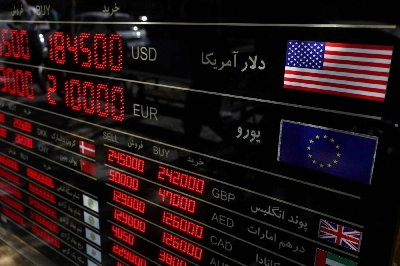
Iran rial hits record low against US dollar after sanctions reimposed

The Iranian rial plummeted to a record low against the US dollar on Sunday after the reinstatement of United Nations sanctions, according to currency-tracking websites.On the black market, the rial was trading at around 1.12 million rials against the dollar, the Bonbast and AlanChand websites reported, about a month after it had been slightly above one million rials to the greenback.

Gulf Times
International

UN reimposes sanctions on Iran after activating "Snapback" mechanism

The United Nations has reinstated international sanctions on Iran, effective early Sunday, after the UN Security Council granted reactivation under the "snapback" mechanism of the 2015 Iran nuclear agreement. This move is aimed at intensifying pressure on Tehran over its nuclear activities.Germany, France, and the United Kingdom — the so-called European "E3"--issued a joint statement saying they had triggered the snapback following what they described as Tehran's failure to meaningfully engage with diplomatic demands. They called on Iran to avoid further escalation and urged full compliance with Security Council resolutions and renewed cooperation with the International Atomic Energy Agency (IAEA).According to the E3, Iran's recent proposals during negotiations were deemed "very limited" and insufficient to avert the reimposition of sanctions, which took effect at midnight GMT after the 30-day deadline expired.The restored sanctions encompass a broad range of restrictions, including an arms embargo, freezing Iranian assets abroad, bans on nuclear cooperation, and constraints on ballistic missile development and certain energy exports.US Secretary of State Marco Rubio praised the move, stating that the Security Council's action demonstrates the international community's unwillingness to accept Iranian threats. He reaffirmed that diplomacy remains open and emphasized that accountability will follow for Tehran's conduct.Earlier, a Russian-Chinese draft resolution to delay the sanction's reimposition for six months was rejected by the Security Council, effectively allowing the snapback mechanism to take effect. Russia condemned the decision, calling it a blow to diplomatic efforts with Iran.Responding to the developments, Iran recalled its ambassadors from Germany, France, and the UK for consultations in protest of the reactivation of the snapback mechanism.

Gulf Times
International

Iran recalls its ambassadors from London, Paris, Berlin

The move comes in response to the activation of the dispute resolution mechanism by the three European powers, known collectively as the "E3", which paves the way for the automatic reimposition of UN sanctions previously lifted under the Joint Comprehensive Plan of Action (JCPOA). This diplomatic rupture follows the failure of a Russian-Chinese draft resolution at the UN Security Council aimed at delaying the reinstatement of sanctions for six months. The resolution fell short of the required votes, triggering the so-called snapback mechanism, which revives punitive measures linked to Iran's nuclear program. Iran, while reaffirming its commitment to the JCPOA, squarely blames the current crisis on the United States' unilateral withdrawal from the deal in 2018 and accuses European signatories of failing to uphold their obligations. Tehran insists it remains open to dialogue, provided sanctions are lifted. According to recent reports by the International Atomic Energy Agency (IAEA), Iran's nuclear activities remain under surveillance. A new agreement between Iran and the IAEA was recently reached in Cairo, underscoring ongoing technical cooperation. In a related development, Secretary of Iran's Supreme National Security Council Ali Larijani revealed in an interview with PBS that Iran had submitted proposals to avoid triggering the snapback clause. However, he warned that if sanctions are reinstated, Iran will respond by suspending cooperation with the IAEA, citing legislation passed by the Iranian parliament. All UN sanctions on Iran are set to be reimposed at midnight GMT, following the E3's formal activation of the 30-day mechanism, accusing Tehran of breaching the nuclear accord, a claim Iran vehemently denies.

Gulf Times
International

UN Security Council rejects efforts to delay sanctions on Iran

The UN Security Council rejected Friday a last-ditch effort to delay the reimposing of sanctions on Iran over its nuclear program. The Council's decision came a day before Tehran's deadline, after Western countries announced that weeks of meetings with Iranian officials had not yielded "tangible" progress toward an agreement.The decision also comes a day before the so-called snapback mechanism, under which international sanctions on Iran would be restored as stipulated in the 2015 nuclear deal with world powers, is due to take effect.Russia and China sought to delay the reimposing of UN sanctions on Iran in the 15-member UN Security Council, after only four countries voted in favor of the draft resolution they submitted, nine voted against, and two abstained.For its part, Iran warned that if the trigger mechanism is activated, it will end its cooperation with the International Atomic Energy Agency.Last Friday, the UN Security Council failed to adopt a draft resolution to extend the suspension of international sanctions on Iran.

Gulf Times
Region

European Council President welcomes proposal to impose sanctions on Israeli entity

President of the European Council Antonio Costa welcomed the European Commission's proposals to suspend certain trade provisions of the Association Agreement with the Israeli Entity and impose sanctions on extremist ministers and violent settlers.In a post on the X platform, Costa confirmed that the decision is now in the hands of member states, emphasizing that these measures aim to send a clear message that Europe cannot accept the Israeli government's policies in Gaza and the West Bank.Costa described the situation in Gaza as catastrophic and unacceptable, calling for an immediate ceasefire, full access to humanitarian aid, and the unconditional release of hostages.Earlier, President of the European Commission Ursula von der Leyen announced that she had submitted a proposal to the European Council calling for sanctions against extremist ministers in the Israeli occupation government and violent settlers, and for the suspension of certain provisions related to trade exchange in the EU-Israel Association Agreement.