tag

Saturday, January 10, 2026 | Daily Newspaper published by GPPC Doha, Qatar.

Tag Results for "US sanctions" (20 articles)

The Lukoil logo is seen in West Qurna oilfield in Iraq's southern province of Basra (file). Lukoil declared force majeure in ‍November at West Qurna ⁠2 as it ‌was hit with sanctions alongside fellow Russian oil producer Rosneft as part of US President Donald Trump's push to end the war in Ukraine.
Business

Iraq to nationalise West Qurna 2 oilfield operations, government says

Iraq's cabinet has approved plans to nationalise operations ⁠at the West Qurna ⁠2 oilfield, one of the world's largest, as the government ‍looks to avert disruptions stemming from US sanctions imposed on Russian stakeholder Lukoil.State-run Basra Oil Company will take over the oilfield's operations for 12 months, two officials at the firm told Reuters."We aim to keep production running smoothly as Iraq navigates uncertainty over US sanctions and ‌will look for potential buyers for Lukoil’s stake during the 12-month period," one Basra Oil official said.Lukoil declared force majeure in ‍November at West Qurna ⁠2 as it ‌was hit with sanctions alongside fellow Russian oil producer Rosneft as part of US President Donald Trump's push to end the war in Ukraine.The sanctions have drawn bids from about a dozen investors, including US oil majors Exxon Mobil, Chevron, and private equity firm Carlyle, according to sources."The state-run Basra Oil Company will cover local staff salaries, operational expenses, and payments to subcontractors, using an account linked to the ​Majnoon oilfield to help facilitate ‌the process," an Iraqi oil manager at the oilfield told Reuters.Production remains steady ⁠at around 465,000 ‍to 480,000 barrels per day, the official said.The government said in a statement on Wednesday that the cabinet had agreed to seek approvals to finance operations through the Majnoon oilfield account, to be boosted by proceeds from crude shipments sold ​by state oil marketer SOMO.Lukoil's 75% operational stake in the oilfield was its biggest foreign asset. The company has until January 17 to sell its overseas assets under the latest deadline set by the US Treasury.The field accounts for about 0.5% of global oil supply and 9% of output in Iraq, OPEC's second-largest producer after Saudi Arabia. 

Cyprus' President Nikos Christodoulides and European Commission President Ursula von der Leyen attend the official opening ceremony of Cyprus taking over the EU presidency at the THOC theatre in Nicosia, Wednesday.
International

Ukraine pushes EU membership bid as Cyprus takes bloc's presidency

Ukrainian President Volodymyr Zelenskiy on Wednesday pressed ‌allies for ironclad security ‍guarantees against any renewed Russian attack while also seeking progress on EU membership talks and tougher sanctions on Moscow.Zelenskiy ⁠met Cypriot President Nikos Christodoulides in Nicosia ⁠as Cyprus took over the European Union's rotating presidency, which runs for six months."We are ‍working to make as much progress as possible during this period on opening negotiating clusters and on Ukraine’s accession to the European Union,” Zelenskiy said after the meeting, in a statement posted on X.Ukraine applied to join the EU days after Russia launched its full-scale invasion in February 2022, seeking to anchor itself politically and economically to the West. It has been pushing to make progress on its bid, despite ‌the challenges of the war and opposition from EU member Hungary to a fast-track process for Kyiv."The President and I talked about strengthening sanctions against Russia, which must remain in place as long ‍as Russia’s aggression and occupation continue," ⁠Zelenskiy said.The two leaders ‌also discussed reinforcing Ukraine's air defence and the production and supply of drones. "We hope that support for Ukraine will remain strong," he said.Zelenskiy later met with European Commission chief Ursula von der Leyen and European Council President Antonio Costa.Wednesday's meetings, he said, would provide an opportunity to discuss details of a meeting in Paris on Tuesday, where the United States backed a broad coalition of Ukraine's allies in promising to provide security guarantees in the event of a ceasefire to support the country if Russia attacks again.Zelenskiy, who is seeking solid post-war security guarantees to deter Russia from attacking again, told reporters he had not received a clear ​answer from Ukraine's partners of ‌what their response to such an attack would be."As long as we don't have such security guarantees, legally binding, supported by ⁠parliaments, supported by the United States ‍Congress, this question cannot be answered," Zelenskiy said in a Whatsapp group chat.Cyprus, which traditionally had close political and cultural ties with Russia, has fully backed sanctions on Moscow. Many on the island draw parallels between Russia's invasion of Ukraine and Turkey's invasion of north Cyprus in 1974 after a brief coup engineered by the military then ruling Greece."Cyprus reaffirms its ​steadfast commitment to Ukraine's sovereignty and territorial integrity. As a country that still lives with the consequences of illegal invasion and ongoing military occupation, we fully understand what is at stake," Christodoulides wrote in a post on X after meeting Zelenskiy."Ukraine will be a central priority of our Presidency, and will work to ensure sustained support at all levels," he said.A ceremony later in Nicosia marking the start of its six-month term will include Middle Eastern leaders, including Lebanese President Joseph Aoun, highlighting the ambition of the eastern Mediterranean ⁠island to serve as a bridge between Europe and the region. 

A liquified natural gas tanker leaves the dock after discharging at PetroChina's receiving terminal in Dalian, Liaoning province, China. The country hasn’t imported US LNG since February, partly because of trade conflicts and weak demand.
Business

Russia LNG exports to China rise to record, surpassing Australia

Russia’s liquefied natural gas exports to China surged to a record in November, as buyers shrugged off the risk of western sanctions to access the cheaper fuel.Deliveries of the super-chilled gas from Russia more than doubled from a year earlier to 1.6mn metric tons last month, customs data released over the weekend showed. The jump saw Russia overtake Australia to become China’s biggest supplier after Qatar.Russia has turned to Asia’s biggest gas market to offset declining shipments to Europe, which was Moscow’s biggest buyer for decades until the invasion of Ukraine. It has had to cut prices to increase its appeal — its LNG was the cheapest among the 12 suppliers to China and about 10% below the average at $9.85 a million British thermal units in November, the customs data showed.Total imports had an annual increase for the first time in more than a year, after weak demand tempered requirements.China in August started importing shipments from Russa’s sanctioned Arctic LNG 2 plant through its remote Beihai terminal. Nevertheless, the Russian facility has had to cut output as winter ice complicates exports.China hasn’t imported US LNG since February, partly because of trade conflicts and weak demand. Major domestic companies are also increasingly diversifying their sources, while trying to sell contracted volumes on global markets, which is easier for American contracts that don’t tend to have destination clauses.Meanwhile, China’s domestic LNG prices fell to a five-year low as inventories grew and demand for heating during winter months remained short of expectations.The domestic wholesale LNG price at key importing terminals dropped below 3,500 yuan per ton ($10.72 per million British thermal units) this week, marking the lowest since mid-2021, according to data from SCI99, a Chinese commodities pricing agency.This marks a significant departure from typical winter patterns, where prices usually rise on higher heating demand. This year, mild temperatures and a faltering industrial and economic recovery across China have dragged domestic LNG prices lower.At the same time, inventories have grown as incoming shipments of seaborne LNG began recovering in November after a year-long slump, though cumulative volumes remain below last year’s level. Imports of piped gas have also been increasing, according to official customs data. Terminal operators have been forced to sell off stockpiles at lower prices as tanks were 73% full as of December 19, SCI99 said.“Price may remain low through the month,” Wang Ran, an analyst with SCI99, wrote in a note. 

People inspect the wreckage of a car that was targeted in an Israeli air strike near the southern Lebanese village of Mazraat 
Al Qnaitra, Monday.
Region

Lebanon says three killed after Israeli strike on vehicle near Sidon

Lebanon said three people were killed Monday in a strike near Sidon that Israel said targeted Hezbollah operatives, days ahead of a deadline for Lebanon’s army to disarm the group near the border. Israel has kept up regular strikes on Lebanon, usually saying it is targeting Hezbollah, despite a November 2024 ceasefire that sought to end more than a year of hostilities with the fighter group, which it accuses of rearming. Lebanon’s state-run National News Agency said Monday’s strike on a vehicle was carried out by an Israeli drone around 10 kilometres from the southern coastal city of Sidon and “killed three people who were inside”. The health ministry reported the same toll. Under heavy US pressure and amid fears of expanded Israeli strikes, Lebanon has committed to disarming Hezbollah, starting with the south. The Lebanese army plans to carry out the task south of the Litani River — about 30 kilometres from the border with Israel — by year’s end. The latest strike came after Lebanese and Israeli civilian representatives on Friday took part in a meeting of the ceasefire monitoring committee for a second time, after holding their first direct talks in decades earlier this month, also under the committee’s auspices. The committee comprises representatives from Lebanon, Israel, the US, France and the UN Interim Force in Lebanon (Unifil). Lebanese President Joseph Aoun said Monday that the goal of the negotiations was to “stop the hostilities, achieve Israel’s withdrawal, return prisoners held in Israel and return southern residents to their villages”. Israel has also kept troops in five south Lebanon areas that it deems strategic. “Lebanon awaits positive steps from the Israeli side,” Aoun told visiting Italian Defence Minister Guido Crosetto Monday, a presidency statement said. 

Gulf Times
Business

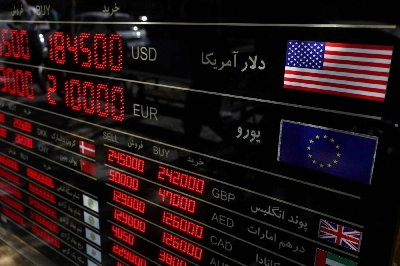
Iran rial tanks to record low as US sanctions and inflation bite

Iran’s currency depreciated to record lows against the dollar last week as multiple challenges including oil sanctions, regional tensions and spiralling inflation plague the economy.The greenback was trading at a little under 1.3mn rials on the unregulated, open market in Tehran late on Wednesday, according to the website Bonbast and the Telegram accounts of three foreign-exchange shops in the Iranian capital. That was just off all-time highs hit earlier in the week, the traders said.The rial has weakened dramatically over the past year, hitting successive record lows in the wake of broader international sanctions.Since 2018, when US President Donald Trump exited a landmark nuclear deal during his first term, the rial has lost more than 95% of its value versus the dollar. When he returned to office this year, Trump revived his “maximum pressure” strategy against Iran, which involves aggressive economic sanctions and culminated in June’s airstrikes on Iran.A drop in oil exports, the biggest single source of foreign currency revenue for Iran, the fact that importers want to settle outstanding foreign trade before the end of the Western calendar year, a recent increase in gasoline prices and persistently high levels of inflation have all weighed on the informal foreign-exchange market in Iran, the state-run Hamshahri newspaper reported, citing Kamal Seyyed Ali, former deputy governor of the Central Bank of Iran.Iran’s Minister of Economic Affairs and Finance, Ali Madanizadeh recently warned that while tensions with Israel remain high, the dollar is likely to only strengthen further, stoking faster inflation.He likened the task of managing inflation and market volatility in Iran to “performing surgery in a field hospital” during the war with Iraq “while under constant bombardment”, according to the state-run Islamic Republic News Agency.Iran has several parallel exchange rates including an official CBI rate, that is only accessible to a limited number of organisations and companies, and a much more expensive, unregulated rate that is used by the vast majority of the population and is a key economic bellwether. 

A gas torch is seen next to the Lukoil company sign at the Filanovskogo oil platform in the Caspian Sea, Russia. Russian export revenues hit their lowest in November since the full-scale invasion of Ukraine in 2022, the IEA said.
Business

IEA lowers 2026 oil glut forecast for first time since May

Surplus to reach 3.84mn bpd in 2026, down 250,000 bpd from last monthSupply growth forecast lowered on sanctions disruptionsBrighter macroeconomic outlook supports demand, IEA saysParallel markets of ample crude but tight fuel markets to continueThe International Energy Agency trimmed its forecast of next year's global oil supply glut for the first time since May on Thursday, flagging higher demand prospects due to a stronger world economy and lower supply from nations under sanctions.Oil prices have been under pressure for months due to predictions from the IEA, which advises industrialised countries, and other analysts of a looming glut.Global oil supply will exceed demand by 3.84mn barrels per day, according to figures from the Paris-based IEA's latest monthly oil market report, down from a 4.09mn bpd surplus estimated in November.A surplus of almost 4mn bpd is still equal to almost 4% of world demand and is at the higher end of analysts' predictionsSupply rose sharply this year boosted by output hikes from the Organisation of the Petroleum Exporting Countries and its partners — a group known as Opec+ — as well as growth in the US and other producers.Opec+ has now paused output increases for the first quarter of 2026.The IEA revised up its global oil demand growth forecasts for this year and next due to an improving macroeconomic outlook and with "anxiety about tariffs having largely subsided".World oil demand is expected to rise in 2026 by 860,000 bpd, up 90,000 bpd from last month's outlook, the IEA said. It raised its 2025 forecast by 40,000 bpd to 830,000 bpd."Falling oil prices and the lower US dollar, both currently near four-year lows, act as a further tailwind for oil demand next year," the IEA said, adding that demand growth in 2025 has come almost entirely from non-OECD countries, which are more reliant on macroeconomic conditions.A spate of breakthroughs with US trade deals had helped put economic sentiment back on track after tariff-related tensions hit consumption earlier this year, the IEA said.The agency expects supply growth to be slightly lower than previously anticipated in 2025-2026, as sanctions on Russia and Venezuela hit exports.The IEA expects global oil supply to rise by 2.4mn bpd next year, having last month predicted supply growth of 2.5mn bpd.The IEA revised down its 2025 and 2026 output forecasts for Opec+ producers, largely because of sanctions disruptions.Global oil supply fell by 610,000 bpd on the month in November, the IEA said, on declining output from sanctions-hit Russia and Venezuela.Russian export revenues hit their lowest in November since the full-scale invasion of Ukraine in 2022, the IEA said.The IEA kept its forecasts for non-Opec+ output stable for this year and next on rising production in the Americas, namely the US, Canada, Brazil, Guyana and Argentina.A trend of "parallel markets", where ample crude supply is juxtaposed with tight fuel markets, is likely to persist for some time, it said, amid limited spare refining capacity outside China and EU sanctions on Russian crude-derived fuel exports. 

File photo shows Sudan's army soldiers celebrating after entering Wad Madani, in January 2025.
International

UK foreign minister plans sanctions relating to human rights abuses in Sudan

Britain's foreign minister Yvette Cooper plans to introduce sanctions relating to human rights violations and abuses in war-torn Sudan, she said Tuesday, stressing the need for sustained efforts for a ceasefire. "I've instructed my officials to bring forward potential sanctions relating to human rights violations and abuses in Sudan," Cooper told lawmakers, amid global efforts to end the war in the east African nation.The conflict erupted in 2023 amid a power struggle between the Sudanese Armed Forces and the paramilitary Rapid Support Forces (RSF). RSF's recent takeover of Al-Fashir, one of Sudan's largest cities, has raised grave concerns about mass killings. Both sides have increasingly relied on drone strikes in recent months.Cooper said that the international community had turned its back on Sudan for "far too long". "We may need to make sure teams can get in to investigate these atrocities and hold the perpetrators to account," she said. Last year, Britain imposed sanctions on three businesses which it said were funding military groups behind the Sudanese war.

Gulf Times
Business

Oil’s billion-barrel buildup at sea points to sanctions stress

A buildup of a billion barrels of oil on the world’s oceans includes a disproportionately large amount of crude from nations subject to some kind of sanctions — a sign the measures are bringing a degree of disruption to the oil trade. Of the surge in oil on tankers since the end of August, as much as roughly 40% of the increase is barrels from Russia, Iran, Venezuela, or unclear origin, according to vessel-tracking data from Vortexa, Kpler and OilX. Even the lowest estimate, at about 20%, is a larger share of global crude production than the three nations have. The buildup doesn’t mean the barrels will never sell, but it is a threat to the revenues of sanctioned petrostates, with further ramifications for a global oil market that’s forecast to be headed for oversupply. While the increase partly reflects higher output, it also suggests some level of difficulty discharging. There’s also been a simultaneous surge in unsanctioned supplies. The fate of all that crude on water, affected by sanctions or not, will go a long way to shaping how oil prices move over the next few months, traders said. Caution over the latest Western measures is triggering some reshuffling of crude flows, with ripple effects for major importers like India and China, while a stretched out tanker fleet briefly sent daily shipping costs above $100,000 a day. “Some of this increase is attributed to stricter Western sanctions, which have left Russian oil stuck on ships and unable to discharge,” Clarksons Securities analysts including Frode Morkedal wrote. “Previous buyers have purchased replacements from the Middle East and the Atlantic.” The buildup in restricted oil is led by Russian supplies, according to a Bloomberg analysis of the data from the vessel-tracking firms. Russian seaborne shipments have risen in recent weeks, with the country pumping more oil as it unwinds earlier production cuts alongside partners in the OPEC+ group of oil producers. It’s likely that some crude is being diverted to export terminals as a result of Ukrainian attacks on Moscow’s oil infrastructure, particularly refineries. **media[381193]** An unprecedented Western clampdown on buyers of Russian barrels, meanwhile, is stopping some cargoes from discharging, with Indian refineries notably refraining from taking cargoes and signs that China might not be willing to pick up the slack. US sanctions on Russia’s two largest oil producers, Rosneft PJSC and Lukoil PJSC, have made trading their oil even more difficult. Russia’s oil-related tax revenues fell year on year by more than 24% last month, according to Bloomberg calculations based on Finance Ministry data. Russia’s government already expects funds from oil and gas flowing into the budget this year to be the lowest since the pandemic of 2020. Iranian shipments have also surged, hitting the highest level in seven years in October, the same month when the US placed sanctions on a major Chinese terminal for its role in buying barrels from Iran. OilX, a unit of consultant Energy Aspects, says its oil-on-water data covers confirmed shipments, including volumes from countries such as Iran and Venezuela, which often experience delays due to dark fleet activity. As a result, the volume may be revised higher over time. Vortexa says that in general its oil-on-water numbers tend to overcount and be revised lower as ships discharge. But the current situation is far from usual. To be sure, there is plenty of non-sanctioned oil in tankers at sea, too, as global output increases. OilX data show that the single largest contributor to the increase since the end of August has been Saudi Arabia, closely followed by the US and Russia. The kingdom shipped oil overseas at the highest rate in two-and-a-half years last month, as it continues to reclaim market share lost over years of output curbs from the Organisation of the Petroleum Exporting Countries and its allies. At the same time, the amount of American crude at sea has climbed after shipments hit their highest monthly average level since July 2024 in October. Volumes rose after processors in Asia snapped up US cargoes over the summer when Middle Eastern prices jumped relative to other regions, in what is called an arbitrage window. But the barrels on water from nations subject to sanctions represent a larger part of the increase than their collective slice of global crude production of about 17%, according to OilX data. “It’s clear that there is a lot of crude on the water now,” Brian Mandell, executive vice president of marketing and commercial at Phillips 66, said on an earnings call late last month. “We’re kind of waiting to see what those crudes are.”


A North Korean flag flutters at the propaganda village of Gijungdong in North Korea, in this picture taken near the truce village of Panmunjom inside the demilitarised zone separating the two Koreas, South Korea.
International

North Korea threatens ‘offensive action’, condemns US-South Korea security talks

North Korea's defence minister vows 'more offensive action' a day after missile testSouth Korea's defence ministry denounces North Korea's missile testNorth Korea criticises US-South Korea security talks, US carrier visit to BusanUS says missile launch highlights North's destabilising effectNorth Korea’s defence minister No Kwang-chol threatened Saturday to take “more offensive action” as he condemned US security talks with Seoul and the arrival of a US aircraft carrier in South Korea.A day earlier, North Korea fired a ballistic missile towards the sea off its east coast, after denouncing on Thursday fresh US sanctions against North Korean individuals and entities that Washington said were involved in cyber-related money-laundering schemes.South Korea’s defence ministry Saturday condemned the missile launch, while saying the North’s criticism of the US-South Korea meeting was regrettable.No criticised a recent visit by US and South Korean defence chiefs to the border between North and South Korea, as well as their subsequent security talks in Seoul, alleging they were conspiring to step up deterrence efforts towards the North and to integrate their nuclear and conventional forces.“This is a stark revelation and an unveiled intentional expression of their hostile nature to stand against the DPRK to the end,” No said, referring to the country’s formal name - the Democratic People’s Republic of Korea. US Defence Secretary Pete Hegseth said on Tuesday the core of the alliance with Seoul will remain focused on deterring North Korea, although Washington will look at flexibility for US troops stationed in South Korea to operate against regional threats.No also said the visit of the US nuclear-powered aircraft carrier George Washington to South Korea’s southeastern port city of Busan this week following US-South Korean joint air drills with Seoul had escalated tensions on the peninsula.“We will show more offensive action against the enemies’ threat on the principle of ensuring security and defending peace by dint of powerful strength,” No said, according to North Korean state media KCNA.South Korea’s navy said the carrier’s visit was to replenish supplies and grant leave for the crew.While visiting South Korea last week, US President Donald Trump repeated his willingness to sit down with North Korean leader Kim Jong-un. No meeting took place, but Trump said he was willing to return to the region to meet Kim.Last week, North Korea also test-fired cruise missiles to the west of the Korean peninsula just as Trump and other leaders were set to gather in South Korea for regional meetings. Regarding the latest missile launch, the US Indo-Pacific Command said on Saturday that it “does not pose an immediate threat to US personnel or territory, or to our allies”. “The missile launch highlights the destabilising impact” of North Korea’s actions, it added.

Reliance has been trying to sell grades including Murban and Upper Zakum on the spot market to domestic and international refiners, according to people at the companies receiving those offers
Business

India’s Reliance trying to sell Mideast oil in rare offer

India’s Reliance Industries Ltd is seeking to sell cargoes of Middle Eastern oil, an unusual move for a refiner that’s normally a major buyer.There’s heightened focus on the actions of the nation’s oil processors since the US slapped sanctions on key supplier Russia. Reliance has been trying to sell grades including Murban and Upper Zakum on the spot market to domestic and international refiners, according to people at the companies receiving those offers. They asked not to be named as they aren’t authorised to speak publicly.India’s largest privately owned refiner, controlled by billionaire Mukesh Ambani, is typically a major importer of oil from the Middle East and Russia. The recent sanctions on Moscow’s two largest oil companies have spurred expectations that Indian processors will have to buy more barrels from countries such as Saudi Arabia.Yet the offers suggest Reliance has ample supply for now, though the reasons why are unclear. Traders are watching Indian buying patterns closely to see whether refiners will hoover up grades tied to benchmark crude prices — potentially supporting oil futures — or find ways to sustain imports from Russia.The Mumbai-based company has already sold a cargo of Iraqi Basrah Medium crude to a Greek buyer. It’s unclear how much crude Reliance is looking to offload in total; and it could choose to sell some but not all of the cargoes.A Reliance Industries spokesperson didn’t reply to an email seeking comment.Refiners in India, the world’s third-largest importer of crude, are busy trying to diversify their supply sources after Western sanctions made buying discounted Russian oil more difficult and risky.Reliance had been Indian’s top importer of Russian crude this year, but snapped up millions of barrels from the Middle East last month following the White House penalties against Russia, which were aimed at depriving the Kremlin of funds for its war in Ukraine.Reliance said last month that it would abide by the US sanctions, and would be adapting its operations to meet the compliance requirements. The refiner previously had a term supply deal for around 500,000 barrels a day from Russian producer Rosneft PJSC.

Gulf Times
International

US imposes sanctions on Colombian President

The United States announced on Friday sanctions against Colombian President Gustavo Petro, accusing him of refusing to combat drug trafficking. In a statement, US Treasury Secretary Scott Bessent said: "President Petro has allowed drug cartels to flourish and refused to stop this activity. Today, President Trump is taking strong action to protect our nation and make clear that we will not tolerate the trafficking of drugs into our nation."The sanctions are also against the Colombian president's wife, Veronica Del Socorro Alcocer Garcia, his son Nicolas, and Colombian Interior Minister Armando Benedetti.In response to the US accusations and sanctions, the Colombian president posted on the X platform that he has sought to combat drug trafficking for decades."Fighting drug trafficking for decades and effectively has brought me this measure from the government of the society we helped so much to curb their cocaine consumption," he added.

Gulf Times
International

Russia vows response to new European sanctions

Russia on Friday vowed a "painful response" to the new package of sanctions imposed by the European Union and to take effective and strict steps in this regard. Russian Foreign Ministry Spokesperson Maria Zakharova said in a comment published on the Russian Foreign Ministry's website that Russia strongly condemns any illegal unilateral coercive measures. The number of countries that support and back this approach is growing. Naturally, Russia will respond to the latest package of sanctions imposed by the European Union with effective and strict steps.Zakharova emphasized that "even in Brussels, they do not believe in the success of sanctions against Russia, but they insist on following a suicidal path for the European Union."The European Union announced yesterday, Thursday, that it had adopted the nineteenth package of economic sanctions against Russia.The new package includes a complete halt to imports of liquefied natural gas from Russia and additional measures against the Russian shadow fleet, which allows Moscow to export oil by circumventing Western sanctions.The sanctions also targeted 117 new vessels from this fleet, bringing the total number of vessels subject to EU sanctions to 558.The new sanctions target companies in several third countries, including 12 in China and three in India, accused of helping Moscow circumvent Western sanctions and transfer technology, particularly that used in drone manufacturing.