tag

Tuesday, July 14, 2026 | Daily Newspaper published by GPPC Doha, Qatar.

Tag Results for "US investment" (184 articles)

Iraq's new Prime Minister Ali al-Zaidi.
Business

Iraq's prime minister seeks big energy investments on US trip

Iraq's new Prime Minister Ali al-Zaidi aims to secure major US investment in his country's oil, gas, and power sectors during ‌a visit to the White House this week after the Iran war hammered crude output and state ​finances.Iraq's government is increasingly focused on ‌diversifying international partnerships to better cope with regional instability, analysts say, an agenda expected to take centre stage ‌during the July 13-18 ⁠visit.The push represents one of ‌the most explicit attempts in years to bring major ‌US investment into a sector long dominated by Chinese, Russian, and European firms, though Iraqi officials reject suggestions Baghdad is distancing ⁠itself from close ally Tehran in favour of deeper ties with Washington."The Iran war was a turning point," said Baghdad-based political analyst Ahmed Younis. "It highlighted the risks of overreliance on any single regional partner.""Zaidi views energy as the fastest route to deeper cooperation with Washington," he said.The effort includes negotiations with Chevron over major upstream projects, support for US-backed power and liquefied natural gas ventures, security guarantees for American operators in Iraq’s semi-autonomous Kurdistan region, and revived plans for strategic export pipelines linking Iraq to Mediterranean markets, according to Iraqi and US officials.Among recent initiatives approved by al-Zaidi’s cabinet is ​an agreement with US-based HKN Energy to develop the Himreen oilfield in northern Iraq. The government has also authorized the Electricity Ministry to finalize a comprehensive cooperation agreement with General Electric aimed at expanding Iraq’s electricity generation and transmission infrastructure.Such deals are expected to be a ‌focus of a meeting between al-Zaidi, a multimillionaire ⁠who took office in May, ​and US President Donald Trump, who has given the new Iraqi prime minister strong backing."We have directed ​the Ministries of Oil, Electricity and Communications to give priority to reputable American companies working in energy, telecommunications, technology, and development,” al-Zaidi said in a statement ahead of the trip.However, attracting enough investment to develop oilfields and fix infrastructure bottlenecks that have prevented sustained gains in output will not be easy, analysts say.An official document seen by Reuters indicated that in early June the Iraqi cabinet instructed the state-run Basra Oil Company to exempt US energy companies currently in discussions for energy projects from certain regulatory requirements related to preliminary agreements."The recent decisions regarding Chevron, US operators in the Kurdistan region, and other US energy projects reflect a deliberate policy shift,” said Mohammed Abbas, a former manager at the state-run Basra Oil Company who now works as ‌an energy consultant. "Zaidi is using Iraq’s energy sector to ‌strengthen ties with Washington and to reverse a ⁠perception among some US energy majors that Iraq is a challenging environment for large-scale investment."Four Iraqi oil officials familiar with the ⁠talks with US energy companies — including Chevron, ExxonMobil, HKN, and ⁠others — said the push underscored Baghdad’s broader effort to deepen economic cooperation with the US.That outreach comes as Iraq grapples with the challenge faced by many oil-producing nations: attracting investment and expanding production while remaining constrained by the Opec+ producers' group output limits.Though Iraq holds some of the world’s largest crude oil reserves, longstanding production restraints have complicated ambitions to raise revenues to support a rapidly growing population.Negotiations with Chevron have emerged as one of the most significant elements of Iraq's strategy. Earlier this year, Chevron entered ​exclusive discussions with Iraq over the giant West Qurna-2 oilfield, after Baghdad moved to replace Russia’s Lukoil as operator — potentially giving the US company control of one of Iraq’s most productive assets.Several Iraqi lawmakers and analysts indicated that the government’s energy initiatives aim to signal to Washington that Iraq is becoming a more attractive destination for large-scale international investment after years of security concerns, bureaucratic hurdles, and legal disputes.Security has improved markedly since the defeat of Islamic State about a decade ago, though periodic drone attacks and regional tensions continue to pose risks to energy infrastructure.Iraqi officials say security around key oil installations has been reinforced since the Iran conflict, with additional measures aimed at reassuring foreign energy companies."Prime Minister Zaidi comes from a business ‌background and understands that winning over ​American energy companies, especially amid fragile regional security, is no easy task," said Murad Ismael, a lawmaker and member of Iraq’s parliamentary oil and gas committee.

An Egyptian rides his cart past the pyramid of Khafre (aslo spelled Chephren) on the Giza Plateau, on the southern outskirts of the capital Cairo (file picture).
Business

Egypt current account deficit widens to $5.1bn

Egypt’s current account deficit more than doubled to $5.1bn in ‌the January-March quarter from $2.3bn a year earlier, central bank data showed on Sunday, reports Reuters. Net foreign direct investment inflows edged down to $3.7bn from $3.8bn in the same period of 2025. The central bank attributed the wider July-March current account ‌deficit mainly to a larger merchandise trade deficit, partly offset by higher remittances, tourism revenue and Suez Canal receipts. Remittances from Egyptians working abroad rose to $12.8bn from $9.3bn in the same quarter last year. Tourism revenue increased to $4.2bn from $3.8bn in the same period last year. Suez Canal revenues rose to $1bn from $800mn a year earlier. Oil imports increased to $5.7bn in the same quarter, from $4.8bn a year earlier, while exports rose slightly to $1.6bn from $1.2bn. 

Stephanie Pope, president and CEO of Boeing Commercial Airplanes.
Business

Boeing unveils new 737 Max production line as aviation giant charts comeback

Boeing marked another step in a marathon comeback on Friday when it celebrated expanded production of the 737 Max, now an aircraft in heavy demand after earlier disasters tarnished the company's reputation.At a rousing ribbon-cutting ceremony attended by hundreds of Boeing employees, commercial airlines chief Stephanie Pope and Washington state elected officials characterised the new $1bn "North Line" Max production line investment in Everett, Washington as the appropriate next step for an industrial site that has been building Boeing's most storied aircraft for decades."This investment is a vote of confidence in our workforce, in American manufacturing, and the future of aerospace in the city of Everett," said Everett Mayor Cassie Franklin. "This factory has repeatedly shown the world what is possible."Boeing has big plans for the North Line, envisioning a production cadence comparable to that in Renton, 35 miles to the south, which until this week was the exclusive home of Max assembly.But in keeping with Boeing's caution after two deadly Max crashes, executives plan a gradual ramp-up in Everett for a jet that once defined the company's problems but is now at the center of its comeback."It's a rolling start," Jennifer Boland-Masterson, senior director for Boeing's North Line production said earlier this week on a media tour of the new production line."We're going to start off slower and then increase our rates," Boland-Masterson said, describing the work ahead on the site's first 737 Max 10 fuselage that was just beginning to be assembled.The Everett building was used to assemble the Boeing 787 Dreamliner before Boeing shifted the operation to South Carolina.While triumphant music played at Friday's ceremony, the massive Convention Center-scaled space was largely empty earlier in the week, save for dormant cranes, a scattering of workers and the occasional hum of drilling.The Everett operation is based closely on the Max assembly lines in Renton. Operations are spread out over 10 "flow days," including days when wings are added and the structure is outfitted with engines, seats and other components.Boland-Masterson declined to offer a timetable for when the first North Line Max aircraft would complete the process. Boeing is training 1,000 North Line staff, about half from Renton and the rest new recruits.The operation -- located in Everett because of the lack of available land in Renton -- will be a central element in Boeing's goal to lift Max output from the current 47 per month to 63 and possibly higher, in a ramp-up closely overseen by federal aviation regulators.The Max has been a key element in a long period of Boeing stumbles. Those began with a pair of deadly crashes in 2018 and 2019 that together claimed 346 lives and prompted congressional hearings in which Boeing was slammed for degrading safety in the chase for profits, and for misleading Federal Aviation Administration (FAA) regulators during certification.The company replaced its leadership in December 2019, but doubts about the MAX re-emerged in January 2024.Then, a window panel on an Alaska Airlines jet blew out midflight before an emergency landing that miraculously resulted in no fatalities. The incident plunged Boeing back into crisis, prompting another leadership shakeup.Since then, CEO Kelly Ortberg has implemented process and quality control improvements and worked to restore credibility with airline customers and FAA regulators, who greenlighted Max production increases from 38 to 42 and then from 42 to 47.Ortberg told a Wall Street conference in late May that it would take "a few months of stabilisation" at the 47 level in terms of readying the supply chain while monitoring key performance indications.After a "low-rate initial production" at Everett, the "North Line will help enable the 737 Max programme to reach 52 airplanes a month," according to a Boeing handout.But Boeing has key FAA hurdles to clear, including the certification of the 737 Max 10. In addition, the agency must sign off on the company's production plans for Everett before commercial aircraft can be delivered. 

Gulf Times
Business

Al-Kuwari meets Cisco chairman

His Excellency the Minister of Finance Ali bin Ahmed al-Kuwari has met with Chairman and Chief Executive Officer of Cisco Chuck Robbins during his visit to Doha, reports QNA. The meeting reviewed cooperation relations along with prospects for strengthening and developing them, particularly in the fields of investment, finance, and the digital economy, in addition to a number of topics of mutual interest.

Gulf Times
Qatar

Foreign firms flock to Qatar in first quarter

Qatar has drawn one of its strongest waves of foreign business in recent years, with 3,295 non-Qatari companies registered in the first quarter of 2026 — a vote of international confidence that underscores the country's growing pull as a regional investment hub.The surge came despite the economic uncertainties and geopolitical challenges buffeting global markets during the quarter, and points to a business environment that continues to reassure investors even in turbulent times.According to a report by Qatar TV, the first-quarter figure marked one of the strongest bursts of foreign business establishment in years. The momentum reflects Qatar's ability to attract international investors through a blend of economic stability, advanced infrastructure, investor-friendly legislation, and expanding opportunities across multiple sectors.The increase comes as Qatar presses ahead with policies designed to sharpen its competitiveness as a regional and global business hub. Key drivers include the steady development of economic and investment regulations, efficient and easily accessible procedures for setting up businesses, and broader scope for foreign ownership across various sectors.Over recent years, the country has introduced a series of reforms aimed at making the investment process faster and more accessible. These measures have improved the ease of doing business, encouraging multinationals and entrepreneurs to establish operations in Qatar. Among the most significant steps has been the expansion of foreign ownership rules, allowing international investors to hold up to 100% of companies in many sectors — a move that has notably lifted market confidence.The strong showing was also evident on specialised economic platforms, particularly the Qatar Financial Centre, which added more than 800 new companies during the first quarter — a growth of around 57% on the same period a year earlier. The jump signals rising interest from global firms seeking to use Qatar as a base for regional operations.Foreign investment inflows are also undergoing a structural shift. While energy, particularly liquefied natural gas (LNG), remains the cornerstone of the economy, international capital is increasingly flowing into emerging fields such as financial services, technology, artificial intelligence, digital transformation, and other knowledge-based industries.This diversification aligns with the goals of Qatar National Vision 2030, which seeks to build a sustainable, diversified economy capable of competing globally while reducing reliance on traditional sectors. The strategy places strong emphasis on innovation, human capital development, entrepreneurship, and the growth of a knowledge-driven economy.Qatar's ability to attract international companies has been further underpinned by major investment in infrastructure and logistics. World-class transport networks — including the expansion of Hamad International Airport and the continued growth of Hamad Port — have strengthened the country's role as a gateway linking Asia, Europe, and Africa.Financial indicators tell the same story. The stock of foreign direct investment reached around QR165.4bn by the end of 2025, reflecting sustained confidence among international investors and the continued inflow of foreign capital into the national economy.The growth in foreign companies mirrors Qatar's current economic performance and points to bright prospects ahead. International businesses increasingly view the country as a strategic location offering political stability, competitive regulations, advanced infrastructure, and access to fast-growing regional markets.Investment promotion bodies, meanwhile, continue to step up efforts to position Qatar as a global centre for business and innovation. Through initiatives supporting entrepreneurship, digital transformation, and sector diversification, the country is aiming to attract higher-value investment that contributes to long-term growth.As global competition for capital intensifies, Qatar's ongoing economic reforms, financial strength, and commitment to sustainable development are reinforcing its reputation as an attractive destination for international business. 

Gulf Times
Business

Al-Sayed meets heads of several international economic organisations

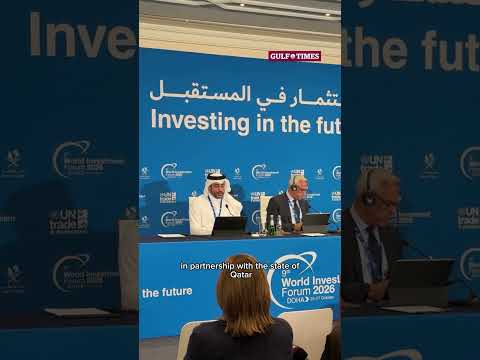
His Excellency the Minister of State for Foreign Trade Affairs at the Ministry of Commerce and Industry (MoCI) Dr Ahmad bin Mohammed al-Sayed met with the heads of a number of international organisations, where they discussed ways to enhance co-operation in the areas of trade and investment, along with various economic and trade issues of common interest.A statement issued by the MoCI on Tuesday indicated that His Excellency began his meetings with a meeting with Acting Secretary-General and Deputy Secretary-General of the United Nations Conference on Trade and Development (UNCTAD) Pedro Manuel Moreno. The two sides discussed preparations for the State of Qatar's hosting of the World Investment Forum, which Doha will host from October 25-27, 2026, along with developments in the global economy, and a number of topics related to trade, investment, and development.**media[465587]**His Excellency also met with the Director-General of the World Trade Organisation (WTO) Dr Ngozi Okonjo-Iweala. The meeting discussed the latest developments in international trade, the challenges facing the multilateral trading system, the importance of promoting the flow of trade, and supporting the ongoing reforms in the WTO.The two sides also discussed the strength and resilience of Qatar's economy under the current circumstances, and its ability to continue growing and enhancing its position as a reliable trade and investment partner regionally and internationally.His Excellency also met with the Director-General of the World Intellectual Property Organisation (WIPO) Daren Tang. They discussed ways to enhance co-operation. They also exchanged views on a number of topics of common interest.HE the Minister of State for Foreign Trade Affairs also participated in the WIPO's high-level ministerial dialogue. In his remarks, he emphasised that the State of Qatar continues to develop an integrated intellectual property system within the framework of its National Vision 2030, which enhances foreign trade and the knowledge-based economy, and supports innovation and international co-operation.

Gulf Times
Business

QCB governor meets officials from international financial institutions

His Excellency the Governor of the Qatar Central Bank and Chairman of the Qatar Investment Authority, Sheikh Bandar bin Mohammed bin Saoud al-Thani, held separate meetings with Founder and CEO of WHOOP, Will Ahmed; CEO of HPS Investment Partners, Scott Kapnick; Co-Founder and Co-Chairman of the Carlyle Group, David Rubenstein; and President and Chief Operating Officer of the Blackstone Group, Jonathan Gray, during his visit to New York, reports QNA. The meetings discussed key global financial and investment developments.

Gulf Times
Qatar

Minister of commerce meets UAE ambassador

His Excellency the Minister of Commerce and Industry Sheikh Faisal bin Thani bin Faisal al-Thani met Monday with the United Arab Emirates (UAE)’s ambassador to Qatar Saeed Abdullah al-Qamzi. They discussed bilateral co-operation in terms of trade, investment, and industry, in addition to touching on topics of mutual interest.  

Gulf Times
Qatar

Graduation season drives gold sales boom Lower global prices boosting consumer demand

The local gold market has been seeing a significant increase in consumer turnout over the recent periods as the graduation season has enhanced the demand for gold jewellery, with families increasingly choosing precious metal gifts to celebrate academic achievements of their children and relatives. Such seasonal surge in demand has coincided with a notable drop in global gold prices, making purchases more attractive for both gift-giving and investment purposes. Accordingly, some gold retailers across Doha noted that graduation gifts have become the primary driver of sales during the current period, surpassing demand typically associated with other seasonal occasions. Consumers are particularly seeking bracelets, necklaces, rings, earrings, and compact jewellery sets, while customised pieces engraved with graduates’ names or initials have gained remarkable popularity due to their emotional and celebratory value. The strong demand has also been supported by a decline in international gold prices over the recent weeks. After reaching record highs earlier in 2026, global gold prices experienced a substantial correction during the second quarter due to several related economic and geopolitical factors. However, despite the recent decline, gold continues to be regarded as one of the world’s preferred long-term stores of value. According to some local gold traders, many customers are taking advantage of the lower prices to buy graduation gifts in addition to gold bars as a safe investment. The graduation season coupled with the start of the summer holiday has further stimulated retail activity, with many families purchasing gifts before travelling abroad. Abdulaleem Hussein, a trader in Doha’s Gold Souq, noted that the decline in international prices has encouraged more customers to buy. He said necklaces, bracelets and earrings remain among the best-selling items, while Qatar’s jewellery market continues to distinguish itself through its wide variety of designs and its ability to produce customised pieces inspired by customers’ preferences or social media trends. Similarly, gold trader Ibrahim al-Ameri described the graduation period as one of the busiest times of the year for jewellery retailers. He observed a growing demand for personalised jewellery engraved with graduates’ names or initials, reflecting consumers’ preference for gifts with lasting emotional significance. He added that lower gold prices have also increased interest in gold bullion, which continues to be viewed as a reliable safe-haven investment during periods of economic uncertainty. Ahmed al-Yafei, another retailer in the Gold Souq, confirmed that customer traffic has risen noticeably in recent weeks as buyers seek to capitalise on softer prices while celebrating school and university graduates. He indicated that lightweight jewellery sets, modern bracelets, necklaces and earrings remain the preferred choices among younger consumers. Recent market data also shows that gold prices in Qatar have eased from their June peaks, improving affordability for local consumers and reinforcing buying activity during the current graduation season. The combination of lower international prices, seasonal gifting traditions, and sustained investor confidence is expected to make this year’s graduation period one of the most active seasons for Qatar’s gold market over the recent years. 

Gulf Times
Album

Japan to invest nearly $12 Billion in India to boost economic cooperation

Japanese Prime Minister TAKAICHI Sanae announced nearly $12 billion investments in commercial projects in India during summit talks with her Indian counterpart, Narendra Modi. Speaking to reporters after the bilateral talks in New Delhi, Sanae said the volatile international situation makes cooperation and integration between Japan and India even more important, adding that she and Modi discussed a number of shared objectives in this regard.  Regarding economic relations, the Japanese Prime Minister noted that companies from both countries have exchanged approximately 130 cooperation documents, noting that they also discussed cooperation in the areas of maritime security and economic cooperation.  The talks are part of Sanae's current visit to India, during which she is focusing on trade and investment, as well as economic and defense security.

Gulf Times
Qatar

Qatar's FDI haul soars to $3.4bn

Qatar pulled in $3.4bn in foreign direct investment capital expenditure last year, spread across 373 projects that created just over 15,000 jobs, as Invest Qatar's newly released 2025 Annual Report confirmed the country's growing pull for high-value, innovation-driven capital.The figures mark a striking year-on-year leap: new FDI projects surged 52%, up from 245 in 2024 to 373 in 2025. More than half of total capex went into greenfield ventures, while close to half of all projects fell into the medium-to-high-tech bracket — a signal, the agency said, of investors' confidence in Qatar's increasingly advanced and knowledge-based economy.Five sectors did most of the heavy lifting. Consumer products, business services, food and beverages, software and IT services, and textiles together accounted for 69% of all projects, pointing to a landscape that spans both legacy industries and newer, knowledge-intensive ones — in step with the goals set out under the Third National Development Strategy.His Excellency the Minister of Commerce and Industry and Chairman of the Advisory Board of Invest Qatar, Sheikh Faisal bin Thani bin Faisal al-Thani, said the results reflected a deliberate strategy rather than good fortune. Amid global uncertainty, the minister said, Qatar had stayed focused on strengthening an economy built on clarity and durability, with 2025's milestones cementing the country's standing as a premier investment destination. He credited a series of targeted initiatives for sharpening the ecosystem's competitiveness, and pledged continued work with partners to keep Qatar a preferred global hub for investment and innovation.Behind the numbers lies a year of institutional expansion. Invest Qatar extended its international reach with new representative offices in London, New York, Paris, Mumbai and Istanbul, putting the agency closer to investors in priority markets. It also rolled out a $1bn national incentives programme built around four packages targeting advanced industries, logistics, technology and financial services.On the digital front, the agency overhauled the Invest Qatar Gateway — the country's first integrated platform guiding investors from market entry through to expansion — adding a secure document vault and smoother access to banking and telecoms services. The platform has since grown to more than 15,000 registered users and upwards of 900 companies.Invest Qatar CEO Sheikh Ali Alwaleed al-Thani described 2025 as a year of purposeful progress and deepening partnerships, crediting the agency's expanded global footprint, new incentives and digital tools with reinforcing Qatar's reputation as a dependable long-term investment partner. He said the focus ahead would be on sustaining that momentum so investment continues to be supported and growth shared.The year also brought recognition on the world stage: Qatar broke into the top 10 globally in the IMD's Global Competitiveness Report for the first time, and climbed 21 places to 12th in fDi Intelligence's Greenfield FDI Performance Index — among the clearest external endorsements yet of its greenfield investment credentials. 

Abdullah bin Hamad al-Athbah
Qatar

Court clears client of revived bank claim

In a ruling that brings a years-long banking dispute to a close, the Investment and Trade Court has found in favour of a client against an Islamic bank, confirming that he bears no further liability over a claim that had already been settled and whose enforcement file had been closed.The dispute began in 2018 over a financing transaction and resurfaced years later when the client faced a renewed claim linked to the same deal, prompting a fresh legal battle before the court.Represented by lawyer Abdullah bin Hamad al-Athbah, the client sought a judgment that would bar any further claims against him over the same obligation.Al-Athbah submitted a defence backed by documents, maintaining that his client had no remaining financial obligations toward the bank under the disputed Murabaha sale contract.During the proceedings the bank sought dismissal of the client’s case, and at the final hearing its lawyer asked for an expert to be appointed to examine the claim.The Third Investment Circuit rejected the request and determined the case on the documents and evidence already before it.In its judgment of June 25, the court ruled that the client had been cleared of any obligations under the Murabaha sale contract and ordered the bank to pay the legal costs.Once the enforcement file had been closed following payment, it found, the bank could not return to pursue further amounts over the same transaction.The ruling is considered significant in banking disputes, drawing a clear line against reviving claims after settlement and reinforcing the legal certainty that parties will not be drawn back into repeated claims over debts already paid.Speaking to Gulf Times, al-Athbah said the ruling reflected the commitment of Qatar’s judiciary to upholding justice and protecting the rights of all parties, regardless of financial or social standing.He added that the consolidation of justice and the rule of law remained a foundation on which strong nations are built, and a principle affirmed by Qatar’s Constitution.