tag

Sunday, February 08, 2026 | Daily Newspaper published by GPPC Doha, Qatar.

Tag Results for "FIFA" (147 articles)

The panel underscored Qatar’s distinctive value proposition, specifically a combination of policy reforms, targeted investment strategies, and entrepreneurial resilience. PICTURE: Shaji Kayamkulam
Business

Qatar’s private sector eyes global expansion as policy reforms unlock new opportunities

Qatar’s private sector is poised to expand globally, leveraging the legacy of the 2022 FIFA World Cup and a series of policy reforms designed to attract investment and diversify the economy, a panel of Qatari public and private sector experts agreed.Khalid Abdulla al-Mana, vice-president of Enterprise Development and executive director of Qatar Exports; Mohammed al-Mulla, head of Asia at Invest Qatar; Hamad Mohammed al-Nasr, director of Trade Development and Investment Promotion at the Ministry of Commerce and Industry (MoCI); and Ashraf Abu Issa, chairman and CEO of Abu Issa Holding; discussed this central message during the ‘Unlock Potential and Accelerate Growth – Opportunities & Challenges’ panel, held recently on the sidelines of the ‘IBPC Annual Connect Event 2026’.Al-Mana highlighted how Qatari companies are increasingly taking their expertise abroad: “In 10 years, we have a world-class metro, airport, stadiums, and roads... with this came a lot of private sector growth. It is important that we take this private sector outside because we have a lot of things to be proud of.”He noted that Qatar Development Bank (QDB) has been financing and supporting companies to enter international markets, citing recent participation in the African Investment Forum as an example of Qatar’s growing footprint.Al-Mana also pointed to India as a priority market, noting that QDB is preparing trade missions to map opportunities between Qatari and Indian firms. “We want to do the research for the Indian market and conduct a trade mission, hopefully this year... this will help a lot in building trade relations,” he added.During the discussion, al-Mulla outlined Invest Qatar’s focus on knowledge-based industries. “In alignment with the Third National Development Strategy, we proactively target sectors such as emerging technologies, logistics, advanced manufacturing, game development, and mobility solutions,” he explained.He stressed that Invest Qatar provides facilitation and aftercare services to ensure companies have a “soft landing” in the country. “We keep a close alignment to these companies to ensure they have a safe journey within Qatar,” al-Mulla said.Addressing regional competition, he stated that competitiveness among Gulf economies “is ultimately beneficial”. “Competition in the region is a benefactor... it creates a wider supply chain, talent gets circulated, and this shows sustainability within the region,” he said.Emphasising Qatar’s regulatory transformation, al-Nasr said: “We are guided by our national development strategy... Qatar has put three main KPIs: to be among the top 10 business environments globally, attract $100bn in FDI, and increase non-hydrocarbon contribution to GDP by 2030.”He revealed that the ministry is implementing more than 188 projects to ease the business journey, alongside sector-specific roundtables to identify and address private sector challenges. “This year alone we have highlighted 128 business challenges from the private sector...we listen, validate, and move back to the private sector on an annual basis,” al-Nasr explained.Abu Issa reflected on the evolution of Qatar’s business ecosystem, saying the country witnessed “a big change” over the last two decades. He noted that challenges such as visas and land allocation have eased, while legislation for family businesses and startups has matured. He also offered advice to entrepreneurs, placing emphasis on patience and grassroots development. 

Jassim al-Jassim at Mutual Dialogue Summit session Tuesday.
Qatar

Hosting major sports events in Qatar has enable young Qataris to realise their full potentials

Qatar plans to host more high-profile sports and football tournaments over the next five years, building on the success of the FIFA World Cup Qatar 2022, the FIFA Arab Cup, the AGCFF U-23 Gulf Cup, and other major events, according to Jassim al-Jassim, CEO of the Local Organising Committee for Football Events.Al-Jassim was speaking at the third edition of the Mutual Dialogue Summit during a session titled “From Hosting to Legacy: How Gulf Sports Shape a Youth-Led Future,” moderated by Asrar al-Ansari, director of the Youth Department at the Co-operation Council for the Arab States of the Gulf (Kuwait).He said the experience gained from hosting global tournaments, coupled with Qatar’s advanced infrastructure, has positioned the country to stage major international sporting events. He noted that many young Qataris discovered and developed their capabilities through hands-on involvement in these tournaments, enabling them to assume senior organisational and management roles without external supervision.Al-Jassim stressed that Qatari professionals have earned FIFA's full confidence to organise events independently, without direct intervention. He added that Hamad International Airport, security agencies, administrative bodies, and other state institutions are now fully equipped to manage large-scale international events, supported by effective contingency plans to address unforeseen challenges.He also highlighted Qatar’s growing reputation as a family-friendly, safe, and welcoming destination for women, noting that the country's sporting events consistently record high ticket sales.While embracing modern technologies and global best practices, al-Jassim said Qatar has remained committed to showcasing its heritage and traditions. He cited Al Bayt Stadium’s architecture and the Gulf bisht presented to Lionel Messi at the 2022 World Cup final as examples of this cultural emphasis.He further noted that Souq Waqif has emerged as one of the most popular destinations for visitors during international tournaments. This outcome was not deliberately planned, but one that reflects the enduring appeal of authentic Gulf heritage. Respect for national traditions, customs, and laws, he said, has remained central to all event-planning efforts.Among the most significant outcomes of the FIFA World Cup Qatar 2022, al-Jassim added, was the importance of investing in local youth by training and engaging them in planning and organisational processes. This approach has paid off, with many trainees now holding senior management and supervisory positions and performing their roles with high efficiency.The third edition of the Mutual Dialogue Summit concluded on Monday. Organised by the QatarDebate Centre, the two-day event was held at Msheireb Museums in Doha and brought together more than 100 young men and women from GCC countries. It was held in strategic partnership with the Ministry of Sports and Youth, in co-operation with Msheireb Museums as the cultural partner. 

Gulf Times
Sport

Qatar to host elite international football festival from March 26 to 31

Qatar will welcome some of the world’s biggest football names when it hosts the Qatar Football Festival from March 26 to 31, the Local Organising Committee for Football Events announced Monday. The festival will feature the Finalissima 2026 between Argentina and Spain, along with a series of high-profile international matches involving hosts Qatar, Saudi Arabia, Egypt and Serbia. The fixtures will offer the teams a valuable opportunity to assess their readiness and fine-tune preparations ahead of the FIFA World Cup, scheduled to be held in the USA, Canada and Mexico from June 11 to July 19. A total of six matches will be played during the festival, headlined by the Finalissima at the iconic Lusail Stadium on March 27. European champions Spain will face World and South American champions Argentina in a highly-anticipated clash that is set to bring together legendary Lionel Messi and teenage sensation Lamine Yamal for the first time. The action begins on March 26, with Egypt taking on Saudi Arabia at Ahmad bin Ali Stadium, followed by Qatar’s clash with Serbia at Jassim bin Hamad Stadium. On March 30, Egypt will meet Spain at Lusail Stadium, while Saudi Arabia face Serbia at Jassim bin Hamad Stadium. The festival will conclude on March 31 with hosts Qatar facing Argentina at Lusail Stadium. With all matches scheduled during football governing body FIFA’s designated international window, teams are expected to field their senior squads. In addition to Messi and Yamal, Liverpool forward Mohamed Salah and Manchester City’s Omar Marmoush, who both play for Egypt, are among the star attractions expected to feature. The matches will be particularly important for hosts Qatar, who secured qualification for next year’s World Cup through the Asian qualifiers for the first time in their history. It will mark Qatar’s second appearance at the global showpiece, following their debut as hosts in 2022. The national team will be aiming to improve on their inaugural campaign, where they exited at the group stage having lost all three group stage matches. Tickets on sale next monthExclusive travel packages for international fans will be available from February 1 in partnership with Visit Qatar and Qatar Airways. Match tickets will go on sale from February 25, 2026 via roadtoqatar.qa. His Excellency Sheikh Hamad bin Khalifa al-Thani, LOC Chairman for Football Events, said: "We look forward to welcoming players and fans from around the world as we prepare to host the world's biggest football stars ahead of the FIFA World Cup. We are honoured to open our doors once again to the global football community.” Sheikh Hamad added: “Hosting the Qatar Football Festival reflects our commitment to delivering world-class experiences and reaffirms Qatar's position as a trusted partner in global football.” Lusail Stadium holds a special place in world football history, having staged iconic moments at major tournaments, including the FIFA World Cup Qatar 2022 and Qatar’s Asian Cup triumph. The venue continues to strengthen its status as one of the sport’s most prestigious landmarks and a stage for creating new footballing memories. Schedule26 March: Egypt vs Saudi Arabia at Ahmad bin Ali Stadium26 March: Qatar vs Serbia at Jassim bin Hamad Stadium30 March: Egypt vs Spain at Lusail Stadium30 March: Saudi Arabia vs Serbia at Jassim bin Hamad Stadium31 March: Qatar vs Argentina at Lusail Stadium

Gulf Times
Qatar

QRCS pays tributes to volunteers of FIFA Arab Cup Qatar 2025

His Excellency the President of the Qatar Red Crescent Society (QRCS), Yousef bin Ali al-Khater, has praised the efforts of volunteers who participated in the organisational measures of the FIFA Arab Cup Qatar 2025 matches, as well as their dedicated efforts and sincerity toward achieving successes and accomplishments. This came during a QRCS-organised ceremony in honour of a contingent of volunteers and partners, in recognition of their pivotal role in ensuring a successful Arab tournament, following the colossal efforts they undertook in both organisational and field aspects, which contributed to the seamless progress of matches and side events.**media[405760]**Attending the ceremony was Maj Ghanem Mohammed al-Hudaifi, Assistant Commander of the Operations Unit of the Safety & Security Operations Committee (SSOC), who exchanged honours and shields with HE al-Khater in appreciation of the productive collaboration between the two sides. Al-Khater, for his part, expressed hope that this honoured image of volunteerism at QRCS would continue to expand regionally and globally, culminating in a tremendous model and school for preparing volunteers to operate in community and humanitarian fields. He applauded the efforts undertaken by partners from the Ministry of Interior and the security committee for their massive confidence, alongside the concerned officials in the General Secretariat and the Executive Apparatus. Al-Khater further extended his gratitude to the Volunteering Department, noting that the path to achievement was hard and streamlined by ongoing collaboration and intensive communication, emphasising that success genuinely matched the effort. The ceremony showcased a primer that highlighted the role of volunteers in maintaining security and safety on the pitch, exactly according to the training provided under the supervision of the security committee.**media[405762]**This included various functions, such as organising spectators, following security instructions, initial intervention in contingency cases, as well as contributing to the preservation of sanitation and order. During the ceremony, the child Osama Khaled Abu Armilah performed a volunteering anthem, followed by the launch of the “Fursan Volunteering” project, which was announced by Assistant Secretary‑General for Volunteering and Local Development, Hussein Aman al-Ali, alongside Head of the Volunteering Department at QRCS, Sharifa Nasser al-Ruwahi. Al-Ali highlighted that this project is a consequential step to broaden the volunteerism horizons and attract children and students as vital volunteers, noting that Osama was the first volunteer within this initiative. Al-Khater, accompanied by al-Ali, honoured partners and supporters from the Special Security Services Organisation Unit, alongside the leaders of the volunteer teams, the logistics team, and a variety of distinguished volunteers who performed exceptional tasks, as well as the administrative team that oversaw the performance and work of the volunteers. The participation of QRCS in the FIFA Arab Cup Qatar 2025 underscores the significance of volunteerism in supporting sporting events and key national platforms, promoting a culture of giving and community engagement, while also providing young people with the opportunity to internalise experience and hone skills in the organisation and management of sporting events. The volunteers were co-opted through multiple stages, beginning with the reception of volunteering applications, their screening, and oral examinations, followed by the training and qualification phase, which is still ongoing, culminating in the final list of leaders, supervisors, and field teams, which included 3,700 volunteers, ahead of this key Arab sporting event.An accredited training team from the Special Security Services Organisation Unit supervised the delivery of specialised training programmes, covering essential knowledge and skills related to crowd management, security and safety guidance, enhancing alertness, security awareness, rapid decision-making, problem-solving, and teamwork, among other topics.Volunteers receive both theoretical and practical training to ensure effective handling of all aspects of organisation, security, and safety on the pitch and in the spectator areas. 

Gulf Times
Qatar

QNB brings its Visa credit cardholders closer to FIFA World Cup 2026

QNB Group has launched an exclusive campaign for its Visa credit cardholders, offering them the chance to win hospitality packages to the FIFA World Cup 2026, courtesy of Visa.Running until March 31, 2026, the campaign rewards customers who spend a minimum cumulative amount of QR10,000 using their QNB Visa credit cards during the promotional period. For every additional QR1,000 spent beyond the initial qualifying amount, cardholders will earn one additional entry into the draw.The winners will embark on an unforgettable FIFA World Cup 2026 journey for two, featuring business-class flights, a four-star accommodation, and Category 1 match tickets. The hospitality packages grant access to the tournament’s most anticipated matches—the Opening Match, Round of 16, Quarter-Final, Semi-Final and the Final.As the only bank in Qatar offering opening and final match packages, QNB is proud to deliver a once-in-a-lifetime experience exclusively for its Visa credit cardholders. The official draw will take place on April 6, 2026.Through the campaign, QNB aims to bring customers closer to the excitement of the FIFA World Cup by combining everyday spending with access to world-class experiences. In partnership with Visa, the initiative underscores QNB’s commitment to delivering innovative rewards and exceptional service while leveraging Visa’s global acceptance and trusted security. 

Gulf Times
Qatar

Vodafone Qatar delivers seamless connectivity at FIFA Arab Cup Qatar 2025

As the FIFA Arab Cup Qatar 2025 concluded, Vodafone Qatar successfully delivered on its role as the Official Technology Sponsor, supporting the tournament with connectivity solutions that enabled seamless fan experiences and smooth tournament operations.Vodafone Qatar’s advanced network infrastructure supported more than 2mn subscribers, delivering nationwide 5G coverage, high-speed fibre connectivity, and secure communication links across tournament venues. Fans, visitors, and organisers benefited from reliable services that enhanced both match-day experiences and overall tournament operations.During match periods, users made over 17mn minutes of voice calls and consumed more than 1,600TB of data. Despite this high traffic, the network maintained consistently high availability and performance, achieving a 99.9% call setup success rate (CSSR), ensuring uninterrupted access for fans, broadcasters, and organisers.Sheikh Hamad Abdulla Jassim al-Thani, CEO of Vodafone Qatar, said: “Vodafone Qatar is committed to supporting the country’s efforts in hosting world-class sports events, in line with the Qatar National Vision 2030. Through continued investment in advanced connectivity infrastructure, we continue to foster a healthier society and enhance how people experience and participate in sporting activities.”The FIFA Arab Cup Qatar 2025 underscored the country’s commitment to sporting excellence, innovation, and global connectivity. Vodafone Qatar remains dedicated to supporting major sporting events and strengthening community connections through cutting-edge technology.To find out more about Vodafone Qatar’s products, services, and sponsorships, visit www.vodafone.qa 

Gulf Times
Qatar

Katara Cultural Village inaugurates two unique arts exhibitions

Two exhibitions exploring Qatar’s modern milestones, from hosting the FIFA World Cup to the era of oil-driven transformation, were inaugurated recently at Katara Cultural Village.The inauguration of “The Legacy of the FIFA World Cup Qatar 2022” exhibition was led by Katara general manager Prof Dr Khalid bin Ibrahim al-Sulaiti, and organised in co-operation between Katara and the Supreme Committee for Delivery & Legacy.**media[399386]**The ceremony was attended by Khalid al-Sayed, senior consultant and director of Post–World Cup Legacy.The opening also coincided with the inauguration of the exhibition “Cultural and Artistic Transformations: Beyond the Oil Drop”, which was attended by Qatar Society of Engineers director Amina al-Naama, alongside a number of individuals interested in cultural and artistic affairs.**media[399388]**“The Legacy of the FIFA World Cup Qatar 2022” offers comprehensive documentation of the Qatar 2022 FIFA World Cup experience as a pivotal milestone in the history of Qatar and the region.**media[399390]**Through visual and interactive content, it highlights various aspects of organising the tournament, including scale models of the World Cup stadiums and dedicated sections documenting the social initiatives launched during the preparation and hosting phases.It features screens displaying interviews and scenes from the tournament, reflecting the human, organisational, and cultural dimensions that accompanied the event, and emphasising that the World Cup was not merely a sporting competition, but a fully integrated civilisational experience.**media[399391]**The exhibition will run until December 30, 2026, aiming to attract visitors and tourists and introduce them to the World Cup story from hosting to championship victory.Meanwhile, “Cultural and Artistic Transformations: Beyond the Oil Drop”, held at Building 46, presents a profound artistic and human reading of the transformation journey experienced by society since the discovery of oil and the emergence of modernity.**media[399392]**The exhibition features the participation of 21 artists, presenting 36 artworks, 35 photographs and postage stamps, in addition to creative works executed on oil barrels, symbolising the strong connection between art and the resource that marked a major turning point in the region’s history.**media[399393]**The exhibition includes archival items documenting that historical period, including scenes related to the early stages of oil discovery and extraction, and the accompanying social and economic transformations.An interactive programme accompanies the exhibition, targeting children through art workshops that involve painting on engineers’ helmets (safety helmets), aiming to simplify engineering concepts while linking them to artistic creativity and awareness of industrial history.**media[399396]**The exhibition will also continue until December 30, 2026, offering a comprehensive cultural and educational experience. 

Gulf Times
Qatar

Qatar turns scale into substance in landmark year

Qatar capped 2025 as one of the world’s most influential sporting hubs, pairing elite on-field success with a packed calendar of global events that reinforced Doha’s standing at the heart of international sport.Backed by long-term investment, world-class infrastructure and organisational expertise sharpened since the 2022 FIFA World Cup, Doha hosted 84 sporting events during the year — including 15 world championships, 14 Asian tournaments and six Gulf competitions — alongside major regional and domestic fixtures. Officials described 2025 as among the most successful years in the country’s sporting history.Football remained central to Qatar’s sporting narrative. The national team secured direct qualification for the 2026 FIFA World Cup — to be held in the United States, Canada and Mexico — after finishing top of its Asian play-off group.The achievement marked Qatar’s second consecutive World Cup appearance, following its debut as host nation in 2022, and ended decades of unsuccessful qualification campaigns. The result was widely viewed as a breakthrough, reflecting sustained development at both youth and senior levels.On the hosting front, Qatar staged the Arab Cup Qatar 2025, the region’s flagship football tournament, which drew a record 1.25mn spectators. The final alone attracted more than 84,000 fans, the highest attendance in the competition’s history. Held under FIFA’s umbrella, the tournament was praised for its organisation, atmosphere and technical standards, with Morocco lifting the trophy after a dramatic final.Qatar’s position within global football governance was further reinforced by a series of high-profile FIFA events in Doha. The capital hosted the FIFA U-17 World Cup Qatar 2025, the first edition to feature 48 teams and more than 100 matches, all played within a single host city.Doha also staged the Intercontinental Cup for clubs, won by Paris Saint‑Germain, as well as the FIFA The Best Awards, attended by leading figures from world football. Together, these events underscored Doha’s role as a preferred venue for major international tournaments and ceremonies.Beyond football, Qatar’s sporting footprint spanned a wide range of disciplines. The Qatar ExxonMobil Open was voted the world’s best ATP 500 tournament by professional players, reflecting high standards of organisation and athlete experience. Doha also hosted top-tier events in women’s tennis, squash, padel and table tennis.In volleyball, Qatar secured hosting rights for the 2029 FIVB World Championship and the 2026 U-17 World Championship, strengthening its reputation in the sport. The country also staged elite competitions in golf, gymnastics, basketball, equestrian sports and chess, including the World Rapid and Blitz Chess Championships, which drew record participation.Qatari athletes delivered strong results on the international stage. In motorsport, Nasser al Attiyah claimed a record 20th Middle East Rally Championship title, reinforcing his status as one of the region’s most successful drivers. Qatar also hosted Formula 1, MotoGP and major off-road racing events at Lusail, cementing its place on the global motorsport calendar.In athletics, Qatari competitors won medals at Asian and world championships, while youth teams topped regional tournaments. Weightlifting, shooting and water sports also produced podium finishes, reflecting the breadth of the country’s sporting development. Qatar’s beach volleyball teams continued to excel, winning multiple international titles and rising to second place in the world rankings, while participation at the Islamic Solidarity Games yielded a strong medal haul across several disciplines.Qatar’s impact extended beyond hosting and competition. Several Qatari sports officials were elected to senior roles within Asian and international federations, highlighting the country’s growing influence in sports administration and governance.Officials said these appointments reflect confidence in Qatar’s expertise and its commitment to developing sport both regionally and globally, while providing a platform to shape policy, set international standards and promote initiatives supporting youth development, gender equality and grassroots participation. 

With non-hydrocarbon sector spearheading expansion, Qatar’s GDP growth has been forecast to rise from 2.7% this year to 3.2% in 2026, according to Kuwait-based banking group NBK.
Business

Qatar’s GDP growth forecast to rise to 3.2% in 2026 lifted by non-hydrocarbon sector

With non-hydrocarbon sector spearheading expansion, Qatar’s GDP growth has been forecast to rise from 2.7% this year to 3.2% in 2026, according to Kuwait-based banking group NBK.In its latest economic insight titled ‘Macroeconomic Outlook 2026-2027’, NBK noted that there will be gains, especially in Qatar’s trade and services segments.Tourism stands out, with visitor arrivals and hotel occupancy rates increasing year-on-year, leveraging the country’s FIFA World Cup and events legacy.The outlook is supported by investment and reform momentum under the Third National Development Strategy (NDS3), which aims to shift economic growth from the public to the private sector by developing clusters in manufacturing, logistics, and tourism, alongside the LNG expansion plan with positive spillovers.Falling borrowing costs amid monetary easing should also lift consumption and credit demand.Meanwhile, NBK holds a conservative estimate for hydrocarbon sector growth (2.2% in 2026) due to slower LNG train rollout from the North Field East Expansion project, expected in H2, 2026.LNG capacity will rise significantly after that, increasing by 63% to 127mtpy by 2028. Inflation will average just 0.4% in 2025 amid deflation in housing rentals and transportation, accelerating to a still-contained 1.4% in 2026.Higher expenditures and lower energy receipts should see the public finances slip into a modest deficit in 2025-2026 of less than 1% of GDP. This will likely be short-lived as gas production ramps up in 2027, bringing sizeable volumetric gains to LNG exports.Public debt will continue trending lower (to 38.4% in 2026), supported by robust nominal GDP growth.Risks to the outlook include lower energy prices, reflecting a potential global economic downturn, and regional geopolitical hostilities (which materialised for a while in 2025 during the regional war albeit with limited economic impact for Qatar on that occasion).Large sovereign assets, NDS reforms, and a strong track record on project delivery bolster resilience and strengthen the outlook.“Economic growth in Qatar, Bahrain and Oman is forecast to mostly improve in 2026, lifted by looser monetary policy and sustained government reform drives.“A softer oil price environment will weigh on Bahrain’s fiscal accounts, with the deficit on a widening path despite consolidation efforts.“Meanwhile, Oman’s successful reform rollout continues to improve its economic prospects with nonoil growth accelerating. In Qatar, the outlook remains robust with solid non-hydrocarbon sector growth rates and imminent, albeit slightly delayed, inauguration of LNG expansion plants,” NBK said. 

Exhibition poster
Qatar

Katara to open 2022 World Cup Legacy exhibition tomorrow

Katara Cultural Village, in collaboration with the Supreme Committee for Delivery and Legacy, will host the “FIFA World Cup Qatar 2022 Legacy” exhibition at 5.30pm Monday (December 29), at Building 45.The exhibition will highlight the cultural, humanitarian, and sporting legacy of the first World Cup to be held in the Arab region and the Middle East.It will offer an interactive experience showcasing the milestones of Qatar's hosting of the 2022 FIFA World Cup and its exceptional organisational successes.The values it embodied include bringing people together, sustainability, innovation, and Qatari cultural identity.The exhibition will also highlight the lasting impact of the tournament on various levels, including infrastructure development, the promotion of cultural and artistic activities, and the support of community initiatives.Furthermore, it will document unforgettable moments that will remain engraved in the memories of fans worldwide.This exhibition reflects Katara and the Supreme Committee for Delivery & Legacy's commitment to preserving and enhancing the tournament's legacy for future generations, consolidating Qatar's position as a global cultural and sporting destination. 

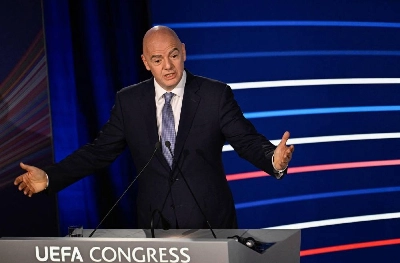
FIFA President Gianni Infantino signed Memorandum of Understanding with the Qatar Stars League and Qatar Football Association president Jassim bin Rashid al-Buainain
Sport

FIFA, Qatar Stars League and Qatar Football Association renew partnership aimed at developing domestic football

As part of its efforts to make football truly global and enable more clubs, leagues and players from all around the world to compete at the highest level, FIFA has renewed its partnership with the Qatar Stars League (QSL) and the Qatar Football Association (QFA).FIFA President Gianni Infantino has signed a new Memorandum of Understanding (MoU) with Jassim bin Rashid al-Buainain, President of the QSL and QFA, to continue their drive to raise standards of professional club management and administration across all first- and second-division clubs in the QSL.Infantino said: “I was delighted to sign a renewed Memorandum of Understanding with the Qatar Stars League and the Qatar Football Association, further strengthening a strategic partnership that continues to raise professional standards in club football. My sincere thanks to Jassim bin Rashid al-Buainain and his teams for their outstanding support, organisation and hosting of major FIFA events this year, including the FIFA Arab Cup, the FIFA Intercontinental Cup and, most recently, the FIFA Under-17 World Cup.”The FIFA President continued: “Through education programmes, knowledge exchange and enhanced support for player well-being, we are working together to help talented individuals and ambitious clubs thrive in a more competitive and sustainable global football ecosystem.”Qatar’s leadership in hosting major tournaments and its commitment to innovation continue to make it a key contributor to the golden new era of global club football. Al-Buainain said: “We are pleased with the extension of the agreement between FIFA and the Qatar Stars League, as it represents an important step that reflects the strength of cooperation between both sides. This partnership covers several areas, including the strategic development of football across its technical and administrative aspects, as well as leveraging the region’s passion for the game to promote peace and highlight the noble values of football worldwide.”The next stage of the collaboration between FIFA, the QFA and the QSL will focus on the Educational Programmes Project. Through this agreement, FIFA will provide bespoke support in a wide range of fields, including exchange and educational programmes for club managers and agents, as well as mental health and overall well-being support systems for players. These will focus not only on theoretical aspects, but also on their application from a practical perspective.The signing, which extends an MoU first signed in 2022, took place on Qatar National Day at the Lusail Stadium ahead of the final of the FIFA Arab Cup between Jordan and Morocco. It also marked three years to the day since Argentina won their third FIFA World Cup title after their enthralling win over France in the final of the 2022 tournament at the same venue.The QFA has consistently driven the growth and popularity of football in the region, from the establishment of the QSL to the successful hosting of major tournaments, including the 2011 and 2023 editions of the AFC Asian Cup and the FIFA World Cup 2022. As well as hosting the FIFA Intercontinental Cup and the FIFA Arab Cup in December 2025, Qatar also hosted the expanded FIFA U-17 World Cup in November 2025 with 48 teams, and it will also stage the next four editions of the annual tournament.

Gulf Times
Album

4.92 Million Passengers Used Metro and Tram During Arab Cup, Intercontinental Cup : Qatar Rail

Qatar Railways Company (Qatar Rail) announced that the total number of passengers who used the Doha Metro and Lusail Tram networks during the FIFA Arab Cup Qatar 2025 and the FIFA Intercontinental Cup Qatar 2025, from Dec. 1 to 18, 2025 reached 4,924,919 passengers, with 4,712,758 passengers travelling by Metro and 212,161 passengers using the Tram, with a daily average of 273,606 passengers across the Metro and Tram networks.The metro and tram played a key role in facilitating the movement of fans and visitors to and from the stadiums of both tournaments, as well as various event zones and key destinations across the country. This was achieved through delivering world-class transportation services and ensuring a safe, reliable, and seamless travel experience throughout the period.The Arab Cup Qatar 2025 was hosted across six stadiums: Lusail Stadium, Ahmad Bin Ali Stadium, Al Bayt Stadium, Education City Stadium, Khalifa International Stadium, and Stadium 974. Five of these stadiums were located within a short walking distance of metro stations, while fans were able to access Al Bayt Stadium via dedicated shuttle bus services from Lusail QNB Metro Station.Meanwhile, the three final matches of the FIFA Intercontinental Cup Qatar 2025, the Americas Derby, the Challenge Cup, and the Intercontinental Cup Final, were all held at Ahmad Bin Ali Stadium, which is directly connected to Al Riffa Mall of Qatar Station, on Dec. 10, 13, and 17, respectively.In terms of operational performance, a total of 48,422 train-trips were completed across the Doha Metro and Lusail Tram networks during the period from 1 to 18 December, comprising 41,843 metro trips and 6,579 tram trips.During the tournament, 34% of spectators used the metro to attend matches, while metro usage increased to 50% for the 5 stadiums directly connected to metro stations.On Dec. 18, which coincided with Qatar National Day celebrations, the Arab Cup Final and third-place playoff match, the highest daily ridership of the tournament was recorded, reaching 357,287 passengers, with 347,987 travelling by metro and 9,300 by tram.DECC, Lusail QNB and Msheireb stations were the busiest across the entire metro network. Within the Lusail Tram network, Legtaifiya Station was the busiest.Qatar Rail played a prominent role in supporting the successful hosting of the Arab Cup and the Intercontinental Cup, through the effective operation of its networks, which delivered a successful model for transporting fans and visitors throughout the tournament period. This was achieved through the dedicated efforts of its teams, advance planning, high operational readiness, as well as close coordination with all relevant stakeholders, with the aim of delivering a world-class travel experience.Throughout the Arab Cup period, Qatar Rail continued its efforts to strengthen the role and expertise of engineers and young national cadres across various sectors of the company, reinforcing their contribution to delivering a successful transport operations model through several operational locations. (QNA).