
tag

Saturday, June 06, 2026 | Daily Newspaper published by GPPC Doha, Qatar.

Tag Results for "2022" (10 articles)

HKCzQ3eWMAAYDiu
Sport

2026 FIFA World Cup: Qatar fans rally behind national team

Qatar fans are preparing to provide strong support for the national team as it embarks on its second FIFA World Cup appearance at the 2026 tournament, which will be held in the United States, Mexico and Canada from June 11 to July 19. Qatar's participation has attracted considerable attention, particularly because it comes through the qualification process this time, following the team's first World Cup appearance in 2022 as the host nation. Qatar has been drawn in Group B and will open its campaign against Switzerland on June 13 in San Francisco. The team will then travel to Vancouver to face Canada on June 18 before concluding their group-stage matches against Bosnia and Herzegovina in Seattle on June 24. Qatari supporters are preparing to travel to the United States and Canada after the Qatar Football Association (QFA) announced that arrangements had been completed for 1,000 fans. Three charter flights will transport supporters from Qatar to the United States on June 9, 10, and 11. Support for the national team at the World Cup will not be limited to the official fan delegation departing from Doha. It will also include Qatari students and other supporters residing in the United States and Canada. The QFA has coordinated with Qatar's cultural attaché office in the United States and the Qatari Embassy in Canada to invite all Qatari students to attend the team's first three group-stage matches. The fan delegation includes the "Maroon Stand" (Mudaraj Al Annabi) initiative, which was launched ahead of the 2023 AFC Asian Cup Qatar and received widespread praise for helping mobilize supporters and encouraging young Qataris to back the national team during the continental championship. The initiative has since expanded to local and international competitions, contributing to the revival of strong fan support for the national side. The QFA has signed a cooperation agreement with the Social and Sport Contribution Fund (DAAM) to finance the national team supporters' delegation for the 2026 World Cup. Under the agreement, the fund will provide the financial support necessary for the association to implement a comprehensive travel program for fans traveling from Qatar to the United States and Canada. The package includes flight arrangements through Qatar Airways, the tournament's official carrier, as well as hotel accommodations and ground transportation. ALL LOGISTICAL ARRANGEMENTS COMPLETED QFA has completed all logistical arrangements for the supporters' delegation, including air travel from San Francisco to Vancouver for the team's second match. Twelve hotels have been secured for Qatari fans: five in San Francisco, four in Vancouver and three in Seattle, where Qatar will play Bosnia and Herzegovina in its final group-stage match. The presence of Qatari supporters is regarded as a key factor in helping the team perform at its best and present a positive image of Qatari football on the global stage, while also reinforcing the country's broader investment in sports. The backing of Qatari fans builds on the country's successful promotional and fan-engagement experience at major tournaments both at home and abroad, reflected in the strong attendance at national team matches. Supporters remain committed to providing continuous encouragement to help the team achieve the best possible results and create the conditions for players to perform at their highest level. Qatari fans hope the national team can deliver a strong showing at the upcoming tournament and that their support will help propel the side deep into a competition featuring many of the world's leading national teams. 

Gulf Times
Sport

FIFA ups payments to clubs who send players to World Cup

Clubs whose players go to the World Cup, or appeared in qualifying, will receive increased compensation this summer, FIFA, the governing body of world football, announced on Friday.FIFA said it had increased the amount of money in its Club Benefits Programme to $355 million (306m euros). It had already announced last September that it planned this increase of 70 percent from the amount distributed for the 2022 World Cup in Qatar.While FIFA does not give total revenue figures for the World Cup, it estimates that its total revenue this year will be 56 percent up on 2022, and for the four years to 2026, a period which includes an enlarged Club World Cup in 2025, it will have taken in 72 per cent more than in the previous cycle.On the other hand, this World Cup is bigger. The field is increased from 36 teams to 48, the number of matches will rise from 64 to 104 and the competition will stretch over 39 days, against 29 last time.Furthermore, clubs will be compensated for appearances in World Cup qualifying for the first time.The total fund is divided into three parts.A total of $250 million is reserved for compensation for players at the finals. FIFA calculated that the minimum payment per player will be $5,000 per day spent at the World Cup, "although the final figures will be confirmed after the conclusion of the tournament".These payments, FIFA said, "will be calculated on a per-player, per-day basis, taking into account both squad inclusion and the duration of each player's involvement".Another $100 million is earmarked for qualifiers.FIFA calculates it will pay $2,362 for each player in a match-day squad for the 905 qualifying games and for 10 friendlies for each of the three host nations, which did not need to qualify.The remaining $5 million will pay administrative costs with any balance "allocated to the benefit of global club football"."This is another benefit from the expanded FIFA World Cup - providing more support across the entire football ecosystem to the clubs that provide all the players who compete to shine on the global stage," said FIFA president Gianni Infantino in the press release explaining the programme.The payments are based on a player's club registration when squads are announced but there are provisions for players who switch clubs during the tournament and for replacement players. 

Gulf Times
Qatar

Qatar takes 2022 legacy to UN stage

The whistle in Doha may have blown long ago, but the echo carries still. At the United Nations Headquarters in New York, the Supreme Committee for Delivery & Legacy (SC) — represented by Managing Director His Excellency Hassan al-Thawadi — joined a high-level reception to mark World Football Day, a celebration of the imprint left by the FIFA World Cup Qatar 2022 even as the world looks ahead to the next chapter.Hosted by the Permanent Mission of Qatar to the UN under the theme "From FIFA World Cup 2022 to FIFA World Cup 2026: A Legacy in Motion," the gathering traced a thread that runs from the floodlights of Lusail to the stadiums of North America, where the United States, Canada and Mexico will share hosting duties this summer.It was a moment, al-Thawadi suggested, that always belonged to more than one nation. "For the Arab world and the Middle East, Qatar 2022 was a moment of pride that belonged to far more than one country," he told the reception. "It proved that a region too often defined by others could host the world on its own terms with warmth, excellence and a story worth telling."That story, he made clear, was never meant to end with the final whistle. "We never intended the tournament to be a moment in isolation," he said. "From the day we won the bid, our ambition was to build something that would outlast the final whistle — in infrastructure, in expertise, and in the connections forged between people. Today, we see that ambition come to fruition as the lessons learned in Doha continue to shape how the world delivers its greatest sporting experiences."Those lessons are now being packed and posted abroad. The SC and FIFA recently signed a knowledge and expertise transfer Memorandum of Understanding to support the delivery of the 2026 finals. Under it, a dedicated team of SC experts from Qatar has fanned out across Host Cities in the United States and Canada, sharing what they know across a wide span of operations, while a second contingent observes the choreography of a tournament stretched across three nations and two borders.The pedigree is hard to argue with. As the first World Cup staged in the Middle East and the Arab world, Qatar 2022 rewrote the benchmarks for innovation, operational efficiency and fan experience, offering a compact, sustainability-minded blueprint that has since informed how major events are delivered the world over.Doha has scarcely paused for breath since. The country went on to host the AFC Asian Cup in 2023, and in 2025 wrote a fresh entry in the record books by staging the finals of three FIFA competitions in the space of three weeks — the inaugural 48-team FIFA U-17 World Cup, the FIFA Intercontinental Cup and the FIFA Arab Cup.And the welcome mat stays out. Later this year Qatar opens its doors again for the second of five consecutive editions of the FIFA U-17 World Cup, running from 19 November to 13 December — proof, if any were needed, that the legacy is still very much in motion. 

The panel underscored Qatar’s distinctive value proposition, specifically a combination of policy reforms, targeted investment strategies, and entrepreneurial resilience. PICTURE: Shaji Kayamkulam
Business

Qatar’s private sector eyes global expansion as policy reforms unlock new opportunities

Qatar’s private sector is poised to expand globally, leveraging the legacy of the 2022 FIFA World Cup and a series of policy reforms designed to attract investment and diversify the economy, a panel of Qatari public and private sector experts agreed.Khalid Abdulla al-Mana, vice-president of Enterprise Development and executive director of Qatar Exports; Mohammed al-Mulla, head of Asia at Invest Qatar; Hamad Mohammed al-Nasr, director of Trade Development and Investment Promotion at the Ministry of Commerce and Industry (MoCI); and Ashraf Abu Issa, chairman and CEO of Abu Issa Holding; discussed this central message during the ‘Unlock Potential and Accelerate Growth – Opportunities & Challenges’ panel, held recently on the sidelines of the ‘IBPC Annual Connect Event 2026’.Al-Mana highlighted how Qatari companies are increasingly taking their expertise abroad: “In 10 years, we have a world-class metro, airport, stadiums, and roads... with this came a lot of private sector growth. It is important that we take this private sector outside because we have a lot of things to be proud of.”He noted that Qatar Development Bank (QDB) has been financing and supporting companies to enter international markets, citing recent participation in the African Investment Forum as an example of Qatar’s growing footprint.Al-Mana also pointed to India as a priority market, noting that QDB is preparing trade missions to map opportunities between Qatari and Indian firms. “We want to do the research for the Indian market and conduct a trade mission, hopefully this year... this will help a lot in building trade relations,” he added.During the discussion, al-Mulla outlined Invest Qatar’s focus on knowledge-based industries. “In alignment with the Third National Development Strategy, we proactively target sectors such as emerging technologies, logistics, advanced manufacturing, game development, and mobility solutions,” he explained.He stressed that Invest Qatar provides facilitation and aftercare services to ensure companies have a “soft landing” in the country. “We keep a close alignment to these companies to ensure they have a safe journey within Qatar,” al-Mulla said.Addressing regional competition, he stated that competitiveness among Gulf economies “is ultimately beneficial”. “Competition in the region is a benefactor... it creates a wider supply chain, talent gets circulated, and this shows sustainability within the region,” he said.Emphasising Qatar’s regulatory transformation, al-Nasr said: “We are guided by our national development strategy... Qatar has put three main KPIs: to be among the top 10 business environments globally, attract $100bn in FDI, and increase non-hydrocarbon contribution to GDP by 2030.”He revealed that the ministry is implementing more than 188 projects to ease the business journey, alongside sector-specific roundtables to identify and address private sector challenges. “This year alone we have highlighted 128 business challenges from the private sector...we listen, validate, and move back to the private sector on an annual basis,” al-Nasr explained.Abu Issa reflected on the evolution of Qatar’s business ecosystem, saying the country witnessed “a big change” over the last two decades. He noted that challenges such as visas and land allocation have eased, while legislation for family businesses and startups has matured. He also offered advice to entrepreneurs, placing emphasis on patience and grassroots development. 

Jassim al-Jassim at Mutual Dialogue Summit session Tuesday.
Qatar

Hosting major sports events in Qatar has enable young Qataris to realise their full potentials

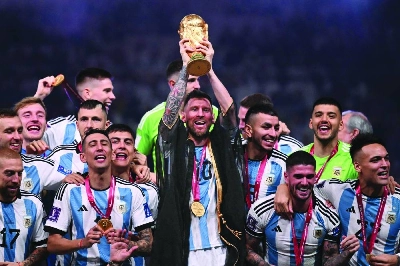
Qatar plans to host more high-profile sports and football tournaments over the next five years, building on the success of the FIFA World Cup Qatar 2022, the FIFA Arab Cup, the AGCFF U-23 Gulf Cup, and other major events, according to Jassim al-Jassim, CEO of the Local Organising Committee for Football Events.Al-Jassim was speaking at the third edition of the Mutual Dialogue Summit during a session titled “From Hosting to Legacy: How Gulf Sports Shape a Youth-Led Future,” moderated by Asrar al-Ansari, director of the Youth Department at the Co-operation Council for the Arab States of the Gulf (Kuwait).He said the experience gained from hosting global tournaments, coupled with Qatar’s advanced infrastructure, has positioned the country to stage major international sporting events. He noted that many young Qataris discovered and developed their capabilities through hands-on involvement in these tournaments, enabling them to assume senior organisational and management roles without external supervision.Al-Jassim stressed that Qatari professionals have earned FIFA's full confidence to organise events independently, without direct intervention. He added that Hamad International Airport, security agencies, administrative bodies, and other state institutions are now fully equipped to manage large-scale international events, supported by effective contingency plans to address unforeseen challenges.He also highlighted Qatar’s growing reputation as a family-friendly, safe, and welcoming destination for women, noting that the country's sporting events consistently record high ticket sales.While embracing modern technologies and global best practices, al-Jassim said Qatar has remained committed to showcasing its heritage and traditions. He cited Al Bayt Stadium’s architecture and the Gulf bisht presented to Lionel Messi at the 2022 World Cup final as examples of this cultural emphasis.He further noted that Souq Waqif has emerged as one of the most popular destinations for visitors during international tournaments. This outcome was not deliberately planned, but one that reflects the enduring appeal of authentic Gulf heritage. Respect for national traditions, customs, and laws, he said, has remained central to all event-planning efforts.Among the most significant outcomes of the FIFA World Cup Qatar 2022, al-Jassim added, was the importance of investing in local youth by training and engaging them in planning and organisational processes. This approach has paid off, with many trainees now holding senior management and supervisory positions and performing their roles with high efficiency.The third edition of the Mutual Dialogue Summit concluded on Monday. Organised by the QatarDebate Centre, the two-day event was held at Msheireb Museums in Doha and brought together more than 100 young men and women from GCC countries. It was held in strategic partnership with the Ministry of Sports and Youth, in co-operation with Msheireb Museums as the cultural partner. 

Gulf Times
Qatar

Qatar turns scale into substance in landmark year

Qatar capped 2025 as one of the world’s most influential sporting hubs, pairing elite on-field success with a packed calendar of global events that reinforced Doha’s standing at the heart of international sport.Backed by long-term investment, world-class infrastructure and organisational expertise sharpened since the 2022 FIFA World Cup, Doha hosted 84 sporting events during the year — including 15 world championships, 14 Asian tournaments and six Gulf competitions — alongside major regional and domestic fixtures. Officials described 2025 as among the most successful years in the country’s sporting history.Football remained central to Qatar’s sporting narrative. The national team secured direct qualification for the 2026 FIFA World Cup — to be held in the United States, Canada and Mexico — after finishing top of its Asian play-off group.The achievement marked Qatar’s second consecutive World Cup appearance, following its debut as host nation in 2022, and ended decades of unsuccessful qualification campaigns. The result was widely viewed as a breakthrough, reflecting sustained development at both youth and senior levels.On the hosting front, Qatar staged the Arab Cup Qatar 2025, the region’s flagship football tournament, which drew a record 1.25mn spectators. The final alone attracted more than 84,000 fans, the highest attendance in the competition’s history. Held under FIFA’s umbrella, the tournament was praised for its organisation, atmosphere and technical standards, with Morocco lifting the trophy after a dramatic final.Qatar’s position within global football governance was further reinforced by a series of high-profile FIFA events in Doha. The capital hosted the FIFA U-17 World Cup Qatar 2025, the first edition to feature 48 teams and more than 100 matches, all played within a single host city.Doha also staged the Intercontinental Cup for clubs, won by Paris Saint‑Germain, as well as the FIFA The Best Awards, attended by leading figures from world football. Together, these events underscored Doha’s role as a preferred venue for major international tournaments and ceremonies.Beyond football, Qatar’s sporting footprint spanned a wide range of disciplines. The Qatar ExxonMobil Open was voted the world’s best ATP 500 tournament by professional players, reflecting high standards of organisation and athlete experience. Doha also hosted top-tier events in women’s tennis, squash, padel and table tennis.In volleyball, Qatar secured hosting rights for the 2029 FIVB World Championship and the 2026 U-17 World Championship, strengthening its reputation in the sport. The country also staged elite competitions in golf, gymnastics, basketball, equestrian sports and chess, including the World Rapid and Blitz Chess Championships, which drew record participation.Qatari athletes delivered strong results on the international stage. In motorsport, Nasser al Attiyah claimed a record 20th Middle East Rally Championship title, reinforcing his status as one of the region’s most successful drivers. Qatar also hosted Formula 1, MotoGP and major off-road racing events at Lusail, cementing its place on the global motorsport calendar.In athletics, Qatari competitors won medals at Asian and world championships, while youth teams topped regional tournaments. Weightlifting, shooting and water sports also produced podium finishes, reflecting the breadth of the country’s sporting development. Qatar’s beach volleyball teams continued to excel, winning multiple international titles and rising to second place in the world rankings, while participation at the Islamic Solidarity Games yielded a strong medal haul across several disciplines.Qatar’s impact extended beyond hosting and competition. Several Qatari sports officials were elected to senior roles within Asian and international federations, highlighting the country’s growing influence in sports administration and governance.Officials said these appointments reflect confidence in Qatar’s expertise and its commitment to developing sport both regionally and globally, while providing a platform to shape policy, set international standards and promote initiatives supporting youth development, gender equality and grassroots participation. 

Exhibition poster
Qatar

Katara to open 2022 World Cup Legacy exhibition tomorrow

Katara Cultural Village, in collaboration with the Supreme Committee for Delivery and Legacy, will host the “FIFA World Cup Qatar 2022 Legacy” exhibition at 5.30pm Monday (December 29), at Building 45.The exhibition will highlight the cultural, humanitarian, and sporting legacy of the first World Cup to be held in the Arab region and the Middle East.It will offer an interactive experience showcasing the milestones of Qatar's hosting of the 2022 FIFA World Cup and its exceptional organisational successes.The values it embodied include bringing people together, sustainability, innovation, and Qatari cultural identity.The exhibition will also highlight the lasting impact of the tournament on various levels, including infrastructure development, the promotion of cultural and artistic activities, and the support of community initiatives.Furthermore, it will document unforgettable moments that will remain engraved in the memories of fans worldwide.This exhibition reflects Katara and the Supreme Committee for Delivery & Legacy's commitment to preserving and enhancing the tournament's legacy for future generations, consolidating Qatar's position as a global cultural and sporting destination. 

Gulf Times
Sport

Serena denies she plans tennis return despite registering for drug tests

Serena Williams insisted she had no plans to make a return to tennis after her registration with the sport’s drug-testing body sparked reports of a dramatic comeback. The 23-time Grand Slam singles champion has not competed since a third-round loss at the 2022 US Open left her one short of the all-time record of 24 Grand Slam singles titles, held by Margaret Court in the women’s game and Novak Djokovic in men’s tennis. “It is correct that she is back on the Registered Testing Pool list,” Adrian Bassett, a spokesman for the the International Tennis Integrity Agency, the sport’s drug-testing body told AFP in London on Tuesday in response to media reports the 44-year-old American had registered. “At this stage we have no other information.” But Williams denied she was planning a return to competitive tennis by posting later Tuesday on X: “Omg (Oh My God) yall (you all) I’m NOT coming back. This wildfire is crazy”.Following her three-set defeat by Australia’s Ajla Tomljanovic at Flushing Meadows three years ago, Williams said she did not want to use the word “retiring” but instead explained she was “evolving” away from tennis. Players who decide to return to testing need to provide information about their time and locations when they are available to give samples. They also need to complete testing for six months before they are allowed to return to competition. Williams’s older sister, Venus, - seven times major singles champion - returned to tennis in July at the age of 45 after almost two years away from the Women’s Tennis Association tour.When Venus, a seven-time major singles champion, came back at the DC Open, she spoke about wishing Serena would join her on tour again. The sisters won 14 Grand Slam doubles titles as a pair and three Olympic gold medals as well. “I keep saying to my team: The only thing that would make this better is if she was here,” said Venus at the time. “Like, we always did everything together, so of course I miss her.“But if she comes back, I’m sure she’ll let y’all know.” 

Gulf Times
Sport

FIFA set to kick off 2026 World Cup ticket sales

FIFA will kick off a multi-phase ticket sale process for the 2026 World Cup this month with initial single seat prices as low as $60 for group-stage matches and as high as $6,710 for the final.Those prices will fluctuate based on demand, and fans will be able to buy single-game tickets, venue-specific tickets and team-specific packages, world football's governing body said Wednesday as it announced a schedule for the first phase of sales.Forty-eight teams, the biggest field in World Cup history, will play in the United States, Canada and Mexico from June 11-July 19 next year.Fans who have a Visa card can register for a FIFA ID on the body's website to enter a presale draw to be held September 10-19.Those selected through the randomized presale draw can then apply to purchase tickets starting October 1.Sales will be capped at four tickets per person per match, and no person can purchase more than 40 for the entire tournament.Further ticket sales will be launched in the coming months, with registration for phase two expected to take place October 27-31 for sales from mid-November to early December.Phase three will begin shortly after the tournament draw is held in Washington on December 5 and fans can submit applications for specific matches.Closer to the tournament, fans will be able to buy remaining inventory on a first-come, first-served basis.FIFA said in a statement it planned to offer additional products such as supporter tickets for fans who want to sit with others backing the same team, and conditional supporter tickets for fans who want to reserve a place in potential knockout rounds.FIFA will also launch an official resale platform.

Ahmed Habib in an interview at the Gulf Times stand at the event. PICTURES: Thajudheen
Qatar

FIFA World Cup 2022’s accessibility legacy highlighted at QES 2025

The FIFA World Cup Qatar 2022’s success as the most accessible tournament ever, a notable feat given the country’s developing infrastructure, was a key insight shared at the Qatar Events Show 2025, highlighting a commitment to lasting accessibility. Speaking at the Qatar Events Show’s second day at a talk titled ‘Accessibility in Events Design’, Ahmed Habib, a senior media content specialist at the Supreme Committee for Delivery and Legacy, noted that true accessibility extends far beyond physical infrastructure, demanding a holistic approach rooted in inclusivity and a deep understanding of diverse needs. “Qatar has done a very good job of building world-class events facilities that are accessible,” Habib said, citing the country’s fortunate starting point with accessible hotels, public spaces, and cultural sites. He pointed out that the foundation of the FIFA World Cup Qatar 2022’s unparalleled accessibility was the establishment of an Accessibility Forum. Operating under the theme, ‘Nothing about us without us,’ this initiative brought together disabled individuals from the community six years prior to the tournament. Habib said their direct involvement was instrumental in shaping a tournament that was not only accessible in its execution but also actively contributed to making Qatar more accessible for people with disabilities in the long term. “We brought disabled people from the community and we said, ‘Listen, we're going to organise a massive tournament in Qatar, and how do you want the tournament to be accessible? But more importantly, is how can this tournament make Qatar more accessible for you after the tournament is over?’” he said. This collaborative approach, he added, ensured the tournament was “delivered to the highest standards,” driven by innovation and a belief that “football is for all”. Habib underlined key innovations such as the introduction of Audio Descriptive Commentary in the Arabic language, offering blind fans an immersive experience through dedicated commentary accessible via their own devices. He noted that this groundbreaking facility, previously unavailable to Arabic speakers, has now paved the way for similar accessibility features in cultural spaces, events, and theaters. “What’s the point if I come to an event that’s physically accessible, but the staff meet me at the door and say, ‘I don’t know if you can come in because you're in a wheelchair’? Then the event is not accessible because staff and volunteers have not been trained,” he added. Habib stressed the critical need for comprehensive staff and volunteer training, equipping them with the knowledge and cultural understanding to welcome and support individuals with disabilities, whether they are attendees, speakers, or colleagues. “What are you going to do if someone who is deaf shows up at your event? Someone who is blind? At least have some sort of minimum training, recognition, understanding, and build that culture amongst your staff and team,” he urged event planners. Habib emphasised the importance of universal design principles in graphic design, citing high colour contrast, appropriate font choices, and clear hierarchy in signage as beneficial for everyone, not just those with specific visual needs. He illustrated this with an example of signage at Toronto Pearson International Airport, where icons and shapes communicate effectively, allowing non-English or French speakers to navigate with ease. Habib also discussed the distinction between the medical model and the social model of disability, where the former often views disability as an illness requiring supervision and dependence. In contrast, he said the social model suggests that disability is a societal construct, and it is the responsibility of society to create inclusive environments where everyone is equal and can participate fully. “Event planners play an important role,” Habib said, reiterating that they have the power to determine whether guests feel ‘disabled or enabled’”. He added that event planners should never view individuals with disabilities as a “loss or abnormality”, nor should they see them as having “restrictions or lack of ability”. Instead, he said the focus must be on fostering an environment where every individual, regardless of ability, can fulfill their potential and participate without limitation.