tag

Thursday, October 01, 2026 | Daily Newspaper published by GPPC Doha, Qatar.

Tag Results for "MoEHE" (36 articles)

Gulf Times
Qatar

Arts-track students get new route into science degrees

Qatar's high school graduates from the literacy and humanities track will now be able to cross into science, technology, engineering and mathematics degrees — fields long closed to them — under a new initiative unveiled by the Ministry of Education and Higher Education (MoEHE) in partnership with the Academic Bridge Program, a member of Qatar Foundation.  Announced at a press conference held by the Higher Education Affairs Sector at the ministry's headquarters, the scheme offers humanities students an accredited preparatory year that qualifies them to enrol in scientific disciplines, provided they meet admission requirements and complete the Academic Bridge's STEM track.  The programme is built around the academic foundations that science degrees demand: English-language proficiency, mathematics, and the core sciences of biology, chemistry and physics, alongside computing and programming.  Its courses are designed so that learning outcomes align with the entry standards of both local and international universities.  Crucially, the year a student spends at the Academic Bridge can be recognised within their wider university path, thanks to the programme's partnerships with a number of prestigious institutions inside and outside Qatar.  That recognition smooths the transition into demanding fields including medicine, engineering, computer science and the natural sciences. Assistant Undersecretary for Higher Education Affairs Dr Hareb Mohamed al-Jabri described the initiative as a strategic step that widens students' academic options and channels them towards the scientific specialisations the country needs.  It supports the national drive towards a knowledge-based, innovation-led economy, he said, and helps prepare qualified Qatari talent in priority fields.  Director of the Academic Bridge Program Dr Saheim Khalaf al-Tamimi voiced pride in the partnership, calling it a reflection of a shared commitment to flexible, comprehensive learning pathways.  The programme's courses, he added, equip students with the skills in English, science, mathematics and computing needed to move confidently into university study.  Applicants must hold a high school diploma with a minimum grade of 70 percent, submit an IELTS certificate or equivalent scoring at least 4.5, and pass placement tests in English and mathematics before completing the formal admission process.  The initiative forms part of the MOEHE's broader effort to open flexible, innovative routes through higher education that keep pace with the labour market — and to ready a generation able to compete in vital sectors in support of Qatar National Vision 2030.

HJyvQMoXYAAiZUW
Qatar

Director of Student Assessment department at MoEHE: preparations complete for end-of-term exams next Thursday

Director of the Student Assessment Department at the Ministry of Education and Higher Education (MOEHE) Ibrahim Abdullah Rashid Al Muhannadi confirmed that the Ministry completed all preparations for the final examinations of the second semester of the 2025-2026 academic year, which are scheduled to begin next Thursday.Preparations included the development of examination questions according to approved procedures and standards, their review and approval, printing and distribution of exam papers, and the preparation of examination centers and committees to ensure full readiness to receive students.In exclusive statements to Qatar News Agency (QNA), Al Muhannadi said that the number of Grade 12 students registered for the second-semester examinations this year reached 16,487 students across various educational tracks. He noted that the examinations will be conducted at 87 centers, including 43 centers for boys, 41 centers for girls, and 3 mixed centers. These centers comprise a total of 818 examination committees. The examination process will be supervised by 4,406 staff members, including committee heads, invigilators, supervisors, and administrative personnel.He explained that the Student Assessment Department conducted a comprehensive survey of secondary school students before the examinations, with the aim of involving them in improving procedures and identifying the main challenges they face.He added that the survey covered several areas, including the clarity of instructions, the usefulness of orientation sessions, the suitability of examination schedules, revision resources, levels of exam-related anxiety, psychological needs, and the support required from parents. It also gathered students’ opinions regarding grading procedures and opportunities for improving their overall academic averages.Al Muhannadi revealed notable findings from the survey with 1,112 students emphasizing the importance of not spreading rumors during exams, while 1,286 stressed the need to avoid intimidating or alarming classmates. A further 1,741 students indicated that the diversity of correct answers during grading provides them with the greatest sense of security. Additionally, 921 students considered thorough review and verification of grades to be a key factor in ensuring confidence in the results.Al Muhannadi stressed that there is no such thing as an impossibly difficult exam, explaining that all examinations are designed according to clear standards that assess different levels of students’ cognitive depth. He noted that many exams which some students describe as difficult actually record high pass rates and strong achievement levels.He added that the examination development process undergoes multiple reviews and rigorous verification stages to ensure quality and compliance with approved educational standards. He also emphasized that student well-being and psychological stability are important considerations when preparing examination schedules and organizing the overall examination process.The Director of the Student Assessment Department further affirmed that the Ministry implements a precise system to ensure fairness in grading and accuracy in results. He explained that graders study the answer keys in detail before marking begins, and that any additional correct answer identified during the grading process is communicated to all marking committees to ensure that every student receives the full marks they deserve.He pointed out that the electronic scanning, manual review, monitoring, and auditing processes go through several successive stages before the results are approved. He emphasized that the Ministry always seeks to award students the grades they deserve, thus enhancing the reliability and fairness of the results.He explained that the GPA improvement system allows high school graduates to retake any number of subjects during the second-round exams to raise their cumulative GPA and improve their chances of university admission. He clarified that students retain their original certificate along with the GPA improvement certificate and can use the better result when applying to universities.Al Muhannadi offered a set of tips and guidelines for students, urging them to plan well for the exam period by creating a realistic timetable for time management and study organization. He also stressed the importance of allocating sufficient time for rest, sleep, exercise, and a healthy diet, in addition to creating comprehensive mind maps of the course topics to facilitate information retention during the exam.He also called on parents to provide a suitable environment for studying and concentration, organize family visits during the exam period, not show anxiety in front of their children, and help them implement study plans, as well as pay attention to dietary habits and regulate sleep hours, stressing that the mind needs rest just as the body does.According to the approved schedules, the first-cycle exams for students in grades 1, 2, and 3 will begin on June 4 with Arabic, followed by mathematics on June 7, and then general knowledge and English the following day. The written exams will conclude on June 11.The exams for grades 4, 5, and 6 will also begin on the same date and continue until June 14, 2026, with one exam per day from 8:00 AM to 9:30 AM.In the preparatory stage, the exams for grades 7, 8, and 9 will begin on June 4 according to the schedules approved for each grade and will continue until June 14. The exam duration is set at one and a half hours for most subjects and two hours for the English exam.As for the secondary level, the exams for grades 10 and 11 will begin on June 4. Students in the humanities, science, and technology tracks will take their exams according to separate schedules that will continue until June 15, with time allotted between one and a half and two and a half hours for some science and specialized subjects.Regarding grade 12 students, the written exams will begin on Thursday, June 4, with students in the literary track taking the history exam, students in the scientific track taking the biology exam, and students in the technological track taking the information technology exam. The high school exams for all tracks will continue until June 21, 2026, and will be held during the morning period from eight to ten-thirty in the morning.

No Image
Media

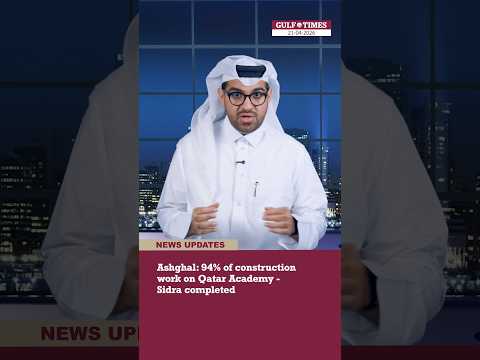
News Updates! 21-04-2026

Quick update on the top stories.. Ashghal: 94% of construction work on Qatar Academy - Sidra completed. MoEHE’s Radiation Protection Department: first line of defence against pollution. 

Gulf Times
Qatar

Education ministry to hold summer camps in France, Germany, Japan

The Ministry of Education and Higher Education (MoEHE) announced that it will organise the 2026 summer language and culture camps in France, Germany, and Japan for outstanding Grade 11 Qatari students from public schools.In a statement, MoEHE said that this initiative is part of its strategic programmes designed to enhance language skills and promote cultural exchange, adding that this year's camps build on the success of previous editions.MoEHE added that through this initiative, it aims to strengthen students' proficiency in their target language and to broaden students' knowledge by exposing them to the host countries' cultures and traditions, thereby contributing to creating an open-minded and capable generation.The four-week programme will commence in July and see the Qatari male students undergo an interactive educational experience that includes intensive language courses and specialised workshops in the three countries, providing them with the opportunity to engage directly with students of diverse nationalities.The statement noted that the summer camps adopt a comprehensive approach that goes beyond academics to include sports and cultural activities, as well as field visits to historical landmarks. These activities help refine students' personal qualities and raise their awareness of educational opportunities available for pursuing university studies abroad.To ensure that Qatar is represented in the best manner, the ministry has established eligibility criteria, setting that applicants must be Qatari nationals of good conduct and are medically fit, in addition to having achieved an overall average of no less than 90% in the first semester certificate, with at least 85% in the foreign language subject and 90% in English.Candidates are also required to submit a CV and pass a personal interview conducted in both English and their respective foreign language to assess their readiness, enthusiasm for exploring other cultures, and ability to adapt to international educational environments.MoEHE emphasised that the summer camps are a valuable opportunity for students to apply what they have learned in the classroom in real-world environments.It called on interested students who meet the requirements to contact their school administrations to begin the registration and interview procedures, in alignment with the competencies and values of the Qatar National Curriculum Framework.  

Gulf Times
Qatar

Qatar to pay students to study nuclear engineering abroad

Three government ministries joined forces Wednesday to unveil a scholarship programme that will send Qatari students abroad to study nuclear engineering — with their salaries running the entire time they're in class.Standing at the podium of the Ministry of Education and Higher Education's press conference, officials from MOEHE, the Ministry of Environment and Climate Change, and the Civil Service and Government Development Bureau laid out what they billed as one of the most generous scholarship packages the state has offered in a specialised technical field.The pitch is straightforward: students who qualify will receive a full government salary throughout their undergraduate studies overseas, have those study years counted toward their civil service tenure, and walk into a guaranteed Grade Nine government position upon graduation — with a path to postgraduate funding waiting after that."This is a strategic qualitative step," said Dr Hareb Mohammed al-Jabri, MOEHE's Assistant Undersecretary for Higher Education Affairs, describing nuclear engineering as "one of the most critical and future-oriented scientific disciplines."He was direct about the programme's intent — it isn't simply about producing graduates, it's about filling a specific institutional gap. Appointments will go directly to MECC's Radiation Protection Department, which regulates radiation use across Qatar's medical and industrial sectors.The financial incentives are notable. Yousef Ibrahim al-Hamar, MECC's Assistant Undersecretary for Environmental Affairs, and Yaqoub Saleh al-Ishaq of the Civil Service Bureau confirmed that nuclear engineering carries an 85% work nature allowance under Prime Minister's Decision No. 25 of 2025 — the highest work nature allowance of any engineering discipline in the government structure.Officials were candid about why the scholarship must send students abroad: nuclear engineering is not taught anywhere in Qatar. Graduates will train at internationally accredited universities, working in labs and technical units within the Radiation Protection Department when they return, giving them hands-on exposure across medical imaging, industrial applications, and regulatory oversight.Al-Ishaq framed the Bureau's role as more than administrative. "We're ensuring alignment between educational outputs and actual career pathways," he said, describing the programme as an "integrated path" designed from the first day of undergraduate study through to a defined career trajectory in government service.Selection criteria are tight. Candidates must demonstrate academic excellence, meet specific grade thresholds from prior qualifications, satisfy English language requirements, and hold unconditional admission from an accredited university. Officials acknowledged the number of seats will be small, reflecting both the rarity of the specialization and the precision of the workforce need.An awareness campaign targeting secondary school students is planned to accompany the launch, with officials keen to demystify a field many young Qataris may know little about.The initiative falls under Qatar National Vision 2030's push to diversify the economy and reduce dependence on expatriate expertise in technically sensitive sectors.Applications are expected to open following the awareness rollout. 

Her Excellency Lolwah bint Rashid bin Mohammed AlKhater, Minister of Education and Higher Education along with other dignitaries.
Qatar

EAA marks official opening of Fourth Assalam School

Education Above All (EAA) Foundation, in collaboration with the Ministry of Education and Higher Education (MoEHE) and Qatar Charity celebrated the official opening of the Fourth Assalam School, marking another milestone under the “Together” Project. The Fourth Assalam School joins the growing network of Assalam Schools, established to support at-risk learners and children facing barriers that prevent them from accessing or continuing quality education. Although the school officially began operations in January 2025, the ceremony was held to commemorate the tangible results achieved and the positive transformation evident in students’ lives. The school serves primary-level students aged seven to 12 and operates a dual-shift, dual-curriculum model designed to maximise reach and respond to diverse learning needs. The morning shift delivers the Qatari National Curriculum for Arabic-speaking students, while the afternoon shift follows the British curriculum for Education Above All (EAA) Foundation, in collaboration with the Ministry of Education and Higher Education (MoEHE) and Qatar Charity celebrated the official opening of the Fourth Assalam School, marking another milestone under the “Together” Project. The Fourth Assalam School joins the growing network of Assalam Schools, established to support at-risk learners and children facing barriers that prevent them from accessing or continuing quality education. Although the school officially began operations in January 2025, the ceremony was held to commemorate the tangible results achieved and the positive transformation evident in students’ lives. To date, 587 students are enrolled, 276 in the morning shift and 311 in the afternoon shift, demonstrating partners’ shared commitment to expanding inclusive, equitable, and high-quality education in line with national priorities. Mohamed al-Kubaisi, CEO, EAA Foundation, emphasised that inclusive, flexible education models can close learning gaps and restore opportunities for vulnerable children. “When education reaches children where they are, lives are transformed. At the Fourth Assalam School, we are witnessing confidence restored, potential unlocked, and families re-engaged in the learning journey. This is the power of partnership and purpose, transforming access into opportunity and classrooms into places of hope.” Yousef bin Ahmed AlKuwari, CEO of Qatar Charity, reaffirmed the partnership’s evolution from humanitarian response to sustainable human development. “The opening of the Fourth Assalam School reflects our firm belief that education is a fundamental right for every child and the most sustainable path to empowerment. Through our long-standing partnership with Education Above All Foundation and the Ministry of Education and Higher Education, we are committed to ensuring that children who have faced hardship, displacement, or economic barriers are given a real second chance to learn, grow, and build a dignified future.” Guests later participated in an interactive tour, “Real learning from the classroom to the podium”, showcasing student-led STEM experiments, exhibitions, debates, flexible learning pathways, and an agriculture project. The Assalam Schools were established in response to the increasing number of vulnerable children in Qatar, particularly those facing significant barriers to formal school enrolment. Key challenges include reaching children who are not officially registered in the education system and those who encounter obstacles to school entry. These barriers include exceeding the official age for grade enrolment, lacking required identification documents, and facing economic hardships. Since its inception, the schools have served more than 21,750 students of diverse nationalities. In addition to academic education, the Assalam Schools provide students with health and psychological support, as well as non-traditional learning programmes designed to enhance learning outcomes and bridge existing educational gaps. 

Gulf Times
Qatar

QEEA exemplifies Qatar's commitment to investing in human capital

His Excellency the Undersecretary of the Ministry of Education and Higher Education (MoEHE) Dr Ibrahim bin Saleh al-Nuaimi has highlighted the great and widespread attention given by the wise leadership to the Qatar Education Excellence Award (QEEA) as well as the increasing participation from students, staff, department and school directors, administrators, postgraduate students, and university graduates, which underscores Qatar's commitment to investing in its human capital and focusing on people as the foundation of societal development and their role in achieving its National Vision 2030.Talking to the Qatar News Agency (QNA), HE Dr al-Nuaimi emphasised that the patronage of His Highness the Amir Sheikh Tamim bin Hamad al-Thani and his continued gracing to the closing ceremony to honour the winners affirms His Highness the Amir's interest in the educational system.Underscoring that His Highness the Amir's commitment makes excellence a prominent feature of society and an inherent characteristic of the outputs and various educational sectors, from schools to universities, both within and outside Qatar, the official pointed out that the MoEHE oversees this entire system and exerts every effort to provide opportunities that motivate everyone towards creativity and excellence.HE Dr al-Nuaimi addressed the award's role in fostering creativity and innovation among students, educational institutions, and the Qatari community, and in deepening these concepts through the integration of various efforts to improve the outcomes of the educational process in the country, adding that all those involved in its categories eagerly anticipate participating year after year.He noted that 20 years since its inception, the award continues its journey, marked by successes in achieving its objectives, within a conducive environment that embraces and encourages creativity.This is evident, HE Dr al-Nuaimi said, in the significant participation, development, and competitiveness witnessed in its competitions year after year, particularly in this 19th cycle.The official clarified that the announcement of expanding the award categories – with the introduction of the Educational Leader, Diploma, and Educational Research, which will be implemented starting with the 21st cycle in 2028 – represents a qualitative and necessary expansion of the award's scope.This expansion will provide more opportunities for participation, HE Dr al-Nuaimi stated, and called upon everyone to strive for excellence and distinction.  

Gulf Times
Qatar

Awqaf, MoEHE honour contestants in school calligraphy competition

The Ministry of Endowments and Islamic Affairs (Awqaf), in collaboration with the Ministry of Education and Higher Education (MoEHE), honoured students who participated in the second school Arabic calligraphy competition, ‘Al-Raqeem’, for the year 2025, in recognition of their efforts and distinguished participation. The competition targeted male and female students from both public and private schools. The honouring ceremony was attended by Undersecretary of the Ministry of Endowments and Islamic Affairs, Sheikh Dr Khalid bin Mohammed bin Ghanim al-Thani and Undersecretary of the Ministry of Education and Higher Education, Dr Ibrahim bin Saleh al-Nuaimi along with a number of educators and members of the ‘Al-Raqeem’ competition committee. The Undersecretary of Awqaf praised the integrative partnership between the two ministries, affirming that the ‘Al-Raqeem’ competition represents a successful model of institutional co-operation aimed at instilling aesthetic and educational values among students. He noted that the initiative strengthens students’ connection to the Holy Qur’an and Arab-Islamic identity through an authentic visual art Arabic calligraphy. The Undersecretary of the Ministry of Education and Higher Education commended the efforts of the organising committee, emphasising that integrating traditional arts into the educational process contributes to the development of students’ aesthetic sensibilities and the reinforcement of moral and human values. He added that the wide participation witnessed in the competition reflects its success and the strong engagement of the educational field. The second edition of the school Arabic calligraphy competition, which launched in October and continued through December 2025, saw the participation of 479 male and female students from 24 public and private schools at the preparatory and secondary levels. This included four schools for students with disabilities, for both boys and girls – an important step reflecting the inclusivity of the competition and the breadth of its educational impact. Students competed in the Ruq’ah script by writing the 23rd verse of Sourat Al-Isra. This choice aimed to link Arabic calligraphy skills with lofty moral values, foremost among them filial piety. Chairman of the Organising Committee of the Qatar International Arabic Calligraphy Competition (Al-Raqeem), Dr Saleh bin Ali al-Akhn al-Marri affirmed that the competition seeks to restore Arabic calligraphy to its rightful status as a core component of Arab and Islamic cultural identity. He explained that directing the competition towards school students aims to nurture a generation that appreciates artistic beauty rooted in Qur’anic values and understands the significance of Arabic calligraphy within the Arabic Islamic Nation’s civilisational heritage. He added that the wide participation this year, along with the inclusion of schools for students with disabilities, clearly demonstrates the success of the initiative and motivates the organising committee to further develop future editions and expand its scope in service of its cultural and educational mission. The competition also featured introductory programmes and awareness workshops for participating students, including visual presentations on the history of Arabic calligraphy, its various styles, and tools. Training booklets and specialised Ruq’ah calligraphy pens were distributed to support students in developing their artistic skills and preparing for the final evaluations. The competition is held under the supervision of the Ministry of Endowments and Islamic Affairs and the Museum of Islamic Art, in co-operation with the Ministry of Education and Higher Education through its departments of programmes and activities, private schools, and kindergartens, with direct supervision from the administrations of participating schools. Regarding participation statistics, the 2025 school edition of the Al-Raqeem Arabic calligraphy competition witnessed broad engagement from public and private schools, with a total of 479 students of various nationalities, including 110 Qatari students. Among public schools, 258 students from ten schools participated, namely Ibn Khaldoun Preparatory School for Boys, Abu Ubaidah Preparatory School for Boys, Hassan bin Thabit Secondary School for Boys, Omar bin Al-Khattab Secondary School for Boys, Al-Hidaya School for Boys with Disabilities, Granada Preparatory School for Girls, Zainab Preparatory School for Girls, Al-Shaymaa Secondary School for Girls, Al-Risala Secondary School for Girls, and Al-Hidaya School for Girls with Disabilities. Private schools accounted for 221 participants representing fourteen schools, namely My School Academy, Global Universe Academy (Al-Waab), Al-Salam Fifth School, Queens International School, Palestinian School for Boys, Al-Furqan Secondary School for Boys, Al-Zaitoun International School (Al-Thumama), Cambridge International School, Next Generation School, Galileo International School, Al-Andalus School for Girls, Edison International School (Mureikh), Al-Maha Academy for Girls with Disabilities, and Al-Awsaj Academy for Students with Disabilities. 

Gulf Times
Qatar

ICSEI 2026 kicks off at Qatar University

Organised by the Ministry of Education and Higher Education (MoEHE), the 39th International Congress for School Effectiveness and Improvement (ICSEI 2026) kicked off Monday at the Qatar University. The conference, which runs until January 22, is held under the theme Crossing Boundaries in Education: Fostering Innovative, Inclusive and Sustainable Learning Environments.More than 500 representatives of an elite group of experts and those interested in developing education and improving the performance of schools and educational systems are taking part. The opening ceremony was attended by His Excellency the Undersecretary of the MoEHE Dr Ibrahim bin Saleh al-Nuaimi, Lebanon’s Minister of Education and Higher Education Dr Rima Karami, and ICSEI president Dr Danette Parsley, along with senior officials from the MoEHE and Qatar University, as well as academics and those interested in educational affairs. In his opening remarks, HE Dr al-Nuaimi emphasised that Qatar believes that progress in education is not measured by replicating global models, but rather by the ability of the education system to absorb and reproduce best international practices in a manner that suits the local context, cultural values, and national priorities. This, he said, is the approach that Qatar is taking in developing its education system. HE Dr al-Nuaimi added that education occupies a pivotal position in Qatar National Vision 2030, which has placed human development at the heart of the state’s project for achieving comprehensive and sustainable development. He said that Qatar continues to invest intensively and effectively in a high-quality education system that focuses on empowering the learner, supporting the teacher, developing educational leadership, and building fair, inclusive, and stimulating learning environments that encourage thinking and innovation. The head of the local preparatory committee for the conference, Dr Asmaa al-Fadala, said that the current edition is the first to be held in the Gulf region, and is witnessing for the first time the acceptance and participation of scientific research in Arabic. She said that the hosting of the ICSEI conference in Doha is more than just an academic event; it is a scientific partnership that reflects the region’s presence as an active partner in formulating important educational issues and questions, especially in light of a rapidly changing world full of challenges and opportunities. Dr al-Fadala indicated that the conference represents a real opportunity to build research teams, generate joint ideas, and launch initiatives that contribute to advancing education globally. The conference is one of the key international forums specialising in the development of education and the improvement of the performance of schools and educational systems, as it provides a global platform for exchanging experiences, discussing contemporary educational issues, and reviewing successful experiences in the field of educational effectiveness. The conference is held in partnership with Qatar University, the College of Public Policy at Hamad bin Khalifa University, and the Arab Educational Training Centre for Gulf States, with a diverse scientific programme that includes scientific sessions, advanced specialised sessions, and field visits to a number of schools within the local educational system. 

Dr Rania Mohamed
Qatar

Qatar to roll out unified code of conduct for all private schools

A unified Code of Conduct governing student behaviour in all private schools and kindergartens in Qatar has been finalised and will be circulated shortly, a senior education official has said.Dr Rania Mohamed, director of the Department of Private Schools and Kindergartens and acting director of the Private Schools Licensing Department at the Ministry of Education and Higher Education (MoEHE), said the policy establishes a single behavioural framework for private schools despite wide differences in curricula and educational systems.In its first version, the document sets out general provisions for student behaviour, alongside clear mechanisms, controls and procedures that private schools are required to follow. These include how schools should address issues such as absenteeism, attendance monitoring and dismissal procedures, ensuring consistency across the private education sector.Dr Mohamed noted that more than 24 different educational systems operate within Qatar’s private schools, each governed by regulations tied to its country of origin. This diversity, she said, has resulted in variations in culture, rules and disciplinary procedures, prompting the Ministry to develop a flexible, overarching framework that can be applied uniformly.“The document is designed to be compatible with all educational systems,” she said, adding that it does not override individual schools’ behavioural assessment policies. Instead, it provides a governing reference that outlines general standards, while allowing schools to retain detailed internal procedures aligned with their curricula.She stressed that private schools will continue to follow the educational systems of their respective countries of origin, but all will operate within a single regulatory framework defined by the new Code of Conduct. There is no conflict, she said, between the document’s provisions and the policies currently applied by schools.As part of its development, the draft policy was shared with 21 private schools representing a range of educational systems. Feedback was collected and incorporated, a process Dr Mohamed said helped ensure the document remains practical and aligned with existing school frameworks.Once circulated, the unified behavioural policy will serve as a reference point for all private schools and kindergartens, outlining the general regulations governing student conduct across the sector.On oversight and enforcement, Dr Mohamed said the Ministry has launched the “Ab’adi” campaign as an initial step in monitoring private schools’ compliance with regulations. In addition, monthly supervisory visits are carried out across the sector.Each month, administrative specialists from the Private Schools Department visit all 352 private schools and kindergartens operating in the country. These visits are complemented by academic inspections, during which specialists provide guidance and monitor the teaching of compulsory subjects, including Arabic Language, Islamic Education, and Qatari History and Citizenship.In total, around 4,000 supervisory and academic visits to private schools and kindergartens are conducted annually, she said, as part of the Ministry’s efforts to ensure compliance, consistency and educational quality. 

Gulf Times
Qatar

QCDC launches winter edition of ‘My Career-My Future Programme’

The Winter Edition of ‘My Career-My Future Programme’ organised by Qatar Career Development Center (QCDC), a member of Qatar Foundation for Education, Science and Community Development (QF), in collaboration with the Ministry of Labour (MoL) and the Ministry of Education and Higher Education (MoEHE), kicked off Sunday. The programme will run until Jan 1, 2026. Taking place at Multaqa (Education City Student Center), the winter edition offers participating students structured field experience in real-world work environments through practical training and mentorship with industry professionals. Participants who complete the programme will receive a certificate detailing the number of training and professional development hours completed. This edition focuses specifically on the financial services sector, along with selected entities from the healthcare, logistics, manufacturing, information technology and digital services, and construction sectors. This specialised approach aims to deepen participants’ experience in key sectors. Executive Director of QCDC Saad Abdulla al-Kharji said the value of professional immersion lies in its ability to transform theoretical perceptions of career aspirations into tangible experience. He explained that students’ engagement in real work environments, their interaction with specialists, and their firsthand exposure to required skills contribute to enhancing their awareness and confidence when making academic decisions. He added that the winter edition represents a focused, practical model made possible through close collaboration with the Center’s partners at the MoL and the MoEHE, as well as the host institutions that opened their doors to the students. Assistant Undersecretary for Educational Affairs at MoEHE Maha Zayed Qaqaa al-Ruwaili emphasised that this experience is a vital bridge connecting education and work, knowledge and skills, and theory and practice. Acting Director of Rehabilitation and Skills Development at MoL Mohamed Salem al-Khulaifi stated that launching the winter edition of the My Career-My Future programme helps introduce students to the work environment and the principles of professional conduct. It also provides them with opportunities to directly observe the nature of professional roles and interact with specialists, thus enhancing their readiness for their professional futures.  

Gulf Times
Qatar

Activity centres to enhance pupils’ skills during break

The Ministry of Education and Higher Education (MoEHE) has launched a series of seasonal student activity centres as part of its spring holiday programme for 2025. The initiative, which runs until December 31, aims to help students make productive use of their school break by developing skills, nurturing talents and strengthening personal and social development, the ministry said.  In a statement, the ministry explained that the centres are designed to provide a safe and supportive educational environment, while promoting national values, a sense of belonging and loyalty to the country. The programme also focuses on enhancing students’ academic, behavioural and social skills.  The activities are open to Qatari and resident students enrolled in government schools, as well as Qatari students attending private schools, aged between six and 18. Six centres have been selected across the country to ensure broad geographic coverage - three for boys and three for girls. **media[397336]**The boys’ centres are based at Khalifa Secondary School, Saad bin Muadh Primary School and Doha Preparatory School. The girls’ centres are located at Al Markhiya Primary School, Al Khor Secondary School and Sowda bint Zam’a Preparatory School.  The ministry highlighted strong co-operation with several state institutions to deliver a wide range of educational, health, sports and awareness programmes. The Ministry of Interior is participating through departments specialising in safety, traffic, community policing and human rights, while the Ministry of Endowments and Islamic Affairs is offering programmes that promote religious and moral values.  The Ministry of Public Health is also contributing through health awareness workshops and by providing nursing staff at the centres to respond to emergencies. In addition, the Ministry of Sports and Youth, youth centres, the Qatar Sports for All Federation, the Qatar Olympic and Sports Museum, the Social Development Center (Nama) and the Qatar Red Crescent are supporting the initiative with sports, recreational activities, training courses and workshops in handicrafts and practical skills. Officials said the programme reflects ongoing efforts to support students’ holistic development beyond the classroom.