tag

Tuesday, September 01, 2026 | Daily Newspaper published by GPPC Doha, Qatar.

Tag Results for "US investment" (210 articles)

Gulf Times
Business

Five decades on, Malaysia-Qatar partnership gains new momentum

As Malaysia and Qatar prepare to mark 52 years of diplomatic relations, both countries are poised to deepen co-operation in trade, technology and food security, Malaysian ambassador Faizal Razali has said. Speaking to Gulf Times as Malaysia marks its 69th Independence Day today, and Malaysia Day on September 16, the envoy said bilateral ties had entered a strategic phase. He described the relationship as developing through three stages: establishing diplomatic connectivity, building economic and people-to-people links, and creating a strategic partnership capable of addressing shared international challenges. “Malaysia is a gateway for Qatar to tap into the Asean market,” Razali said, referring to the Association of Southeast Asian Nations. “In the same way, Malaysia looks at Qatar as a hub to expand in this region.” He said strong political engagement between the two leaderships had helped establish a solid foundation for economic ties, with energy, food products, and services among the areas connecting the two markets. Independence was not only freedom from colonial rule, Razali elaborated, but also “liberating your mind from being colonised”, allowing Malaysians to guide their own development and progress. The Malaysia MADANI values, which incorporate sustainability, prosperity, innovation, respect, trust and compassion, place inclusive progress at the heart of that national journey, he added. That outlook is also shaping Malaysia’s priorities with Qatar. Around 30 Malaysian companies are registered and operate in Qatar across construction, infrastructure, information technology, and services, with support from engagement with Qatari institutions and the Malaysia Business Executive Council – Qatar (MBEC) in Doha, he noted. Razali identified Islamic finance as an additional growth area, including sukuk, fintech and Shariah-compliant digital products. He also pointed to the halal economy, noting that Malaysia will host the Malaysia International Halal Showcase from September 23-26. “Halal is about sustainable development,” he said, explaining that co-operation could extend beyond food into logistics, services and other responsible business sectors. Food security presents another opportunity. Razali proposed stronger supply connectivity, including a possible “green corridor” to ensure the continuous movement of essential food products between Malaysia and Qatar during periods of disruption. Malaysia could contribute through palm oil, agricultural products, food manufacturing and related technologies, while Qatar could serve as a regional distribution hub. He also highlighted semiconductors, artificial intelligence (AI), cybersecurity, digital infrastructure, port management and tourism as areas with room for closer collaboration. Malaysia’s semiconductor experience, he said, could support joint training, research and higher-value manufacturing. Beyond government and business, some 6,500 Malaysians working in key sectors in Qatar give the relationship a deeply personal dimension.Razali said community organisations promote Malaysian culture through food, language, sport, education and public events. He cited the recent 5km Merdeka walkathon at Doha Festival City and a blood donation drive in May, when around 100 Malaysians donated through Hamad Medical Corporation as a gesture of giving back to Qatar. The envoy urged Malaysians abroad to maintain “professionalism, integrity and pride” while remaining united across their cultural diversity. “To our Qatari friends, we must say a sincere thank you for hosting us,” he said, lauding the warmth and respect extended to Malaysians over the decades. He said the task ahead is to carry the relationship into a new phase through stronger trade, investment, education, tourism, technology and lasting connections between the two peoples. Malaysia, he stressed, remains a trusted friend and partner of Qatar.

A passenger boat sails past Indian-flagged oil tanker, docked near an offloading terminal at Butcher Island, off the coast in Mumbai. India is one of the economies most exposed to oil supply disruptions emanating from the Iran war, as it imports nearly 85% of its crude needs — mostly from the Middle East — and crude prices are stuck near $90 a barrel.
Business

India smashes growth forecasts as investment surges in April-June

India's economy expanded 7.8% year-on-year in the April-June quarter, blowing past forecasts as an investment boom and manufacturing strength added to already-solid consumer demand.The figure handily beat the 7.1% growth economists had predicted in a Reuters poll, although it cooled from the previous quarter's revised 8.6% pace. The Reserve Bank of India had pencilled in just 7% growth for the first quarter of the fiscal year that began in April.The upside surprise for Asia's third-largest economy landed even as geopolitical tensions from the US war on Iran continue to rattle global markets.Prime Minister Narendra Modi hailed the numbers as "a herculean feat" in a post on X, declaring: "Doomsayers were doomed and India bloomed...yet again!"Tax cuts — both for goods and services and on incomes — earlier this year lit a fire under consumer spending, with personal consumption rising 7.1%, up from 6.8% a year earlier. Private investment, meanwhile, doubled its pace, surging to close to 12% from just 5.8% previously."Robust credit demand and resilient domestic consumption despite elevated prices further highlight the underlying strength of economic activity," said Tanay Dalal, senior vice president for business & economic research at Axis Bank.Credit is flowing freely across the economy: The RBI's August bulletin showed farming, industry and services sectors all posting healthy loan growth, with lending hitting an 18.3% pace at the end of the June quarter — the fastest in more than a decade.Gross value added, a more accurate measure of underlying economic activity, grew 8.2% during the April-June quarter, the data showed. This measure strips out the volatile components of national accounts such as indirect taxes and subsidies.Manufacturing sector growth sped up to 9.2% from 8.3% in the same period last year, while the financial services sector grew a robust 12.1% compared with 8.8%, driven by strong growth in bank credit."The key risks are now less about a softer domestic story and more about the persistence of high oil prices, rupee weakness and tighter global financial conditions. Scope for full-year growth to be north of 7% is high," said Radhika Rao, senior economist at DBS Bank.India is one of the economies most exposed to oil supply disruptions emanating from the Iran war, as it imports nearly 85% of its crude needs — mostly from the Middle East — and crude prices are stuck near $90 a barrel."Globally, prices of petroleum products could pose a risk to global demand and therefore on the prospect of export growth in the coming years. So we need to keep our diversification efforts going on and also ensure cost competitiveness," Chief Economic Adviser V Anantha Nageswaran told reporters.Exports have held up so far this fiscal year, but the oil price surge is muddying the inflation picture — the central bank expects headline inflation to average around 5% this year — while also threatening the fiscal and current account balances.Minutes of the RBI's August monetary policy meeting showed that two committee members, including the governor, back broad-based tightening if inflation quickened, keeping alive the possibility of a rate hike later this year.A deficient monsoon also poses growth and inflation risks. The season brings 70% of India's annual rainfall and underpins agriculture and rural incomes, yet nearly half of farmland lacks irrigation even as millions depend on farming for their livelihood.Farm output — a sector employing more than 40% of India's workforce — grew 3.6% in the quarter, matching the previous quarter's pace. 

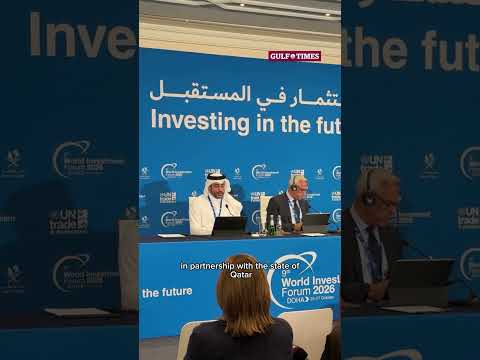
Nan Li Collins, chair, UN Sustainable Stock Exchange Division Director at the UNCTAD Division on Investment and Enterprise. PICTURE: Shaji Kayamkulam
Business

Doha to host ‘World Investment Forum 2026’ in October

The UN Trade and Development (UNCTAD) will hold its ninth World Investment Forum (WIF) in Doha on October 25-27, aimed at facilitating dialogue and fostering partnerships among governments, investors, and businesses on investment and development. Held in partnership with the State of Qatar, the forum, to be held at the Sheraton Grand Doha Resort & Convention Hotel, will focus on how investment can support sustainable development and build resilience at a time of heightened uncertainty and shape the future of development. The WIF is the UN’s flagship event for the global investment community. Under the theme ‘Investing in the Future’, WIF 2026 will bring together those who shape investment policy with those who allocate capital, with discussions spanning AI, critical minerals, energy, infrastructure, sustainable finance, tourism and culture, and emerging investment opportunities, including in the space economy. The forum will feature ‘Global Leaders Plenaries’, ‘Ministerial Roundtables’ on investment and entrepreneurship, the ‘Sustainable Stock Exchanges Dialogue’, a high-level session on investment in the Gulf region, and a global investment promotion conference, showcasing investment opportunities from around the world. The forum is expected to attract senior government officials, heads of international organisations, investment authorities, multinational corporations, investors, entrepreneurs and financial institutions. Day one will prioritise supply chain security, economic recovery, and regional integration, featuring a session organised alongside the Gulf Cooperation Council (GCC) Secretariat, stated Nan Li Collins, chair, UN Sustainable Stock Exchange Division director at the UNCTAD Division on Investment and Enterprise, during a media briefing held in Doha recently. She said day two will examine technology, capital, and societal progress, including an AI transition track co-chaired by the International Telecommunication Union (ITU). Collins also stated that the organisation actively engaged key Qatari stakeholders over recent days, including the Qatar Investment Authority (QIA), Qatar Development Bank (QDB), the Qatar Stock Exchange (QSE), Qatar Foundation, and Qatar Museums.  “Invest Qatar will play an important role in positioning Doha and Qatar as an investment destination and its role in the region globally. QIA, one of the leading sovereign wealth funds, will also be a partner for the forum, because they are making a very important strategic investment globally,” Collins noted. According to Collins, the 2026 agenda introduces dedicated discussions covering investments in the space economy and culture. Highlighting the cultural track, Collins pointed to Qatar’s established footprint in the field. “Investing culture is also new this year. So this is exactly where Qatar is playing a leading role globally. So we are featuring this important, unique agenda where Qatar is taking leadership globally also in this forum,” she said. UNCTAD expects delegation arrivals from over 100 countries, Collins noted, adding that more than 20 ministers and heads of international agencies have confirmed attendance, including UN Tourism leadership co-chairing the tourism investment track. The media briefing also included updates on the UNCTAD’s World Investment Report 2026, which shows that global foreign direct investment (FDI) recovered in 2025, but that the recovery remains uneven. Global FDI rose 6% to $1.6tn in 2025, ending two years of decline. Investment in developed economies increased by 11%, while flows to developing economies rose by 2%, according to the report.More than 80% of global FDI went to the 20 largest host economies. At the same time, a small number of strategic sectors accounted for 44% of the value of global greenfield investment projects in 2025, up from 16% in 2020, the report noted. The figures underscore a central challenge for policymakers: while investment is recovering, it is increasingly concentrated in particular economies and sectors, the report pointed out.Registration to attend the World Investment Forum 2026 is open. Information and the full programme are available here: https://worldinvestmentforum.unctad.org/

Dr Vincent Beyer, legal officer, Investment Policy and Agreements at the UN Trade and Development (UNCTAD). PICTURE: Shaji Kayamkulam
Business

Qatar FDI surges 559% to $3bn as GCC's global market share leaps six-fold

Qatar recorded a 559% increase in foreign direct investment (FDI) inflows to $3bn in 2025, up from $0.5bn in 2024, placing the country among the top three destinations in the Gulf Cooperation Council (GCC) on a per-capita basis.“If we look at individual member states, we see that if we're looking at total numbers, the UAE is leading, followed by Saudi Arabia, Oman, and then Qatar. These are aggregate values. If we were to adjust them on a per capita basis, Qatar would be in the top three,” according to Dr Vincent Beyer, legal officer, Investment Policy and Agreements at the UN Trade and Development (UNCTAD). Beyer presented the figures by during a recent press briefing in Doha highlighting key data from the World Investment Report 2026.Globally, FDI flows grew 6% in 2025, moving from $1.5tn to $1.6tn. However, capital allocation has grown increasingly concentrated across specific geographies and industrial sectors, according to Beyer.Within the GCC, Beyer noted that total capital inflow expanded substantially over the past decade. The region secured 6% of global FDI in 2025, up from 1% in 2015, representing a six-fold increase in market share.Data shared by Beyer showed that total FDI inflows to the GCC reached $98.5bn in 2025. The UAE attracted $48.2bn, Saudi Arabia recorded $32.6bn, Oman secured $13.3bn, Qatar received $3bn, Bahrain registered $0.8bn, and Kuwait stood at $0.5bn.Sectoral data for greenfield investments in the GCC indicates a swift rebalancing toward digital infrastructure, Beyer reported. Between 2021 and 2025, he said greenfield announcements in information and communication technologies (ICT) rose to $44bn, climbing close to the $45bn directed into energy and gas supply. Extractive industries recorded $33bn, automotive projects garnered $24bn, and construction brought in $22bn over the same period, Beyer also said.“If we're looking at Qatar specifically, the three sectors that drove the FDI numbers in Qatar are chemicals, energy, and then ICT investment,” Beyer explained.Beyer noted that government strategies globally have adjusted to attract specialised projects. Selective incentives now constitute 50% of targeted investment policy measures worldwide, while national screening mechanisms for foreign capital increased from 21 countries in 2016 to 52 in 2025, he said.Capital commitment globally remains heavily focused on five strategic fields: advanced technologies, critical minerals, energy transition, semiconductors, and artificial intelligence infrastructure. These sectors accounted for 44% of global FDI flows in 2025, up from 16% in 2020, Beyer pointed out.Beyer observed that top donor countries generate nearly three-quarters of investments in these strategic fields, while the top three receiving nations capture over half of all commitments.

US President Donald Trump speaks with new Federal Reserve Chair Kevin Warsh on the day of his swearing in ceremony, in the East Room of the White House in Washington, DC, on May 22. Investors say Warsh has sown market confusion and stoked doubts about his credibility on inflation in part by hinting at last month's policy meeting that rising yields, by tightening monetary conditions, could reduce pressure on the Fed to hike rates even as rising prices remain well above its 2% target.
Business

Anxious investors hope for clarity on Warsh's Fed plan at Jackson Hole

Investors this week will watch the annual Jackson Hole symposium for clues on how policymakers plan to navigate a landscape in which higher Treasury yields could do some of the tightening work for them. The central bank has often used the Wyoming gathering, hosted by the US Federal Reserve Bank of Kansas City, to flag its expectations for rate policy, but few investors expect President Trump's new Chair Kevin Warsh to honor that tradition in his debut speech on Friday. He has abandoned the forward guidance investors were long accustomed to, contending traders and portfolio managers should scrutinize market signals instead. That has left the market in the dark. Investors say Warsh has also sown market confusion and stoked doubts about his credibility on inflation in part by hinting at last month's policy meeting that rising yields, by tightening monetary conditions, could reduce pressure on the Fed to hike rates even as rising prices remain well above its 2% target. They hope the Fed chair will use his speech to fully explain his roadmap for returning inflation to the Fed's target and what he sees as the bond market's role in that strategy. "This lack of direction can be frustrating," said Robert Gill, a portfolio manager at Fairbank Investment Management in Toronto. "It is causing uncertainty and contributing to higher long-term bond yields, and this is an outcome that he seems to be designing." The picture has been complicated further by the Treasury Department's interventionist pivot after this month's selloff in long-dated Treasury bonds — fueled in part by fears over swelling sovereign debt and an expected rise in issuance — drove yields to near two-decade highs. In a surprise move, the Treasury subsequently doubled buybacks on long-dated bonds, an operation Secretary Scott Bessent said aimed to support liquidity but which investors widely saw as an effort to tamp down yields. The relief was short-lived. While investors do not expect Warsh to comment directly on the Treasury's debt management policy, the combination of its increased buybacks and elevated term premia, the extra compensation investors demand for holding long-term bonds, highlights a growing challenge for the Fed which investors hope he will address. In particular, they want Warsh to more strongly commit to the 2% inflation target as measured by the annual change in the price index for personal consumption expenditures, and to clearly explain how the Fed plans to respond if inflation continues to run above target. "Are they going to give it a year, or are you going to try to get it in compliance in six months?" said Vishal Khanduja, head of the Broad Markets Fixed Income team at Morgan Stanley Investment Management in Boston. Underscoring that uncertainty, the market is pricing in a growing chance of a hike, despite falling payrolls and slowing price rises suggesting the economy is in no immediate danger of overheating. US rate futures are pricing in a 40% chance of a rate hike next month, up from 33% a week ago, according to the CME's FedWatch. "It makes little sense to keep markets in the dark," said Royce Mendes, head of macro strategy at Desjardins in Toronto. Some investors share Warsh's stance on the bond market. George Catrambone, head of fixed income Americas at DWS in New York, argued that the bond market has already tightened financial conditions substantially, reducing the need for policymakers to do so through rate increases. Since Warsh took the helm in May, the benchmark US 10-year yield has climbed 8 basis points, while the 30-year bond yield has advanced 10 basis points. Yet long-term yields are being driven not only by inflation fears and related expectations for policy rates, but also by Treasury supply dynamics and investor demand. Bessent has said that the Treasury is increasingly having to compete, for example, with a large volume of corporate issuance at higher yields, including for artificial intelligence infrastructure. The Treasury's buyback plan is unlikely to eliminate the upward pressure on long-end yields if investors continue demanding greater compensation to hold longer-dated debt, investors said. But increasing the Fed's credibility on inflation could help. 

Gulf Times
Business

Food security is the Gulf’s next great investment story

The Gulf imports most of what it eats. For decades that was treated as a logistics question, solved with long-term supply contracts and overseas farmland. Akash Bhojwani believes it is about to become a finance question, and that the region is unusually well placed to answer it."Food security ultimately depends on the health of the farms you buy from," says Bhojwani, Founder and Managing Director of Arclight Capital, a Dubai-based holding and advisory firm focused on the UAE-India corridor. "And the single biggest risk sitting on those farms is that almost none of them are insured or properly financed. You cannot secure your food supply on top of an uninsured field."The numbers are stark. Roughly 75 percent of agricultural risk worldwide is uninsured, and in Asia barely one in five smallholders carries crop cover. Premiums are collected annually from people who earn seasonally, claims take months to settle, and small policies cost more to distribute than they return.What has changed, Bhojwani argues, is the arrival of digital rails capable of fixing the delivery problem. India, the Gulf's largest food trading partner in Asia, now runs payment and data infrastructure at a scale no emerging market has seen. Its Unified Payments Interface handles roughly 81 percent of retail digital payments across nearly 700 banks, and its consent-based data sharing framework has enabled more than 2.6 billion accounts."India built the rails. Identity, payments, consent-based data," he says. "Once a farmer's harvest and sales exist as data, you can lend against a real crop cycle and insure a real field. A satellite trigger can settle a claim within hours of a failed monsoon instead of months. That is what modern agricultural finance looks like." The corridor at workBhojwani sees the UAE-India corridor, a relationship carrying more than $85 billion in bilateral trade, as the natural artery for this capital. Arclight Capital was built for that corridor, combining strategic advisory, investment advisory and long-term holdings under one roof, with a growing focus on the payment and insurance rails that serve rural economies."Dubai is where Gulf capital looks for yield and where Indian founders look for global markets," he says. "Agri-fintech is not a niche impact story here. It is strategic infrastructure, and sovereign capital across the region is starting to treat it that way."He is careful to manage expectations on timelines. Agricultural cycles move slowly, and much of the groundwork involves making informal markets machine-readable before technology can add value. "This is a space where you underwrite in years, not quarters," he says. "But that is exactly why the opportunity is still open. The capital that wins in emerging markets is the capital that shows up early and stays."For a region whose food supply depends on distant fields, he argues, that patience is not just an investment strategy. It is policy. "De-risking the farmer is the cheapest food security programme the Gulf could ever buy." For more details visit - www.arclight.capital  or write at [email protected] 

QNB Group CEO Abdulla Mubarak al-Khalifa.
Business

QNB to strengthen global trade, investment dialogue at Qatar Economic Forum UNGA special edition

QNB Group will participate as Presenting Sponsor of the ‘Qatar Economic Forum, Powered by Bloomberg: United Nations General Assembly (UNGA) Special Edition’ in New York City.It will use the platform to strengthen relationships with global business and financial leaders and advance cross-border trade and investment opportunities across its international network. Taking place alongside the UNGA on September 20, QNB will be represented by a delegation of senior executives, led by Group CEO Abdulla Mubarak al-Khalifa. The delegation will engage with existing and prospective clients, investors, and policymakers to explore areas for collaboration and support international business and investment.QNB’s continued sponsorship of the Qatar Economic Forum reflects its strategy to strengthen its international platform, deepen institutional relationships and connect businesses and investors with opportunities across global markets. It also supports the Group’s commitment to advancing Qatar’s position as an international centre for business, investment and economic dialogue. Al-Khalifa said, “QNB’s scale and international reach give us a strong ability to support trade and investment across markets. Through our network spanning 28 countries across Asia, Europe and Africa, we combine local market knowledge, financing capacity and corporate and institutional banking expertise to help clients access capital, enter new markets and pursue cross-border growth.“Our continued sponsorship of the Qatar Economic Forum reflects how we put that international capacity to work. The UNGA Special Edition will enable us to engage directly with global decision-makers, understand emerging priorities and turn strategic dialogue into lasting relationships and tangible opportunities for our clients and the markets we serve.”During the special edition, QNB executives will engage with international stakeholders on the economic and investment trends shaping global markets. The group expects its participation to deepen client and investor relationships, develop new cross-border business opportunities and reinforce QNB’s position as a gateway between international capital and growth markets across the Middle East, Asia and Africa.

Indian embassy charge d’affaires Sandeep Kumar. PICTURE: Thajudheen
Business

Indian SMEs seen as bridges for Qatar investment

Indian small and medium-sized enterprises (SMEs) in Qatar are being positioned as “living bridges” for deeper economic cooperation, according to an embassy official who underscored their role in turning investment pledges into reality.“There are more than 20,000 Indian-owned or Indian-managed companies. They are the real living bridges that can help turn these objectives into realities,” charge d’affaires Sandeep Kumar’s speech emphasised at the recently held India Utsav 2026 celebrations organised by LuLu Hypermarket in Al Gharrafa.These firms, many of them embedded in Qatar’s private sector, are expected to channel the $10bn investment commitment announced by Doha into projects that align with India’s long-term growth agenda, Kumar noted.“Qatar has indicated that it will be investing about $10bn in India. This signals significant opportunities and a positive momentum towards achieving mutual goals. To realise this investment effectively, collaboration from both sides will be essential,” Kumar emphasised.According to Kumar, the emphasis on SMEs comes at a time when India is pursuing its “Viksit Bharat 2047” vision to become a developed economy by its centenary of independence. He pointed out that the presence of Indian companies in Qatar provides a practical mechanism to translate high level declarations into ground level business activity.Kumar announced that India’s demographic dividend, with 65% of its population under the age of 35, and the growing participation of women in the economy, are among the nation’s drivers of resilience and innovation.He also revealed that India’s digital infrastructure now accounts for more than half of global digital transactions, underscoring the scale of its technology adoption.“We have developed one of the largest digital infrastructures in the world. I am very happy and proud to share that more than 50% of all global digital transactions take place in India,” Kumar explained, pointing to responsible deployment of artificial intelligence, blockchain, and other emerging technologies as areas where India and Qatar can collaborate.Kumar said, “India has embarked upon embracing new and emerging technologies. The ‘India AI Impact Summit 2026’ is just one example of that. And we have been embracing these technologies not just in words, but in spirit. Our goal now is to promote the responsible use of emerging technologies, particularly AI, blockchain, and other similar innovations.”On Qatar’s diversification drive under its 2030 national vision, Kumar described this as closely resonant with India’s development goals. He stressed that both sides are exploring cooperation in advanced manufacturing, semiconductors, logistics, food security, and infrastructure.Kumar noted that high level visits have already elevated bilateral ties to a strategic partnership, with trade valued at around $14bn. Energy exports from Qatar dominate the basket, but both countries have agreed to double the volume by 2030, he said.India’s exports to Qatar, worth about $1.7bn, include auto components, foodstuff, and jewellery, according to Kumar, who pointed out that diversification is essential to rebalance the trade relationship.He also highlighted recent ministerial exchanges, including visits by India’s commerce, culture, and energy officials, as evidence of momentum in India’s longstanding partnership with Qatar.Kumar stressed that the alignment of Qatar National Vision 2030 and India’s Viksit Bharat 2047, India's long-term national roadmap to transform the country into a fully developed, self-reliant nation, provides a framework for cooperation that extends beyond energy, creating opportunities in technology, manufacturing, and sustainability.

A general view of the Keiyo Industrial area of Chiba prefecture from the observation deck of Kawasaki Marien in Kawasaki of Kanagawa Prefecture on Monday. Japan's economy slowed in the second quarter and missed market forecasts on softer household and business spending, highlighting the fragile nature of its recovery as the Middle East war clouds the outlook.
Business

Japan Q2 growth misses forecasts on weaker spending, investment

Japan's economy slowed in the second quarter and missed market forecasts on softer household and business spending, highlighting the fragile nature of its recovery as the Middle East war clouds the outlook. However, long-term bond yields hit a three-decade high as investors brushed aside the soft reading as reflecting one-off factors, and focused more on mounting inflationary risks that could prod the Bank of Japan to raise interest rates next month. Gross domestic product rose 1.1% in annualised terms, government data showed on Monday, missing a median market estimate of 2.0% in a Reuters poll and below a revised 1.9% expansion in the previous quarter. While the data revealed some temporary soft patches in demand, analysts say robust underlying momentum and persistent price pressures are likely to keep the case for imminent interest rate hikes intact. "Today's GDP data was a bit weak but the economy is likely to continue recovering moderately," said Naoki Hattori, chief Japan economist at Mizuho Research Institute. "Given risks of underlying inflation overshooting its target, the BoJ is likely to proceed with a rate hike next month." Sources have told Reuters the BoJ  is set to raise rates as soon as September and is considering hiking more aggressively thereafter to avoid being behind the curve on inflation. The benchmark 10-year Japanese government bond (JGB) yield rose for a sixth straight session on Monday to hit a 30-year high of 2.925%, as investors continued to price in BoJ  rate hikes sooner and faster than earlier expected.Private consumption was the biggest disappointment in the GDP data, falling 0.02% versus market expectations for a 0.5% increase, the first drop in eight quarters.Analysts said the weakness was due in part to lower school fees households paid thanks to subsidies, which pushed down headline private consumption but lifted government spending.Capital spending, a key driver of private demand, fell 1.2% in the second quarter, confounding market forecasts for a 0.4% increase. However, capital expenditure, as well as overall preliminary GDP, tend to be revised higher with updated figures.Exports remained resilient thanks to solid US demand for Japanese hybrid vehicles and sustained global investment in artificial intelligence that supported shipments of semiconductor-related equipment and components.Net external demand, or exports minus imports, added 0.5 percentage point to growth, largely because imports fell sharply after temporary disruptions to crude oil shipments through the Strait of Hormuz."I don't think the BoJ would be too worried about today's GDP data as the economy is showing remarkable resilience to headwinds from the Iran war," said Yoshiki Shinke, senior executive economist at Daiichi Life Research Institute.The government maintained its sanguine view on the economy."The economy remains on a moderate recovery path, with export-driven growth offsetting weakness in domestic demand," Economy Minister Minoru Kiuchi said in a statement.Looking ahead, analysts cautioned that rising import costs and mounting upstream price pressures could eventually feed through to consumers, posing a risk to spending later this year.Aside from rising fuel costs from the Middle East conflict, a weak yen has lifted import prices and broader cost-of-living for households, posing a headache for policymakers. Such price pressures have led to a flurry of hawkish comments from BoJ policymakers that bolstered the case for an early rate hike. The government has sought to cushion the blow to households from rising living costs with subsidies, though rising bond yields may prevent it from ramping up fiscal spending any further, some analysts say. That spells trouble for consumption, which is mostly holding up so far as a tight job market prods firms to offer higher pay. "Government subsidies have helped contain consumer inflation so far, but a weaker yen and higher crude oil import costs raise the likelihood of broader price hikes from the autumn onward," said Takeshi Minami, chief economist at Norinchukin Research Institute.A survey this month by the Japan Center for Economic Research showed 37 economists forecast annualised GDP growth to slow to an average 0.05% in the July-September quarter.

Mohammed Saif al-Sowaidi, CEO of the QIA.
Business

QIA announces investment in Lesha Qatar Equity Fund

Lesha Bank is a Qatar-based Shari’a compliant investment bank founded in 2008. The Fund is focused on achieving capital growth and income by investing in a diversified portfolio of shares included in the QE Al Rayan Islamic Index or constituents of the QE All Share Index in accordance with Shari’a guidelines. The investment is part of QIA’s Active Asset Management Initiative, launched in 2024 to establish partnerships with leading global and local asset managers with GCC expertise. Under the initiative, QIA seed funds managed by its partners by re-allocating shares in Qatar Stock Exchange listed companies.    Lesha Bank has ambitions to become a global leader in Shari’a-compliant investment banking, offering innovative investment solutions across alternative investments, asset management, and investment advisory service. The bank manages approximately QAR 19.2 billion in assets under management and aims to further expand its asset base as part of its long-term growth strategy. The collaboration with local asset managers such as Lesha Bank further reflects QIA commitment to supporting Qatar’s competitive local economy. Through a number of initiatives, QIA seeks to support the continued development and diversification of Qatar’s capital markets.  Mohammed Saif Al-Sowaidi, CEO of QIA said, “We are pleased to expand our Active Asset Management Initiative through this investment in Lesha Bank, the first locally managed fund under the initiative. This partnership reflects our commitment to supporting the development of Qatar’s financial sector and broadening opportunities for local asset managers.” Mohammed Ismail Al Emadi, Group CEO of Lesha Bank commented "Having the QIA invest in our public equity fund focused on Shari'a-compliant listed equities is a powerful endorsement of our investment philosophy and capabilities. We are honoured to be the first local asset manager to join the QIA's Active Asset Management Initiative, designed to boost economic growth and enhance liquidity on the Qatar Stock Exchange. This collaboration reflects a shared commitment between two Qatari institutions to strengthen local capital markets for the long term." Lesha Bank is the first local asset manager to join the initiative and the fourth partner overall. Previous partnerships include QIA investments in funds alongside Franklin Templeton, Ashmore, and Fiera Capital.  Lesha Bank is the first independent Shari’a-compliant Investment Bank authorized by the Qatar Financial Center Regulatory Authority (QFCRA), and a listed entity on the Qatar Stock Exchange (QSE: QFBQ). Lesha Bank acts as an investment partner in offering attractive, premium investment opportunities and innovative financial solutions with local, regional, and international reach. Lesha Bank continues to enhance its role as a trusted advisor and gateway to opportunities in Qatar, the region, and global markets with a focus on US, Europe, and the MENA region. Lesha Bank offers high-net-worth individuals and corporates a range of innovative, tailormade Shari’a-compliant financial products and solutions covering alternative investments focused on aviation, global infrastructure, private equity and real estate along with private wealth, asset management and investment banking advisory.  Qatar Investment Authority (QIA) is the sovereign wealth fund of the State of Qatar. QIA was founded in 2005 to invest and manage the state reserve funds. QIA is among the largest and most active sovereign wealth funds globally. QIA invests across a wide range of asset classes and regions as well as in partnership with leading institutions around the world to build a global and diversified investment portfolio with a long-term perspective that can deliver sustainable returns and contribute to the prosperity of the State of Qatar.  


Moza Abdulaziz al-Ishaq
Qatar

Alam Al Roum brings Qatar’s investment vision to Egypt’s Mediterranean coast: industry expert

The growing Qatar-Egypt partnership is taking a new dimension through Alam Al Roum, a major development on Egypt’s North Coast that reflects an ambitious vision for tourism, investment and sustainable urban development in the Mediterranean. In an interview with Gulf Times, Qatari writer and media professional Moza Abdulaziz al-Ishaq described the project as more than a conventional real estate investment, highlighting its potential to become a fully integrated international tourism destination. She has written a book on tourism in Qatar, titled Qatari tourism innovations. “Alam Al Roum reflects a vision that views tourism destinations as engines of economic growth and powerful tools for reshaping the development and tourism landscape,” she said. “It represents a transition from traditional real estate investment towards building a complete global destination,” she added. The project is among the largest Qatar-Egypt investment ventures in recent years, with an estimated investment of $29.7bn, covering nearly 4,900 feddans (a feddan equals 4,200sqm) and extending along more than 7.2km of Mediterranean coastline. Al-Ishaq said that the project’s significance extends beyond its economic value, describing it as a model of Arab economic integration capable of encouraging further Gulf investment in Egypt. “The project carries political and strategic dimensions alongside its economic importance,” she stated. “It strengthens Arab economic integration and demonstrates how regional partnerships can create long-term value through tourism, innovation and sustainable development.” Developed by Qatari Diar, the project is envisioned as an integrated city combining residential, hospitality, entertainment, commercial and investment components. Plans include international hotels, approximately 4,500 hotel rooms, luxury resorts, a world-class yacht marina, commercial and administrative areas, educational and healthcare facilities, extensive green spaces and a wide range of marine, sporting and leisure activities. According to al-Ishaq, the project reflects Qatari Diar’s broader international strategy of developing sustainable urban and tourism destinations while diversifying investment beyond the energy sector. “Qatari Diar does not view Alam Al Roum simply as a real estate project, but as an integrated destination bringing together living, tourism, entertainment, services and investment,” she said. “Its ambition is to create a world-class destination capable of competing with leading international resorts.” Al-Ishaq noted that global tourism is increasingly defined by the quality of the overall experience, rather than natural beauty alone. Accessibility, accommodation, services, entertainment and recreational opportunities have become key elements in determining a destination’s competitiveness. Al-Ishaq believes Alam Al Roum is well positioned to respond to these changing expectations and strengthen Egypt’s North Coast as a regional hub for luxury tourism and investment. “This project reflects a new concept of Arab joint investment, where economic vision and tourism development converge in a single project, creating opportunities for sustainable growth and stronger regional partnerships,” she added. With its scale, strategic location and integrated development model, Alam Al Roum is expected to emerge as a major tourism and investment destination in the Mediterranean, while providing a prominent example of Qatar-Egypt co-operation built around shared economic interests and long-term development. 

Qatari Diar CEO Sheikh Hamad bin Talal al-Thani joins Egyptian Prime Minister Dr Mostafa Madbouly and Randa el-Menshawy, Minister of Housing, Utilities and Urban Communities, during the tour.
Business

Qatari Diar launches Phase 1 of $29.7bn Alam Al Roum development in Egypt

Qatari Diar has officially announced the launch of the first phase of its landmark Alam Al Roum development on Egypt’s north coast, marking the beginning of one of the Mediterranean’s most ambitious mixed-use urban and tourism destinations. The project represents a total investment of $29.7bn, including $3.5bn in direct cash investments, with handover of the first phase scheduled to begin in 2030. The first phase is expected to generate thousands of direct and indirect employment opportunities as part of the project’s overall target of creating more than 250,000 jobs upon completion. It will also open significant opportunities for Egyptian and international contractors to participate in the construction works, strengthening the competitiveness of the local construction sector and reinforcing Qatari Diar’s commitment to maximising local value creation.The announcement was made during a site visit by Egyptian Prime Minister Dr Mostafa Madbouly. He was accompanied by Randa el-Menshawy, Minister of Housing, Utilities and Urban Communities, as part of a tour to review major development and investment projects and monitor implementation progress across Egypt’s north coast. Qatari Diar CEO Sheikh Hamad bin Talal al-Thani welcomed the Prime Minister in the presence of the company’s senior executives, who presented the implementation roadmap and timeline for Phase 1 ahead of construction.The development is one of Qatari Diar’s largest integrated urban and tourism projects worldwide and its biggest investment in Egypt. Spanning 20.58mn sq m, the project boasts 7.2km of Mediterranean waterfront envisioned as a fully integrated coastal city, combining residential, hospitality, commercial, cultural, entertainment, educational, and healthcare components within a modern urban framework designed to create a sustainable community for future generations.The project’s first phase embodies the scale and potential of a fully integrated development in its own right. The phase spans 4mn sq m and features a total built-up area of 1.4mn sq m. It includes a 2-km beachfront and promenade, open-sea connected lagoons suitable for swimming and yachting, as well as 195,000sq m of swimmable artificial lagoons, and open spaces accounting for approximately 85% of the total land area. The development also features a town-centre marina with capacity for 50 yacht berths, and four hotels offering more than 1,000 rooms, sports centres, and international retail and dining venues, further reinforcing its position as a premier destination. The first phase is expected to generate approximately 30,000 direct and indirect jobs, backed by investments reaching up to 220bn Egyptian pounds.The project’s overall masterplan includes 22km of seawater-connected lagoons, integrated with waterfront promenades and extended beaches, 850,000sq m of swimmable lagoons, an international marina accommodating up to 370 yacht berths, a domestic marina with 120 berths, and an 18-hole championship golf course spanning nearly 980,000sq m with direct sea views. The development will also feature more than 3,500 hotel rooms across a collection of internationally branded hotels and resorts, positioning it as a regional hub for yacht tourism, sports, and global events.The company also highlighted the project’s urban planning philosophy, which is centred on creating a walkable city through an integrated network of pedestrian and cycling paths, smart mobility solutions, and best-in-class environmental sustainability standards in water resource management, biodiversity protection, and climate resilience.Alam Al Roum represents a transformative milestone in reshaping Egypt’s Mediterranean north coast. The project’s components are scheduled to be delivered progressively beginning in 2030, coinciding with the completion of the first phase.Sheikh Hamad said, “This milestone reflects the scale of our commitment to Alam Al Roum. We remain committed to delivering this phase by 2030, supported by Egypt’s stable investment environment and long-term partnership opportunities.“From the earliest stages, we have partnered with leading global experts in master planning, marina design, hospitality consulting, landscape architecture, and infrastructure engineering to ensure the project meets international best practices.”Sheikh Hamad added: “We are implementing Phase 1 according to a carefully structured timeline targeting starting delivery in 2030. The project will help attract further investment, strengthen Egypt’s tourism sector, and capitalise on the exceptional advantages of the north coast.”