tag

Thursday, July 09, 2026 | Daily Newspaper published by GPPC Doha, Qatar.

Tag Results for "K2 Airways" (46 articles)

This handout photograph taken on July 8, 2026 and released by the Pakistan Airports Authority shows Pakistan Navy and Pakistan Maritime Security Agency personnel standing next to the wreckage of the K2 Airways Cargo Boeing 737, after it was recovered during a search and rescue operation in the Arabian Sea, off Ormara town. Pakistan located the wreckage of a Boeing cargo plane on July 8, the country's airports authority said, adding that rescuers were searching for five crew on board when the aircraft had gone missing. (Photo by Pakistan Airports Authority / AFP) / RESTRICTED TO EDITORIAL USE - MANDATORY CREDIT "AFP PHOTO / Pakistan Airports Authority / - " - HANDOUT - NO MARKETING NO ADVERTISING CAMPAIGNS - DISTRIBUTED AS A SERVICE TO CLIENTS
International

Pakistan finds wreckage of cargo plane in sea, search for crew ongoing

Pakistan located the wreckage of a Boeing cargo plane yesterday, the country’s airports authority said, adding that rescuers were searching for five crew on board when the aircraft had gone missing.The plane was approaching Karachi from Sharjah in the United Arab Emirates when radar showed it “rapidly descending” Tuesday evening after reporting a “navigational system issue”, according to the Pakistan Airports Authority (PAA).Pakistan’s navy and maritime rescue agency, after searching for 12 hours, “successfully located and identified wreckage of K2 Airways Cargo B737 which was declared missing last night”, the PAA said in a statement posted on X. The wreckage was found in the Arabian Sea, off Ormara town on Pakistan’s southern coast, it said.“Efforts are underway to find the missing crew members,” the PAA added. The authority published images of personnel lifting pieces of the fuselage from a small boat onto a larger vessel and the red and white debris with the words “K2 Air” laid out on the ship’s deck.In a statement issued before the plane wreckage was found, Prime Minister Shehbaz Sharif expressed “deep sorrow, grief, and regret over the tragic incident”.A source familiar with the matter told AFP that both navy and merchant vessels were taking part in the search efforts, supported by military aircraft.The aircraft was observed on radar at 21:21 pm (1621 GMT) on Tuesday “rapidly descending and with rapid heading change”, and communication contact was lost about 155 nautical miles west of Karachi, the PAA said.Preliminary data sent from the plane “indicated a loss of altitude, followed by a climb, and then a second, sudden and dramatic loss of altitude”, according to Flightradar24.com, a global flight-tracking service. 

Two suspects, a Thai man and his Laotian wife, suspected of sending drug parcels from a border province to Bangkok, are escorted by officials to the Office of the Narcotics Control Board (ONCB) in Bangkok. (Reuters)
International

How drug gangs use social media to recruit Thai air crew as couriers

Early in the morning on June ​18, a message from an unknown account ‌slipped into the TikTok inbox of a flight attendant in Bangkok with a series of questions: "Are ‌you flying to Australia? ⁠Do you do carry-for-hire? ‌What is your rate?"The 30-year-old, who flies for a ‌regional budget carrier, ignored the message and forgot about it — until Tuesday, when a Thai Airways flight attendant was charged ⁠with importing more than one kilogram (2.2 pounds) of heroin into Australia hidden in several tote bags.The rare detention of a national airline cabin staff has triggered alarm in Thailand, raising questions about security measures at airports and concern that international trafficking networks are targeting air crew in their attempts to get illicit drugs to lucrative markets beyond the Southeast Asian nation."According to reports, in the first half of this year, there have already been at least six cases of people travelling from Thailand who were charged with commercial drug trafficking," Thai Prime Minister Anutin Charnvirakul said ​at a meeting on Friday of the top national anti-drug committee."This is considered a high number... and it damages the country's image," he said.Thailand's main airport operator will improve baggage screening and inspections, including those of crew members, and airlines will take serious disciplinary ‌actions against staff carrying or accepting items ⁠on behalf of others, a ​government spokesperson said."I don't reply to strangers like this," the Bangkok flight attendant told Reuters, referring ​to the account that messaged her. She asked not to be named due to the sensitivity of the issue. "We've been constantly warned about this, no carry-for-hire. It's a well-known rule."The unknown account — named "Powder is Powder" in Thai — was linked to drug trafficking networks that create fake social media accounts to find people to move illicit substances across borders, said Areepak Ngernbamroong, a spokesperson for Thailand's Office of the Narcotics Control Board."The account has now been shut down," Areepak said. "The ONCB is investigating, and preliminary findings indicate that the account used many different names."In a statement following the detention, Thai Airways said it had strict rules governing the conduct of all employees and would cooperate with the relevant authorities.CROSS-BORDER MOVEMENTAfter procuring drugs from neighbouring countries with large production facilities, trafficking networks move the ‌substances through Thailand concealed in items such as ‌clothing, coffee packets, and vases, according to Thai ⁠authorities. The cultivation of opium poppies for the production of heroin in neighbouring Myanmar surged to its highest level in ⁠a decade in 2025, the UN Office on Drugs ⁠and Crime (UNODC) reported in December.War-torn Myanmar is the world's main known source of illicit opium, amid declining production in Afghanistan, as conflict and economic hardship push more farmers into the illicit trade.In Thailand, trafficking networks target specific groups of travellers, including flight attendants, to help transport the drugs overseas, said Police Major Suriya Singhakamol, Secretary-General of the ONCB.In the case of the Thai Airways flight attendant arrested in Australia, she had initially posted in a social media group where people offer to carry ​items overseas for a fee, he said.The flight attendant then began communicating with a Facebook user named "Rose Rose", according to Suriya."They later agreed on a fee of 8,800 baht ($265.46)," he told reporters.The heroin concealed within the lining of the bags carried by the attendant had an estimated street value of A$500,000 ($347,150), according to the Australian Federal Police.Using similar methods, drug smuggling networks had prepared to send five more packages from the Thai capital Bangkok to Australia and Taiwan between June 30 and July 1, said Suriya."But authorities seized 24.38 kilograms of heroin, concealed in traditional goods, silk clothing, coffee sachets, and winter jackets," he said, adding that Thai agencies were coordinating with Australian and Taiwanese authorities.So far, ‌Thai authorities have taken into ​custody two people, a Thai man and his Laotian wife, suspected of sending drug parcels from a border province to Bangkok. 

Singapore Airlines planes sit on the tarmac at Changi Airport. Asian airlines ‌that gained passengers and charged higher fares on European routes after the start of the Iran conflict ​are seeing those advantages erode as Gulf ‌carriers restore flights and offer lower ticket prices, industry data shows. (File picture)
Business

Asian airlines' Europe windfall fades as Gulf rivals rebound

Asian airlines ‌that gained passengers and charged higher fares on European routes after the start of the Iran conflict ​are seeing those advantages erode as Gulf ‌carriers restore flights and offer lower ticket prices, industry data shows.The shift has been gradual, ‌but it is raising ⁠doubts over whether carriers including ‌Singapore Airlines, Cathay Pacific Airways, Korean Air Lines and ‌ANA Holdings can retain much of the market share they gained during the disruption."It is clear that we have ⁠passed the peak of the load factor gains for the Asian carriers," said Nathan Gee, head of Asia-Pacific transportation research at BofA Global Research, referring to an industry term for the percentage of seats filled. "But long-haul bookings tend to be on a six-month window, suggesting the strongest contribution to flown revenues will be seen in the upcoming quarters."Emirates, Qatar Airways and Etihad Airways carried nearly one-third of passengers from Asia to Europe and more than half of those from Australia and New Zealand to Europe before the conflict, according to Cirium data. At the ​start of the Iran war on February 28, their Gulf hub airports were closed due to drone and missile attacks, but by mid-June the airlines' flights had returned to around 90% of normal levels, Flightradar24 data shows.Between March and May, Middle Eastern ‌carriers improved from a nearly 60% drop ⁠in passenger numbers from ​a year earlier to a 28% decline, according to International Air Transport Association data. And while non-stop ​traffic from Asia to Europe was up nearly 30% year-on-year in March, by May the gain had narrowed to 15%.In June, Australia lifted a "do not travel" warning that had voided travellers' insurance policies at Gulf hubs.Some travellers with pre-war bookings on Gulf carriers had bought refundable backup flights to Europe on Asian airlines as they assessed the security situation, said Michael Schischka, a senior adviser at Mary Rossi Travel in Sydney who specialises in luxury European trips."Not all clients, but I'd say the majority are now feeling more comfortable and safe and secure in flying through the Middle East," he said. "A lot of the Asian flights ‌were very full and the cheaper fares weren't ‌available. So that's driven people back to looking ⁠at the Middle East airlines again as well."A Korean Air spokesperson said it had experienced a year-on-year increase in load ⁠factors on its European routes between March and ⁠May, but transfer traffic demand had softened as Gulf carriers resumed operations over the course of the second quarter.ANA, which has yet to report May data, said its load factor on European flights had slipped from 93.1% in March to 86.9% in April, though it was still up 8.7 percentage points year-on-year. Cathay Pacific reported the load factor across its network was up 2 percentage points in May to 86.8% from a year earlier, whereas in March the gain was ​9.5 points to 92.2%.Independent aviation analyst Brendan Sobie said the data pointed to a gradual rather than sudden rebalancing, with Singapore Airlines' trajectory also illustrating the trend clearly.The airline's Europe load factor surged 13.8 percentage points in March, but the gains narrowed sharply to 4.9 points in April and just 1.1 points in May."In May the load factors for both Europe and Australia normalised," Sobie said. "They had a big uptick in March, a smaller uptick in April and in May even smaller. To me it's more gradual, not overnight."Cherie Lavin, a travel agent at Travel My Dear in Brisbane, said her clients looking to fly in the next one to three months remained hesitant about ‌booking with Middle Eastern carriers."But ​I think for next year there's no qualms in quoting it," she said. "And it's being received well." 

Gulf Times
Qatar

Qatar anticipates surge in summer tourism

Qatar is bracing for a fresh wave of visitors in the second half of 2026, with a packed calendar of offers, programmes and entertainment events rolled out to pull in travellers from home and abroad — even as soaring airfares and regional tensions keep a growing number of families holidaying on home turf.The country drew 1.13mn visitors in the first quarter of 2026, according to Qatar Tourism figures — 646,000 in January, 423,000 in February and 63,000 in March.Industry experts expect arrivals to climb sharply in the coming months as the summer holidays begin, buoyed by a broad line-up of events and activities. Qatar, they note, has established itself in recent years as a leading destination and a favourite among travellers chasing experiences that fuse the country's heritage with its modern edge.Speaking to Qatar News Agency (QNA), the experts said the sector is set for a strong rebound in inbound travel through the second half of the year. While some residents are still planning trips overseas, others are turning inward — to beaches, resorts, nature reserves and historic forts — to spend the summer with their families. High airfares and hotel rates abroad, compounded by regional tensions, have prompted many to rethink their plans in favour of what Qatar offers closer to home.Tourism expert Ahmed Hussein forecasts a robust recovery in the second half of 2026, pointing to signs of easing regional tensions and Qatar Tourism's steady push to diversify the country's offerings. This summer, he said, is unlike those before it: steep airfares and geopolitical headwinds have nudged citizens and residents alike towards domestic travel — which can cost more than 50% less than a holiday abroad, while serving up a full menu of family and child-friendly entertainment.In April, Visit Qatar launched its annual summer campaign under the banner "Hello Summer", promising a season of leisure and entertainment running from May to the end of September. The campaign showcases a sweep of world-class events pitched at families, friends and adventure-seekers.The Summer 2026 programme packs in entertainment, cultural and sporting fixtures — among them the Qatar Toy Festival, major music concerts and a string of activities across the country's flagship malls. Luxury hotels and resorts are laying on exclusive summer experiences, alongside theme parks and water attractions for all ages.Hussein also expects visitors to make the most of the country's coastline. Qatar boasts a diverse spread of public and private beaches — from open, natural stretches to fully integrated beachfront destinations built for a premium day out — with more than 10 beaches, each offering its own flavour of recreation.For his part, tourism expert Ayman al-Qudwa said Doha had cemented its standing as the Gulf's tourism capital this year, emerging as the destination of choice for citizens, residents and international visitors — particularly travellers from the GCC. He put this down to an ecosystem that pairs ease of access with a varied offering and advanced infrastructure, with domestic tourism the biggest winner of 2026.Summer holidays, he added, give families a chance to relax, unwind and recharge away from the grind of work and study. While some are preparing to travel abroad — funded through savings or loans — others are choosing to stay put, drawn by lower costs, varied attractions and a deep bench of facilities.Qatar's success, al-Qudwa told QNA, rests on what he called the "tourism square", beginning with Hamad International Airport, which links Doha to more than 190 global destinations and serves over 35 international airlines. He also flagged the pivotal role of Qatar Airways, whose network of more than 160 destinations and over 140 daily flights continues to feed visitor arrivals.The result, he said, is an integrated model blending entertainment, hospitality and economic value — one that makes domestic tourism the most cost-effective and family-friendly option going, and underpins expectations of a strong second-half recovery.Qatar Tourism has lately opened up new destinations beyond Doha for visitors seeking calm and quiet alongside a full slate of activities — among them nature reserves, historic forts, international resorts and hotels, public parks, recreational facilities, celebrated restaurants, traditional markets and major malls. The country also remains among the world's safest places to visit.National Planning Council data for 2023 recorded 167 cinema screens with a combined 38,210 seats, screening more than 5,497 films — 4,926 foreign and 571 Arabic. Museums and exhibitions drew some 1.09mn visitors over the same year.The council's figures also showed 189 hotels and hotel apartments in 2023, offering 46,806 rooms and 68,495 beds. The hospitality sector logged 6.67mn guests and 15.68mn room nights across the year. 

Qantas presents the first of 12 modified Airbus A350-1000ULR jets to be used for record-breaking non-stop flights, with Sydney-London designated as the first route, at a ceremony at Airbus headquarters in Toulouse, France, Wednesday. Qantas Airways announced London as the first destination for the world’s longest non-stop commercial flight.
Business

Qantas picks London for first record-breaking non-stop flights

Qantas Airways on Wednesday announced London as the first destination for the world’s longest non-stop commercial flight, a roughly 20-hour trip from Sydney eliminating the traditional stopover on the “Kangaroo Route”. The Australian carrier plans to start selling tickets in February and launch the flights in October 2027, CEO Vanessa Hudson told an event in Toulouse, France. The flights are part of the airline’s “Project Sunrise” initiative, which will also serve New York using modified Airbus A350-1000ULR jets capable of flying up to 22 hours with 238 passengers on board. The announcement is part of a fleet overhaul that began in 2017 when Qantas challenged Airbus and Boeing to develop planes capable of ultra-long-haul, non-stop routes from Australia. “Australia’s distance from the rest of the world should never stand in the way,” Hudson said, before unveiling one of the modified Airbus jets, fresh from the paint shop and yet to have its Rolls-Royce XWB-97 engines installed. Qantas named Project Sunrise after the airline’s double sunrise endurance flights during World War Two, which remained airborne long enough to see two sunrises. The aim is to cut what was once a five-day trek on the “Kangaroo Route” to London to a single hop of 19 to 21 hours, depending on routing and winds. Qantas will use polar routes about a quarter of the time, especially during the northern winter. The trip now takes some 24 to 25 hours via Singapore. It is a major gamble for Qantas, involving billions of dollars in aircraft, cabin upgrades and research into passenger health on ultra-long flights. To succeed it must convince travellers to pay more to avoid layovers, while minimising the discomfort from long flights. Qantas has participated in academic research on jet lag, exercise, hydration, lighting and meal times, Hudson said. “What they are selling is time, and they absolutely need to get a premium on all the cabins, particularly business and premium economy,” said aviation analyst John Strickland. Hudson said Qantas hopes to replicate the roughly 20% premium it has achieved across all four cabins on Perth-London flights versus one-stop routes. Qantas has temporarily rerouted the Perth-London service via Singapore because of disruption in Middle East airspace. “We will return our network to where it was prior to the war when things settle down,” Hudson said, without giving a time-frame. Qantas has estimated Project Sunrise could add more than A$400mn ($283mn) a year to earnings. Jefferies analysts have said they expect a positive market for Project Sunrise flights to London. Gulf carriers such as Emirates, which redrew the aviation map around their hubs, are expected to defend their market share. Australia on Wednesday lifted a months-long “do not travel” warning on Gulf hubs that had invalidated most travel insurance policies even for transit passengers. Airbus won the Project Sunrise order in 2019 after an intense battle with Boeing’s 777X. Earlier this month, Airbus carried out the first test flight for one of 12 modified A350-1000ULR planes ordered by Qantas. The 238-seat planes feature an extra rear-centre fuel tank helping to increase the range by 1,000 nautical miles (1,852 km) to 10,000 nautical miles. Flights are so long that much of the fuel is used merely to carry the weight of the remaining fuel. Half of the 12 new jets will serve the ultra-long-haul London and New York markets. The rest may replace Boeing 787s on other long routes such as Perth-London or Auckland-New York, freeing those aircraft to open new routes, Hudson said. Chicago has long been on Qantas’ watch list among other destinations. The first aircraft is due for delivery in April 2027, about five years later than originally expected due to the Covid-19 pandemic and supply chain delays. Reuters reported this month that Qantas is in talks to buy 20 more wide-body jets from Airbus or Boeing, with the smaller A350-900 or more Boeing 787s under consideration. 

Qatar Airways CEO Hamad Ali al-Khater.
Business

Demand ‘bouncing back’ despite Iran war disruptions, says Qatar Airways CEO

Qatar Airways has largely weathered the disruptions caused by the war in Iran, with passenger loads exceeding “80%” and recovery tracking closer to a V-shape than the U-shape it had initially braced for, according to the airline’s top executive.Hamad Ali al-Khater, in an exclusive interview with CNN’s Richard Quest at the International Air Transport Association (IATA) Annual General Meeting in Rio de Janeiro, said the crisis that struck on February 28, when Iranian strikes prompted Qatar to shut its airspace, was “the most significant” the airline had faced in its modern history.Four Qatar Airways flights were cancelled until early March, and capacity has been building back since, though it has not yet returned to pre-war levels, Quest noted. But al-Khater pointed out that demand had defied expectations: “We’ve seen demand bounce back at a pretty surprising level.”He said, “What we expected was a U-shaped recovery. It’s coming closer to a V-shape right now. Loads, just five days ago, crossed north of 80%. Australia to Europe, the kangaroo route is bouncing back. India, US flows are bouncing back, China, Africa. We’re seeing some pretty robust and resilient demand outside.”On fuel, al-Khater said the airline had mapped out its outstations and was satisfied there was enough headroom to manage supply risks, even as the Strait of Hormuz remains closed.“Let me put things into perspective. The skies are open for Qatar Airways, but the strait remains closed for now. So...we’re provisioning, we fly to about...166 destinations. We’ve mapped out all our outstations in airports where we believe there’s high risk.“We believe there is sufficient headway from proper critical fuel supply shortages. Having said that, we’re looking after the health of the business, so we provision accordingly. And resilience and emergency and planning was just a core paramount factor in how we operate in the months to come,” he explained.Al-Khater acknowledged fuel prices remain a risk and that the airline would need to adjust ticket pricing accordingly, but said load factors justified confidence. “Yes, fuel price is a risk. Yes, we have to pivot and steer accordingly from a price perspective to see what’s appropriate for our passengers, but the loads speak for themselves,” al-Khater emphasised.According to al-Khater, his priority was preserving jobs through the current uncertainty. “The health of the business remains paramount and preservation of jobs and that’s what I’m focusing on. If I bring that back to what’s important to us, it’s our people. What that means is culture, empowerment, and upskilling, but it’s also a focus on growth, which is still set to continue,” he said.Al-Khater said Qatar Airways has around “210” widebody orders from its Boeing deal and expects A321 long-range aircraft to arrive in October, which he said would give the airline narrowbody aircraft with widebody-range potential. Starlink connectivity is already across most of the fleet, and Q Suite Next Gen is due soon, he also said.“These factors are going to make sure that we’re in a much healthier position once we’re out of this crisis,” he emphasised.Al-Khater added: “I’m very privileged to be leading this organisation. It comes with a profound sense of responsibility. And there are plenty of young leaders worldwide who are capable of demonstrating their resilience, and I’m here to do that.” 

Gulf Times
Qatar

Qatar Airways to increase operations to Dubai with five daily flights starting today

Qatar Airways continues to increase its capacity between Qatar and the United Arab Emirates (UAE) by gradually expanding frequencies between Hamad International Airport (DOH) and Dubai International Airport (DXB) from two to five daily services, starting 5 June 2026.The additional frequencies will be introduced in phases to meet growing demand and provide greater flexibility for passengers travelling between the two cities. The existing two daily flights will be increased to three daily flights effective today, followed by the introduction of the fourth flight from 15 June, and a fifth daily flight resumed during the summer season. The flights will be operated on Boeing 777 and Airbus A350 aircraft. This expansion reinforces Qatar Airways' commitment to enhancing connectivity within the region and supporting both business and leisure travel between Qatar and the United Arab Emirates with up to 35 weekly flights. Qatar Airways has been steadily restoring its network across the Middle East and is currently operating to over 20 destinations in the region. Providing passengers convenient and seamless connectivity, the airline resumed operations to Dubai (DXB) and Sharjah (SHJ) in April, and restarted flights to Abu Dhabi (AUH) in May. Building on this momentum, Qatar Airways is continuing the phased restoration and expansion of its global network to over 160 destinations by this summer.

Alex Macheras
Business

Qatar Airways’ strongest year on record ends in crisis

Qatar Airways Group has reported its highest-ever operating profit for a financial year that ended in crisis. The results, published this week, cover twelve months that were, for the vast majority of their duration, a story of disciplined commercial performance, network growth, and balance sheet strengthening. Then, in the final weeks of the financial year, a regional geopolitical conflict closed Qatari airspace, curtailed the airline’s operation sharply, and set in motion a disruption whose consequences remain very much present as the report goes to print. The numbers that sit behind this annual report therefore reflect two distinct realities occupying the same financial year, and understanding what the Group actually built and proved in 2025/26 requires reading them with both in mind.Operating profit reached QR15.2bn, equivalent to $4.2bn — the highest in the Group’s history. Post-tax profit came in at QR7.08bn, or $1.94bn. Total equity grew to QR75.4bn and net debt was reduced materially, to QR55.6bn, ending the year in the strongest balance sheet position the airline has recorded. These are serious numbers by any measure of a global aviation business. They are also numbers that were achieved in a year that ended in crisis. On February 28, the regional geopolitical conflict closed Qatari airspace and curtailed Qatar Airways’ operation in a manner with few precedents in modern commercial aviation. The final quarter of the financial year was, by any honest assessment, lost territory. Revenue came in at QR83.75bn, slightly below the prior year’s QR86.02bn. What the headline operating profit figure tells, however, is a different and more instructive story. The business that absorbed the full force of an airspace closure and still reported its highest-ever operating profit did so because the preceding nine months of the financial year were exceptionally strong. Strip away the final quarter, and Qatar Airways was performing at a level that places it unambiguously in the tier of the world’s strongest international network carriers.The question worth examining, and the one with the most structural significance for the airline’s future, is what drove that performance. The answer, in considerable part, is partnerships. Airline partnerships generated QR16.7bn, or $4.6bn, during the year. That figure represents 30% of Qatar Airways’ passenger revenue, up QR1.2bn on the prior year. To put that in perspective: Nearly a third of the airline’s passenger income now flows through its commercial relationships with other carriers rather than from its own metal operating independently. That is a meaningful strategic shift, and it has been deliberately engineered over a number of years. Qatar Airways currently operates the largest codeshare network in the global aviation industry, with approximately 5,500 daily codeshare flights across more than 750 markets and agreements in place with 37 airlines. The architecture of that network is not accidental. It reflects a recognition that a hub-based carrier operating out of a single point of origin, however well-positioned geographically, has natural limits on organic reach. Codeshare and interline density extends commercial access into markets where Qatar Airways cannot justify its own frequencies, and it generates revenue on traffic that would otherwise connect through a competitor’s hub. During the year, the Group deepened commercial integration with British Airways and Iberia, the two carriers with which it shares membership of the oneworld alliance and in which it holds a substantial equity stake through International Airlines Group. A joint business with Virgin Australia was launched, bringing long-haul services from Brisbane, Melbourne, Perth, and Sydney to Doha, and simultaneously doubling cargo capacity from Australia’s principal hubs. New bilateral codeshare agreements were added with Air Algérie and Kenya Airways. Daily services between Manila and Doha were introduced in deeper cooperation with Philippine Airlines, and three weekly Beijing to Doha flights were added through China Southern Airlines. Each of these additions is individually modest in isolation. Collectively, they are the continuation of a systematic effort to make the Doha hub commercially indispensable to airlines that lack the widebody capacity, the network depth, or the geographic position to serve long-haul markets independently. The carrier is, in effect, building a global network through aggregation as much as through its own schedule. The cargo dimension adds a further layer. Qatar Airways Cargo remains the world’s largest international air freight carrier by volume, with 12 per cent global market share and 1.4mn tonnes of chargeable weight moved during the year. Its Global Cargo Joint Business with IAG Cargo and MASkargo received regulatory approvals across 57 markets and moved into a pilot launch phase, creating a combined cargo proposition that no single carrier in that grouping could replicate alone. When the airspace crisis struck at the end of February, the partnership network proved its operational as well as commercial value. Partner airlines stepped in to reprotect affected customers at short notice, rerouting itineraries and absorbing passengers onto alternative services at a speed that would not have been possible without pre-existing commercial agreements and integrated booking systems. The airline’s 30 Boeing 777 freighters were fully deployed, 93 per cent of the Doha cargo backlog was cleared, and more than 9,000 tonnes of perishables and medicines continued to move throughout the disruption. That operational resilience would have been harder to sustain without the commercial foundation that the network provides.There are limits to what the annual report, by its nature, addresses directly. The financial year closed on March 31, 2026 and the disruption was still very much active at that point. In fact, it’s still an ongoing situation today. The airline has referenced a target of 120 destinations by mid-June, but the full network rebuild is a multi-month process, the pace of which depends significantly on factors outside the Group’s control. Revenue from Q1 of the 2026/27 financial year will be the first clean read of the recovery’s trajectory. What the 2025/26 results do establish, however, is that Qatar Airways enters that recovery with a balance sheet equipped to absorb a prolonged reset, a fleet order — 130 Boeing 787s, 30 Boeing 777-9s, and 50 options — that signals a decade of considered capacity growth, and a commercial partnership network deep enough to maintain revenue flows even when its own operation is running at reduced capacity. For an airline that operates from a single hub, in a region that has now demonstrated its capacity for rapid and severe disruption, that last point may prove the most strategically significant of all. The author is an aviation analyst.X handle: @AlexInAir.

Wassan al-Khudhairi
Qatar

Iraqi curator Wassan al-Khudhairi appointed artistic director of Art Basel Qatar

Art Basel announced the appointment of Iraqi curator Wassan al-Khudhairi as artistic director of the 2027 edition of Art Basel Qatar, presented in partnership with Qatar Sports Investments (QSI) and QC+.Al-Khudhairi succeeds Wael Shawky, artist and director of Qatar Museums’ Fire Station: Artist-in-Residence, who shaped the curatorial vision for the inaugural edition alongside Vincenzo de Bellis, Art Basel's chief artistic officer and global director of Fairs. Al-Khudhairi will develop the artistic and curatorial vision of this edition in close collaboration with de Bellis, and will guide the gallery selection process together with the fair’s dedicated Selection Committee. The second edition of Art Basel Qatar will be held from January 28 to 30, 2027, with preview days on January 26 and 27. Art Basel Qatar’s Premium Partner is Qatar Airways.Al-Khudhairi brings both deep regional expertise and a globally informed curatorial practice to the role. Her longstanding connection to Qatar and the MENASA region was most formative during her tenure as founding director of Mathaf: Arab Museum of Modern Art in Qatar, where she oversaw its successful opening in 2010 and landmark exhibitions, including Sajjil: A Century of Modern Art and Cai Guo-Qiang’s Saraab. A full biography is outlined below.Art Basel Qatar also announces the opening of gallery applications for its 2027 edition and reveals the curatorial theme shaping the fair’s artistic programme.Building on the momentum of its inaugural edition, Art Basel Qatar continues its long-term commitment to supporting and expanding the region’s art ecosystem while creating new pathways for exchange between the Middle East, North Africa, South Asia, and the broader international art world.The strong response to the 2026 fair from galleries, artists, collectors, institutions, and cultural leaders affirmed both the platform's global relevance and the demand for deeper engagement with artistic practices emerging from and connected to the region. The 2027 edition will continue to build on this foundation through an expanded artistic programme, new collaborations, and greater opportunities for galleries and audiences to engage with the region’s evolving cultural landscape of the region.The second edition will maintain the same curated format introduced for the inaugural fair, with gallery presentations taking the form of focused solo showcases that foreground individual artistic voices and respond directly to the fair’s theme. The fair will once again be hosted across Msheireb Downtown Doha in its established venues: the Doha Design District and M7 cultural forum. The 2027 edition will significantly elevate its Special Projects sector, offering visitors expanded and unparalleled immersive experiences across multiple formats. 

Gulf Times
Business

FMM strengthens position as Qatar’s leading integrated FM partner

FMM has emerged as one of Qatar’s leading integrated facility management companies, delivering services across critical sectors including aviation, healthcare, education, transportation, and infrastructure. Since its establishment as a joint venture between Qatar Airways and Ferrovial, the company has built a strong reputation for operational excellence, innovation, safety, and sustainability. Under the leadership of Irene Vidal, FMM has expanded its capabilities through advanced technologies such as virtual reality training, robotics, drone-assisted operations, and AI-driven initiatives, while maintaining a strong focus on workforce development and long-term client partnerships. In this interview, Vidal discusses FMM’s evolution, its role in supporting globally recognized facilities such as Hamad International Airport, the company’s innovation strategy, and how technology, sustainability, and people continue to shape the future of facility management in Qatar.   Excerpts: Q: Since its establishment in 2012 as a joint venture between Qatar Airways and Ferrovial, how has FMM evolved in terms of scale, capability, and market positioning?A: FMM was founded with a singular mandate: to deliver world-class facility management to what would become the world’s best airport. That founding ambition has defined everything since. Over twelve years, the company has grown into Qatar’s most diversified integrated FM operator — more than 4,600 professionals serving aviation, healthcare, rail, infrastructure, education, and major commercial developments. Innovation has been central to that evolution. FMM has introduced virtual reality training platforms, drone-assisted cleaning, BIM technology integration, and robotic systems across its operations. The company holds the most recognised awards and certifications in the regional FM industry and maintains rigorous welfare standards through periods of operational stress. A dedicated sustainability division is now operational, and a comprehensive AI implementation programme is advancing across departments. FMM’s market positioning is clear. The company competes on quality, transparency, and long-term partnership — not on price-led, manpower-only contracts. Today’s FMM is not simply larger than the company founded over a decade ago; it is more capable, more structured, and better positioned for the decade ahead. Q: What do you see as FMM’s defining competitive advantage in Qatar’s facility management sector today?A: FMM’s competitive position rests on four reinforcing pillars. The first is technical depth and critical infrastructure expertise — managing assets where failure is not an option demands contingency protocols that are live, tested, and continuously updated. Smart monitoring tools ensure proactive, around-the-clock service rather than reactive response. The second is safety culture and genuine investment in people. FMM’s safety standards consistently exceed industry best practice, and its welfare policy — encompassing continuous training, fair conditions, and structured professional development — translates directly into high retention and deeply experienced site teams. The third is sectoral breadth. FMM operates across healthcare, education, transport, oil and gas, and public infrastructure. Each sector carries its own technical and regulatory demands; performing successfully across all of them generates cross-sector learning that continuously sharpens performance. The fourth is client-centric flexibility. FMM does not present a fixed catalogue. It begins with a thorough understanding of each client’s requirements and builds from there — adapting scope, service levels, and commercial structures accordingly, with environmentally responsible methodologies embedded throughout. Q: How has working with flagship clients such as Hamad International Airport shaped FMM’s operational standards and global reputation?A: Operating at the World’s Best Airport for over a decade has fundamentally shaped FMM as an organisation. An international gateway of that calibre is measured against the most demanding global benchmarks — across more than one million square metres of daily cleaning and hundreds of thousands of maintenance tasks annually — all while sustaining an exemplary safety record. What defines this relationship beyond scale, however, is its depth. Over more than ten years, FMM and Hamad International Airport have built a genuine partnership grounded in shared objectives and a mutual commitment to five-star passenger experience at every touchpoint. Being recognised as the FM partner behind a consistently world-ranked facility is a credential that cannot be bought. It has positioned FMM not as a service contractor, but as a trusted long-term operational partner — the standard the company applies across every client it serves. Q: How do you balance operational efficiency with long-term strategic transformation in a business as dynamic as facility management?A: The tension between running an operation today and transforming it for tomorrow is real. At FMM, it is resolved through two disciplines. The first is financial clarity: strategic investment must be funded by operational performance, which means daily operations are protected first. Teams maintain full completion of planned maintenance, zero penalty records, and consistently high client satisfaction scores — not as secondary targets, but as the foundation that makes transformation possible. The second discipline is pace. Not every environment absorbs change at the same speed. FMM adapts the sequencing of transformation to each client’s operational reality rather than applying a uniform rollout. Efficiency and strategic transformation are not op-posing forces; at FMM, they are two expressions of the same commitment to excellence. Q: FMM has introduced innovations such as virtual reality-based training and robotics integration. What motivated this push toward digital transformation in facility management?A: The motivation is straightforward: companies that wait for clients to demand technology will always be followers. FMM formalised its Innovation Programme in 2019 because the operational gains were visible before the market was asking for them. The virtual reality training platform is the clearest example. Training thousands of operatives in active, safety-sensitive environments was slow, disruptive, and inconsistent. A digital solution mirroring exact on-site conditions — accessible before personnel arrived on location — reduced training time by nearly a third, improved knowledge retention significantly, and eliminated the need to occupy critical client areas during induction. Robotic and autonomous cleaning systems and drone technology are now deployed on selected projects, delivering greater preci-sion while enabling skilled staff to focus on higher-value tasks. The introduction of an Annual Internal Innovation Award reinforced a cultural shift: frontline employees began independently generating operational improvements in maintenance monitoring, environmental management, and service delivery. These solutions came from FMM’s own people — and that is precisely the point. Q: How do you ensure that innovation translates into measurable efficiency, cost savings, and service quality for clients?A: Every technology FMM considers must pass a single test before commitment: what is the measurable outcome for the client, the operation, and the environment? If the answer is not specific and verifiable, the technology does not advance. The results are concrete. Robotic cleaning systems have improved output by thirty percent while substantially reducing water consumption. Drone-assisted access to difficult surfaces has cut related workplace incidents by ninety percent and reduced task time by more than two-thirds. The company’s electric fleet eliminates seven tonnes of carbon emissions per vehicle annually, and battery-operated equipment has removed diesel fumes from operations entirely. The principle is consistent across every initiative: pilot with rigour, measure honestly, scale only what performs. That sequence protects clients from unproven solutions and ensures that when FMM presents an innovation, the evidence is already real. Q: Sustainability is a key pillar of Qatar National Vision 2030. How is FMM aligning its operations to contribute to this national goal?A:  FMM approaches Qatar National Vision 2030 as a strategic commitment, not a compliance exercise. In 2026, the company established a dedicated Sustainability Services division — making FMM the first facility management company in Qatar to offer green building advisory, energy efficiency consulting, and environmental reporting as structured commercial services. The division is built around four pillars: Energy Auditing, Green Building Certifications, GHG Accounting and Carbon Management, and Energy Management — each designed for facility-intensive environments including airports, metro systems, healthcare, education, and commercial assets. At the operational level, monthly waste tracking, smart energy management, responsible cleaning programmes, and a fleet transition to zero-emission transport generate measurable environmental outcomes reported transparently to every client. FMM’s reporting capability actively supports clients’ own sustainability obligations — not only the company’s. Q: FMM is the first FM company in Qatar to introduce electric vehicles for employees. What other green initiatives are you currently prioritizing?A: Adopting locally assembled electric vehicles demonstrated that FMM’s environmental commitment is operational, not aspirational. Current initiatives extend that intent across every dimension of the business. Conventional fuel-powered cleaning equipment is being phased out entirely in favour of battery-operated alternatives, reducing both emissions and noise. Drone technology is expanding capacity to clean difficult-to-access surfaces with a fraction of the water previously required. Smart energy management systems and targeted lighting upgrades are reducing consumption across managed facilities, with performance monitored continuously. Certified eco-friendly cleaning agents have replaced conventional products, single-use materials have been eliminated where reusable alternatives exist, and waste-tracking is embedded in daily operations across all projects. FMM is also advancing a paperless initiative across all internal processes — digitalising purchase orders, work approvals, and operational reporting — reducing environmental footprint while improving accuracy and traceability. Underpinning all of this is an Annual Environmental Champions programme that formally recognises staff delivering measurable sustainability outcomes from the ground up. Lasting change comes from people who are engaged, empowered, and accountable. Q: How do you integrate waste management, energy efficiency, and environmental responsibility into day-to-day operations across different sectors?A: Integration is achieved by embedding sustainability into core operational systems — scheduling, procurement, and performance expectations — so that it becomes standard practice rather than a separately managed programme. In aviation, complete waste recycling has been achieved and thousands of conventional light fittings converted to energy-efficient alternatives. Precision chemical dispensing systems eliminate overconsumption of cleaning agents, reusable materials have re-placed single-use products, and automated building management controls reduce energy demand without compromising occupant comfort. In healthcare, biodegradable materials and specialist waste disposal protocols address environmental and infection control requirements simultaneously. Every sector operates under a tailored environmental management plan, measured against defined targets and reported transparently. That accountability is what converts intention into outcome. Q: FMM works across education, healthcare, hospitality, retail, and infrastructure. How do you tailor your service delivery model to such diverse sectors?A: The operating environment changes with every sector. The standard does not. FMM’s delivery model is built on a fixed, non-negotiable performance framework — complete planned maintenance, zero safety incidents, full client accountability — then adapted to the specific technical and regulatory conditions each environment demands. In healthcare, every cleaning protocol is built around international infection control standards, with real-time monitoring verifying hygiene levels and zero tolerance for error. In education, large multi-building campuses with overlapping academic schedules require precise workflow coordination to avoid disruption. In national transit infrastructure, critical maintenance must be completed within narrow operational windows — delivered through careful planning, specialist equipment, and the kind of rapid execution that only sustained experience builds. FMM’s advantage is that this intelligence has been developed through direct, long-term operational exposure — not adapted from a generic model. “If facility management in Qatar comes to be seen as a profession worthy of pride, that will have been something worth doing” Q: What role do strategic partnerships, especially with government and semi-government entities, play in FMM’s long-term growth strategy?A: They are the mechanism through which FMM operates at the centre of what matters most to Qatar’s development. Partnerships with national infrastructure authorities, healthcare organisations, transit networks, and major development entities give FMM not simply contracts, but a position at the heart of facilities that define Qatar’s international reputation and serve millions of people daily. The compounding nature of these relationships is central to FMM’s strategy. Expertise built in aviation FM creates credibility in transit. Proven healthcare delivery opens doors in education. Each partnership, performed to the highest standard, becomes the foundation for the next. Long-term growth does not depend on finding new clients — it depends on earning deeper trust with the right ones, and ensuring that as Qatar’s most significant facilities grow and evolve, FMM grows with them. Q: You have been recognized as “Female FM Leader of the Year”, the “Top 10 CEOs in Qatar” and one of the “Most Influential Entrepreneurs.” How would you define your leadership philosophy, and how it has evolved while leading FMM?A: My philosophy rests on influencing rather than enforcing, and on motivating through empowerment. Leadership is about creat-ing genuine bonds with a team — choosing not simply the best people, but the right people for the right roles — and leading with integrity, fairness, and clarity of purpose. The authenticity of that bond is tested most clearly during periods of crisis, when a team needs to know that decisions account for the human dimension, not only the financial one. In FMM’s early years, the focus was on foundations: reliable operations, safety culture, quality certifications, training systems, and mobilisation procedures — all established before they were contractually required. Later, brand development and diversification beyond the aviation sector became priorities. Today, I lead an organisation accountable for what FM’s reputation looks like across this region. That means operating ahead of where the market is — on technology, sustainability, and how people are treated — and beginning to look at what responsible international growth might mean for FMM’s next chapter. Q: Finally, where do you see FMM in the next decade, and what legacy do you hope to build for the company and for Qatar’s facility management industry?A: Two transitions are already underway that will define FMM’s next decade. The first is the shift from facilities supplier to built-environment partner. The sustainability division, green building advisory capability, and energy management services position FMM to offer clients strategic guidance on how their facilities perform against environmental and efficiency standards — not only maintenance and operations. As Qatar’s regulatory direction continues to move toward sustainability accountability, FMM will already be there. The second transition is geographic confidence. The standards FMM has developed managing some of the world’s most complex and scrutinised facilities are genuinely transferable, and the company’s shareholders are ready to explore new environments with the same conviction applied in Qatar. As for legacy, the measure that matters most is not revenue or recognition. It is whether FMM changed what Qatar’s FM industry ex-pected of itself — whether the standard we held became the sector’s baseline. And above all, whether the people who built this company, many of them far from home, felt genuinely valued. If facility management in Qatar comes to be seen as a profession worthy of pride, that will have been something worth doing. 

Gulf Times
Qatar

Qatar Airways, Philippine Airlines expand partnership and loyalty benefits

Qatar Airways and Philippine Airlines are expanding their strategic partnership by enhancing the connectivity between both airlines’ networks. Starting 1 June 2026, Philippine Airlines will place its (PR) code on Qatar Airways flights from Manila, Cebu, Clark, and Davao to Doha, and connect to over 20 major European cities, including Paris, Rome, and Frankfurt via Hamad International Airport. Qatar Airways will place its (QR) code on Philippine Airlines’ domestic flights, enabling travellers arriving in Manila and Cebu to enjoy a seamless connectivity to popular leisure destinations including Caticlan and Puerto Princesa. Complementing the codeshare expansion, Qatar Airways’ loyalty programme, Privilege Club, has partnered with Philippine Airlines’ Mabuhay Miles to extend loyalty benefits to members of both programmes. This marks Privilege Club’s 26th airline partnership and increases the loyalty programme’s footprint in South East Asia, delivering diverse opportunities for members to collect and spend Avios across Philippine Airlines’ global flight network. Privilege Club members can now collect and spend Avios on Philippine Airlines routes across Australasia, Southeast Asia, the US, and access to a wider range of cities within the Philippines, including destinations including Cebu, Clark, and Davao City. Additionally, Philippine Airlines Mabuhay Miles members can also collect and spend miles when flying across Qatar Airways’ global network, including destinations across Africa and Europe. For Philippine Airlines, this latest loyalty partnership enhances the airline’s presence in the Middle East through broader network access. Avios can be spent for travel rewards including flights with Qatar Airways, oneworld, and partner airlines award flights and Qatar Airways upgrades, as well as direct bookings with Qatar Executive. Lifestyle benefits include packages with Qatar Airways Holidays, dining and shopping at Qatar Duty Free, and much more. Similarly, Mabuhay Miles members can enjoy a broad range of rewards across its lifestyle partners, spanning travel, retail, and dining experiences. The World’s Best Airline, as voted by Skytrax in 2025, received the Platinum performance recognition this year by Cirium, the leading aviation analytics organisation, for its reliability and operational performance. The recognition is a testament to Qatar Airways’ unwavering commitment to providing seamless and proven operations as part of its award-winning passenger experience. Philippine Airlines has been recognised by Cirium as Asia-Pacific’s Most Punctual Airline for 2025, underscoring its focus on operational reliability. Philippine Airlines continues to strengthen its capabilities through sustained investments in network efficiency and fleet readiness to deliver consistent and reliable service. Travellers can learn more about the partnership offerings on qatarairways.com or through the Qatar Airways app.

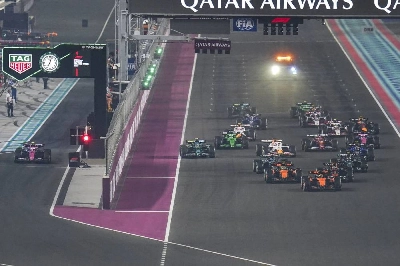
The Formula 1 Qatar Airways Qatar Grand Prix 2026 will take place from November 27 to 29 at the Lusail International Circuit.
Sport

Lusail International Circuit launches premium hospitality packages for F1 Qatar Grand Prix

Lusail International Circuit (LIC) has officially launched its premium hospitality packages for the Formula 1 Qatar Airways Qatar Grand Prix 2026, taking place from November 27 to 29, offering guests an elevated race weekend experience that combines world class motorsport, luxury hospitality, premium entertainment, and exclusive behind the scenes access.Set against the backdrop of one of Formula 1’s most spectacular night races, the new three-day hospitality offering has been designed to cater to corporate guests, VIPs, motorsport enthusiasts, and international visitors seeking a premium Grand Prix experience in Qatar.Among the offerings is the Premiere Hospitality Private Suites experience, featuring private suites located within the Premiere Hospitality venue at the end of the Main Straight. Designed with corporate hospitality and premium client engagement in mind, guests will enjoy indoor seating, outdoor terraces, dedicated trackside and pitlane viewing, premium dining experiences with live cooking stations and premium beverages, as well as exclusive live entertainment throughout the race weekend.Packages are available for purchase in increments of 50 or 100 guests, making them ideal for large scale corporate hosting, networking, and business development opportunities. Guests also have the flexibility to tailor their hospitality experience to suit their specific needs.Lusail International Circuit also brings back the Lusail Hill Lounge package located at the iconic Turn 1 section of the circuit. Designed to deliver a relaxed yet refined hospitality atmosphere, the experience combines panoramic racing views with premium culinary offerings, curated cultural activations, dedicated parking access, and personalized hospitality services throughout the weekend.Located within the Premiere Hospitality venue, F1 Experiences Champions Club guests will enjoy exceptional trackside views, premium hospitality, guided F1 paddock tours, championship trophy photo opportunities on the starting grid, insider appearances from leading F1 personalities, and a range of immersive entertainment experiences across the weekend.The Qatar Grand Prix has rapidly established itself as one of the standout events on the F1 calendar, attracting fans and visitors from around the world to Lusail International Circuit. The launch of the 2026 hospitality packages reflects the circuit’s continued commitment to delivering premium guest experiences both on and off the track.Hospitality packages are now available through the official Lusail International Circuit website. For more information and bookings, visit Lusail International Circuit - F1 Hospitality