


| Beyond the Tarmac |
Supply chain disruptions and capacity constraints are impacting air cargo demand, despite economic conditions remaining favourable for the critically important industry.
Labour shortages, partly due to employees being in quarantine, insufficient storage space at some airports and processing backlogs exacerbated by the year-end rush created supply chain disruptions, according to the International Air Transport Association, which represents some 290 airlines comprising 83% of global air traffic.
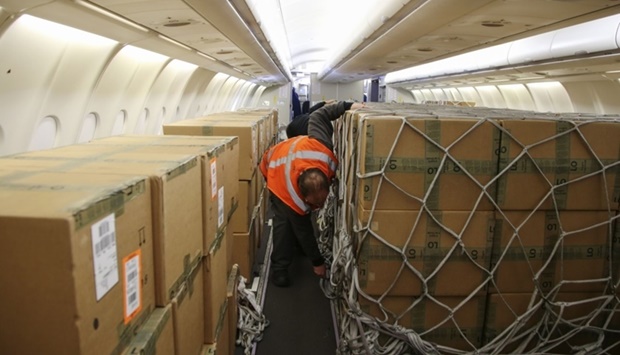
During the pandemic crisis, air cargo has been a lifeline for society, delivering critical medical supplies and vaccines across the globe and keeping international supply chains open.
And for many airlines, cargo became a vital source of revenue when passenger flights were grounded.
The recent surge in Covid-19 cases in many advanced economies has created strong demand for PPE shipments, which are usually carried by air.
In 2020, the air cargo industry generated $129bn, which according to IATA, represented approximately a third of airlines’ overall revenues, an increase of 10%–15% compared to pre-crisis levels.
In 2021, cargo demand was expected to have exceeded pre-crisis (2019) levels by 8% and revenues might have risen to a record $175bn, with yields expected to grow by 15%.
This year the demand is expected to exceed pre-crisis (2019) levels by 13% with revenues expected to rise to $169bn although there will be an 8% decline in yields.
That said, IATA data for global air cargo markets showed slower growth in November 2021.
“Air cargo growth was halved in November compared to October because of supply chain disruptions. All economic indicators pointed towards continued strong demand, but the pressures of labor shortages and constraints across the logistics system unexpectedly resulted in lost growth opportunities. Manufacturers, for example, were unable to get vital goods to where they were needed, including PPE. Governments must act quickly to relieve pressure on global supply chains before it permanently dents the shape of the economic recovery from Covid-19,” said Willie Walsh, IATA’s director general.
To relieve supply chain disruptions in the air cargo industry, IATA has called on governments to ensure that air crew operations are not hindered by Covid-19 restrictions designed for air travellers.
The association has urged the governments around the world to honour the commitments made at the ICAO High Level Conference on Covid-19 to restore international connectivity, including for passenger travel. This will ramp-up vital cargo capacity with “belly” space.
The association has called for innovative policy incentives to address labour shortages where they exist.
It supports the World Health Organisation / International Labour Organisation Action Group being formed to ensure “freedom of movement” for international transport workers.
The outlook for air cargo in the short and long-term is strong. Indicators such as inventory levels and manufacturing output are favourable, world trade is forecast to grow at 5.6% in 2022, e-commerce continues to grow at a double-digit rate, and demand for high-value specialised cargo – such as temperature-sensitive healthcare goods and vaccines - is rising.
IATA’s global head of cargo Brendan Sullivan said, “The surge in demand for air cargo and attractive yields are not without complications. Pandemic restrictions have led to severe global supply-chain congestion and created hardships for aircrew crossing international borders.
“Resourcing and capacity, handling and facility space and logistics will be an issue. This will create further operational challenges for our industry that must be planned for now. But we have demonstrated resilience throughout the crisis and with that same focus we will overcome these challenges.”
The pandemic accelerated digitalisation in some areas as contactless processes were introduced to reduce the risk from Covid-19 transmission.
“We need to build on this momentum not only to drive improvements in operational efficiency but to meet the needs of our customers. The biggest growth areas are in cross-border e-commerce and special handling items like time and temperature sensitive payloads.
“Customers for these products want to know where their items are, and in what condition, at any time during their transport. That requires digitalisation and data,” Sullivan noted recently.
Air cargo is a key driver of global economic development, facilitating trade and creating millions of jobs worldwide.
It helps countries contribute to the global economy by increasing access to international markets and allowing the globalisation of production.
To maintain growth momentum, the global economy requires delivery of high-quality products at competitive prices to consumers worldwide.
Air cargo transports more than $6tn worth of goods, accounting for approximately 35% of world trade by value.
Air cargo also helps people stay connected – some 328bn letters and 7.4bn postal parcels are sent every year and airmail plays an essential role in their delivery!
The significance of air cargo is perhaps best illustrated in the supply of much-needed Covid vaccines and other essential lifesaving drugs around the world, every single day!
Air cargo is critical in flying these temperature-sensitive pharmaceuticals in the best conditions, using cutting-edge technologies and procedures.
Labour shortages, partly due to employees being in quarantine, insufficient storage space at some airports and processing backlogs exacerbated by the year-end rush created supply chain disruptions, according to the International Air Transport Association, which represents some 290 airlines comprising 83% of global air traffic.
During the pandemic crisis, air cargo has been a lifeline for society, delivering critical medical supplies and vaccines across the globe and keeping international supply chains open.
And for many airlines, cargo became a vital source of revenue when passenger flights were grounded.
The recent surge in Covid-19 cases in many advanced economies has created strong demand for PPE shipments, which are usually carried by air.
In 2020, the air cargo industry generated $129bn, which according to IATA, represented approximately a third of airlines’ overall revenues, an increase of 10%–15% compared to pre-crisis levels.
In 2021, cargo demand was expected to have exceeded pre-crisis (2019) levels by 8% and revenues might have risen to a record $175bn, with yields expected to grow by 15%.
This year the demand is expected to exceed pre-crisis (2019) levels by 13% with revenues expected to rise to $169bn although there will be an 8% decline in yields.
That said, IATA data for global air cargo markets showed slower growth in November 2021.
“Air cargo growth was halved in November compared to October because of supply chain disruptions. All economic indicators pointed towards continued strong demand, but the pressures of labor shortages and constraints across the logistics system unexpectedly resulted in lost growth opportunities. Manufacturers, for example, were unable to get vital goods to where they were needed, including PPE. Governments must act quickly to relieve pressure on global supply chains before it permanently dents the shape of the economic recovery from Covid-19,” said Willie Walsh, IATA’s director general.
To relieve supply chain disruptions in the air cargo industry, IATA has called on governments to ensure that air crew operations are not hindered by Covid-19 restrictions designed for air travellers.
The association has urged the governments around the world to honour the commitments made at the ICAO High Level Conference on Covid-19 to restore international connectivity, including for passenger travel. This will ramp-up vital cargo capacity with “belly” space.
The association has called for innovative policy incentives to address labour shortages where they exist.
It supports the World Health Organisation / International Labour Organisation Action Group being formed to ensure “freedom of movement” for international transport workers.
The outlook for air cargo in the short and long-term is strong. Indicators such as inventory levels and manufacturing output are favourable, world trade is forecast to grow at 5.6% in 2022, e-commerce continues to grow at a double-digit rate, and demand for high-value specialised cargo – such as temperature-sensitive healthcare goods and vaccines - is rising.
IATA’s global head of cargo Brendan Sullivan said, “The surge in demand for air cargo and attractive yields are not without complications. Pandemic restrictions have led to severe global supply-chain congestion and created hardships for aircrew crossing international borders.
“Resourcing and capacity, handling and facility space and logistics will be an issue. This will create further operational challenges for our industry that must be planned for now. But we have demonstrated resilience throughout the crisis and with that same focus we will overcome these challenges.”
The pandemic accelerated digitalisation in some areas as contactless processes were introduced to reduce the risk from Covid-19 transmission.
“We need to build on this momentum not only to drive improvements in operational efficiency but to meet the needs of our customers. The biggest growth areas are in cross-border e-commerce and special handling items like time and temperature sensitive payloads.
“Customers for these products want to know where their items are, and in what condition, at any time during their transport. That requires digitalisation and data,” Sullivan noted recently.
Air cargo is a key driver of global economic development, facilitating trade and creating millions of jobs worldwide.
It helps countries contribute to the global economy by increasing access to international markets and allowing the globalisation of production.
To maintain growth momentum, the global economy requires delivery of high-quality products at competitive prices to consumers worldwide.
Air cargo transports more than $6tn worth of goods, accounting for approximately 35% of world trade by value.
Air cargo also helps people stay connected – some 328bn letters and 7.4bn postal parcels are sent every year and airmail plays an essential role in their delivery!
The significance of air cargo is perhaps best illustrated in the supply of much-needed Covid vaccines and other essential lifesaving drugs around the world, every single day!
Air cargo is critical in flying these temperature-sensitive pharmaceuticals in the best conditions, using cutting-edge technologies and procedures.