


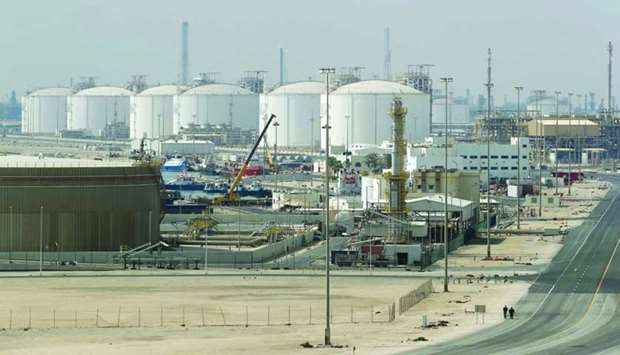
The hydrocarbons and certain manufactured products as refined petroleum products and basic chemicals gave a strong impetus to Qatar's industrial sector, which witnessed a robust more than 6% month-on-month increase in producer price index (PPI) this November, according to official estimates.
Qatar's PPI – a measure of the average selling prices received by the domestic producers for their output – however, saw a 24.6% year-on-year fall, said the figures released by the Planning and Statistics Authority (PSA).
The PSA had released a new PPI series in late 2015. With a base of 2013, it draws on an updated sampling frame and new weights. The previous sampling frame dates from 2006, when the Qatari economy was much smaller than today and the range of products made domestically much narrower.
The mining PPI, which carries the maximum weight of 72.7%, reported a healthy 8.1% surge on a monthly basis in November 2020 as the selling price of crude petroleum and natural gas shot up 8.1%; while that of stone, sand and clay was down 0.2%.
The PPI for mining registered 29.6% shrinkage on a yearly basis in November this year on the back of a 29.6% slump in the selling price of crude petroleum and natural gas and 8.3% in stone, sand and clay.
The manufacturing sector, which has a weight of 26.8% in the PPI basket, witnessed a 2.4% increase month-on-month in November this year on 3.5% jump in the selling price of refined petroleum products, 2.3% in basic chemicals, 1% in beverages, 0.4% in rubber and plastics products and 0.1% in dairy products; even as the price of cement and other non-metallic mineral products declined 2.3% and grain mill and other products by a marginal 0.5%.
The manufacturing sector PPI had seen a yearly 14.1% contraction in November 2020 as the selling price of refined petroleum products plummeted 19.2%, basic chemicals (12.6%), other chemical products and fibres (6.9%), cement and other non-metallic mineral products (6%), rubber and plastics products (4.5%), grain mill and other products (1%) and dairy products (0.1%).
However, there was a 12.1% expansion in the selling price of basic metals, 5% in paper and paper products, 4.9% in juices and 1.5% in beverages.
The utilities group, which has a mere 0.5% weightage in the PPI basket, saw its index gain 1.7% on monthly basis because the selling prices of electricity had risen 3.5%; even as that of water was down 0.2% in November 2020.
The index had seen a 1.9% growth year-on-year this November with the selling price of water soaring 11.9%; whereas that of electricity declined 5.9%.
The PSA had released a new PPI series in late 2015. With a base of 2013, it draws on an updated sampling frame and new weights. The previous sampling frame dates from 2006, when the Qatari economy was much smaller than today and the range of products made domestically much narrower.
The mining PPI, which carries the maximum weight of 72.7%, reported a healthy 8.1% surge on a monthly basis in November 2020 as the selling price of crude petroleum and natural gas shot up 8.1%; while that of stone, sand and clay was down 0.2%.
The PPI for mining registered 29.6% shrinkage on a yearly basis in November this year on the back of a 29.6% slump in the selling price of crude petroleum and natural gas and 8.3% in stone, sand and clay.
The manufacturing sector, which has a weight of 26.8% in the PPI basket, witnessed a 2.4% increase month-on-month in November this year on 3.5% jump in the selling price of refined petroleum products, 2.3% in basic chemicals, 1% in beverages, 0.4% in rubber and plastics products and 0.1% in dairy products; even as the price of cement and other non-metallic mineral products declined 2.3% and grain mill and other products by a marginal 0.5%.
The manufacturing sector PPI had seen a yearly 14.1% contraction in November 2020 as the selling price of refined petroleum products plummeted 19.2%, basic chemicals (12.6%), other chemical products and fibres (6.9%), cement and other non-metallic mineral products (6%), rubber and plastics products (4.5%), grain mill and other products (1%) and dairy products (0.1%).
However, there was a 12.1% expansion in the selling price of basic metals, 5% in paper and paper products, 4.9% in juices and 1.5% in beverages.
The utilities group, which has a mere 0.5% weightage in the PPI basket, saw its index gain 1.7% on monthly basis because the selling prices of electricity had risen 3.5%; even as that of water was down 0.2% in November 2020.
The index had seen a 1.9% growth year-on-year this November with the selling price of water soaring 11.9%; whereas that of electricity declined 5.9%.