



Air transport is a vital feature of our modern, globalised world, connecting people and businesses across oceans and continents.
The aviation industry supports 65.5mn jobs around the world and accounts for nearly $2.7tn (3.6%) of the world’s gross domestic product (GDP).
If aviation were a country, it would rank 20th in size by GDP!
The benefits of air travel are abundantly clear, but this connectivity creates environmental challenges too.
Worldwide, flights produced nearly 915mn tonnes of carbon dioxide in 2019, according to the Air Transport Action Group (ATAG). Globally, humans produced in excess of 43bn tonnes of CO2.
The global aviation industry produces around 2% of all human-induced carbon dioxide (CO2) emissions.
Around 80% of aviation CO2 emissions are emitted from flights of over 1,500 kilometres, for which there is no practical alternative mode of transport, ATAG says.
Industry data show aviation emissions have increased by 26% since 2013 alone. And they are expected to continue to grow, with passenger numbers projected to double to 8.2bn in 2037.
Aviation could consume a quarter of the global carbon budget for limiting global temperature rise to 1.5C by 2050, according to an earlier analysis by Carbon Brief.
As part of a UN climate deal, airlines around the world have begun to monitor their CO2 emissions.
Under the UN’s ‘Corsia’ scheme, which stands for Carbon Offsetting and Reduction Scheme for International Aviation, airlines have to ensure that any rise in international aviation emissions above 2020 levels are offset elsewhere.
From January 1, 2021, international flights will become subject to offsetting obligations, according to the International Air Transport Association.
The scheme will start operating early next year, with a voluntary pilot phase that will last to the end of 2023.
All airlines which operate routes between two volunteering states will be subject to the offsetting requirements. This is irrespective of whether the operator is itself based in a non-participating state. Corsia refers to this as the “route-based approach”.
The industry’s climate targets is that from 2020, net carbon emissions from international aviation will be capped through carbon neutral growth.
By 2050, net aviation carbon emissions will be half of what they were in 2005.
Achieving this ambitious goal will require continued investment in new technologies and strong support mechanisms for the deployment of sustainable aviation fuels (SAF).
Alternative fuels, particularly sustainable aviation fuels, have been identified as excellent candidates for helping achieve the industry climate targets.
SAF derived sources such as algae, jatropha, or waste by-products have been shown to reduce the carbon footprint of aviation fuel by up to 80% over their full lifecycle.
Experts point out that the development of new, more efficient aircraft and engines can substantially decrease CO2 emissions. New technology aircraft are, on average, around 15- 20% more fuel-efficient than the models they replace. Sustainable aviation fuels, which are already being used on certain commercial flights, will have the potential to cut emissions by up to 80%.
Operational measures include identifying weight savings in the current fleet, allowing the aircraft to burn less fuel. Airlines have been investing in lightweight seats and cabin equipment and even replacing heavy pilot manuals with tablet computers. Other operational measures include single-engine taxiing, idle reverse thrust, and ATC procedures such as continuous descents into airports and traffic flow management that prevent unnecessary airborne holding
A major stride towards the aviation industry’s global carbon offset was recently achieved by Qatar Airways at it officially launched its carbon offset programme. The airline’s passengers now have the opportunity to voluntarily offset the carbon emissions associated with their journey at the point of booking.
Qatar Airways’ carbon offset programme is built on a partnership with the International Air Transport Association’s (IATA) Carbon Offset Programme, providing its customers with the assurance that the credits bought to offset these emissions are from projects delivering independently verified carbon reductions as well as wider environmental and social benefits.
Under this, emissions will be offset with climate and sustainable development expert ClimateCare, through the Fatanpur Wind Farm project in India. This project has installed wind turbine generators (WTGs) with a combined output of 108MW to generate and supply clean electricity to the Indian National Grid.
Reducing impact on the environment is aviation industry’s declared global policy. It becomes all the more meaningful when passengers too are involved in further minimising their environmental footprint, taking into account the fact that nearly 4.5bn passengers flew the world’s airlines in 2019!
Pratap John is Business Editor at Gulf Times. Twitter handle: @PratapJohn
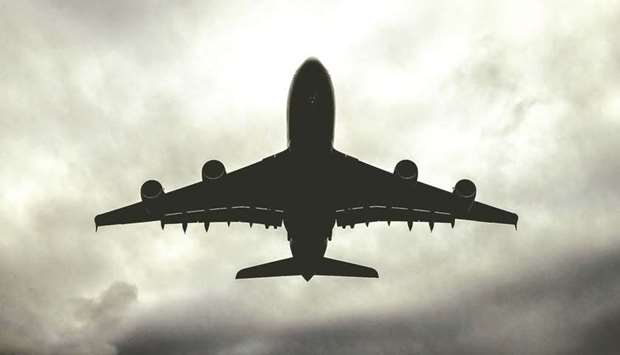
As part of a UN climate deal, airlines around the world have begun to monitor their CO2 emissions. Under the UN’s ‘Corsia’ scheme, which stands for Carbon Offsetting and Reduction Scheme for International Aviation, airlines have to ensure that any rise in aviation emissions above 2020 levels are offset elsewhere