



Doha could soon see the advent of infrastructure and commodity funds as well as private pensions, targeting expats; and derivatives, especially in liquefied natural gas (LNG) futures; as part of measures to broaden and deepen the country's capital market, according to a Qatar Financial Center (QFC) report.
Setting up regulatory and operational frameworks for private pension funds, currently under active consideration by QFCRA, would be imperative to the introduction of these funds to Qatar, said the report on Qatar’s Capital Market, jointly prepared with Refinitiv.
In Qatar, regulations are in place for offering and listing investment funds and ETFs (exchange traded funds), so exposure to real assets can be offered to investors seeking diversification of their portfolios and protection against inflation, it said.
"Investors could potentially gain exposure to mega infrastructure projects in Qatar and other developing economies through infrastructure funds, which generate their returns based on the income from listed infrastructure assets," the report said.
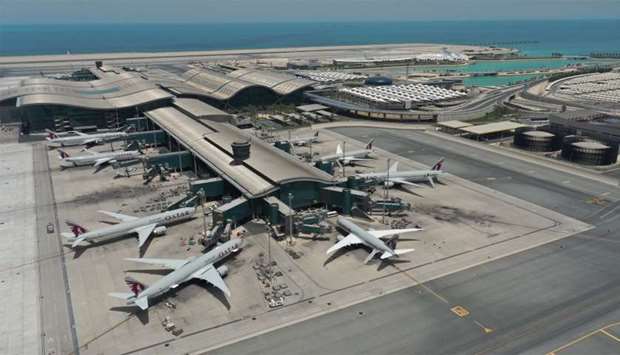
These assets may include airports, toll roads, oil and gas pipelines, and utilities facilities, offering governments an alternative source of project funding, it added.
In addition to these infrastructure assets, Qatar’s substantial real assets in the aviation and shipping sectors create an opportunity for asset managers to introduce domestic funds based on leasing such assets, it said.
Finding that QInvest manages four such funds, investing in Shariah-compliant leases or Ijara contracts for assets in developed markets, it said the high returns generated by these funds could be replicated domestically, attracting demand form both domestic and foreign investors.
The report also said commodity funds are another type of fund that could be offered in Qatar, investing in physical commodities such as oil, natural gas and gold, as well as agricultural goods.
Alternatively, these funds could invest in commodity indices or the commodity futures contracts, it added.
About the pension fund industry, whose size remains small in the region, as the countries are welfare states, operating government-backed public pension funds for the benefit of their citizens; it said nonetheless, there is an untapped market in the large expat workforce based in Qatar and neighbouring countries that is not eligible for these public pensions.
"Private pension schemes present new growth opportunities for Qatar’s asset management industry," it said, adding these funds would offer a new type of investment vehicle that is suitable for retail investors, particularly expats.
The private pension scheme would also create a new source of institutional demand for domestic investment securities, in addition to public pension and insurance funds, especially those with long maturities.
The report also recommended establishing a derivatives market, which could help enhance the breadth of the capital markets, offering investors risk management tools to hedge their investments and business exposure.
The Qatar Stock Exchange (QSE) recently announced that it is looking into derivatives trading, indicating that it could be hosted on the exchange, supported by a listing framework and clearing and settlement through the Qatar Central Securities Depository.
The derivatives market would likely commence with index futures, based on the three QSE indices. It is also recommended for QSE to initially offer single-stock futures in the market, which can typically be easier to structure, manage and promote to domestic investors.
Another product that warrants close consideration would be LNG futures contract, building on Qatar’s position as the world’s largest LNG exporter, the report said.
In Qatar, regulations are in place for offering and listing investment funds and ETFs (exchange traded funds), so exposure to real assets can be offered to investors seeking diversification of their portfolios and protection against inflation, it said.
"Investors could potentially gain exposure to mega infrastructure projects in Qatar and other developing economies through infrastructure funds, which generate their returns based on the income from listed infrastructure assets," the report said.
These assets may include airports, toll roads, oil and gas pipelines, and utilities facilities, offering governments an alternative source of project funding, it added.
In addition to these infrastructure assets, Qatar’s substantial real assets in the aviation and shipping sectors create an opportunity for asset managers to introduce domestic funds based on leasing such assets, it said.
Finding that QInvest manages four such funds, investing in Shariah-compliant leases or Ijara contracts for assets in developed markets, it said the high returns generated by these funds could be replicated domestically, attracting demand form both domestic and foreign investors.
The report also said commodity funds are another type of fund that could be offered in Qatar, investing in physical commodities such as oil, natural gas and gold, as well as agricultural goods.
Alternatively, these funds could invest in commodity indices or the commodity futures contracts, it added.
About the pension fund industry, whose size remains small in the region, as the countries are welfare states, operating government-backed public pension funds for the benefit of their citizens; it said nonetheless, there is an untapped market in the large expat workforce based in Qatar and neighbouring countries that is not eligible for these public pensions.
"Private pension schemes present new growth opportunities for Qatar’s asset management industry," it said, adding these funds would offer a new type of investment vehicle that is suitable for retail investors, particularly expats.
The private pension scheme would also create a new source of institutional demand for domestic investment securities, in addition to public pension and insurance funds, especially those with long maturities.
The report also recommended establishing a derivatives market, which could help enhance the breadth of the capital markets, offering investors risk management tools to hedge their investments and business exposure.
The Qatar Stock Exchange (QSE) recently announced that it is looking into derivatives trading, indicating that it could be hosted on the exchange, supported by a listing framework and clearing and settlement through the Qatar Central Securities Depository.
The derivatives market would likely commence with index futures, based on the three QSE indices. It is also recommended for QSE to initially offer single-stock futures in the market, which can typically be easier to structure, manage and promote to domestic investors.
Another product that warrants close consideration would be LNG futures contract, building on Qatar’s position as the world’s largest LNG exporter, the report said.