


There has been a steady increase in the number of Qatari entrepreneurs seeking business opportunities in Italy in the past two years — a trend, which, according to the Italian Chamber of Commerce in Qatar, is driven by public and private sector initiatives on self-sufficiency and the development of the local market.
Qatari entrepreneurs, according to the Chamber’s chairperson, Palma Libotte, “are now more aware of what they want.”
“In the last two years, Qatari entrepreneurs had directly approached the Italian chamber for assistance in finding specific solutions in Italy,” Libotte told Gulf Times.
Libotte said the previous trend was inbound “business tourism,” especially in sectors like construction, architecture, interior design, and furniture, among other industries.
“Specific companies are needed to support or develop certain projects. Therefore, as there has been a slowdown in incoming business due to several factors... the trend is changing mainly because Qatar is trying to encourage its nationals to produce and to create, and the ‘Made in Qatar’ tag is a now big thing,” she continued.
Because of this trend, Libotte stressed that the Italian Chamber of Commerce in Qatar is providing tailor-made or niche services to Qatari entrepreneurs and owners of small and medium-sized enterprises (SMEs) in a variety of sectors, including building materials and manufacturing, as well as steel.
“There is a business intelligence that is developing now among Qatari entrepreneurs. They are not waiting now anymore for things to happen, and they are more inclined to see what they need and search it through direct channels.
“Qatari entrepreneurs are business-smart because they go directly to the source instead of waiting… there is a move and there is an interest; there is a turning point now and the slowdown has encouraged them to focus on what they really need, how it has to be done, and what is the most effective way to do it,” Libotte pointed out.
Libotte stressed that the economic blockade has prompted Qatari entrepreneurs to take on initiatives related to self-sufficiency and focusing more on the local market.
“Qatar has sort of launched the force of people, who are now scouting for business opportunities to make the country independent and self-sufficient... and this strength can only go forward and there is no turning back; we will never go back to being dependent on neighbouring countries,” Libotte emphasised.
She also noted that the economic blockade helped “clean-up the market” in terms of the number of companies doing business in the country.
She said: “The people that are still in Qatar are the ones that are doing business, who are in the business, and have the knowledge about the market.”
“The companies that are going strong are the ones that really have understood where their strength is, where their scope is, and the ones that are more open to co-operation and be proactive to look for partners,” Libotte added.
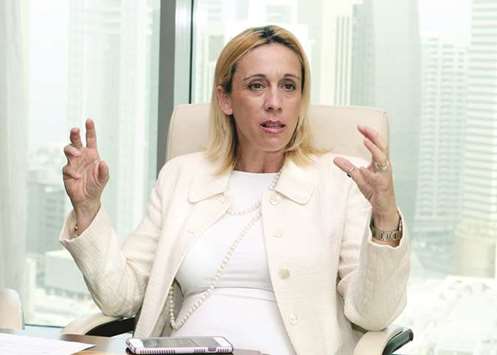
Qatari entrepreneurs are business-smart because they go directly to the source, says Libotte.