



Nakilat (Qatar Gas Transport Company) has the potential to go global, particularly through joint ventures, in the long term, on declining finance costs and consolidation of operations through its recent management takeover of its Q-Max and Q-Flex vessels from Shell, according to Arqaam Capital.
However, this strategic option is “limited” at current spot rates, which do not offer “lucrative” returns to it, Arqaam Capital said in a recent company specific report.
“Declining finance costs, cash of QR2.7bn and the ability to leverage up to 80% of existing fleet (unspecified whether this is on gross PPE or net) mean that Nakilat could invest in new projects,” it said.
Finance costs (all fixed due to swaps) currently constitute about 45% of total costs and should continue to decline as Nakilat, which now has a 14.5% share in global liquefied natural gas tanker capacity, engages in further debt repayments, it said.
As a result, free cash flow and free cash flow to equity are expected to see compound annual growth rate at 4% and 6% respectively during 2016-24, mainly due to stable revenues from ongoing operations, which would remain largely unchanged during the duration of the charters, it added.
Additionally, Nakilat’s consolidation of operations and shift to a fully-fledged shipping company presents the opportunity for it to go global at some point in the future as management acquires the necessary experience to penetrate the global scene, it said. “Only with a global partner we think Nakilat can enter the global market,” Arqaam said, adding it did not favour such a strategic option, given the low current spot rates and thus the entry at this current point is not attractive.
Finding that the current spot rates do not offer lucrative returns for Nakilat, the report said the Qatari company currently charges an implied average of about $91,000 a day for its 25 wholly-owned vessels, at 2.25 times the current spot price of $40,000 (for conventional vessels) and about 1.5 times the current prices when converted to Nakilat’s Q-Max and Q-Flex vessels specifications, which have 1.5 to 1.8 times the capacity of conventional vessels.
“We estimate that the cost of a new Q-vessel at QR1.1bn, finance by 80% debt and 20% equity, same as historical structure. At $80,000 per day, Nakilat could generate net income of QR1mn and return on investment of 5% given current costs; while charter rates of $120,000 per day yields return on invested capital of 9% and net margins of 34%,” Arqaam said.
Highlighting that the takeover of Q-Max and Q-Flex vessel management from Shell signals a new era for Nakilat, Arqaam said it should increase margins but costs ought to be higher in the short term.
Estimating QR40mn-QR50mn in cost savings by 2020 as Nakilat fully absorbs Shell’s revenues and works on cost optimisation in its shipping management arm, the report said “we estimate SG&A (selling, general and administrative) costs to stabilise in 2019 while operating costs to start declining by 0.5% to 1% starting 2017 as more vessels are transferred to Nakilat’s account.” SG&A costs have expanded 22% year-on-year to QR98mn in the first nine months of 2016 as Nakilat’s fully-owned subsidiary NSQL prepared for the transfer of vessels from Shell and the costs are expected to continue to increase in 2017-18 on hiring of staffs and consultants to oversee the transfer of management and gradually decrease thereafter.
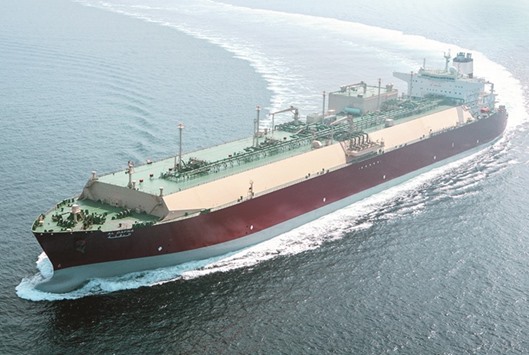
Nakilat’s consolidation of operations and shift to a fully-fledged shipping company presents the opportunity for it to go global at some point in the future as management acquires the necessary experience to penetrate the global scene, Arqaam Capital says.