



Built assets are making a growing contribution to Qatar, according to a new report that notes they will deliver $152bn to the national economy this year.
This represents an 11% increase over the last two years, and will see the total contribution from built assets account for 44% of Qatar’s total GDP in 2016, according to the ‘2016 Global Built Asset Performance Index’ released by Arcadis, a global design and consultancy for natural and built assets.
This growth in percentage is partly due to the impact of a lower oil price, which has seen the percentage of revenue that comes from exporting natural resources decrease, but also reflects the tremendous progress that Qatar has made in recent years in diversifying into new industry sectors.
Investment in buildings and infrastructure is playing a key role in supporting Qatar’s economic diversification agenda, the report said.
It said Qatar leads the world when it comes to securing a financial return from their built assets, when this is assessed on a per-capita basis. In 2016, built assets will generate an average of $66,316 for every person that lives in Qatar, the report said.
“This figure is significantly higher than any of the other 35 countries considered in this year’s study, demonstrating that Qatar has not only invested in its built environment, but it is also securing an impressive return on this capital spend,” Arcadis said.
The Arcadis research also examined how the economic return from built assets would evolve over the next decade.
For Qatar, the study showed that the revenue contribution that comes from built assets would increase by 20% in this period, reaching a total of $183bn by 2026.
Derek Sprackett, head, business advisory, Arcadis Middle East said, “Built assets, including transport links, high quality residential and commercial property, and productive industrial centres all make a significant contribution to a country’s economic performance. In recent years, many countries across the Middle East have invested heavily and strategically in real estate and infrastructure, as part of their national visions and efforts to diversify their economies. Our research shows this strategy is already paying financial dividends, as well as creating cities and communities where people want to live, work and visit.”
“Vision 2030 has provided an inspiring roadmap on how Qatar will develop over the coming years. Since its inception in 2008, a significant amount of progress has been made, however, the drop in oil price has resulted in a very different economic environment.
“A smaller number of programmes have rightly been prioritised, but the mechanics that support the delivery process also need to become more efficient. This includes the speed at which projects are procured, tenders assessed, and schemes ultimately started. This is particularly important for projects relating to the 2022 FIFA World Cup, which is a key milestone in the overall vision, but which has a much earlier delivery date,” Sprackett added.
The index, developed in conjunction with the Centre for Economics and Business Research (Cebr), examines the revenue that is generated by buildings, infrastructure and other fixed assets (homes, schools, roads, airports, power plants, malls, railways, ports) in some 36 countries around the world that collectively represent 78% of global GDP.
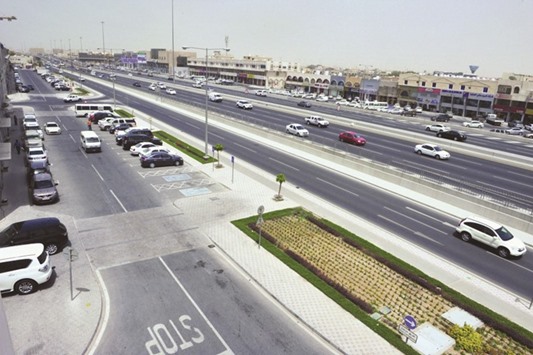
Investment in buildings and infrastructure is playing a key role in supporting Qatar’s economic diversification agenda