



International restrictions on the shipment of lithium-ion batteries and lithium-powered gadgets and equipment have raised concern among many Qatar residents, who said the situation has limited their options when making online purchases of these items.
Many electronic products are powered by lithium batteries, among them are tablets and smartphones, digital cameras, or laptops, as well as medical equipment and power tools.
But due to safety concerns, the International Civil Aviation Organisation (ICAO) has banned the shipment of lithium-ion batteries as cargo on passenger aircraft. The ban, which took effect last April 1, was adopted by ICAO’s 36-nation governing council on an interim basis until new packaging standards for lithium batteries are developed, said news reports quoting ICAO president Olumuyiwa Benard Aliu.
In Qatar, the price range of lithium batteries and lithium-powered products varies, and many residents rely on online stores that provide lower prices or special rates compared to those offered by local stores, which again may not have the exact products sought after by customers.
Qatar-based photographer and videographer, Hamad al-Muftah, told Gulf Times that he often purchases photographic equipment or accessories online because of cheaper prices. “Sometimes the equipment I need is either too expensive to buy in Qatar or is not available in the local store, which is why getting them online is a more practical option,” he said.
But al-Muftah lamented that his online purchase of assorted lithium batteries was prohibited to enter Qatar upon reaching Dubai. The items, according to him, were shipped back to the US. He noted that a similar incident happened to his friend in Doha, who purchased lithium batteries worth QR4,000 from an online store, which refunded the amount after the items were shipped back to the US.
Some online stores have stopped shipping lithium-powered items to Qatar. A leading US store in an advisory, said: “There are currently no shipping methods available to Qatar due to carrier regulations regarding products containing lithium batteries. Please select a different shipping destination or remove these items from your cart.”
A Doha resident said he was fortunate to get lithium batteries from a relative, who bought the items in the US and hand-carried them to Doha. Al-Muftah said one of his options is to transport lithium batteries from Dubai to Qatar by road.
FAA Safety Alert
The Federal Aviation Administration (FAA) has issued a Safety Alert for Operators (Safo) on “carriage of spare lithium batteries in carry-on and checked baggage.” “Lithium batteries present a risk of both igniting and fueling fires in aircraft cargo/baggage compartments,” the Safo said.
“To reduce the risk of lithium battery fires, the US Department of Transportation’s Hazardous Materials Regulations (HMR), and equivalent International Civil Aviation Organisation’s Technical Instructions for the Safe Transport of Dangerous Goods (ICAO TI), prohibit spare lithium batteries from checked baggage (including baggage checked at the gate or on-board the aircraft),” it added.
A customer service representative (CSR) from Aramex Doha told Gulf Times that it “cannot accept or ship lithium batteries.” The same was stated by a CSR from FedEx in Qatar.
A call to DHL in Doha revealed that the company “can ship lithium batteries but it should be with the equipment such as mobile phones and laptop computers.” “We cannot ship lithium batteries alone because it is included among items considered as ‘dangerous goods,’” the CSR from DHL stressed.
The check-in counter at Hamad International Airport said spare lithium batteries cannot be stored in checked baggage but may be included in the passenger’s carry-on luggage. Power banks, laptops and digital cameras may be hand-carried by passengers.
Some airlines allow passengers to hand carry small and medium lithium batteries, under 100 Watt-hour and 100-160Wh, respectively, provided they are inside the equipment, terminals are taped properly, or are enclosed in original packaging. Large lithium batteries (160+Wh) are banned, with the exception of mobility aids like a lithium-ion powered wheelchair.
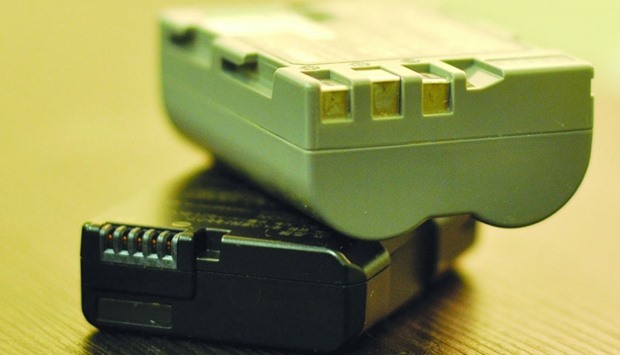
Some consumers in Qatar have encountered limited shipping options for products powered by lithium-ion batteries.