Region

Sunday, February 22, 2026 | Daily Newspaper published by GPPC Doha, Qatar.

Region

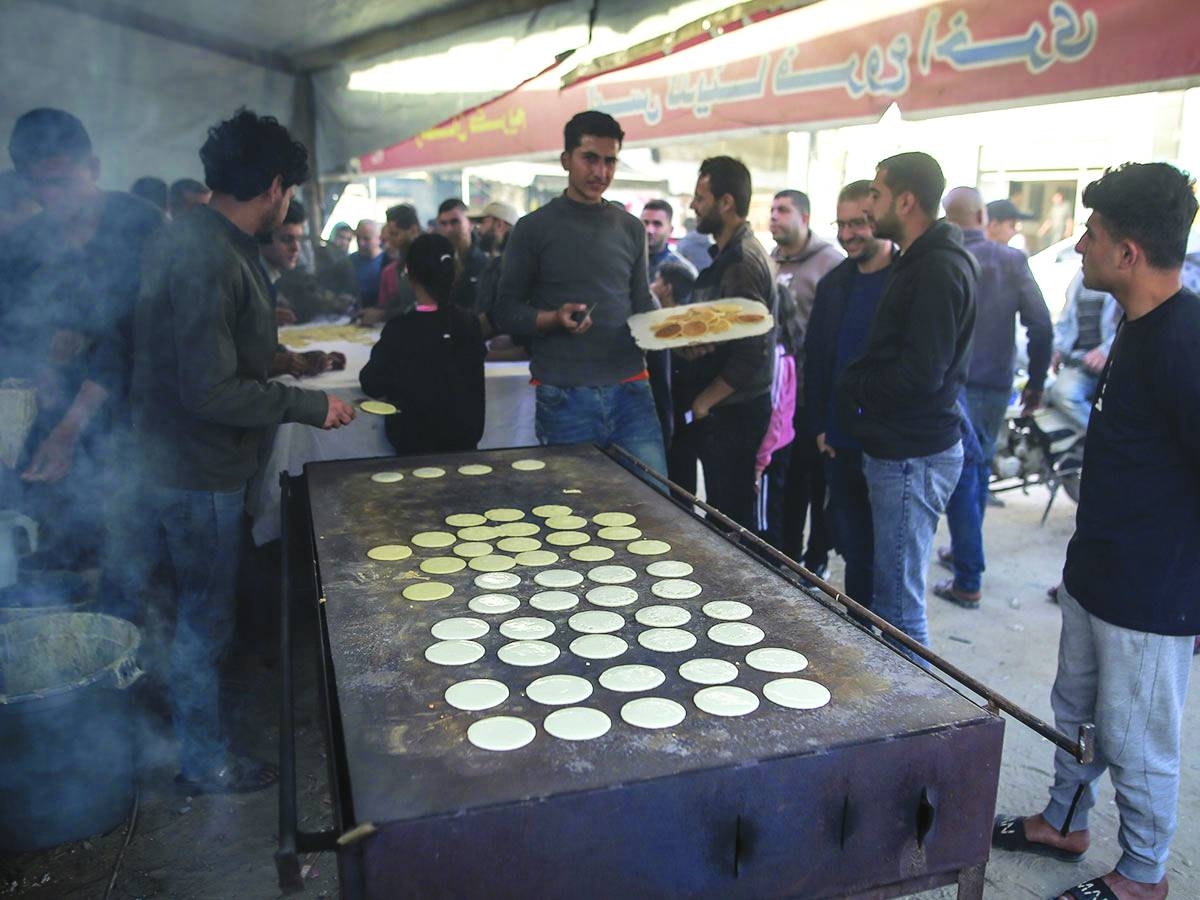
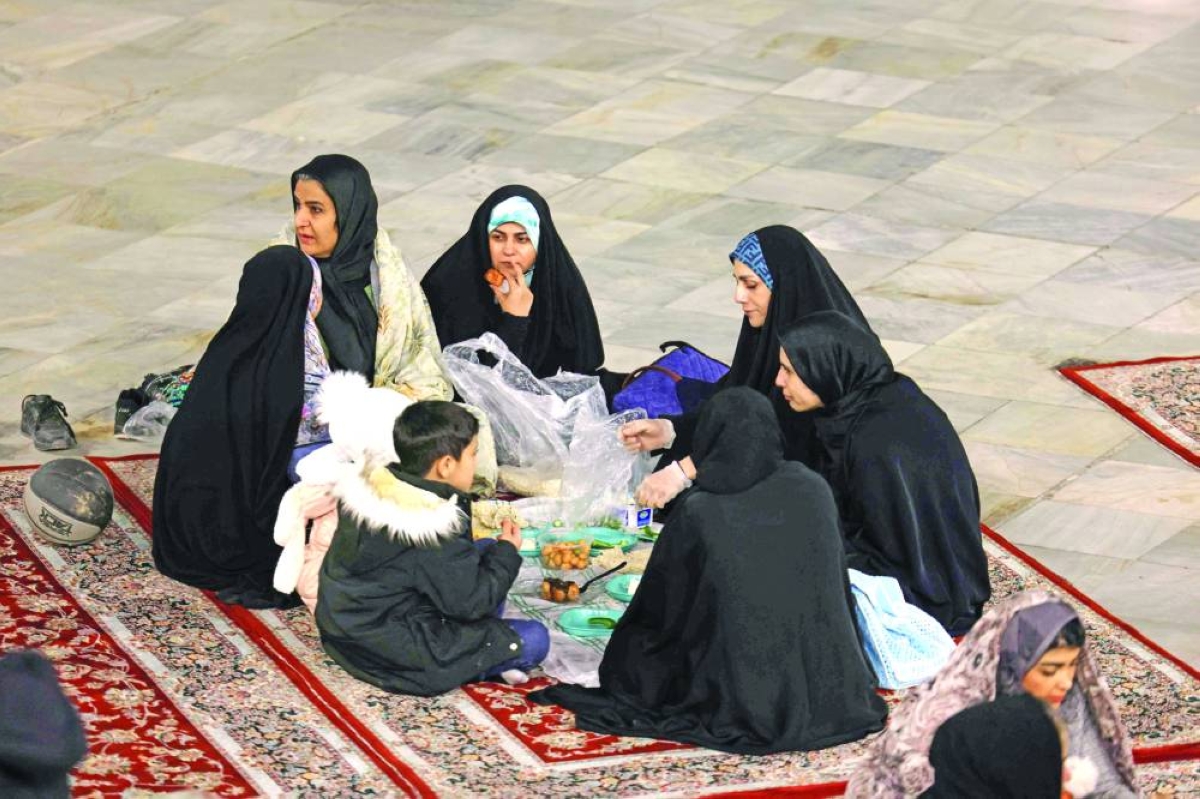
An Iranian family sits together to break the dawn to dusk Ramadan fast during Iftar, in the grounds of the Imamzadeh Saleh mosque in Tehran on February 21, 2026. Muslims throughout the world are marking the month of Ramadan, the holiest month in the Islamic calendar, during which devotees fast from dawn until dusk. (AFP)

Fears of renewed conflict haunt Tehran as US issues threats

Tehran resident Hamid struggles to sleep as fears of renewed conflict haunt the Iranian capital after last year's 12-day war with Israel."I don't sleep well at night even while taking pills," Hamid told AFP, as he expressed concern for his "family's health... my kids and grandchildren".The city woke up to blasts overnight from June 12 to 13 last year as Israel launched an unprecedented military campaign.The war erupted as Iran was preparing for another round of talks with the US, which briefly joined Israel in attacking key Iranian nuclear sites.**media[419504]**The attacks prompted Iran to respond with drone and missile strikes, with thousands of people killed in Iran and dozens in Israel.Iran has now resumed talks with Washington, with Iran insisting they be limited to the nuclear issue, though Washington has previously pushed for Tehran's ballistic missiles programme and support for armed groups in the region to be on the table.Still, the outcome of diplomacy remains uncertain.On Thursday, US President Donald Trump said that "bad things" would happen if Tehran did not strike a deal within 10 days, which he subsequently extended to 15.In this atmosphere, Hamid is worried about his children and grandchildren."I've lived my life, but they haven't done anything good in their lives, they had no fun, no comfort, no leisure and no peace," he said."I want them to at least experience life for a bit. But I'm afraid they might not get the chance."Others share his concerns.Hanieh, a ceramist from Tehran, thinks war will occur "within 10 days".The 31-year-old has stored some essentials at her home to get through a possible military attack by the US after its build-up in the region."I am getting more scared because my mother and I had lots of difficulties during the past 12-day war," she told AFP. "We had to go to another city."Mina Ahmadvand, 46, also believes another conflict is in store."I think at this stage, war between Iran and the US as well as Israel is inevitable and I've prepared myself for that eventuality," the IT technician told AFP."I bought a dozen canned foods including tuna fish and beans as well as packs of biscuits, bottled water and some extra batteries, among other things."'LESSONS LEARNT'Iranians are applying "the lessons learnt during the 12-day war", Hanieh said, as windows taped up with duct tape can be seen across Tehran.Supreme leader Ayatollah Ali Khamenei has warned that any military campaign against Iran would lead to a "regional war".Tehran has repeatedly said it would target Israel and US bases in the region, as when it attacked a US base in a Gulf state during the 12-day war.The situation has forced Iranians to follow the news closely, and only adds to anxiety over surging prices and the plunging national currency following widespread protests.Saturday, the euro was trading at above 1.9mn rials while the US dollar surpassed the 1.6mn mark.For Hanieh, there has been a sense of "life on hold" since the mass protests and Iranian communications shutdown that lasted nearly three weeks.But in Tehran, shops and offices remain open, even though cafes and restaurants are mostly closed for the month of Ramadan, which started on Thursday in Iran.Meanwhile, Ahmadvand is preparing for the worst."I don't want war to happen, but one should not fool around with the realities on the ground."

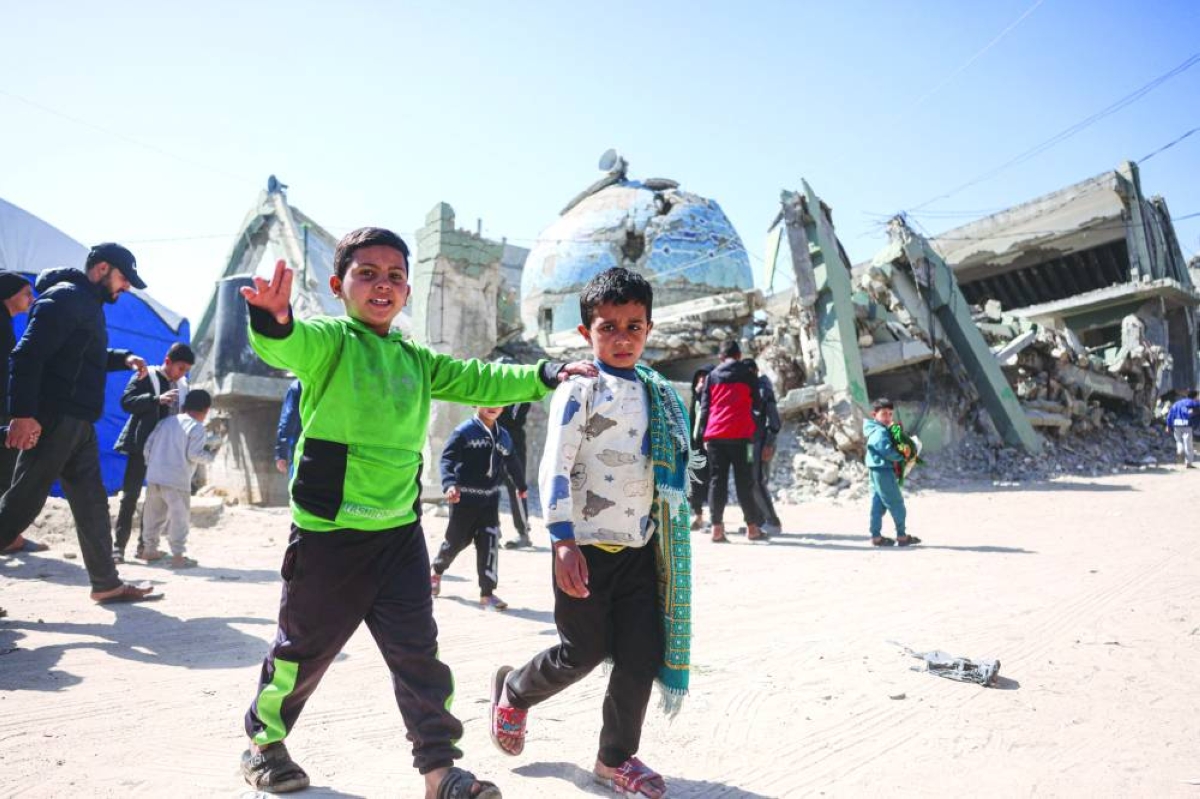
Two displaced Palestinian boys, one carrying a pray mat on his shoulder, leave following the first Friday noon prayers of the holy month of Ramadan, outside the destroyed Al-Huda Mosque, in Khan Yunis in the southern Gaza Strip, yesterday.

Hamas retakes control of daily life in Gaza

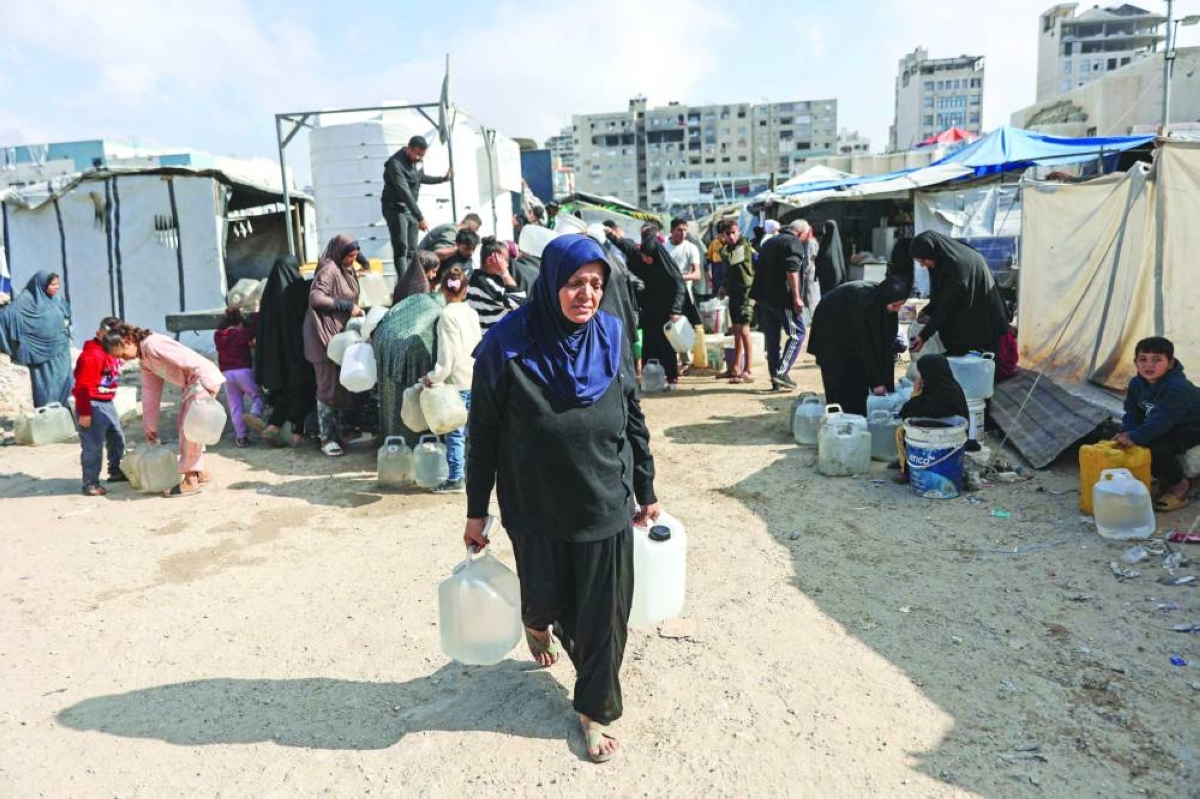
Hamas has reasserted control over large parts of Gaza from which the Israeli military withdrew under the US-sponsored ceasefire, exercising power through police and working to restart public administration.The inaugural meeting of US President Donald Trump's "Board of Peace" on Thursday included an announcement on the recruitment of a new transitional Palestinian police force in Gaza meant to take over security from Palestinian Hamas movement.It also saw several countries pledge to send troops for the nascent International Stabilisation Force in the Gaza Strip, without any timetable set.Hamas still refuses to lay down its arms under the conditions set by Israel, but it has pledged to hand over power, insisting it no longer wants to administer the territory it seized by force nearly 20 years ago."Everyone knows that Hamas possesses the real power in Gaza," said Jaber Shaaban, a displaced Palestinian living in a tent in Gaza City. **media[419176]**"Hamas is the strongest and largest organised entity and it has power, police and a government," the 64-year-old added."Without Hamas, the committee cannot work," he said, referring to the 15-member Palestinian technocratic committee formed to handle day-to-day governance of Gaza.Since a ceasefire between Hamas and Israel began on October 10, Gaza has been divided by a so-called "Yellow Line" beyond which Israeli forces are stationed and which leaves the military in control of just over half of the territory."Currently, we operate only in areas under Hamas control," said Abu Ashraf Barbah, a merchant who before the war supplied food items across the territory of more than 2mn Palestinians."The Hamas ministry is the one that deals with traders and controls the markets, while the Hamas police carry out campaigns against tax evaders," he added. **media[419175]**The newly-formed Palestinian technocratic body is primarily mandated to oversee civilian services such as health, education and municipal affairs.— In the markets, on the streets —Phase two of Trump's Gaza ceasefire plan, which the UN Security Council endorsed in November, stipulates that Hamas should disarm and the Strip's day-to-day governance be handed over to the technocratic committee.But Israeli officials say Hamas still has around 20,000 fighters in Gaza and several thousand rockets.The return to some form of public order is one of the challenges of the second phase, which the US launched last month.Concrete results have been slow to materialise.While waiting for the transitional authority to take shape, Gaza's existing police force — which answers to Hamas authorities — has returned to the streets since the ceasefire took effect.AFP journalists reported that uniformed, armed police have deployed at major intersections, hospital entrances and government buildings, directing traffic and regulating markets.With many police stations destroyed during Israeli air strikes, some units have resumed operations from temporary tents, residents said.For traders, Hamas's influence is most visible."The one controlling everything in Gaza's economy is Hamas," said 41-year-old merchant Samir Abu Adnan."Hamas has started collecting taxes, the ministry of economy publishes daily price lists, and the police and ministries are still affiliated with Hamas," he said.Several traders confirmed to AFP that civil servants were collecting taxes in markets and shops, relying on police enforcement in cases of non-compliance.In rare testimony to the media, a police captain in Gaza City told AFP that the force would maintain law and order regardless of who formally governs the territory."We are a police force that carries out the government's instructions," the 44-year-old officer said, declining to be identified for security reasons."We do not care who will be in the political leadership of the government," he added."What matters to me is that the incoming government is not affiliated with the occupation," he said, referring to Israel."If the committee takes over Gaza, we will help it."But there is uncertainty over how the transitional technocratic committee would be deployed in the territory and what would happen to the current police force.Amani Ashtiwi, a teacher living in a tent in central Gaza, said the committee would need "very strong support from the Palestinian Authority, Egypt and America to be able to govern Gaza"."The committee faces a long and difficult road because Hamas controls the levers of life in Gaza," Ashtiwi added.For merchant Abu Adnan, Hamas still "holds the power"."If the committee takes over, it will need Hamas's approval for every decision," he said.