Search - World Summit for Social Development

Thursday, October 15, 2026 | Daily Newspaper published by GPPC Doha, Qatar.
Search Results for "World Summit for Social Development" (360 articles)

All words
An area of the Amazon rainforest which has been slashed and burned stands next to a section of virgin forest, as seen from a police helicopter during the ,Hileia Patria, operation against sawmills and loggers who trade in illegally-extracted wood from the Alto Guama River indigenous reserve in Nova Esperanca do Piria, in Para State,
International

Nations make new pledges to cut methane, save forests at climate summit

Leaders at the COP26 global climate conference pledged to stop deforestation by the end of the decade and cut emissions of the potent greenhouse gas methane to help slow climate change. On the second day of the two-week summit in Glasgow, Scotland, wealthy nations took some overdue actions to provide long-promised financial help for the developing countries worst hit by global warming. The United Nations conference aims to keep alive a receding target of capping temperatures at 1.5 degrees Celsius (2.7 Fahrenheit) above pre-industrial levels, to avert still greater damage than has already been caused by greenhouse gases. British Prime Minister Boris Johnson, host of the event attended by almost 200 countries, said he welcomed the latest steps but urged caution. "We must take care to guard against false hope and not to think in any way that the job is done, because it is not. There is still a very long way to go," he told a news conference. More than 100 countries joined a U.S.- and EU-led effort to cut emissions of methane 30% by 2030 from 2020 levels, potentially a step in stemming the overheating of the planet. U.S. President Joe Biden chided Chinese President Xi Jinping for his decision not to attend in person. "It's been a big mistake, quite frankly, for China - with respect to China not showing up," Biden said at a news conference. "The rest of the world is gonna look to China and say what value added are they providing? And they've lost the ability to influence people around the world and all the people here at COP, the same way I would argue with regard to Russia." China said Xi had not been given an opportunity to deliver a video address, and had to send a written response instead. Xi offered no additional pledges. China was represented in Glasgow by its chief climate negotiator Xie Zhenhua, who said in remarks to reporters on Tuesday that "five years were wasted" because Biden's predecessor Donald Trump pulled the United States out of the Paris Agreement and it was time to "work harder and catch up". read more   MOST AT RISK Leaders of developing countries most at risk from the effects of climate change, such as heatwaves, droughts, storms and flooding, told delegates the stakes could not be higher. "Let's work for the survival of ours and all species. Let's not choose extinction," said Trinidad and Tobago Prime Minister Keith Rowley. The Global Methane Pledge, launched on Tuesday after being announced in September with just a few signatories, now covers countries representing nearly half of global methane emissions and 70% of global GDP, Biden said. Methane is more short-lived in the atmosphere than carbon dioxide but 80 times more potent in warming the planet. Cutting emissions of the gas, estimated to have accounted for 30% of global warming since pre-industrial times, is one of the most effective ways of slowing climate change. Among the signatories is Brazil - one of the five biggest emitters of methane, generated in cows' digestive systems, in landfill waste and in oil and gas production. Three others - China, Russia and India - have not signed up, while Australia has said it will not back the pledge. The United States also unveiled its own domestic proposal to crack down with a focus on the oil and gas sector, where leaky infrastructure allows methane to escape into the atmosphere. read more   LOST FORESTS More than 100 national leaders also signed a promise to halt the destruction of the world's forests which absorb roughly 30% of carbon dioxide emissions, according to the nonprofit World Resources Institute. In 2020, the world lost 258,000 sq km (100,000 sq miles) of forest - an area larger than the United Kingdom, according to WRI's Global Forest Watch. The conservation charity WWF estimates that 27 football fields of forest are lost every minute. The pledge to halt and reverse deforestation and land degradation by the end of the decade is underpinned by $19 billion in public and private funds to be invested in protecting and restoring forests. read more The signatories again include Brazil, which has carried out soaring deforestation under right-wing President Jair Bolsonaro, Indonesia and the Democratic Republic of Congo. Together they account for 85% of the world's forests. Under the agreement, 12 countries pledged to provide $12 billion of public funding between 2021 and 2025 for developing countries to restore degraded land and tackle wildfires. At least $7.2 billion will come from private sector investors representing $8.7 trillion in assets under management, who also pledged to stop investing in activities linked to deforestation such as cattle, palm oil and soybean farming and pulp production.   'DOUBLE STANDARDS' The funding may help reduce mistrust among developing countries caused by the failure of wealthy nations to deliver on a 2009 promise to stump up $100 billion per year by 2020 to help them tackle climate change. This mistrust is one of the main obstacles to climate progress, making some developing countries reluctant to embrace steep emission cuts. "We see double standards creeping into our thinking, whereby those who have already benefitted from carbon-driven economies would like to prevent emerging economies laying similar foundations for their political stability, social development and economic prosperity," Suriname President Chan Santokhi said. On Tuesday, Japan said it would offer up to $10 billion over five years in additional assistance to support decarbonisation in Asia. U.S. climate envoy John Kerry said this could leverage another $8 billion from the World Bank and other sources, probably allowing the $100 billion threshold of climate financing to be reached by 2022, rather than 2023 as previously expected. In another deal signed on Tuesday, Britain and India launched a plan to improve connections between the world's electricity power grids to help accelerate the transition to greener energy. read more But there was scant sign of shared resolve by the world's two biggest carbon polluters, China and the United States, which together account for more than 40% of global emissions but are at odds on numerous issues. Biden has singled out China and leading oil producer Russia for failing to step up their climate goals in Glasgow, while Beijing has rejected Washington's efforts to separate climate issues from their wider disagreements. The Communist Party-run Global Times said in an editorial on Monday that Washington's attitude had made it "impossible for China to see any potential to have fair negotiation amid the tensions".

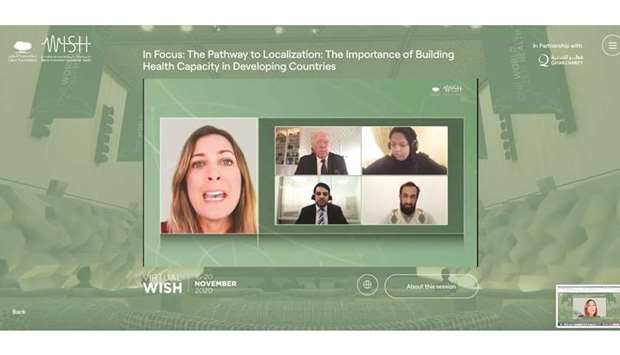
The panel discussion in progress.
Qatar

QC participates in discussion on building health capacity

Qatar Charity (QC) has taken part in the World Innovation Summit for Health (WISH) through a panel discussion, ‘The pathway to localisation: The importance of building health capacity in developing countries’, and the ‘Innovators of Tomorrow’ initiative, in addition to a pavilion at the virtual exhibition held on the sidelines of the conference.  WISH is a global health initiative of Qatar Foundation. Four senior experts from leading organisations participated in the discussion, whose main objective was to strengthen action towards localisation and to inform on the urgent need to recognise and support local communities in being the decision-makers and the leaders of solutions impacting their healthcare systems, QC said in a statement.  The discussion also aimed to keep abreast of current good practices and innovative approaches in the field, while identifying common challenges and opportunities to link national healthcare strategies with broader global localisation frameworks.  During the panel discussion, Ishrat Ullah, head of Relief at Qatar Charity, said QC has provided health assistance worth $24mn to nearly 60 countries around the world to help them fight Covid-19. He also underlined the importance of social awareness and community education, indicating that the “conscious community will ask the local government to strengthen the health system and provide efficient health services”. He said that QC’s teams working in developing countries face some challenges in the health field, adding that Qatar Charity focuses on building the capacities of the local community and strengthening the local health system, so that the local community members can respond first in case of emergencies and disasters.  The Qatari assistance was lauded, as Dr Robert F Walters, chairman of Orbis, said the huge assistance his organisation receives from Qatar Fund for Development (QFFD) and Qatar Charity makes it easier for it to carry out its tasks. Bashayer AlAli, International Programmes director at QFFD, spoke about building resilience, identifying the gap and meeting local needs, noting that QFFD focuses on the local community, achieving sustainable development and finding local solutions for local needs.  Mohamed Amad, chairperson of Humanitarian Network Pakistan, spoke about the national plan to strengthen the health system and engage the local community and private sector in this regard. He also noted that they work in the most vulnerable areas in order to support the health system and educate the local community about the importance of hygiene, health and nutrition. Qatar Charity’s pavilion at the virtual exhibition held on the sidelines of the conference displays its experiences and projects in the field of health, and provides information about its areas of work. The pavilion also sheds light on QC’s partnerships with United Nations and other international organisations, and its efforts aimed at preventing the coronavirus.  The ‘Innovators of Tomorrow’ initiative was launched in co-ordination with the Ministry of Education and Higher Education. Workshops were organised for the students of four schools as part of the initiative to inform them of what countries, institutions and civil society organisations did in the field of health. A special pavilion has also been set up for students at the virtual exhibition of the WISH conference to display their production and creativity.

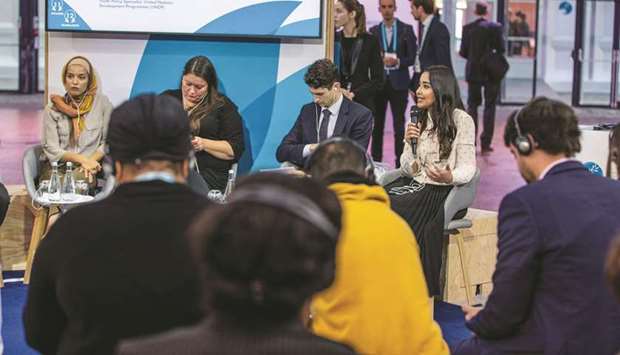
Machaille al-Naimi, president of Community Development, Qatar Foundation, speaking about the importance of youth engagement during the event.
Qatar

QF Community Development chief discusses why youth are ‘integral’ to decision-making

Amid a rise in youth activism around the world, the question of how to involve young people in decision-making has been placed in the spotlight at the 2019 Paris Peace Forum with speakers from Qatar, Europe, and Africa sharing their views.  A discussion session at the annual global governance summit in the French capital focused on the theme ‘Age is but a Number: Including Youth in Decision-Making Processes’, as, in countries throughout the world, traditional age-based hierarchies continue to be challenged by a highly-connected movement of young people with a desire to be part of the conversation when key decisions that affect their future are made. Machaille al-Naimi, president of Community Development, Qatar Foundation, was among those who participated in the discussion, as she spoke about the importance of youth engagement, alongside fellow speakers Stefan Pfalzer, president of the European Student Think Tank; Edwin Mulimi Nayendo, project leader at the Oslo Centre; and Yasmine Ouirhrane, expert on Peace & Security at the AU-EU Youth Cooperation Hub. The event was moderated by Noella Richard, Youth Policy specialist at the UNDP Youth Global Programme. The session explored the fact that, worldwide, young people face increasing pressure and insecurity from rising unemployment and decreasing social welfare but that while protestors and activists are often applauded for speaking out, true empowerment, or the involvement of youth in decision-making processes, does not necessarily follow. “One only needs to pick up a newspaper or scroll through social media and see the protests taking place around the world to realise that the youth have had enough and are demanding to be heard. “The previously-accepted hierarchies of the youth being far removed from the decision-makers are now being challenged and dispensed with. We cannot have decisions being made about the future without our youth being present at the table to set the agenda and be a part of the decision-making process,” said al-Naimi. She added: “First and foremost, it’s about believing in the voice of one, understanding that your voice is powerful. At Qatar Foundation, we understand that the youth are integral to future decisions, and that decisions cannot be taken on their behalf without them being involved.” The speakers discussed how to define nation-specific and culture-specific ways of encouraging youth representation in governance, society and employment, and enabling young people to be partners in driving change. They also emphasised the need for assumptions about the role of young people in the world to be overcome, and to ensure they know their views and opinions will be listened to. Nayendo said “a prejudiced approach” to engaging young people must be avoided, adding that “let’s keep an open mind and let them tell us what they think is the solution – young people are not the leaders of tomorrow; young people are the leaders of today.” According to Ouirhrane, involving young people in decision-making is “a bottom-up process”. She said, “I encourage young people to believe in their potential and make sure that their voices are heard at the local, national and international levels, because it’s with this positivity and this willingness that we make change happen.” At the Paris Peace Forum, Dr Ahmad M Hasnah, president of Hamad Bin Khalifa University – a member of Qatar Foundation – also participated in a discussion session titled ‘Shine Bright: A Better Future with Innovation in Education’. He and fellow speakers Myo Thein Gyi, Myanmar’s Minister of Education; Haifa Dia al-Attia, CEO of Luminus Plus; and Delphine Dorsi, director of the Right to Education Initiative, addressed topics including disruption, inclusivity, and gender parity in education. “In order for us to prepare graduates and students for the world they’re living in, we need to provide them with a multidisciplinary and multidimensional educational experience. We need to educate our students for the future, not the current state. A lot of jobs that will be available once our students graduate won’t even exist right now,” said Hasnah. He said education still provides the best opportunity for young people “to be in a diverse and truly global environment”, but questioned whether education should be delivered in the same way to every student. “Should we instead have a competency point for each student? With advances in areas like personalised medicine, we need to look into how we make education more personalised.” Meanwhile, HE Lolwah Alkhater, spokesperson for the Ministry of Foreign Affairs, introduced a panel session on the topic ‘Education for Peace and Development: How to Create Sustainable Impact?’ Featuring two leading Qatari organisations in the field of international philanthropy, the Education Above All Foundation (EAA) and Qatar Fund for Development (QFFD), it explored the role of education as a mechanism for peace, and how innovation can sustain education in times of conflict.

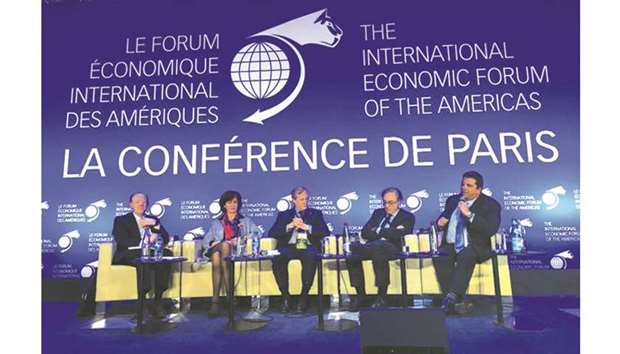
WISE participates in a panel discussion on innovation and technology at IEFAu2019s inaugural conference of Paris.
Qatar

WISE joins panel on innovation and technology in Paris

The World Innovation Summit for Education (WISE), a member of Qatar Foundation (QF), recently participated in a panel discussion examining the role of innovation and technology in education. The event was hosted by the International Economic Forum of the Americas (IEFA) at its inaugural Conference of Paris, under the title: ‘Reshaping Globalisation, Managing Disruption’. Stavros N Yiannouka, CEO, WISE, spoke on the panel, titled ‘Innovation and Technology: Fostering Inclusive Growth’, which was moderated by Andrew W Wyckoff, director for Science, Technology and Innovation, Organisation for Economic Co-operation and Development. Also participating were Ophra Rebière, vice president and head of corporate social responsibility, Sanofi; Louis Audet, president and CEO, Cogeco Inc and Cogeco Communications; Bernard Spitz, president, French Insurance Federation and President, International and Europe, Mouvement des Entreprises de France. The panellists discussed how the rapid spread of innovative technologies in a wide range of sectors has led to a dramatic increase in highly specialised knowledge, creating more complex technical and economic interstate relations. They considered the pressure in the private sector to create a culture of innovation, and ways to ensure equitable global access to the most innovative technologies. The panellists also explored how to avoid creating technological gaps among countries at different stages of their development. Yiannouka reminded the delegates of the importance of reviving the teaching of reason. “We need an education that teaches us how to think and how to reason. We need to acknowledge that the search for the truth involves competing ideas; the best way to resolve that competition of ideas is through reasoned discourse and through listening to each other. We need to assert the ethical values on which a good education is founded.” The IEFA’s conferences bring together senior government leaders and heads of state, specialists, union leaders, representatives of private and public sectors, academics, and civil society to discuss issues, share experiences, and provide access to information. The IEFA calls for open and unrestricted dialogue on the complex issues of the globalisation process, focusing on the issue of widening inequality. The conference of Paris considers the role of Europe, and the need for a globalisation that is more inclusive, more balanced, and more humane. WISE was established in 2009 under the leadership of Her Highness Sheikha Moza bint Nasser, chairperson of Qatar Foundation. Its participation in the Paris event, in line with QF’s ethos of inspiring positive change in local communities and beyond, aims to help build the future of education.

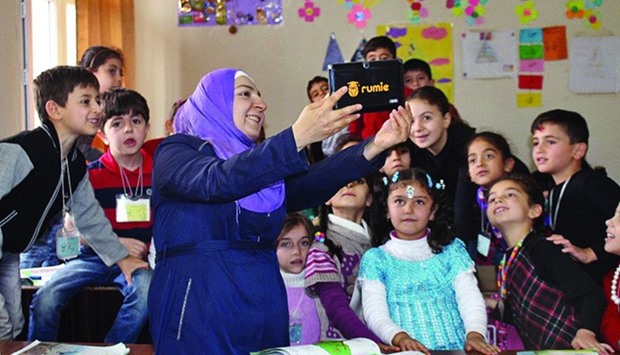
From 'Learn Syria project'.
Qatar

WISE Accelerator programme selects five projects

The World Innovation Summit for Education (WISE) has selected five projects to 2016-2017 WISE Accelerator programme. They are ‘Learn Syria’ and ‘Chalk.com’ from Canada; ‘Aflatoun Education’ from Netherlands; ‘Joko's World’ from Australia and ‘Edukasyon.ph’ from Philippines. The WISE Accelerator is intended to support the development of innovative projects in the field of education with high potential for scalability and positive impact. It relies on the expertise of qualified mentors and partners to provide projects with effective strategies and concrete support to ensure their development. Five projects are selected annually to join the programme. Throughout the year, the projects will benefit from tailor-made mentorship to address specific needs. The WISE Accelerator will provide international visibility and serve as an intermediary to connect the projects with an appropriate network, creating opportunities to share knowledge and identify support among donors and investors. Learn Syria is an education campaign bringing free digital education to Syrian refugees through a collaborative platform and Rumie tablets that work offline. Started in 2013, the project has a global reach and works with local partners and thousands of skilled volunteers online. It has built a full digital Syrian curriculum for children from grades 1-12 for autonomous learning. This content is then loaded onto its learning tablets and are deployed through local partners in Turkey and Lebanon. The project reaches over 25,000 Syrian students. Headquartered in Amsterdam and with reach in Africa, Alfatoun Education was created in 2014. It is a platform that strengthens teacher capacity globally by delivering social and financial education through online and offline technology. The platform provides a self-study course that gives teachers who have already participated in Aflatoun refresher workshops and supplementary training. The modules deal with both programme implementation and active-learning methods transferrable to any subject. Chalk.com, created in 2013, is a school management system providing real time data from the classroom to help schools understand what actually works. With its workflow tools for teachers, Chalk.com allows teachers to truly personalise learning by better understanding every student’s individual needs. The real time data from the classroom results in rich insights for the administration to make more informed decisions. Today, over 200,000 teachers use Chalk.com's tools to plan lessons, align to curriculum, and assess their students. Edukasyon.ph is an online platform started in 2013 reaching all over Philippines. It empowers students with opportunities to find education pathways for their dream careers. Students gain advice by filtering and ranking offers based on price, quality and relevance, and navigating through 200 career pathways. The website also offers convenience by allowing students to apply to schools online directly. With a current reach of 50,000 users every month, the website has witnessed user growth of over 20% a month. With a global reach, Joko's World is a suite of interactive learning applications that brings world cultures and intercultural understanding to the classroom in a fun way. Joko's World blends music, geography and culture in a unique and educational way, allowing students to build skills and knowledge on a diverse range of cultures. The project uses games that allow students to incrementally build skills and knowledge through game-based challenges that offer instant feedback. The project currently has more than 10,000 users globally.

Local
Qatar

WISH to hold ‘behavioural insights’ forum in November

The World Innovation Summit for Health (WISH), a global initiative of Qatar Foundation for Education, Science and Community Development (QF), announced that a ‘behavioural insights’ forum will be held during its conference slated be held in November. The behavioural insights forum will present groundbreaking, evidence-based research showing how citizen’s health can be maintained and improved through better understanding and application of the latest evidence on the factors which influence behaviour, led by a UK government-owned social purpose company, The Behavioural Insights Team. Using a broad definition of health, the report will cover three main areas: quality of life and wellbeing, public health, and delivery of healthcare. It will further demonstrate how behavioural insights can be applied at the macro level of high-level policies and system design, as well as at the micro level of experimentation, to achieve incremental improvements for the benefit of societies. David Halpern, chief executive of the Behavioural Insights Team and board director, and chair of the forum, said, “Behavioural factors such as diet, smoking, and accidents now account for the majority of healthy years of life lost. Within medical practice, behavioural factors also loom large in the transmission of infectious disease, medical adherence, and clinical errors. Yet these behavioural factors have received comparatively little attention, and the behavioural models within the medical community remain surprisingly undeveloped.” The report will also present a shortlist of the interventions that have the most potential, while stressing the importance of continually testing new ideas and adapting to the results they generate. Egbert Schillings, CEO, WISH, said: “As with previous summits, WISH seeks to present pioneering and comprehensive scientific research that provides answers to some of the toughest questions facing the healthcare sector today.

Gulf Times
Opinion

A deserving award for Afghanistan’s ‘mother of education’

In an age in which some celebrities are born or created on account of trivial reasons, many real heroes and achievers often go unrecognised or do not receive the applause they deserve. In an era when some awards and their winners vie to justify and complement each other, an individual of Dr Sakena Yacoobi’s calibre ought to be considered an exception.The founder and CEO of the Afghan Institute of Learning (AIL), who has either directly or indirectly impacted the lives of more than 12mn  people, in her war and strife-torn country, may not have won a Nobel Peace Prize despite being nominated. The 2013 recipient of the Opus Prize, a Kravis Prize, Gruber Prize Awardee, a Skoll Social Entrepreneur, Schwab Social Entrepreneur, and Ashoka fellow was bestowed last week in Doha with the prestigious 2015 WISE Prize for Education.Qatar Foundation for Education, Science and Community Development (QF), the force behind the World Innovation Summit for Education (WISE), chairperson HH Sheikha Moza bint Nasser and the jury deserve a big salute for honouring Dr Yacoobi, also the co-founder and vice president of Creating Hope International. Popularly known as Afghanistan’s “mother of education”, Dr Yacoobi, 65, has spent two decades working persistently to rebuild her country’s education landscape, devastated by war. She has established four schools, a hospital and a radio station in Afghanistan as part of her mission. The recipient of five honorary doctorates from institutions including Princeton University, launched her activities in the early 1990s when she started working in Afghan refugee camps in Pakistan. A passionate educator herself, she trained teachers, opened schools for children and learning centres for women.The Taliban rule in the mid-1990s, during which girls’ education was banned, did not deter Dr Yacoobi from her mission to provide education and health services to women and children, especially girls. She launched the AIL in 1995, with the primary objective to improve teacher training through innovation.  AIL was also the first organisation to open learning centres for women in the country and continues to find innovative ways to provide literacy and vocational skills to girls and women. Addressing the Summit, Dr Yacoobi urged world leaders who are superpowers to spend their money on books, schools and pens rather than on tanks, cannons and other weapons of war. She said that world leaders should follow in the footstep of HH Sheikha Moza for investing heavily on education.“I believe what you are doing in WISE will help the world. In giving recognition to education, you will bring peace and we need peace because many people suffer from war, conflicts, poverty, and health issues,” Dr Yacoobi noted. She observed that every leader in every nation should address the root cause of poverty which is the lack of education. “If every child goes to school today, there will be no war in the world.” Are the leaders listening?

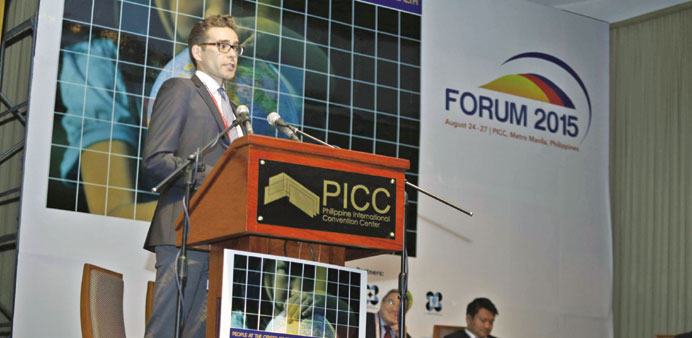
 Keown presenting the report .
Qatar

Wish presents research at forum

The World Innovation Summit for Health (WISH), a global initiative of Qatar Foundation, presented its landmark Global Diffusion of Healthcare Innovation (GDHI) research to leading healthcare stakeholders representing governments, NGOs and the private sector at the Global Forum 2015 on Research and Innovation for Health in Manila. Organised by the Council on Health Research for Development (COHRED) in partnership with the Philippine’s department of science and technology, department of health and the Philippine Council for Health Research and Development, Forum 2015 brought together high-level representatives from government, business, non-profits, international organisations, academic and research institutions, and social entrepreneurs.  During the conference, Dr Oliver Keown, clinical adviser and policy fellow at the Institute of Global Health Innovation, Imperial College London and private secretary to professor the Lord Darzi of Denham, executive chair of WISH, presented WISH’s GDHI research in a session titled:’From evidence to policy - thinking outside the box’ to highlight the need for innovation and research to improve economies and population health.  Keown said: “Our GDHI study has delivered invaluable insight to behaviours and practices within healthcare organisations which support the spread of innovation and best practice. WISH has been a tremendously powerful platform for learning from international stakeholders as well as broadcasting this evidence-based policy to a global audience.”

Professor Stephen Colagiuri
Qatar

Leading expert to address challenge posed by diabetes

The World Innovation Summit for Health (Wish), a global initiative of Qatar Foundation (QF), has appointed Stephen Colagiuri, professor of Metabolic Health at Sydney University, to chair its Diabetes Forum.  Professor Colagiuri will guide the work of a multidisciplinary team composed of leading experts from around the world. The forum will produce evidence-based research addressing the main issues facing policymakers and others responsible for the prevention and treatment of diabetes. Results, findings and recommendations from the forum will be presented for discussion at the Wish summit taking place in Doha on 17 – 18 February 2015. The Diabetes Forum, one of seven to publish reports at Wish 2015, will investigate a range of diabetes related issues in the coming months.  It will give an overview of the current burden of diabetes globally and projections for likely future scenarios. The forum will also examine the effectiveness of the type 2 diabetes treatment and what policy levers might be used to ensure they are applied consistently in diabetes care. Finally it will also review case studies from across the world of successful implementation of innovative, practical and cost effective treatments and prevention strategies Professor Colagiuri said: “Our current approach to diabetes is totally unsustainable in the face of its extraordinary growth – especially in healthcare systems which are least well equipped to deal with it. “Our team will bring a range of perspectives to bear on this urgent health priority and I look forward to working with some of the world’s leading experts. We want to help equip policymakers with the evidence and guidance they need to confront diabetes for the sake of current and future generations.” Professor The Lord Darzi of Denham, executive chair of Wish, said: “Diabetes is widely recognised as a looming global health crisis. It causes significant human suffering, commonly damaging the heart, blood vessels, eyes, kidneys and nerves and its social and economic impact is vast, especially in poorer countries.” With the appointment of Professor Colagiuri as chair of the Diabetes Forum, Wish aims to improve care for people with diabetes globally, examine innovative and cost effective solutions, and demonstrate where policymakers can make practical interventions to ensure treatment is applied consistently so that all patients can benefit. Professor Colagiuri is a world-renowned diabetes expert. His research has focused on evidence-based guideline development and implementations, screening for type 2 diabetes, prevention of type 2 diabetes, economic aspects of diabetes prevention and care, diabetes care delivery in developing countries, and vascular risk assessment in people with diabetes. He has published over 200 scientific papers on diabetes. Other than diabetes, Wish will publish reports on Communicating Complex Health Messages, Delivering Affordable Cancer Care, Dementia, Universal Health Coverage, Mental Health and Well-being in Children and Young People, and Patient Safety.  

Students engaged in a non-formal learning event.
Qatar

WISE promotes non-formal learning opportunities

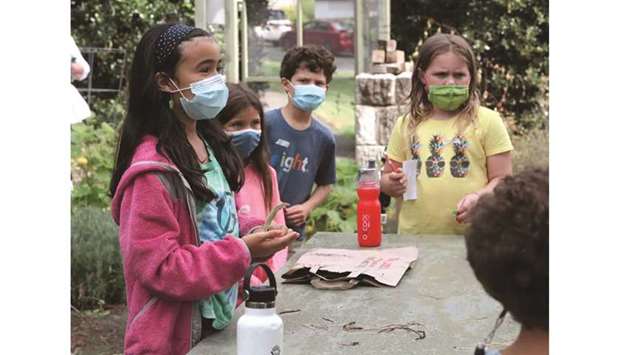
Staff Reporter The World Innovation Summit for Education (WISE), a global think tank of Qatar Foundation, is currently attempting to create more non-formal learning opportunities to foster more intrinsic motivation through its Learners’ Voice programme. “The initiative, which equips fellows with self-expression skills, has been redesigned in 2021 to be a year-long series of extracurricular activities serving 45 local public middle- and high-schools from nine different schools, in a partnership with the Ministry of Education,” Aurelio Amaral, head of the Learning Ecosystems Track at WISE, said. According to Amaral, “passions can create more active and engaged learners in the long run as opportunities to learn and grow don’t need to be tied to school grounds.” He feels that there is a lot of potential for youth development beyond school borders by observing the surroundings in the neighbourhood, or by interacting with people and organisations from the communities.  Motivating students is one of the key challenges faced by school leaders from public and private schools in Qatar, based on preliminary findings from an action-research project conducted by WISE, which has surveyed over 100 public and private schools and non-formal education providers in Qatar. “To foster more engagement in school, many principals and teachers are seeking to offer a breadth of real world more opportunities outside the classroom space, which are related to the curriculum and connect to learners’ passions and interests. This includes visits to employers and cultural spaces, or – in times of Covid-19 and e-learning – virtual talks with leaders from various areas of expertise to bring an aspect of learning to life,” he noted. WISE organised a kick-off session, in March 2021 with the curriculum and delivery partners, Eidos Global and PA Qatar. According to Amaral, higher levels of engagement sparkle in particular when students use speculation and storytelling to discuss societal problems, such as examining the consequences of global warming by creating scenarios of how life in Doha would look like if the city was permanently flooded “They could explore their identities and through the lenses of their communities, for example, by analysing older and more recent portraits taken in Qatar and observing how fashion traditions in the country evolved over time; interact with role models who can nurture their aspirations,” he said. To substantiate the point, Amaral cites an example of Shaima al-Tamimi, a Qatar-based artist who  explored with the students the sub-text behind her works and those from artists from the region. The personal connection and the contextualised references helped students to see a deeper purpose in developing their own photography projects. “Through the learnings from the programme, it would be possible to collect some evidence on the contribution of non-formal learning to youth engagement in the formal education system in Qatar. The experience might as well encourage more collaboration between schools and other actors in the society – especially those who can help to nurture youth’s personal interests and stimulate the pursuit of their ambitions in the future, “he said. “In our programme and research efforts, we have been working to identify the conditions and lay the foundations to establish and maintain in Qatar effective learning ecosystems – an emerging concept which consists of effective collaboration among schools, businesses and community-based organisations to offer inclusive learning opportunities that improve motivation, bridge gaps in a community and promote social cohesion,” he said. “This, by no means, undermines the role of the formal education system. Rather it looks to capitalise on all the different learning places and assets within a community to support formal learning, and unlock the intrinsic motivation of learners. “If youth can find new sources of motivation to learn outside school – especially when they are nearby in the community – this should only benefit and enhance the overall education experience,” added Amaral.

Gulf Times
Qatar

Ooredoo sponsors DLD event

Ooredoo sponsored the recent Doha Learning Days event, a six-day festival held before the World Innovation Summit for Education (WISE) 2019 in Doha. Doha Learning Days was an experiential learning festival held from November 14-19 at Education City’s Ceremonial Court and Green Spine. The festival featured a number of different activities centred on education, hosted in conjunction with more than 57 local organisations and innovators. Activities included codebreaking, wellness masterclasses, poetry workshops, sports and much more. Doha Learning Days was organised as part of WISE 2019, a platform for educators, decision-makers and experts in the field of education to come together to engage, debate and network, with the aim of building the future of education. Ooredoo’s sponsorship of the event was in line with its corporate social responsibility strategy, and – to create a mutually beneficial relationship – WISE ensured activities offered were aligned to this strategy with the intention that they would enhance programmes in which Ooredoo is already involved. Speaking of the event and sponsorship, Manar Khalifa al-Muraikhi – director PR and Corporate Communications – said: “We are always looking for ways in which we can support our local communities, and ways in which we can contribute to improving education and access to education in line with our commitment to the United Nations’ Sustainable Development Goals. We were delighted to have the opportunity to show our practical support by sponsoring Doha Education Days, and proud to be associated with WISE to facilitate this worthwhile event.”

Child marriage continues to be a common practice in the developing world.
Opinion

A blueprint for ending child marriage

When a young girl is pushed into marriage, the damage can last long after her wedding day. Research shows that girls who marry before the age of 18 receive less schooling than those who marry later, face a higher risk of domestic abuse, and suffer a lifetime of adverse effects on their physical and mental well-being. Yet child marriage continues to be a common practice in the developing world. According to Unicef, there are more than 700mn women alive today who were married before they turned 18. One in three women aged 20-24 were married or in a union while still a child. What can be done to end this harmful practice? Bangladesh offers both a possible blueprint and a cautionary tale. Today, Bangladesh has the world’s highest rate of marriage among girls under 15, and violence against Bangladeshi women is on the rise. Unfortunately, legal efforts to protect women and girls by criminalising aspects of child marriage face significant obstacles, due to the prevailing political culture, the accommodation of religious extremists, and the persistence of gender bias. The existing law penalising aspects of child marriage – the Child Marriage Restraint Act (CMRA) of 1929 – dates to the British colonial period. The law stipulates terms of imprisonment or a fine for anyone who “contracts,” “solemnises,” or arranges a marriage with a girl under 18. But, with some recent exceptions, it is frequently ignored and rarely enforced. In the last three years, various drafts of a bill to give the law more teeth have been proposed. But the proposals focused on criminalising facilitation or participation; none would invalidate child marriage itself. Individuals who officiate at child marriages or adults who take a child bride may violate the law, but the marriage itself would remain legal. Each version of the bill has kept open this legal route for child marriage. Moreover, while the drafts have introduced stiffer penalties for perpetrators – and imposed greater responsibility on officials to take action – they have also created more space for exceptions. Marriage below the age of 18 is already permitted in Bangladesh by personal laws based on religion. The newly passed replacement of the CMRA – the CMRA 2017 – allows for exceptions in “special cases,” which remain entirely undefined. That “special cases” clause was earlier interpreted by an official to mean in “for the sake of honour” – which presumably could include pregnancy following a rape – as long as the marriage has a court’s approval and the parents’ consent. Such a framework could ultimately erode legal protections – such as the right to consent – that girls have had for almost a century. Despite these legal challenges, Bangladesh’s experience may offer hope. Notwithstanding the current child marriage concerns, Bangladesh has made important strides in improving the lives of girls and women during the last three decades. A generation ago, it was unusual for girls to attend primary school. Today, thanks to a broad political consensus on the value of female education, gender parity has largely been achieved in both primary and secondary schooling. Even on the issue of child marriage, political developments have been encouraging. As two of us have noted elsewhere, at the July 2014 Girl Summit in London, the Bangladeshi government said it would aim to eradicate marriage by girls below the age of 15 by 2021. Targeting marriages with such young girls may be the right approach. Much work remains, and pressure to make good on these commitments is mounting. But there seems to be at least some will to act. When it comes to persuading some of the Bangladeshi public, however, progress has stalled. Communities in South Asia often value girls less than boys because of limited opportunities to acquire skills and access salaried jobs. Early marriage is often considered the best option to secure a girl’s future. But the constraints placed on young women originate from the patriarchal norms that dominate the community and the household. Conservative values that oppose giving adolescent girls and young women full control over their life choices are pervasive, because family “honour,” for them, is closely tied to the perceived “purity” of their daughters and brides. An unmarried adolescent girl’s reputation must be carefully protected, because its loss could damage her family’s social standing considerably. The government has often alluded to this line of reasoning to justify proposed reforms to the child marriage law. The “special cases” clause in CMRA 2017 could be an attempt to pre-empt “patriarchal resistance” or a backlash from religious extremists. But the social cost of allowing exceptions may be too high. Bangladesh’s success in empowering girls and ending child marriage will hinge on strengthening the rule of law by closing existing loopholes. Crucially, such actions must be accompanied by sustained social campaigns and targeted educational programmes that convince the public to support the goal, while empowering girls themselves. As the Unicef Goodwill Ambassador Angélique Kidjo has said, “long-lasting, fundamental changes come from within communities, and they depend on engaging both mothers and fathers in finding solutions that make a difference in their daughters’ lives.” Some recent successful efforts to address child marriage do precisely that. It is still possible for Bangladesh to meet the Sustainable Development Goal of eliminating child marriage by 2030. If the government leads, we are confident that the people of Bangladesh will eagerly follow. – Project Syndicate * Sajeda Amin is a senior associate at the Population Council in New York City. M Niaz Asadullah is Professor of Development Economics at the University of Malaya, in Kuala Lumpur, Research Fellow at the IZA Institute of Labor Economics, and Visiting Fellow at the Center on Skills, Knowledge, and Organisation Performance (SKOPE), the University of Oxford. Sara Hossain is a lawyer at the Supreme Court of Bangladesh and an honorary executive director of the Bangladesh Legal Aid and Services Trust. Zaki Wahhaj is a senior lecturer at the University of Kent.