Search - covid 19

Wednesday, December 24, 2025 | Daily Newspaper published by GPPC Doha, Qatar.

Search Results for "covid 19" (360 articles)

Gulf Times
Opinion

Clash over healthcare subsidies threatens to reshape midterms

For Larry Jackson, a Donald Trump-backing Republican hoping to unseat his party’s incumbent in a West Virginia congressional primary next year, the fight in the US Congress over Affordable Care Act subsidies is both personal and political ammunition.Jackson, 42, says steep ACA premium hikes facing West Virginians — estimated by one think-tank to average nearly 400% per enrollee next year — highlight the stakes of the expiring subsidies. It’s an issue he plans to spotlight in a broader cost-of-living message for his campaign to unseat Representative Carol Miller, who has not committed to keeping them in place. The elevation of ACA subsidies as an electoral issue among Republicans in one of the nation’s most reliably conservative states a year before Americans go to the polls for midterm congressional elections underscores the issue’s potential potency.Jackson, a business owner, has relied on the ACA to provide health insurance for his family of eight. Without the enhanced subsidies, due to expire at the end of December, his monthly premium is set to quadruple to $1,850 a month. Democrats’ refusal to approve discretionary funding for federal agencies until Republicans agreed to extend the subsidies triggered the longest government shutdown in US history. It ended on Wednesday without a deal to extend them.Democrats are expected to campaign vigorously on the hikes as they seek to break the Republican grip on Congress in next November’s elections.“These tax credits cannot expire. It’s going to hurt a lot of people in West Virginia,” Jackson told Reuters. “We can all agree there are problems with the Affordable Care Act, but the government needs to extend these credits as they work that out.”The subsidies, introduced during the Covid-19 pandemic, expanded federal assistance for Americans seeking health insurance through marketplaces created by the ACA, also known as Obamacare.With an aging, rural population and some of the nation’s highest rates of poverty and chronic illness, the state of nearly 2mn people faces among the biggest proposed premium increases in the country. The subsidies have provided a crucial lifeline to tens of thousands of West Virginians previously priced out of Obamacare coverage.A deal struck on Sunday between Republicans and a handful of Democrats in the Senate to end the 43-day shutdown left the fate of the subsidies in limbo. While Senate leadership promised a vote on the subsidies in December, Republican leaders in the House of Representatives have not committed to a vote on them.Of the more than 30 people Reuters spoke to in West Virginia, a comfortable majority, including all Democrats and several Republicans, supported extending the subsidies until Congress could formulate a plan to make health insurance more affordable.Republicans who opposed the extension expressed concerns about fiscal discipline or potential fraud in the programme, including one whose business was insuring its employees through Obamacare.Keeping the subsidies would likely receive broad support nationwide, according to a poll conducted by health policy organisation KFF from October 27 through November 2. It found three-quarters of US adults backed their extension.Simon Haeder, an associate professor of public health at Ohio State University, said the issue is unlikely to move the needle enough in the midterms in a staunchly Republican state like West Virginia, where Trump won 70% of the vote in the 2024 presidential election. But it could make a difference in so-called purple states closely divided between the two parties.“It’s going to give Democrats something to run on,” said Haeder, who has researched the intersection of health policy and politics. “If you’re a Republican in a purple state, you’re going to have to answer for people losing healthcare.”In an October Reuters/Ipsos poll, 37% of Americans said Democrats had a better approach to healthcare, compared with 27% who favoured Republicans. Brian Darling, a Republican strategist and former Senate aide, said inflation and the broader economy will likely be top of mind for voters next November, but healthcare policy could tip close races.“Republicans need to have a health reform proposal drafted and ready to deploy in the enhanced subsidy debate or they will lose on policy and at the ballot box,” he said.The Center for American Progress, a liberal think tank, estimates ACA enrollees in West Virginia face an average 387% increase in their premiums without the subsidies, more than any other state.According to KFF projections, a 60-year-old couple making $85,000 in the state’s first congressional district — represented by Miller — will see premiums jump by 654%, from $602 to $4,540, second only to Wyoming’s lone district at 693%.Tami White, who works at an insurance agency in West Virginia, said her firm has been renewing lower-income clients in new ACA plans, with premium hikes ranging from 20% to 100% for similar or downgraded plans. It has yet to renew any clients with earnings above 400% of the poverty line due to the cost.While households below the 400% threshold — $84,600 for a couple — will still qualify for a lesser tax credit, those above it will receive nothing if the subsidies expire.As many as 15,000 West Virginians are at risk of losing health coverage because they cannot afford the new premiums, according to the West Virginia Center on Budget & Policy, a progressive policy research group, potentially compounding the state’s healthcare problems ahead of planned Trump administration cuts to Medicaid, the government health insurance programme for low-income Americans. The reductions are part of the sweeping package of tax and spending cuts Trump signed into law in July. Once those cuts are fully implemented, the state’s hospitals, which rely heavily on Medicaid dollars, could lose $1 billion per year, according to West Virginia Hospital Association CEO Jim Kaufman.Miller, who is facing the primary challenge from Jackson and two other Republicans, did not respond directly to questions on whether she supported extending the tax credits. Republicans could negotiate on the credits once the government reopens, Nicolas Gray, a spokesman for Miller, said in a statement.The issue has hit home for Jackson’s campaign manager as well. Patrick Krason said he blamed both parties for his new premiums, projected to rise five times to $2,200 a month.“I am mad at everybody, at the legislative branch, Republicans and Democrats,” he said.“Greedily for myself, I would like (the subsidies) extended for a year,” he said. “And, you know, maybe they decide they can actually come up with a plan.”— Reuters 

An expert panel featuring senior government officials, academics, and innovation leaders has agreed that Public Innovation Labs are critical in enhancing service delivery and building agile institutions within government frameworks. PICTURE: Thajudheen
Business

Qatar’s innovation labs reshape government practice, says expert panel

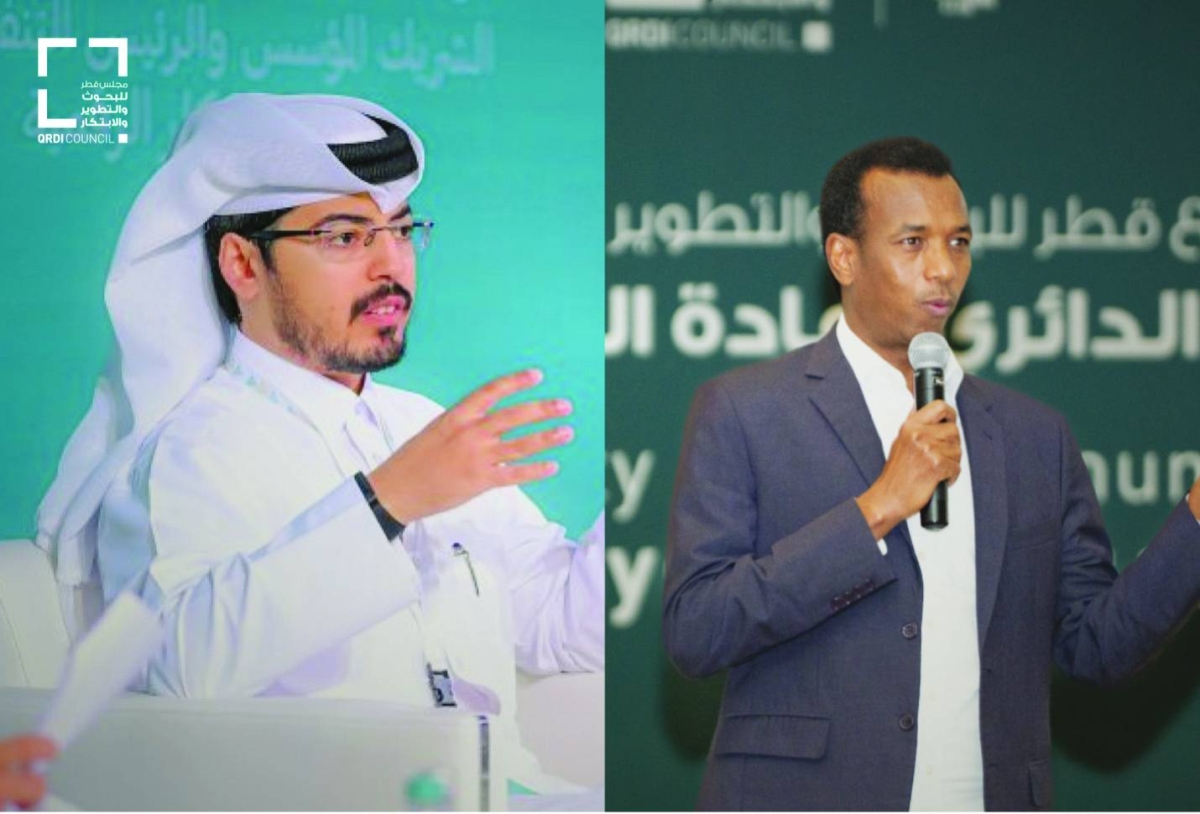
Senior government officials, academics, and innovation leaders have explored how Public Innovation Labs (PILs) can help governments improve service delivery, foster citizen engagement, and build agile institutions.Eman al-Kuwari, director of Digital Innovation at the Ministry of Communications and Information Technology (MCIT), underscored how MCIT is reimagining the role of government in the digital age, citing the TASMU Innovation Lab.“Technology is the means, not the end; we created the Innovation Lab to offer a safe environment for experimentation. It’s a space where we can test emerging technologies, validate ideas, and include the wider ecosystem.“That includes startups, academia, and private sector partners. We’re reimagining how government works — and that starts with giving teams the confidence to try,” al-Kuwari pointed out during the inaugural ‘Ibtechar Majlis’, a new dialogue series launched earlier by Qatari innovation firm Ibtechar.She added that innovation must be embedded in the culture of public institutions: “It’s not just about infrastructure or policy — it’s about building a mindset. We want government teams to be able to experiment, to test, and to learn. That’s how we bring real value to public services.”Nejoud M al-Jehani, executive director of Strategy & Programmes at the Qatar Research, Development and Innovation (QRDI) Council, offered a strategic framing of innovation, distinguishing between internal reform and ecosystem-wide transformation.“We differentiate between government innovation and public innovation. Government innovation is about improving internal processes — policies, service delivery, operations. Public innovation is broader. It’s about creating value for society by mobilising the entire ecosystem: government entities, corporates, startups, and universities,” al-Jehani explained.Emphasising the dual role of government in this landscape, she continued: “As an adopter, government defines challenges and becomes the first customer. That builds market confidence. As an enabler, it sets standards, opens partnerships, and creates the conditions for innovation to thrive across sectors.”Hissa al-Tamimi, director of Governmental Innovation at the Civil Service and Government Development Bureau (CGB), spoke about the launch of Qatar’s first government accelerator and its role in bridging national priorities with operational realities.She said, “We’re rethinking how services are designed and how operations are managed. The accelerator helps us connect national projects with the day-to-day work of government entities.”Al-Tamimi also addressed the cultural challenge of embedding innovation in public institutions, saying, “If innovation were just about systems, adaptation would be easy. But when you’re dealing with people, that’s where the challenge lies. Innovation pushes us beyond our comfort zones. It’s not a privilege — it’s a way of living. That’s the only way we can advance.”Dr Georgios Dimitropoulos, professor and associate dean for Research at Hamad Bin Khalifa University’s College of Law, highlighted the importance of collaboration between academia and government: “Academia brings ideas and evidence. The government brings implementability. The two sides need each other.”Citing historical examples to illustrate the power of this partnership, Dimitropoulos said: “Think of the Manhattan Project, the COVID vaccines, and the Internet. These were all born from collaboration between government and academia. Qatar’s AI strategy is a local example. It was developed with HBKU’s Qatar Computing Research Institute, and it positioned the country as an early adopter.”Ibtechar co-founder and CEO Nayef al-Ibrahim, who moderated the discussion, framed the Majlis as a culturally rooted space for dialogue and co-creation, adding that it is “an integral part of Qatari culture.”“Public Innovation Labs continue that spirit. They offer governments safe spaces to test ideas, co-create with citizens, and deliver agile services. In a small state, a model that combines centralised coordination with decentralised experimentation brings significant value. It allows for flexibility, inclusion, and scale—all while maintaining coherence,” he added.

Indonesia’s sovereign wealth fund Danantara is reducing its financial support for flag carrier PT Garuda Indonesia, putting in doubt the distressed airline’s ability to refresh its fleet.
Business

Garuda’s fleet growth at risk as Danantara trims funding

Indonesia’s sovereign wealth fund Danantara is reducing its financial support for flag carrier PT Garuda Indonesia, putting in doubt the distressed airline’s ability to refresh its fleet.Garuda will now receive 23.7tn rupiah ($1.4bn) from PT Danantara Asset Management, an arm of the wealth fund, through a private placement, which comprises a cash injection and a loan conversion, according to an exchange filing. The airline was supposed to obtain $1.8bn under a plan drawn up last month.In addition to covering finance expenses and providing working capital, Danantara Asset would have helped with fleet expansion. However, Danantara Asset notified Garuda that “there is also an adjustment to the planned use of funds, which no longer includes fleet expansion,” the airline said in a separate statement.The carrier has struggled financially since the Covid-19 pandemic and has grounded an increasing number of planes because of difficulties making maintenance payments. The number of idled jets operated by the company and subsidiary low-cost carrier PT Citilink Indonesia rose to 51 as of June, nearly 40% of the group’s total fleet, and up from 33 a year ago.Leasing new planes comes with high price tags amid a dearth of available aircraft and a global surge in travel. The carrier earlier this year paid twice as much to lease a Boeing Co 737 Max jet than it does for older 737 jets.Garuda should focus on getting some of its grounded planes flying again, said Gerry Soejatman, a Jakarta-based independent aviation analyst.“Ordering new planes for early delivery is going to be very expensive, and probably less prudent financially,” he said. “It is better to see the grounded jets being put back into service or returned to lessors before Garuda place big aircraft orders.”

Gulf Times
Business

Digging up a fortune?

Gold’s meteoric rise in price this year has finally come to a halt, but at an elevated price compared with a year ago. An alternative to buying the metal itself is to invest in the companies that mine it.There is a category of stock that has significantly outperformed that of tech firms linked to the artificial intelligence (AI) boom in 2025. While Nvidia’s share price was up around 40% and Oracle’s 72% by mid-October, the listed company Newmont had gained 134%, Agnico Eagle increased 113% while newcomer to the stock market Zijin doubled in value after its IPO at the end of September.These three less-familiar names are all gold mining companies. The S&P Global Gold Mining Index has increased by over 120% this year.The lustrous metal itself has dazzled humans for millennia, and naturally attracts more attention than the often messy, difficult process in mining this precious metal. Companies that are specialist in the extractive process have not always delighted investors, but that may be changing.The traditional downsides to buying gold as a commodity have been that there are no dividends or potential for earnings growth. Moreover, there are fees; either to cover the security needed to storing physical gold, or the commission for trading gold-linked exchange trade funds (ETFs).With the companies that mine the gold, they have been able to pay dividends following the recent gold rush.The rise in share prices of gold mining companies has been around double that of the price of gold itself, which has risen by around 50% in 2025, reaching more than $4,300 per ounce in mid-October, before dipping back to below $4,000 by the end of the month. As recently as early 2024, it was trading at $2,000.Buying stocks in gold mining is a levered bet on the price of gold: there are high costs, but these do not vary significantly with demand. So margins are overly suppressed with a low price, and disproportionately boosted when the global price rises.There are, however, bad memories for some investors who have invested in gold mining sector. A previous price rise followed the banking crisis of 2007-08, but this was followed by loose fiscal discipline in the sector, high CEO pay, risky mergers and ambitious mining projects which left some miners exposed when the gold price fell – from above $1,500 in 2012 to below $1,100 in 2015. Gold sector stock prices fell 79% between 2011 and 2015.There are indications that the mature companies in the sector have learned the lesson, building up their cash position in the current boom, paying dividends and exercising conservative judgement. Free cash flow yields this year have reached the range 7-9%.There was a boost to the gold price in 2020 during the Covid pandemic, but the industry’s inflation level also rose, owing to disrupted supply chains. Inflation is now subdued. Costs have risen but at a much lower rate than the increase in price.Bolstering support for the sector further is that, while the global gold price may fall – indeed, it is already off its highs – it is unlikely to collapse. While it is often regarded as a safe haven stock, to hedge against inflation, geopolitical uncertainty and the declining value of paper money, this has been only a partial explanation this year. The gold price continued to rise in price while the value of the dollar was holding steady, not falling.Historically, gold prices would move in approximately inverse relationship to stock prices, but in 2025 they have been rising together. The prices of silver and platinum have also increased. These are not traditional hedges against declining faith in fiat currencies. Silver began the year at around $30 per ounce, rose to nearly $55 by October, before falling to $45-46.Elevated global liquidity, and the rise of retail investing, featuring market trading apps, have been contributory factors. InvestEngine, a platform for retail investors, has reported a 250% increase in purchases of gold exchange traded commodities in 2025. The exchange traded fund share of all gold demand has increased to nearly 20%.With an ETF, you do not own physical gold, but rather shares in a gold fund, where each ETF unit typically equals 1gram of 99.5% pure gold. The ETFs are more liquid than gold itself. It is possible to trade in leveraged ETFs linked to gold, which use borrowing to amplify the returns, but leveraging can also compound the losses when prices fall.Governments have continued to build their gold reserves, as a diversification away from the US dollar. The Chinese government now holds 74mn troy ounces, worth around $283bn. It has not been selling at what may be the top of the market. For governments, purchasing significant gold reserves is a strategic holding, not a speculative bet.Gold is likely to remain a significant minority proportion of a diversified portfolio. Gold miners, provided that they avoid over-reach and conserve cash during the boom times, may also be a credible long-term investment.The author is a Qatari banker, with many years of experience in the banking sector in senior positions.


Annalena Baerbock speaking to QNA.
Qatar

‘Qatar support for UN is leading example of international action’

President of the 80th Session of the United Nations General Assembly Annalena Baerbock stressed that Qatar’s support for the the United Nations is a leading example, praising the country’s role as an international mediator in conflict resolution and its active contribution to social development. In statements to Qatar News Agency (QNA), Baerbock explained that the Second World Summit for Social Development in Doha underscores the need to move from promises to implementation through concrete action in areas such as education, employment, and social justice, thus contributing to achieving social benefits and healthcare for all people. She highlighted the importance of promoting social development and achieving global justice, noting significant progress in certain economic and social indicators despite ongoing challenges in other parts of the world. President of the 80th Session of the United Nations General Assembly said that the unemployment rate in Qatar stands at around 1%, while in some other countries it reaches 30%, reflecting the persistent gap among nations in benefiting from the fruits of social development. She stressed that failure to address crises such as hunger exacerbates displacement and migration, emphasising the need to break this vicious cycle by working on the three main pillars of the United Nations: peace and security, social development, and human rights. Baerbock added that the summit aims to accelerate progress toward achieving the 17 Sustainable Development Goals (SDGs), noting that all goals are interconnected and cannot be achieved in isolation, especially amid global climate challenges that affect food security. She also pointed to the importance of linking the Doha Summit with the Climate Change Conference to be held in the Amazonian city of Belem, Brazil, and the role of nationally determined commitments in reducing carbon emissions. She affirmed that investment in renewable energy benefits strong economies and enhances their competitiveness. The president of the UN General Assembly emphasised the importance of international co-operation to achieve social justice, explaining that global challenges know no borders, and that the experience of the Covid-19 pandemic demonstrated the necessity of international collaboration in providing vaccines and addressing health crises. In conclusion, the President of the 80th Session of the United Nations General Assembly Annalena Baerbock told QNA that supporting UN agencies, including the World Food Programme, is vital to preventing hunger and human suffering in countries such as Sudan, stressing that immediate funding and support are essential to ensuring a dignified life for people around the world.

John Williams, president of the Federal Reserve Bank of New York.
Business

Fed may soon need to expand balance sheet for liquidity needs

The US Federal Reserve may soon need to grow its balance sheet through bond purchases and could consider shortening the average duration of its debt holdings, Federal Reserve Bank of New York President John Williams said yesterday. "The next step in our balance sheet strategy will be to assess when the level of reserves has reached ample" from the current state of "somewhat above ample", Williams said in the text of a speech prepared for delivery at the European Central Bank Conference on Money Markets 2025 in Frankfurt. When that happens, it will then be time to begin the process of gradual purchases of assets, Williams said. "Based on recent sustained repo market pressures and other growing signs of reserves moving from abundant to ample, I expect that it will not be long before we reach ample reserves," Williams added. At last week’s Fed meeting, the Fed announced that December 1 would bring an effective halt to a three-year-old process to shrink bond holdings acquired as part of an effort to support the economy and financial system during the Covid-19 pandemic. Williams also made the case for shortening the average duration of the Fed's government debt holdings since it focused past purchases on long-term bonds and its average duration was now "very long", much longer than the overall market. "Having a somewhat neutral or close to neutral maturity structure in a central bank balance sheet relative to what's out there in the market, it seems to make sense," Williams said in response to a question. "We're pretty long right now, very long in duration right now." From 2020, the Fed more than doubled the size of its overall holdings to a peak of $9tn on aggressive purchases of Treasury and mortgage bonds. Since 2022, it has been allowing a set amount of those securities to mature and not be replaced with the aim of leaving enough liquidity in the financial system to retain firm control over the federal funds target rate range, its main lever to affect the economy, while at the same time allowing for normal money market volatility. Recent signs of rising money market rates coupled with active use of Fed liquidity facilities indicated to the Fed it had gone far enough on shrinking holdings, hence its decision to hold the overall balance sheet steady at its current $6.6tn level. Some analysts expect the Fed could start to expand holdings via bond purchases in the first quarter. Williams cautioned that it’s tricky to know when the Fed has reached the level of reserves that will need it to start putting cash back into the system. "I am closely monitoring a variety of market indicators related to the fed funds market, repo market, and payments to help assess the state of reserve demand conditions,” he said. He cautioned that buying bonds to maintain the right amount of liquidity is not stimulus. "Reserve management purchases will represent the natural next stage of the implementation of the (Federal Open Market Committee's) ample reserves strategy and in no way represent a change in the underlying stance of monetary policy,” Williams said. He added that Fed rate control tools like reverse repo and the Standing Repo Facility have been working well, and he expects to see active usage of the latter facility, which lends cash to eligible firms, going forward.

Lolwa al-Baker
Community

Qatar University graduate paving way for future healthcare leaders

Qatar University (QU) Health Sector celebrated the inspiring journey of Lolwa al-Baker, a Qatari graduate from the Physiotherapy Programme whose passion and perseverance exemplify the next generation of national health leaders.Her transformation from an uncertain first-year student to a confident future professional reflects the strength of QU’s academic environment in empowering students to reach their full potential, a statement said.Lolwa’s path to physiotherapy was one of discovery. Initially enrolled in biomedical sciences, she found her true calling late in her first year. “Something in my mind shifted towards becoming a physiotherapist,” she recalled. Drawn to patient care, rehabilitation, and the science of movement, she joined the Department of Rehabilitation Sciences with enthusiasm and purpose.During her studies, Lolwa gained extensive hands-on experience through clinical placements at institutions including Aspetar, Hamad Medical Corporation, and Sidra Medicine. “These placements are helping me map out my future and decide which areas I am keen to explore further,” she said. The experience strengthened her professional skills and affirmed her ambition to contribute meaningfully to Qatar’s healthcare sector.Her academic journey was not without challenges. Like many students, she faced uncertainty during her early university years, compounded by the Covid-19 pandemic. With the support of faculty, peers, and family, she learned to adapt and thrive. “Those early challenges helped me grow as a person and as a student,” she reflected.Initially, her family knew little about the physiotherapy profession, but her success helped increase awareness and understanding of its importance. “Their encouragement and belief in my abilities have been invaluable,” she added, emphasising the role of family support in her development.Lolwa values the diverse learning opportunities offered at QU Health, including Interprofessional Education (IPE) and collaborative activities that promote teamwork and holistic care. “Engaging with passionate peers and dedicated faculty has kept me inspired and motivated,” she said.Looking ahead, Lolwa aspires to specialise further — potentially in sports rehabilitation or paediatrics — and aims to create new opportunities for Qatari physiotherapists through professional associations and community initiatives. “I am dedicated to not only meeting but exceeding the expectations of the Qatari healthcare system,” she stated.Her story reflects QU’s mission to prepare skilled graduates who contribute to national development. Lolwa al-Baker stands as a role model for perseverance, purpose, and professional excellence, inspiring future generations of healthcare leaders in Qatar, the statement added.

US Speaker of the House Nancy Pelosi (D-CA) walks to the House Triangle before speaking on the 25th Anniversary of the New Democrat Coalition on Capitol Hill in Washington, U.S., May 18, 2022. REUTERS
International

Nancy Pelosi first woman House speaker to retire

Nancy Pelosi, a towering figure in US politics and the first woman to serve as speaker of the House of Representatives, announced Thursday that she will step down at the next election.Admired as a master strategist with a no-nonsense leadership style that delivered consistently for her party, the 85-year-old Democrat shepherded historic legislation through Congress as she navigated America's bitter partisan divide.In later years, she became a key foe of President Donald Trump, twice leading his impeachment and stunning Washington in 2020 when images of her ripping up his speech to Congress were beamed on live television around the world."I want you, my fellow San Franciscans, to be the first to know I will not be seeking reelection to Congress," she said in a video statement pointedly aimed at her hometown constituents."With a grateful heart, I look forward to my final year of service as your proud representative."Pelosi — whose term ends in January 2027 — was the first woman to lead a major political party in the US Congress.Despite entering political office later in life, she quickly rose through the ranks to become a darling of liberal West Coast politics and, eventually, one of the most powerful women in US history.She is in her 19th term and has represented her San Francisco-area district for 38 years. But her fame centers especially on her renowned skills at the national level, leading her party for two decades.As House speaker for eight years, she was second in line to the presidency, after the vice president, including during Trump's chaotic first term.She was revered for her ability to corral her often fractious caucus through difficult votes, including Barack Obama's signature Affordable Care Act and Joe Biden's infrastructure programs.Republicans painted her as the driving force behind a liberal elite that had turned its back on American values and was undermining the social fabric.The granddaughter of Italian immigrants, Pelosi was born in Baltimore where her father, Thomas D'Alesandro, was a mayor and congressman who schooled her in "retail politics" from a young age and staunchly backed Franklin Roosevelt's New Deal.Pelosi attended her first Democratic National Convention before hitting her teens and was pictured with John F Kennedy at his inaugural ball when she was 20.She moved to San Francisco and raised five children with businessman Paul Pelosi while delving into Democratic politics before being elected to Congress at age 47."Nancy Pelosi will be recorded as the greatest speaker in American history, the result of her tenacity, intellect, strategic acumen and fierce advocacy," said Adam Schiff, a colleague in the California House delegation before he moved up to the Senate.A San Francisco liberal and multimillionaire, Pelosi is far from universally popular.Her status as a hate figure for the right was brought in stark relief when an intruder, apparently looking for the speaker, violently assaulted her husband in the runup to the 2022 midterm elections.And during the 2021 assault on the US Capitol, supporters of then-president Trump ransacked her office, and a crowd baying for blood chanted "Where's Nancy?" as they desecrated the halls of Congress.Pelosi moved quickly after that to secure the second impeachment of Trump, whom she called the "deranged, unhinged, dangerous president of the United States."Her legislative achievements include steering through Obama's key health care reforms as well as massive economic packages after both the 2008 financial crisis and the Covid-19 pandemic."I say to my colleagues in the House all the time, no matter what title they have bestowed upon me — speaker, leader, whip — there has been no greater honor for me than to stand on the House floor and say, I speak for the people of San Francisco," Pelosi said.

AirAsia aims to operate more than 25 daily flights via Bahrain by 2030.
Business

AirAsia plans Middle East hub in Bahrain amid growth ambitions

AirAsia has signed a provisional accord with Bahrain to set up a Middle East hub in the Gulf country, expanding on its plans to create a global low-cost airline. Tony Fernandes, the Malaysian carrier group’s founder, made the announcement at an investor forum in Bahrain, confirming an earlier Bloomberg News report. The Malaysian entrepreneur’s Capital A Bhd signed a letter of intent with Bahrain’s transport ministry. “Bahrain will be a powerful launchpad for us in the Middle East,” Fernandes said in a statement. Bahrain said the deal reinforced the nation’s role as a strategic connector between Europe, the Middle East and Asia. The Malaysian budget carrier aims to operate more than 25 daily flights via Bahrain by 2030. The newly established hub will explore obtaining a local airline operating license to operate flights from Bahrain elsewhere in the Middle East, Central Asia, Africa and Europe. The move expands on an effort to strengthen the Malaysian carrier’s ties to the Middle East. Saudi Arabia’s sovereign wealth fund played the single biggest role in an AirAsia fund raising earlier this year, investing about $100mn, as the airline sought funds to reboot its growth ambitions after years of Covid-induced losses. AirAsia Group needs a Gulf hub to connect flights and passengers between Asia and Europe using its Airbus SE A321XLR aircraft. The longer-term plan is to have a fleet of 600 planes in 10 years, significantly more than the 255 in service now that are shared among its operating airlines across Southeast Asia. The company plans to expand destinations from 143 to 175 in the same period. Bahrain is working to grow its position as an aviation and logistics hub. The country’s national carrier has been on a mission to become profitable and expand its fleet, placing an order with Boeing Co for as many as 18 widebody jets during a meeting in Washington between Bahrain Crown Prince Salman bin Hamad al-Khalifah and US President Donald Trump in July.

Gulf Times
Qatar

President of the 80th session of UNGA to QNA: Qatar support for UN is leading example of international action

President of the 80th Session of the United Nations General Assembly Annalena Baerbock stressed that the State of Qatar's support for the the United Nations is a leading example, praising the country's role as an international mediator in conflict resolution and its active contribution to social development.In statements to Qatar News Agency (QNA), the president explained that the Second World Summit for Social Development in Doha underscores the need to move from promises to implementation through concrete action in areas such as education, employment, and social justice, thus contributing to achieving social benefits and healthcare for all people.She highlighted the importance of promoting social development and achieving global justice, noting significant progress in certain economic and social indicators despite ongoing challenges in other parts of the world.President of the 80th Session of the United Nations General Assembly said that the unemployment rate in Qatar stands at around 1 percent, while in some other countries it reaches 30 percent, reflecting the persistent gap among nations in benefiting from the fruits of social development.She stressed that failure to address crises such as hunger exacerbates displacement and migration, emphasizing the need to break this vicious cycle by working on the three main pillars of the United Nations: peace and security, social development, and human rights.She added that the Summit aims to accelerate progress toward achieving the 17 Sustainable Development Goals (SDGs), noting that all goals are interconnected and cannot be achieved in isolation, especially amid global climate challenges that affect food security.She also pointed to the importance of linking the Doha Summit with the Climate Change Conference to be held in the Amazonian city of Belem, Brazil, and the role of nationally determined commitments in reducing carbon emissions. She affirmed that investment in renewable energy benefits strong economies and enhances their competitiveness.The President of the UN General Assembly emphasized the importance of international cooperation to achieve social justice, explaining that global challenges know no borders, and that the experience of the COVID-19 pandemic demonstrated the necessity of international collaboration in providing vaccines and addressing health crises.In conclusion, President of the 80th Session of the United Nations General Assembly Annalena Baerbock told QNA that supporting UN agencies, including the World Food Programme, is vital to preventing hunger and human suffering in countries such as Sudan, stressing that immediate funding and support are essential to ensuring a dignified life for people around the world.

ARAMCO
Business

Saudi Aramco third-quarter profit slips on lower crude prices

Saudi Arabia's Aramco, the world's top oil exporter, reported a 2.3% fall in quarterly profit on Tuesday, citing a drop in crude and product prices, but its performance improved from the previous quarter as oil production rose. The kingdom has been pumping more crude as Opec+ unwinds voluntary production cuts after several years of cutting back to support the market. In October, crude oil futures fell for a third consecutive month, dropping more than 2% and hitting a five-month low, on fears of a supply glut and US tariff concerns. **media[377401]** Aramco reported net profit of 101.02bn riyals ($26.94bn) in the three-month period ended on September 30, down from 103.4bn riyals last year. However, net profit was up around 19% compared to the second quarter as revenues rose due to higher volumes and prices for both crude oil and refined and chemical products. "Our rule of thumb is that every 1mn barrels per day of additional crude oil production translates into an additional $11bn of annual operating cash flow based on 2025 average prices year-to-date," Aramco CFO Ziad al-Murshed told analysts. The company's total hydrocarbon production was 13.27mn barrels of oil equivalent per day (boepd) in the third quarter, compared to 12.8mn boepd the previous quarter. On Sunday, the Organisation of the Petroleum Exporting Countries and their allies, known as Opec+, agreed to a small oil output increase for December and a pause in increases in the first quarter of next year, in what some investors saw as a signal of oversupply in the market. Adjusted net profit, which does not include non-recurring items, at Aramco came in at $28bn during the third quarter, beating a company-provided median analyst estimate of $26.5bn. Aramco's shares rose by up to 1.1% after the earnings were published and closed up 0.7% at 25.76 riyals apiece. Aramco on Tuesday raised its 2030 sales gas production capacity growth target to about 80% above 2021 levels, up from its earlier goal of more than 60%. This increase is expected to bring total gas and associated liquids production to around 6mn boepd, Aramco said citing the expected contribution of its Jafurah field, which is central to Saudi Arabia's ambitions to become a major global player in natural gas. "As we develop our plans, we see (gas) demand growth increasing more than previously forecasted, including higher demand from additional uses such as AI data centres," CEO Amin Nasser said in the call with analysts. JPMorgan analysts said in a note that the upgraded guidance translated into a material increase of over 500,000 boepd. Aramco confirmed $21.3bn in total dividends for the third quarter, about $200mn of which is performance-linked. The dividends, which will be about one-third lower this year, are a critical source of income for the Saudi Arabian government, which owns 81.5% of Aramco shares directly and another 16% through its sovereign wealth fund PIF. The kingdom has invested billions to diversify its economy away from oil, which still generated 62% of government revenue last year. Free cash flow for the third quarter jumped 55% to $23.6bn from the previous three months, Aramco said, citing higher net cash from operating activities coupled with steady capital expenditures. The cash flow figure is only $2.3bn higher than the company's total dividend payout for the quarter. Total borrowing rose to $95.1bn as of September 30 from $80.9bn a year earlier, with Aramco raising $5bn from a bond in May and a further $3bn from a sale of Islamic bonds in September. Gearing was 6.3%, from 1.9% at the end of September 2024. Pfizer Pfizer reported a drop in third-quarter profits Tuesday as lower sales of Covid-19 products more than offset gains in other medications. Profits were $3.5bn, down 21% from the year-ago period. Revenues dipped 6% to $16.7bn. The big US drugmaker, which has been navigating a significant drop in coronavirus-related revenues, pointed to lower Covid-19 infections across the US and internationally, compared with the year-ago period. Pfizer also experienced a 20% fall in its vaccine revenues after US officials in the Trump administration narrowed guidance for getting the jabs in the US. Under Health and Human Services Secretary Robert Kennedy, Trump's administration has recommended that for people aged five through 64, only those with higher-risk conditions get a Covid vaccine. Lower sales in Covid-related products were partially compensated for by gains in other products. These include Eliquis, which is used to treat blood clots, and migraine drug Nurtec. Pfizer confirmed its full-year revenue forecast and raised somewhat its profit outlook. But Pfizer profits were also dented by a $1.35bn charge related to an agreement with 3SBio for exclusive rights to commercialise a cancer medication undergoing trials in China. Pfizer is embroiled in a takeover battle with Novo Nordisk for the purchase of obesity treatment maker Metsera. The Danish pharmaceutical giant last week announced an unsolicited bid for Metsera that topped Pfizer's $4.9bn merger agreement. Telefonica Shares in Spanish telecoms giant Telefonica fell sharply on Tuesday after it posted a net loss for the first nine months of the year and announced it would cut its dividend by half in 2026. The company booked a net loss of €1.08bn ($1.2bn) between January and September, compared with a profit of €954mn during the same period last year, weighed down by losses linked to asset sales in Latin America. Net profit in the third quarter fell to a lower-than-expected €217mn from €493mn in the same period last year due to one-off impairment charges on its Telefonica Tech unit, the company said in a statement. Telefonica said it would cut its dividend by half next year to 15 cents per share as part of a new five-year strategic plan as it seeks to reduce its debt. The company said it expects to achieve up to €2.3bn in savings in 2028, and €3.0bn by 2030, through "streamlined processes, digital transformation, and the sale of legacy network assets". "Telefonica's results continue to point to a weak business environment in a highly competitive sector, with limited short-term catalysts for a turnaround," Javier Cabrera, analyst at trading platform XTB, wrote in a note. "Telefonica's underperformance is not solely a reflection of the company itself, but also of the broader European telecom landscape." The dividend cut was hurting the company's share price but is a "necessary step" as it will "alleviate a significant financial burden" and free up funds than can be used to grow the business, Cabrera said. Philips Dutch electronics and medical device manufacturer Philips reported a slight gain in third-quarter net profits on Tuesday as it battles tariff uncertainty and ongoing litigation over faulty sleep apnoea machines. The firm banked €187mn in net profits in the third quarter, compared with €181mn it registered in the same period in 2024. In the second quarter of this year, Philips had posted profits of €240mn. "In this quarter we maintained our momentum," chief executive Roy Jakobs said in a statement. Traders welcomed the results, pushing the stock sharply higher at the opening bell. In the third quarter, sales came in at €4.3bn, the same as during the second quarter. Orders were up 8%, driven by what the firm said was "sustained double-digit growth" in the US. Philips continues to battle legal difficulties over a 2021 recall of DreamStation machines for sleep apnoea, a disorder in which breathing intermittently stops during sleep. It recalled millions of machines over concerns users were at risk of inhaling or swallowing pieces of toxic sound-absorbing foam and fears it could potentially cause cancer. The firm agreed in 2024 to pay $1.1bn to settle US lawsuits related to the recall, although it did not acknowledge liability. In September, sources close to the case told AFP that a magistrate in France was looking into whether Philips committed aggravated fraud in relation to the machines. The Paris prosecutor's office confirmed to AFP that it had received 104 complaints from individuals, two from associations, as well as an alert from France's medical device regulator. Philips said that probe, opened in June, concerned its actions during the 2021 recall and had no bearing on the quality of its current machines. In July, Philips said it expected a hit of between €150mn and €200mn this year from US tariffs. Ryanair Irish no-frills airline Ryanair on Monday announced a rise in net profit for its second quarter on increased ticket prices. Profit after tax jumped to €1.7bn ($2bn) compared with €1.4bn one year earlier, the Dublin-based carrier said in a statement. The group expects full-year traffic to increase more than 3% to 207mn passengers due to earlier-than-expected Boeing plane deliveries and strong first-half demand. Delays to Boeing aircraft delivery had caused Ryanair to cut its passenger growth target in the past year. Revenue jumped 8% to around €5.5bn. Fares increased 13% in the first half of its fiscal year, thanks in part to a favourable timing of Easter holidays in its first quarter. Ryanair chief executive Michael O'Leary said the company expects to "recover all of last year's seven-percent full-year fare decline". He added that Ryanair forecasts "reasonable net profit growth" in its 2026 fiscal year. The company said it has switched more capacity this winter to regions "cutting aviation taxes and incentivising traffic growth", such as Sweden, Slovakia, Italy, Albania and Morocco. BP British energy giant BP on Tuesday reported a sharp rise in net profit for the third quarter as higher oil output and cost-cutting helped offset a drop in crude prices. Profit after tax jumped to $1.16bn for the July-September period, compared with $206mn in the third quarter of 2024, BP said in an earnings statement. Stripping out exceptional items, underlying net profit dipped but beat analysts' forecasts. "We continue to make good progress to cut costs, strengthen our balance sheet and increase cash flow and returns," said chief executive Murray Auchincloss. "There is much more to do but we are moving at pace, and demonstrating that BP can and will do better for our investors," he added. In February, BP launched a major pivot back to its more profitable oil and gas business, shelving its once industry-leading targets on reducing carbon emissions and slashing clean energy investment. However, energy prices have come under pressure this year on concerns that US President Donald Trump's tariffs will hurt economic growth, while OPEC+ nations have produced more oil. British rival Shell last week reported a jump in third-quarter net profit as trading margins and sales volumes improved. France's TotalEnergies also posted soaring net profit, while US oil giants ExxonMobil and Chevron both reported lower earnings. As for BP, its latest quarter benefited from higher oil and gas production and improved refining margins. The company said it expects divestments for the full year to be higher than forecast, as it looks to simplify its business and boost performance. That comes after BP on Monday announced that it had agreed to sell stakes in certain US shale assets for $1.5bn. "The back-to-basics mantra is sticking," said Derren Nathan, head of equity research at Hargreaves Lansdown. He warned, however, that "patience will be needed for those hoping for a return to bumper payouts to shareholders".

Dr AbdelGadir Warsama Ghalib
Business

Key role of RegTech to ensure compliance

Legal PerspectiveDue to increasing need to utilise new technologies in business, many new solutions are offered to help in this arena. We mention, in this connection, that RegTech, as a sub-industry of Fintech, is reaching high funding and it will continue to grow as businesses work hard to stay compliant with the new and existing regulations.The growth of this new industry is due to many factors and reasons including, among other things, noticeable volume of regulatory requirements, big fines in cases of non-compliance, clear activity in the use of technology especially after Covid-19, increased funding for RegTech companies, etc.This new technology, no doubt, offers safer, faster and more efficient workflows and therefore institutions are expected to increase spending on RegTech solutions to streamline their role and future business.It goes without saying that, the increased digitalisation, particularly in banking, has given rise to a number of challenges, both to regulators and likewise to executors. There has been a remarkable increase in the services provided. However, at the same time, there is also remarkable increase in new crimes, cyber-crimes, including data breaches, cyber hacks, risk of money laundering, and fraud.By using technology, the RegTech companies have started proving that they can do a better job than normal legacy systems particularly with reference to the detection of illegal activities. As we see, at present, RegTech companies operate in various areas of the financial and regulatory space.In the financial sector, as example, the regulators across the globe have come up with a number of mandates to increase transparency and reduce risk. The sheer volume of new norms for compliance added, increased or complicated the troubles facing the financial institutions. It has been noticed that, highly regulated industries such as the banking industry is facing ever-increasing regulatory compliance obligations.Herein, modern new technologies, such as artificial intelligence (AI), biometrics and machine learning, can be utilised by the banking and financial industries to address challenges for regulatory compliance. RegTech companies are using these technologies in their solutions to make regulatory compliance processes more efficient and effective.RegTech solutions have various applications such as financial crime detection and prevention, cybercrime supervision, tracking and recording compliance activities, centralisation and timely submission of regulatory filings and streamlining market review workflows.Needless to say that, they can help compliance departments achieve a greater return on investment by increasing operational efficiencies, reducing operational costs and mitigating the risk of breach of regulatory norms. It’s good to follow and adopt this new activity, however, the need for human professionals is irreplaceable and the professional minds along with the new machine’s abilities shall work in collaboration to benefit our society for a prosperous future.Dr AbdelGadir Warsama Ghalib is a corporate legal counsel. Email: [email protected]