Search - World Summit for Social Development

Friday, October 16, 2026 | Daily Newspaper published by GPPC Doha, Qatar.

Search Results for "World Summit for Social Development" (360 articles)

All words
Gulf Times
Qatar

All public and private schools to shift to remote learning on November 4 - Ministry of Education and Higher Education

The Ministry of Education and Higher Education announces that all classes in public and private schools will be conducted remotely on Tuesday, 4 November 2025, in support of the State’s efforts to ensure the success of the Second World Summit for Social Development 2025, which the State of Qatar is hosting.All administrative and teaching staff will also work remotely on that day, with lessons delivered through the approved online learning platforms and schedules.

Gulf Times
Qatar

Amir, king of Spain vow to deepen ties

Amir attends dinner banquet hosted by the king and queenKing reiterates his country's solidarity with Qatar, condemns Iranian attack on Al Udeid Air BaseKing lauds Amir's role in facilitating Iran-Israel truceHis Highness the Amir Sheikh Tamim bin Hamad al-Thani met Sunday at the Royal Palace in Seville with King Felipe VI of Spain, on the sidelines of a dinner banquet held in honour of the heads of state and government participating in the 4th International Conference on Financing for Development (FfD4), organised by the UN in Seville.At the outset of the meeting, the king of Spain welcomed His Highness the Amir, expressing his gratitude for accepting the invitation. The king affirmed that this reflects the great interest Qatar places in supporting development, pointing in this regard to the Fourth World Summit for Social Development, which Qatar will host in 2025.King Felipe voiced his aspiration to strengthen relations in light of the agreements and memoranda of cooperation signed between the two countries, and the importance of supporting joint bilateral investments through small and medium-sized enterprises.The King of Spain also reiterated his country's solidarity with Qatar and its strong condemnation of the Iranian attack on Al Udeid Air Base, praising His Highness the Amir's role in facilitating a ceasefire agreement between Iran and Israel.For his part, His Highness the Amir stressed Qatar's keenness to consolidate relations between the two countries and push them toward a more advanced level across all areas of existing cooperation, particularly in the cultural, educational, and security fields, in a manner that serves the common interests of the two friendly countries.The meeting addressed the main topics on the conference agenda, particularly ways to activate international cooperation to support and finance development. The meeting also discussed ways to strengthen the close bilateral relations between the two countries, as well as the latest regional and international developments of common interest.The meeting was attended by a number of members of the official delegation accompanying His Highness the Amir, and by a number of senior officials from the Spanish side.His Highness the Amir Sheikh Tamim bin Hamad al-Thani attended Sunday the dinner banquet hosted by King Felipe VI of Spain and Queen Letizia at the Royal Palace in Seville in honour of the heads of state and government participating in the Fourth International Conference on Financing for Development, organized by the UN.The banquet was attended by HE Secretary-General of the UN, Antonio Guterres and Prime Minister of Spain, Pedro Sanchez.The banquet was also attended by a number of members of the official delegation accompanying His Highness the Amir, and a number of members of the official delegations.Earlier, His Highness the Amir Sheikh Tamim bin Hamad al-Thani arrived in Seville, on a visit to the Kingdom of Spain, at the invitation of King Felipe VI of Spain and Queen Letizia.His Highness the Amir is accompanied by an official delegation.

Gulf Times
Qatar

Qatar's UN Permanent Representative meets President and CEO of save the children US

HE Permanent Representative of the State of Qatar to the United Nations Sheikha Alya Ahmed bin Saif Al-Thani met with President and CEO of Save the Children US, Janti Soeripto, at the Permanent Mission's headquarters in New York.During the meeting, they reviewed ways to enhance cooperation and partnership between the State of Qatar and Save the Children, particularly in light of the ongoing preparations for the Second World Summit for Social Development, which Qatar will host at the end of this year.Both sides affirmed the importance of coordinating efforts to empower children and youth and to ensure their rights to development and education.

Gulf Times
Opinion

Setting the standard for climate finance

This week’s United Nations Climate Change Conference (COP27) in Egypt will be the first such summit held on African soil since 2016. That makes the gathering an ideal setting for world leaders to deliver on their earlier promises and announce a comprehensive plan to mitigate the worst effects of climate change on countries in the Global South. Providing developing countries with the financing they need to achieve net-zero emissions is crucial to realising climate justice. Ensuring inclusive and sustainable growth will require investing trillions of dollars in clean energy and green infrastructure. But only through investment on this scale can we meet the 2015 Paris climate agreement’s central goal of limiting global warming to well below 2C, relative to pre-industrial levels. Fortunately, since the Paris agreement was signed, institutional investors have become increasingly aware that climate change could significantly affect companies’ bottom lines and have incorporated ESG (environmental, social, and governance) and sustainability factors into their risk analyses and valuations. But as important and commendable as these measures are, they are not enough. Developing global standards for climate-risk disclosure marks the next stage in the fight against climate change. To this end, we must merge today’s alphabet soup of differing ESG and sustainability guidelines into a single mandatory framework. The International Sustainability Standards Board (ISSB) and the European Union’s proposed Sustainability Reporting Standards (ESRS), which aim to create clear rules and criteria for ESG-related disclosures, are both steps in the right direction. Mandatory standards such as the ISSB and the ESRS play a simple but powerful role by creating a yardstick for measuring the climate impact of corporate activity. By providing companies around the world with shared tools to report on their greenhouse-gas emissions and measure climate-related risks, they level the playing field for investors and financial institutions, helping them to make better-informed decisions. While there is enough wealth in the world to solve every development challenge facing low- and middle-income countries, doing so would require vibrant and liquid local capital markets. To this end, we must develop global standards that would enable unimpeded capital flows from the Global North to the Global South. Developing countries, for their part, recognise the importance and potential benefits of globally accepted disclosure standards. In September, a group of African finance, economy, and environment ministers issued a joint statement welcoming the work of the ISSB. The document urges African countries to work with the organisation to introduce a “global baseline of sustainability disclosures,” adding that “early adoption by African jurisdictions and companies has the potential to attract more investment and to boost private sector development in Africa.” Any global sustainability framework must incorporate countries like India, China, Brazil, Nigeria, Bangladesh, and Kenya. By adopting such standards, companies in climate-vulnerable countries could become more attractive to global investors. But this is easier said than done. For developing countries to impose mandatory sustainability standards, they would first need to train regulators, board members, corporate executives, accountants, auditors, financial analysts, accounting firms, and investors in using these frameworks. They would also need to modernise their information-technology systems and enact policies to accommodate these changes. The international community must support and advise climate-vulnerable countries as they build these crucial capacities. But time is of the essence. Given the urgent need to adopt global mandatory sustainability standards, the international community needs to co-ordinate policies to leverage existing resources and programmes. Multilateral development organisations such as the United Nations, the World Bank, the International Monetary Fund, and the OECD are essential to this process, as are professional associations, industry groups, academic institutions, and foundations. Likewise, new media and digital platforms could enable standard-setters to reach millions of potential users. From the signing of the Paris agreement at COP21 to the launch of the ISSB at COP26 last year in Glasgow, the world has made significant progress in translating climate goals into concrete actions. Ahead of COP27, we must shift our focus to the Global South and ensure that developing countries secure the investments they need to reach the net-zero target without sacrificing future growth. When world leaders gather in Egypt’s Sharm El-Sheikh tomorrow, they must acknowledge that climate change does not concern only Europe, the United States, and China. The climate battle will be won or lost in countries like Colombia, Nigeria, and India. The conference offers the world’s richest countries the chance to put their money where their mouth is. — Project Syndicate

Qatar participates in ministerial session of Arab Economic and Social Councilrnrn
Qatar

Qatar participates in ministerial session of Arab Economic and Social Council

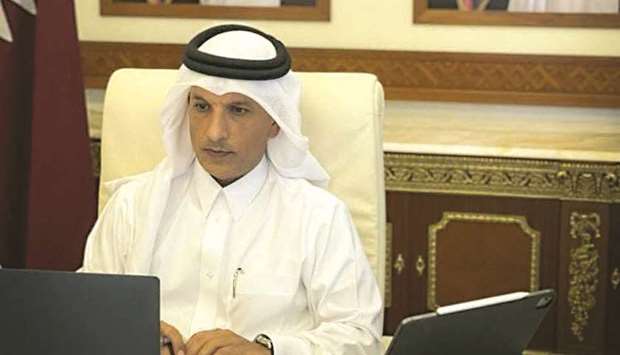
Qatar participated in the 106th session of the Economic and Social Council at the ministerial level, which began on Thursday at the headquarters of the General Secretariat of the Arab League, in the presence of the Arab ministers of economy, trade, and finance. HE the Minister of Finance Ali Shareef al-Emadi represented Qatar in the session, which was held via video conferencing. The meeting will discuss several topics presented to Arab ministers, members of the Economic and Social Council, foremost of which are the economic and social issues of the Arab League at the level of the next Arab summit, supporting for the Palestinian economy, the 2020 unified Arab economic report, and the unified Arab speech of the joint annual meeting of the International Monetary Fund and the World Bank for 2020. Also, the ministers will inform the council about the reports and decisions of ministerial councils and specialised Arab committees. In a statement before the meeting, head of the Social Affairs sector at the Arab League, ambassador Haifa Abu Ghazala, said that the agenda presented to the ministers was discussed by the Economic and Social Council's committees and senior officials on Wednesday, where they raised a set of draft decisions in preparation for consideration by the ministers. She emphasised that the issue of dealing with the effects and consequences of the coronavirus (Covid-19) pandemic from various social, health, humanitarian, and economic aspects is one of the items that will be discussed at the council meeting, as well as supporting Palestine's efforts to contain the pandemic and its social and humanitarian repercussions. She added that the council will also review several measures within the framework of the full Arab support for Lebanon and solidarity with it, to overcome the effects of the Beirut Port disaster that occurred on August 4, including economic, social, and development support to enable it to overcome the repercussions of this disaster.

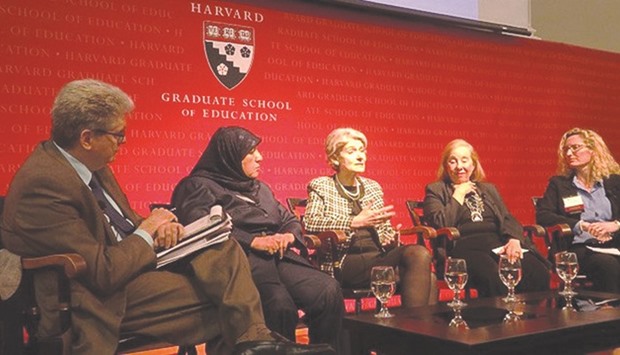
WISE Prize for Education Laureate Dr Sakena Yacoobi during a panel discussion.
Qatar

WISE winner calls for more investment in education

WISE Prize for Education Laureate Dr Sakena Yacoobi has called for more social investment in education “as the only path to peace, prosperity, and moderation in troubled regions.” Yacoobi made the call in a keynote address delivered at a Harvard Graduate School of Education event, which considered “Education in Vulnerable Regions.” The “Askwith Forum,” a series of public lectures, formed part of the Harvard Graduate School of Education’s Harvard Advanced Learning Initiative, “Deep Dive.” The programme facilitates the international discussion of education and gender equality issues, and, serving as a platform for cross cultural understanding, reflects the aspirations of the World Innovation Summit for Education (WISE), an initiative of Qatar Foundation for Education, Science, and Community Development (QF). Yacoobi, a US citizen and founder of the Afghan Institute of Learning, was presented with the WISE Prize for Education at the summit in November 2015. For over 20 years, she has worked to bring education, as well as healthcare services to the most vulnerable under extreme conditions of war, displacement, and oppression during Taliban rule in her native country.   In her speech, Yacoobi spoke about her work in Afghanistan, including establishing a hospital and a high school. She also discussed “The Afghan Institute of Learning,” which is under her current leadership, and plans for the creation of a university for women in Afghanistan. Dr Irina Bokova, director-general, Unesco, also spoke at the event and discussed the issue within the context of international development efforts. She emphasised the need for societies to hold governments responsible for ensuring that children receive a secondary education. She pointed out that middle income countries have the greatest gender inequalities regarding access to education, and that these countries can well afford greater investments. A panel discussion followed the speakers’ address and included members of the Harvard Advanced Learning Initiative faculty. The participants discussed the need to close gender inequalities, and ways to scale innovative solutions in various contexts around the world.

Gulf Times
Qatar

Qatar Participates in High-level Meeting to Commemorate the Anniversary of Adoption of Durban Declaration and Programme of Action

The State of Qatar participated in the High-level Meeting to Commemorate the 25th Anniversary of the Adoption of the Durban Declaration and Programme of Action, held on the sidelines of the 81st session of the United Nations General Assembly in New York.HE Director of the International Organizations Department at the Ministry of Foreign Affairs Sheikha Hanouf bint Abdulrahman Al-Thani represented the State of Qatar at the meeting.During the meeting, Her Excellency reaffirmed the State of Qatar’s full support for the Durban Declaration and Programme of Action, as well as its commitment to promoting human rights, equality, and nondiscrimination, and to strengthening the values of tolerance, coexistence, and respect for cultural diversity.Her Excellency also affirmed that Qatar would continue its national and international efforts to combat discrimination and promote inclusion and community participation. She highlighted key related initiatives and legislation, as well as Qatar’s hosting of the Second World Summit for Social Development in Doha in 2025 and its contribution to international efforts to address inequalities and exclusion and strengthen social protection.Her Excellency further reaffirmed Qatar’s commitment to continuing its support for international efforts aimed at the full and effective implementation of the Durban Declaration and Programme of Action. 

Gulf Times
Qatar

Qatar attends Arab justice ministers council in Cairo

Qatar participated in the 41st session of the Arab Ministers of Justice Council, held Wednesday at the headquarters of the Arab League in Cairo. The Qatari delegation was led by His Excellency Minister of Justice and Minister of State for Cabinet Affairs Ibrahim bin Ali bin Issa al-Hassan al-Mohannadi. In his speech, he reaffirmed Qatar's commitment to strengthening Arab legal and judicial co-operation. He highlighted Qatar's initiatives aimed at building sustainable justice for future generations, focusing on investment legislation, emerging technologies, governance, and dispute resolution mechanisms. The minister emphasised the role of the judicial sector in supporting investment and praised the Doha Political Declaration adopted at the Second World Summit for Social Development 2025 in Doha as a roadmap for promoting social justice, peace, security, and human rights. **media[381108]** His Excellency al-Mohannadi also expressed Qatar's gratitude to the Arab League and national committees on international humanitarian law for their collaboration in developing Qatar's proposal to establish a permanent Arab committee on international humanitarian law. He described the initiative as a milestone in Arab joint action, giving the Arab world a unified legal voice in defending justice and human dignity in conflict zones. During the session, the council discussed a range of Arab legal and legislative initiatives, including the Arab convention on combating terrorism, the Arab convention on combating money laundering and financing of terrorism, the Arab convention on cybercrime, and the Arab anti-corruption convention. The meeting also reviewed draft Arab model laws, including legislation on hate speech, protection and assistance for displaced persons, refugee status in Arab states, and the protection of children from recruitment in armed conflicts. Ministers additionally discussed measures to enhance Arab co-operation, including co-ordination between the Arab Ministries of Justice and Interior, the creation of an Arab excellence award in applied legal sciences, and the review of recommendations from the 74th meeting of the Arab Ministers of Justice Executive Office.

Gulf Times
Business

Qatar leads in digital infrastructure and sustainability innovation: DCO’s DEN 2025 report

Qatar ranks among the top countries globally for broadband quality, data infrastructure, digital government services, and innovation, according to a report by Digital Co-operation Organisation (DCO). For example, the report notes that Qatar recorded a higher number of Internet exchange points, improvements in online banking services, and growth in innovative companies. Digital Co-operation Organisation, which is an international organisation dedicated to advancing inclusive and sustainable digital economies, launched the Digital Economy Navigator 2025 (DEN 2025) during the Second World Summit for Social Development in Doha. The report highlights Qatar’s world-class digital infrastructure, advanced governance frameworks, and pioneering investments in sustainability technologies, reaffirming its role as one of the region’s most future-ready digital economies. Qatar’s early adoption of 5G networks and investment in green, energy-efficient data centres position it as a leader in sustainable digital innovation. The report also emphasises Qatar’s commitment to digital skills development and innovation ecosystems, including improved access to online learning resources, digital training at work, flexible working arrangements, and digitally enabled access to employment opportunities. These efforts reflect Qatar’s national digital strategy and its broader vision to diversify the economy and accelerate sustainable growth. Covering 80 countries representing 94% of global GDP and 85% of the global population, the DEN 2025 is the most comprehensive benchmark of digital economy maturity worldwide. Drawing on 145 indicators and insights from more than 41,000 respondents, it provides policymakers, businesses, and development partners with a detailed view of how nations are using technology to drive inclusive, sustainable growth. DCO Secretary-General Deemah al-Yahya said DEN 2025 illustrates both the progress already made and the opportunities ahead. Commenting on DEN 2025, she said: “The Digital Co-operation Organisation envisions a future where every nation can participate meaningfully in the digital economy, not only as consumers of digital services, but as creators and innovators.” She added that collective effort will be essential to turn this potential into reality. “DEN 2025 is a reminder that our collective progress depends on decisive action. We must move from measuring digital transformation to accelerating it, with governments adopting agile and forward-looking policies, businesses investing with purpose and responsibility, and societies embracing innovation as a force for inclusion. “The cost of inaction is exclusion, but the rewards of collaboration are limitless. If we work together across borders, sectors, and communities we can shape an inclusive, trusted, and sustainable digital future where every nation has the opportunity not only to participate, but to lead.” The DEN 2025 shows that digitalisation is creating new opportunities for growth across all income levels. Internet access now reaches more than four in five people globally, and lower-middle-income countries are recording the fastest progress. The report estimates that connecting underserved communities could enable more than 1.3bn people to benefit from digital banking and online services, enhancing inclusion and economic resilience. Artificial intelligence continues to advance rapidly, and the new “Digital for Sustainability” pillar highlights how innovation can support more efficient, environmentally responsible economies. The DCO notes that Qatar’s leadership in green digital infrastructure and sustainable policy integration demonstrates how advanced economies can balance technological ambition with environmental stewardship. The DCO encourages policymakers, the private sector, and innovation stakeholders to use the DEN 2025 as a framework for collaboration and shared progress. Qatar’s achievements in connectivity, governance, and sustainability illustrate how long-term planning and investment can build resilient, inclusive digital economies.

Gulf Times
Qatar

A global youth townhall on digitally powered economic journeys

The Education Above All (EAA) Foundation, a global education and development organisation, through its Silatech Programme, in partnership with the International Labour Organisation (ILO), successfully hosted yesterday a global youth townhall titled “Digitally Powered Economic Journeys.”The townhall brought together more than 500 participants, including youth, development practitioners, and partners from across the globe to take stock of youth economic empowerment programming, with a lens of exploring the impact of the digital era on youth employment, including self-employment. The townhall explored how the digital era is reshaping skills, employment, and economic opportunities for youth worldwide, with a particular focus on marginalised youth. Participants shared experiences, lessons, and recommendations on how technology can be harnessed to expand decent work and inclusive growth, especially in the Global South.The session examined the impact of rapid digital transitions and technological advancements on youth employability, entrepreneurship, and access to livelihood opportunities. Discussions also addressed the need for youth economic empowerment programmes to be designed in light of the impacts of technology and AI on the future of work. Within this context, ILO delivered a presentation on the progress made towards Sustainable Development Goal 8 on Decent Work and Economic Growth.Mr Mana Al Ansari, Executive Director of EAA’s Silatech Programme, delivered the opening remarks, emphasising the need for partnerships that prepare young people for a digital future.“The digital era is impacting the rules of work and opportunity. Our collective responsibility is to ensure that young people, particularly those in fragile and underserved contexts, are equipped with the skills needed to respond to these rapidly changing times and to thrive in this new economy. Through forums like this, we listen to youth voices and translate their insights into action that advances inclusive and sustainable employment,” he said.Mr. Francesco d’Ovidio, Director of the ILO Office in Qatar, added a quote:“Digital transformation holds great potential to create new employment opportunities for young people - but only if it is decent, inclusive, and rights-based. As technology reshapes labour markets, our collective task is to ensure that young people globally are able to thrive in this changing world of work.”The townhall started with several keynote speeches from youth beneficiaries of EAA and ILO programs, as well as from key partners including Qatar Foundation (QF) Alumni. The highlight of the townhall was a moderated discussion that provided youth from 58 countries a platform to reflect on the opportunities and challenges of the digital era on employment prospects and the future of work. The townhall focused on hearing youth’s voices and recommendations for more effective programming and youth employment policies.“As a refugee, I often felt that opportunities were limited, so I saw this training as a real chance to build skills that could open new doors for me.” Seba Ajaj, a young beneficiary who participated in the ILO Job Search Clubs programme implemented in Jordan under the PROSPECTS Partnership programme funded by the Government of the Kingdom of the Netherlands.Closing the event, the organisers reaffirmed that key takeaways from the Youth Townhall will contribute to EAA’s and ILO’s strategic high-level event on taking stock of youth economic empowerment programming at the upcoming Second World Summit for Social Development to be held in Doha in November 2025, where youth perspectives will inform discussions on employment and decent work.For more information about EAA Foundation, visit www.educationaboveall.org

Gulf Times
Qatar

Prime Minister and Minister of Foreign Affairs meets UN Deputy Secretary-General

HE Prime Minister and Minister of Foreign Affairs Sheikh Mohammed bin Abdulrahman bin Jassim Al-Thani met today at the Amiri Diwan with Deputy Secretary-General of the United Nations Amina Mohammed, who is visiting the country.During the meeting, the two sides discussed cooperation relations between the State of Qatar and the UN and ways to support and enhance them. They also discussed the State of Qatar's ongoing preparations to host the second World Summit for Social Development 2025 (WSSD2), in addition to discussing the Doha Programme of Action for the Least Developed Countries 2022-2031.During the meeting, HE Prime Minister and Minister of Foreign Affairs expressed the State of Qatar's aspiration to welcome participants from all around the globe in Doha, as well as to achieve tangible outcomes that contribute to building a better world. His Excellency also expressed Qatar's aspiration to strengthen cooperation with the United Nations.

Gulf Times
Qatar

Challenge 22 projects set for next phase of development

Several projects that were devised within Qatar Foundation (QF) and won the Challenge 22 awards will be taken up for the next phase of development.According to Telegraph, Qatar Foundation’s fortnightly newspaper, Challenge 22 has selected six ideas to receive expert mentoring and to be taken to the prototype stage, and be showcased internationally. Three of them are innovations from QF. Challenge 22 was launched by the Supreme Committee for Delivery & Legacy in January 2015, with Qatar National Research Fund (QNRF), a research funding entity under QF, as a strategic partner.“With the potential for global impact through the 2022 FIFA World Cup in Qatar, the winning projects will be taken to the next phase of development, supported by QF,” the paper said.Challenge 22, an annual award programme, is designed to ensure that the global sporting showpiece creates a lasting legacy for Qatar and the region by inspiring and challenging innovators to explore ways of enhancing the tournament and other major global events, while intensifying a culture of discovery, economic diversification, and entrepreneurship. Qatar Science & Technology Park (QSTP), Qatar Computing Research Institute( QCRI), Qatar Environment & Energy Research Institute, all research and development entities under QF  and the World Innovation Summit for Health, a QF initiative, support the award through their expertise, networks, and facilities, as challenge partners. The winning innovations from Qatar Foundation include FitPet, a health promotion app developed by Dr Ingmar Weber, Senior Scientist, Social Computing, QCRI, and Dr Yelena Mejova, Scientist, Social Computing, QCRI, alongside two partners from iLoveQatar.net. Dr Khaled Saoud, assistant professor of physics, Virginia Commonwealth University in Qatar, won for his submission, ‘Scalable Synthesis of Expanded Polystyrene’, outlining a scientific method for improving the sustainability of stadia. Meanwhile, a team from Carnegie Mellon University in Qatar, led by Dr Maher Hakim, associate professor, was among the winners after unveiling ‘Tamm’, a platform to improve the tournament experience for fans, by connecting visitors with volunteer residents. “Challenge 22 has “recognised emerging talents that we hope will inspire the next generation of innovators from the Middle East”, said Hamad al-Kuwari, managing director, QSTP. “Throughout the second phase of the award, QSTP will be providing guidance, house mentoring sessions, and workshops, in addition to offering year-long accelerator programmes for the winning ideas. We look forward to working with the winners in phase two of the project that will bring their innovative ideas to life.”