Search - World Summit for Social Development

Friday, October 16, 2026 | Daily Newspaper published by GPPC Doha, Qatar.

Search Results for "World Summit for Social Development" (360 articles)

All words
OPTIONAL
Qatar

First Leaders’ Meeting of the Global Alliance Against Hunger and Poverty begins in Doha

Qatar, in partnership with the UN, hosted the First Leaders’ Meeting of the Global Alliance Against Hunger and Poverty Monday, ahead of the second World Summit for Social Development 2025. The event brought together more than 350 delegates representing nearly 90 countries. Speaking at the opening, HE the Minister of State for International Co-operation, Dr Maryam bint Ali bin Nasser al-Misnad, said the meeting reflects Qatar’s long-standing commitment to development for peace and stressed that ending hunger and poverty is a shared global responsibility requiring international solidarity and partnerships based on justice and equality. HE Dr al-Misnad welcomed participants to what she called their second home, Qatar, and praised Brazil’s initiative to launch the alliance during its G20 presidency, highlighting the efforts of co-presidents in turning the initiative into a practical platform to serve humanity. She noted that over 700mn people worldwide still live in extreme poverty, with the effects of conflict, climate change, debt accumulation, and weak development threatening progress in many developing countries. She also welcomed the adoption of the Sevilla Commitment during the Fourth Financing for Development Conference, emphasising the need to reform international development systems and create a fairer, more resilient global economic environment. HE Dr al-Misnad outlined Qatar’s efforts under its National Vision 2030, including building a diversified, knowledge-based economy, investing in human capital, strengthening social protection and healthcare, and environmental preservation. She highlighted Qatar’s partnership with the UN in implementing the Doha Program of Action 2022-2031, aimed at empowering the least developed countries to transition toward sustainable development. As part of these efforts, the Qatar Fund For Development signed agreements with the UN Office of the High Representative for the Least Developed Countries to finance two major projects: building resilience and establishing a food storage system to tackle food insecurity. Dr al-Misnad emphasised Qatar’s belief in the UN as a central platform for coordinating multilateral efforts and reiterated the country’s commitment to working with all partners for a world free from hunger and poverty, stressing that through partnership, investing in people, and deep solidarity, no one will be left behind, and peace and development will be shared rights for all peoples. Meanwhile, UN General Assembly President, Annalena Baerbock, described global hunger as an “unacceptable humanitarian tragedy” and warned that rising global temperatures could push an additional 189mn people into hunger if temperatures rise by 2C, or up to 1.8bn if the rise reaches four degrees. She called on the international community to act urgently, noting that 673mn people suffered from hunger in 2024, while 2.3bn faced varying degrees of food insecurity. Brazilian Minister of Social Development Wellington Dias, co-president of the alliance, said the initiative has restored hunger and poverty to the global agenda, highlighting Brazil’s success in lifting 24.4mn people out of hunger and 7.6mn out of poverty since 2023 through evidence-based policies and inclusive social and economic initiatives. For her part, Spanish Secretary of State for International Co-operation, Eva Granados, also a co-president, praised the alliance as a model for international co-operation, noting that member countries lead with their national priorities while the international community provides co-ordinated support. She stressed Spain’s commitment to combating hunger with a rights-based, gender-responsive approach and announced plans to launch a new co-operation strategy on the right to food next year. The alliance has, within a year of its launch, fostered new partnerships in countries including Ethiopia, Haiti, Kenya, Palestine, and Zambia, combining international financial institutions, UN agencies, donors, and NGOs to implement integrated national programmes addressing hunger and poverty through social protection, agriculture, nutrition, and climate adaptation under the Fast Track initiative launched nine months ago.

Gulf Times
Qatar

Prime Minister meets visiting leaders

HE the Prime Minister and Minister of Foreign Affairs Sheikh Mohammed bin Abdulrahman bin Jassim al-Thani met Monday with Egyptian Prime Minister Dr Mostafa Madbouly, who is in Doha to attend the Second World Summit for Social Development. The meeting discussed bilateral relations and explored ways to strengthen co-operation between the two countries. They also exchanged views on developments in the Gaza Strip and the occupied Palestinian territories in light of the ceasefire agreement in the Strip, in addition to a range of issues of shared concern. HE Sheikh Mohammed stressed the need for concerted regional and international efforts to ensure the full implementation of the agreement, paving the way towards achieving lasting peace and stability in the region. HE the Prime Minister and Minister of Foreign Affairs, Sheikh Mohammed bin Abdulrahman bin Jassim al-Thani met Monday with the visiting Commander of the US Central Command Admiral Charles Bradford Cooper.**media[377247]**The meeting discussed the close strategic relations between Qatar and the US and ways to support and strengthen them, primarily in the areas of military and defence co-operation. The two sides also discussed a host of topics of common interest. HE the Prime Minister and Minister of Foreign Affairs Sheikh Mohammed bin Abdulrahman bin Jassim al-Thani met Monday with Yemen’s Prime Minister, Salem Saleh bin Braik, who is visiting Qatar to participate in the World Summit for Social Development.**media[377246]**The meeting dealt with bilateral relations and ways to bolster them; the latest developments in Yemen; and host of topics of mutual interest. During the meeting, HE Sheikh Mohammed affirmed Qatar’s unwavering support for Yemen and its continued assistance to its brotherly people until they achieve their aspirations for security, stability, and development. HE the Prime Minister and Minister of Foreign Affairs Sheikh Mohammed bin Abdulrahman bin Jassim al-Thani met Monday with the visiting Jordanian Prime Minister and Minister of Defence Dr Jafar Hassan.**media[377248]**The meeting discussed bilateral relations and ways to support and strengthen them. They also discussed the developments in the Gaza Strip and the occupied Palestinian territories, in light of the ceasefire agreement in the Strip, besides topics of common interest. HE Sheikh Mohammed stressed the need for concerted regional and international efforts to ensure the full implementation of the agreement, paving the way for achieving sustainable peace and the desired stability in the region.

Gulf Times
Qatar

Amir, King Philippe explore new horizons in Qatar-Belgium ties

His Highness the Amir Sheikh Tamim bin Hamad al-Thani met at the Amiri Diwan on Monday with King Philippe of the friendly Kingdom of Belgium on the occasion of his visit to Qatar to participate in the Second World Summit for Social Development, which will begin in Doha Tuesday.At the outset of the meeting, His Highness the Amir welcomed the king of Belgium and his accompanying delegation and underscored the importance of the strong ties between the two countries across a variety of fields.**media[376830]**His Highness further underlined that Qatar looks forward to strengthening these relations and elevating them to new heights for the joint interests of the two friendly nations, expressing his thanks to the king for responding to the invitation to participate in the summit.For his part, the king of Belgium expressed his thanks to His Highness the Amir for the warm welcome and the invitation to participate in the summit, emphasising his country’s keenness to deepen the relations of friendship and co-operation with Qatar and advance them in all fields.The king further lauded His Highness the Amir’s role and Qatar’s supportive efforts for peace in the region and the world.**media[376832]**During the meeting, they discussed the bilateral relationship between the two friendly nations and ways to enhance it in multiple areas, key regional and global developments, and a range of subjects of shared interest.HE the Chief of the Amiri Diwan Abdullah bin Mohammed bin Mubarak al-Khulaifi, HE the Minister of State at the Ministry of Foreign Affairs Dr Mohammed bin Abdulaziz bin Saleh al-Khulaifi, alongside a number of high-ranking officials, attended the meeting.Attending from the Belgian side were Minister of Consumer Protection, the Fight against Social Fraud, Persons with Disabilities and Equal Opportunities, Rob Beenders, along with members of the official delegation accompanying the king.His Highness the Amir and King Philippe held a bilateral meeting during which they discussed a range of issues of mutual interest on the regional and global stages.

Gulf Times
Qatar

Tomorrow marks the launch of the New Shura Council Session, ushering in a new chapter in its 50-year journey

A new session in the Shura Council's historic journey begins tomorrow, Tuesday, marking another milestone in more than five decades of national parliamentary development. The Council has consistently enjoyed the support and guidance of the wise leadership, reflecting its vital legislative and oversight role and its close cooperation with the esteemed government in advancing Qatar's renaissance, sustainable development, and the aspirations of its citizens for a dignified and prosperous future.The next phase of the Shura Council's successful journey — which spans over half a century — begins with the first regular session of the second legislative term, corresponding to the 54th annual session. This new session will be held with a developmental vision and comprehensive institutional preparedness, in line with the Council's evolving role in national governance.His Highness the Amir Sheikh Tamim bin Hamad Al-Thani issued Amiri Decision No. 42 of 2025 on October 9, appointing members of the Shura Council. The decision took effect from the date of issuance and was published in the Official Gazette.On the same day, His Highness the Amir received Their Excellencies the members of the Shura Council at the Amiri Diwan, where His Highness the Amir welcomed them and wished them success in performing their duties. HH the Amir emphasized the Council's role in supporting the State's efforts to achieve sustainable development and to further the comprehensive renaissance witnessed by Qatar across all fields.For their part, the members of the Shura Council expressed their sincere thanks and appreciation to HH the Amir for his continued trust and support. They affirmed their commitment to work with national responsibility and dedication to serve the homeland and citizens, in line with Qatar's vision and the aspirations of its people for continued progress and prosperity.The Shura Council, as formed under HH the Amir's decision, consists of 49 members. Article 77 of the country's Permanent Constitution was amended to state that: "The Shura Council shall consist of no fewer than forty-five members, and the appointment of members shall be issued by an Amiri Decision."The new session follows the constitutional amendments that were unanimously approved by the Council last November and subsequently endorsed through a popular referendum, which saw an approval rate of 90.6% of valid votes. This milestone represents a genuine embodiment of national unity, the strengthening of the social fabric, and the consolidation of the principles of Shura deeply rooted in Qatari society, paving the way for continued growth and achievement.The 2024 constitutional amendments stand among the most significant accomplishments of the previous legislative term. They included several amendments, additions, and deletions to the Constitution, all designed to serve the State's supreme interests and reinforce the values of justice, equality, and civic responsibility among all members of Qatari society.Among the major achievements of the Shura Council in its previous term was the approval of its internal regulations, which govern its operations, define procedures for sessions, decision-making, and committee work, and enhance the Council's overall efficiency.The new internal regulations, consisting of 244 articles divided into eight chapters, bolster the Council's legislative and oversight authority and define the mechanisms for exercising its powers in accordance with the Constitution and relevant laws.The first legislative term (2021-2025) witnessed extensive parliamentary activity, including 138 regular sessions, two extraordinary sessions, 312 committee meetings, the discussion of 84 draft laws, 22 requests for discussion, 25 proposals, 21 hearings, and 185 internal and external parliamentary engagements, as well as 417 bilateral meetings.These figures reflect the substantial institutional efforts of the General Secretariat and the Council's expanding role in legislation, oversight, and parliamentary diplomacy.Meanwhile, the General Secretariat of the Shura Council has finalized all technical and organizational preparations for the launch of the first regular session of the second legislative term tomorrow. The preparations included equipping the main hall and meeting rooms with the latest technology, ensuring the aesthetic and functional readiness of the Council's facilities, and confirming full technical and logistical preparedness.In this regard, His Excellency Secretary-General of the Shura Council Nayef bin Mohammed Al Mahmoud stated in a meeting held on Sunday with representatives of the local media that the opening session of the new term will be followed by a procedural session, including the swearing-in and the reading of Amiri Decree No. 98 of 2025, inviting the Shura Council to convene its first regular session of the second legislative term, corresponding to the 54th annual session. The session will then proceed with the election of the Speaker and Vice-Speaker.He added that the General Secretariat has tested all technical and logistical systems, and that legal and technical teams are fully ready to ensure the smooth conduct of the session.His Excellency Al Mahmoud emphasized that, with more than fifty years of experience, the Council is fully prepared for this new phase and continues to operate with high professionalism and discipline to ensure a successful start befitting its prestigious stature and legislative and oversight responsibilities.Thanks to its active participation in various regional and international parliamentary forums, the Shura Council has attained a prominent position and enjoys wide respect and recognition. It currently holds several key positions, including membership in the Executive Committee of the Inter-Parliamentary Union (IPU) — the highest UN-affiliated parliamentary body — as well as membership in several of its standing committees.His Excellency Al Mahmoud highlighted that the General Secretariat plays a vital role in supporting Council members and enabling them to effectively perform their parliamentary and diplomatic duties. He underlined that external parliamentary work has evolved beyond symbolic participation to become a strategic activity aimed at achieving tangible outcomes that serve national interests and strengthen the Council's international partnerships.As a result of its active role in parliamentary diplomacy, the Shura Council has established distinguished relations with counterparts in other countries. These ties, reinforced through mutual visits between the general secretariats, enable the exchange of parliamentary experiences and expertise, including legal and technical knowledge.In this context, one of the most prominent upcoming parliamentary events to be hosted by the Council is the Parliamentary Forum, which will be held in collaboration with the Inter-Parliamentary Union (IPU) on the sidelines of the Second World Summit for Social Development in Doha this November, in cooperation with the United Nations. Additionally, the Council will host the meetings of the Asian Parliamentary Assembly in December and will also participate in the summit of heads of GCC parliaments, which will later be hosted by the Kingdom of Bahrain.Such relationships, mutual visits, and various parliamentary events reflect the growing international confidence in the Shura Council's experience, its leading institutional role, and its prominent presence at both the national and international levels, guided by the visions and messages contained in the speeches delivered by His Highness the Amir Sheikh Tamim bin Hamad Al-Thani during the opening of the Council's sessions.As part of its continuous modernization and development efforts, the General Secretariat of the Shura Council has begun implementing a digital transformation initiative within its comprehensive institutional plan and its 2025-2030 strategy, which is set to launch at the end of this year.The General Secretariat has developed this strategy based on Qatar National Vision 2030 and the key messages from the speeches delivered by His Highness the Amir Sheikh Tamim bin Hamad Al-Thani during the openings of the Shura Council's sessions. The aim is to enhance efficiency, digitize procedures, develop human capacities, and improve administrative and technical performance in line with the aspirations of the coming phase.The important and distinguished role-played and consistently upheld by the Council in promoting the image of the State of Qatar at regional and international forums is widely recognized. The Council also articulates the country's steadfast positions and defends issues of concern to the Arab and Islamic nations, foremost among them the Palestinian cause.Throughout its successive sessions, the Council has demonstrated its vital legislative role in serving the interests of the Qatari people and meeting their aspirations through the body of legislation and laws it discusses, approves, and amends within the framework of the rule of law and in alignment with Qatar National Vision 2030 and the Permanent Constitution of the State of Qatar.Building on all these achievements, members will continue to carry out their duties in the new legislative session, keeping in mind the interests of citizens and the higher interests of the nation, under the wise leadership of His Highness the Amir Sheikh Tamim bin Hamad Al-Thani.The history of the Shura Council dates back to 1972, when the amended Interim Basic Law was issued on April 19 of the same year to regulate the structures and institutions of the modern state, including the Shura Council, which initially had 20 members.

Gulf Times
Qatar

Qatar affirms its policies, strategies work to empower women in all fields

The State of Qatar affirmed that, through its various sectoral policies and strategies, it has worked to empower women and provide them with full opportunities in all fields through an integrated approach that works to eliminate all forms of discrimination against women and girls, with an equal focus on social and economic aspects. This came in the statement of the State of Qatar, delivered by First Secretary at the Office of the Minister of State at the Ministry of Foreign Affairs Khalid Saeed Al Muqbil, during his participation in the interactive dialogue with the Special Rapporteur on the right to development, item 3, within the framework of the 60th session of the Human Rights Council in Geneva. He considered that the full and effective participation of women in all aspects of life, on an equal footing, is a fundamental and effective element for achieving development, and explained that while the United Nations Declaration on the Right to Development prohibits discrimination on the basis of gender, Sustainable Development Goal 5 specifically emphasizes gender equality and the empowerment of women as a fundamental global goal for achieving sustainable development. He pointed out that Qatari women, at the national level, play a pivotal role in comprehensive development, and enjoy government support that focuses on empowering them in various economic, social, and political sectors, within the framework of Qatar National Vision 2030, which aims to build a sustainable society capable of achieving economic growth and social well-being. He highlighted the State of Qatar's hosting of the Second World Summit for Social Development in Doha in November 2025, expressing hope that this important global event will constitute an opportunity to enhance the full and equal participation of women in efforts to achieve and sustain development. The First Secretary at the Office of the Minister of State thanked the UN Special Rapporteur on the right to development, Surya Deva, for his valuable efforts in carrying out his mandate.

Gulf Times
Qatar

Qatar hosts over 80 major events a year: official

More than 80 major international events now take place in Qatar every year, across diplomacy, technology, sports, trade and culture. This was disclosed by Executive Director to the Permanent Committee for Organising Conferences (PCOC) Mubarak Ajlan Mubarak al-Kuwari, who noted that many events are strategically co-ordinated by the PCOC, aligning global conversations with Qatar’s National Vision. Speaking to Qatar News Agency (QNA), al-Kuwari said that these events have made Qatar a venue for dialogue and innovative solutions, adding that when people think of Qatar today, they no longer picture just a small desert nation in the Gulf, but see a connectivity hub that brings the world together and a trusted international partner. He noted that the Doha Forum and Qatar Economic Forum brought together more than 8,500 people from over 160 countries. Almost half of them came from abroad to exchange ideas on everything from global development to humanitarian crises. He added that Web Summit Qatar 2025 saw more than 25,000 participants, 1,520 startups, and hundreds of investors and companies gathered in Doha, transforming the capital into a livewire of innovation and tech energy. He highlighted Qatar’s role as a trusted international partner. From high-level GCC summits to interfaith dialogues and ministerial meetings, Qatar continues to be the place where the region, and increasingly the world, comes to talk, listen, and collaborate. “In less than a decade, Qatar has evolved into a thriving international hub, and at the heart of this transformation lies a powerful force: events. From cultural festivals to global summits, Qatar’s deliberate investment in hosting meaningful, world-class gatherings is reshaping its place on the map, and in the minds of millions,” al-Kuwari said. He added that the past year alone saw over 5mn international visitors arrive in Qatar, marking a 25% jump from 2023. Nearly 10mn hotel room nights were sold, a record that speaks to the country’s growing magnetism. And 2025 is already off to a strong start, with 1.5mn international visitors in just the first quarter, with average hotel occupancy hitting 71%. He noted that visitors were arriving from across the Gulf, Europe, Asia and beyond, drawn by the country’s relentless rhythm of events. He said that none of this would be possible without the deep foundation Qatar has built over the years. Starting with Hamad International Airport, repeatedly named one of the world’s best, connects Doha to more than 170 cities. Inside the country, the sleek Doha Metro and network of highways make it easy for visitors to get where they need to go, whether it’s a business summit at a state-of-the-art convention centre or a cultural gathering in Katara. Al-Kuwari described all the factors feeding into Qatar’s hosting of the events were a winning formula. He pointed to data from the World Travel & Tourism Council (WTTC), 51% of international visitors in 2025 came by air, 34% by land, and 15% by sea, a testament to the country’s multi-access strategy. He noted that Qatar has built not just connections, but confidence: this year, Doha was ranked the second safest city in the world, giving both event organisers and tourists peace of mind. He said that none of this momentum came out of nowhere, as Qatar proved its hosting credentials on the world’s biggest stage during the FIFA World Cup Qatar 2022, and that legacy continues to ripple outward. The numbers tell a compelling story: Qatar’s events industry is expected to grow by over 11% annually, reaching nearly $4.65bn by 2032. The WTTC projects the sector will contribute QR124.2bn to the economy in 2025 alone, supporting 350,000 jobs, and nearly half a million by 2035. International visitor spending is expected to hit QR98.8bn this year, and QR144.7bn within a decade. Looking ahead, al-Kuwari stressed that Qatar was doubling down. Later this year, it will co-host the Second World Summit for Social Development with the UN, an event that only comes once every 30 years. He said that such a milestone alone would be a defining moment for most countries. But for Qatar, it’s part of a packed calendar that also includes the T100 Triathlon World Championship Final (through 2030), the FIFA Arab Cup Qatar 2025, and the high-energy return of the Visit Qatar E1 Grand Prix of Electric Boats. “And alongside these headline events, there’s a vibrant mix of festivals, exhibitions, and sports tournaments that reflect Qatar’s growing identity as a place where cultures meet, and futures are shaped,” he added before concluding by saying that in a world searching for authenticity, Qatar is showing what’s possible when a country leads with “ambition, hospitality, and heart. The numbers prove it. The people feel it. And the world is watching.” (QNA)

Generation Amazing Foundation has highlighted its achievements in 2022
Qatar

 Generation Amazing executes development projects in 35 countries

“Seeing young people come together for a historic tournament, not only to support their teams, but to use football as a means of uplifting marginalised communities and building important life skills was amazing"Generation Amazing Foundation (GA), a Supreme Committee for Delivery & Legacy (SC) and FIFA World Cup Qatar 2022 human and social legacy project, reached several important milestones in 2022, apart from impacting the lives of 1mn young people around the world through its sports-for-development programmes.“Ever since Qatar won the bid to host the World Cup in 2010, GA has been driven by a fundamental belief that football can unlock the potential of young people around the world. We are delighted to have been able to keep our promise of reaching 1mn beneficiaries before the World Cup – and we will keep that energy moving forward into 2023,” said Nasser al-Khori, executive director, GA.Since being launched during Qatar’s bid to host the FIFA World Cup, GA has implemented football for development projects in 35 countries. GA operates in alignment with the United Nations Sustainable Development Goals, promoting inclusion and gender equality in its football for development programme, which teaches life skills, including communication, leadership, teamwork and organisation.In the days leading up to the FIFA World Cup Qatar 2022, GA also organised the 4th edition of the GA Festival, where over 400 youth from across the world took part in a first-of-its-kind international schools exchange programme.The GA festival saw the launch of ‘Goal 22: Football, Social Impact and Sustainability’ – a first-of-its-kind youth exchange project that aims to empower young people who are passionate about football. Youth representing the 32 qualifying countries for Qatar 2022 came together in Doha for a series of workshops and activities.“Seeing young people come together for a historic tournament, not only to support their teams, but to use football as a means of uplifting marginalised communities and building important life skills was amazing. In many ways, 2022 was a year that culminated all of our efforts over the last 12 years,” added al-Khori.Throughout the year, GA continued to support marginalised communities around the world through a number of initiatives. In June, GA took part in a roundtable event at the 26th Commonwealth Heads of Government Meeting in Rwanda, which will host a Generation Amazing Community Club. The club will feature sports facilities as well as a safe space for youth to interact with each other.A few months later in August, GA announced a collaboration with the UN Refugee Agency and the Education Above All Foundation to develop a “Football 4 Development Playbook” – a new toolkit that aims to support some of the world’s most vulnerable, forcibly displaced children.In September, GA kicked off the 77th UN General Assembly week in New York through a special ‘Scoring for the Goals’ projection on the iconic UNHQ building. The initiative showcased the power of sport to inspire climate action and gender equality – as part of GA’s commitment to UN Development Goals.Towards the end of the year, GA reached another milestone by expanding football for development programmes in schools across Jordan and Oman through a number of partnerships. GA also organised a panel on the vital role women play in shaping the future of sports for development at Concordia Annual Summit. The roundtable included experts and leaders in the field to discuss how mega sporting events can translate into substantive and sustainable social change for communities in need.

HE the Minister of Education and Higher Education Buthaina bint Ali al-Jabr al-Nuaimi
Qatar

Qatar hosts preparatory meeting for Transforming Education Summit 2022

Qatar hosted the informal virtual consultative regional meeting for the Arab region and West Asia, in preparation for the Transforming Education Summit 2022 slated to be held in New York next September, in co-operation with the Office of the Deputy Secretary-General of the UN and the Education Above All Foundation. This meeting came at Qatar's initiative, and as an affirmation of its true belief and continued commitment that quality education is a universal human right and a fundamental basis for achieving sustainable development. The meeting was chaired by HE the Minister of Education and Higher Education Buthaina bint Ali al-Jabr al-Nuaimi and its sessions were moderated by HE Permanent Representative of Qatar to the UN Sheikha Alya Ahmed bin Saif al-Thani, and CEO of the Education Above All Foundation Fahad al-Sulaiti, with the participation of UN Deputy Secretary-General Amina Mohamed, Lord Ahmad of Wimbledon, Minister for South and Central Asia, North Africa, the United Nations and the Commonwealth in the British Government, as well as ministers of education and representatives of ministers in 23 countries of the Arab region and West Asia. Welcoming the ministers and participating officials, HE al-Nuaimi said that Qatar is one of the strongest supporters of the Education Transformation Summit, which was called for by the UN Secretary-General. She pointed out that Qatar through this consultative meeting is seeking to prepare for the Preparatory Summit for the Transformation in Education to be held in Paris from June 28-30, and in preparation for the Education Transformation Summit slated to be held by the UN Secretary-General in New York on September 19. She underlined that Qatar's support for the Education Transformation Summit reflects the state's vision for education as one of the main pillars for developing a national, knowledge-based and diversified economy that provides a prosperous and secure future for Qatari citizens. She pointed out that Qatar National Vision 2030 is not confined to building a global educational system that provides exceptional opportunities for high-quality education and training, but its permanent constitution establishes education as a basic rule for achieving progress and social advancement. She indicated that Qatar's support for the right to education as a basis for development was not limited only to the interior, but also transcended to all parts of the world through the establishment of Qatar Foundation for the World Innovation Summit for Education (WISE) in 2009 under the patronage of Her Highness Sheikha Moza bint Nasser, Chairperson of the Board of Directors of Qatar Foundation for Education, Science and Community Development, in response to the need to revitalise education, provide a global platform for developing ideas, and develop solutions characterised by creativity and innovation to meet the challenges facing education, as well as the establishment of the Education Above All Foundation and its various activities around the world, to provide equitable and inclusive education as a basic right for all in more from 60 countries. HE the Minister of Education added that financing education is a top priority for Qatar's policy for development aid, and said that in line with the basic principle of the 2030 Agenda, which is "leaving no one behind", Qatar pays special attention to children of early age. Some 61mn primary schoolchildren are out of school due to numerous and complex barriers that impede their access to education, including extreme poverty, distance from schools, and ongoing conflict. She explained that over the past decade, Qatar, through the Qatar Fund for Development, has supported educational projects worth $1bn around the world. It also played a major role in providing educational aid by approving funding programs and annual funding, adding that, since 2013, the commitments of education programs in the Qatar Fund for Development amounted to more than $850mn, reaching more than 70 countries around the world.

abstract-1297926_1280
Opinion

A new vision for global co-operation

The world faces a range of serious threats – from exclusionary nationalism to great-power competition to growing inequality – that are preventing the international community from working together to solve other complex challenges, such as the distribution of Covid-19 vaccines and the accelerating pace of climate change. But global crises require global solutions, and with his highly anticipated report, Our Common Agenda, UN Secretary-General Antonio Guterres has outlined a new vision for multilateral co-operation. Written in response to the commitments endorsed at last year’s 75th UN General Assembly, Our Common Agenda is a clarion call for better and more inclusive global governance – the kind needed to build a greener, more equitable, and more secure future. Unusual in length, substance, and scope for a UN report, it offers a set of promising ideas for a bold, yet pragmatic, strategy for transformation. Guterres’s recommendations place a premium on accelerating the implementation of existing international agreements, beginning with the 2015 Paris climate agreement and the 2030 Agenda for Sustainable Development. Beyond these important initiatives to protect our global commons, establishing a new forum for managing them has become a moral and practical imperative. Guterres breaks new ground here by calling for the all-but-defunct UN Trusteeship Council to be repurposed to oversee the governance of the ocean, atmosphere, and outer space. This revitalised body also would be responsible for improving the delivery of public goods and responding to global threats. Moreover, Guterres has endorsed Club de Madrid’s proposal for a World Social Summit in 2025 to examine the causes of rising poverty, take stock of the developments that have contributed to income disparity, and encourage policies needed to ensure a more equitable society. The discussions at the summit should build momentum for the full implementation of the Sustainable Development Goals and ensure that post-Covid economic development is broad-based and green. A new global social contract to address poverty, growing inequality, and the worsening climate crisis will require the involvement of civil society, and Guterres is right to emphasise its role in achieving greater international solidarity. He also notes the need to support the growing contribution of citizens to collective action within and across borders. It is encouraging that Our Common Agenda proposes dedicated civil-society focal points within all UN entities. But more is needed. Two recent civil-society initiatives – We The Peoples Call for Inclusive Global Governance and Together First – proposed a senior-level UN Civil Society Envoy, reporting directly to Guterres. Such a position would ensure harmonisation, high-level reporting, and even greater system-wide access for civil-society organisations in UN decision-making and programming. Realising Guterres’s ambitious agenda for more inclusive, networked, and effective multilateralism requires an orchestrated strategy. The goal must be to rebuild and enhance citizens’ confidence in their common institutions, so that the global system can act more effectively on the major issues confronting the international community. Guterres’s initiative to convene a Summit of the Future at the start of the 78th General Assembly in September 2023 is a good start toward upgrading the global-governance architecture. As part of the preparations for the summit, we support the secretary-general’s call for a high-level advisory board led by former heads of state or government. The goal of this body would be to identify the global public goods most in need of governance improvements. The advisory board would also bring a balanced political perspective to the preparations. At the same time, consultations leading up to the summit could help refine Guterres’s proposals on an Agenda for Peace, a Global Digital Compact, a Declaration on Future Generations, and a new Emergency Platform for convening key actors worldwide to respond to complex crises. Each of these – as well as the related, far-reaching global-governance innovation proposals that we have been supporting – merit serious consideration by UN member states and together form the basis for an ambitious, two-year multi-stakeholder undertaking, culminating in the 2023 summit. We urge world leaders to pay attention to the secretary-general’s vision for the future and the related recommendation of 50 former government ministers and senior UN officials for “a dedicated intergovernmental process” to “strengthen and reform the legal and institutional machinery of the UN system.” By mobilising diverse actors worldwide – including policymakers, activists, academics, and businesspeople – the international community can ensure that the mandate to collectively shape “the future we want” adopted at last year’s General Assembly becomes a reality. – Project Syndicate • Maria Fernanda Espinosa, a former president of the UN General Assembly, is Co-Chair of the Coalition for the UN We Need steering committee. Danilo Turk, a former president of Slovenia, is President of the Club de Madrid, an organisation of more than a hundred former democratically elected presidents and prime ministers.

Gulf Times
International

Qatar’s diplomacy is grounded in peaceful solutions, global ties

 His Highness the Amir Sheikh Tamim bin Hamad al-Thani will lead Qatar’s delegation in the meetings of the 81st session of the United Nations General Assembly (UNGA), held at the UN’s headquarters in New York.He will deliver a speech at the opening session of the General Assembly today, addressing key issues, particularly those concerning regional and international affairs. The speeches delivered by HH the Amir before the UNGA embody a comprehensive vision that keeps pace with global transformations and reinforces the state’s steadfast stances on issues of peace, development, and partnership. They affirm that Qatar’s diplomacy is grounded in prioritising peaceful solutions, linking stability to development, and strengthening multilateral action and international partnerships.An analysis of the content of HH the Amir’s speeches during the past three sessions, to cite but one example, reveals a clear consistency in the pillars of Qatari policy, despite the changing nature of international crises and issues. HH the Amir’s personal presence at the General Assembly is of paramount importance. It enables Qatar to articulate its stances directly to world leaders, discuss issues of concern to the international community, and reaffirm its commitment to multilateral action. Furthermore, the appreciation shown for Qatar’s role by UN bodies, organisations, and international stakeholders reflects the broad scope of Qatari diplomacy in crisis management and its ability to engage with diverse parties in conflicts where opening traditional channels of dialogue proves difficult. Viewed through this lens, the pillars of peace, development, and partnership appear interconnected in Qatari policy: peace fosters the environment necessary for development, and development addresses some of the root causes of instability, while international partnerships provide the practical framework for translating stances and principles into initiatives and solutions. As the upcoming session of the General Assembly prepares to address increasingly complex crises and challenges that transcend borders, Qatar maintains its presence on the UN stage, guided by a vision affirming that conflict resolution does not begin with arms, that development is inseparable from stability, and that addressing global crises requires co-operation and partnerships that rise above narrow calculations. Qatar consistently upholds clear principles in its addresses to the UNGA, particularly support for dialogue and mediation, respect for state sovereignty, adherence to international law, and the rejection of selectivity in the application of the rules of international legitimacy. HH the Amir’s speeches at the United Nations have consistently called for dismantling the root causes of crises and armed conflicts.The Palestinian cause has long been a prominent feature of his speeches at the General Assembly. In his speech at the 78th session of the General Assembly in September 2023, HH the Amir expressed deep rejection of the double standards in the international stance regarding Palestinian rights, while reaffirming the Palestinian people’s right to establish an independent state based on the 1967 borders, with East Jerusalem as its capital, in accordance with international legitimacy resolutions and the two-state solution. “It is not acceptable for the Palestinian people to remain prisoners of the Israeli settler occupation arbitrariness, and the rejection of any just political solution in accordance with the principles of international legitimacy by successive Israeli governments,” he said in his speech. “You have to bear in mind that the failure of the international organisation to take actions against the occupation provided and continues to provide the opportunity for Israel to undermine the foundations of the two-state solution by means of settlement expansion until the occupation has brazenly taken the form of an apartheid regime in the broad daylight of the twenty-first century.” HH the Amir also emphasised the need for the international community to pay attention to unresolved and pressing Arab issues, where a lack of stability and the loss of a clear path toward peace have caused suffering for the region’s peoples. In this context, he addressed the situation in Syria and the violence in Sudan, stressing Qatar’s condemnation of crimes committed against civilians in Khartoum and the Darfur region, urging for the perpetrators to be held accountable, for the fighting to cease, for reason to prevail, and for civilians to be spared the consequences of the conflict. HH the Amir also stressed the necessity of meeting the aspirations of the Lebanese people and lifting them out of their economic and developmental crises, as well as resolving the crisis in Yemen and achieving a political settlement in Libya. Just as the call for peace and stability was a constant theme in his speech at the 78th UNGA session, the emphasis on sustained development, ensuring that peoples enjoy security and peace, was a fundamental element. “The rapid technical development and the growing reliance on it opens up unprecedented prospects for humanity to develop for the better,” HH the Amir said. “Undoubtedly, science and technology are crucial for increasing productivity and improving human life quality.” “It is incumbent on us to keep pace with the scientific and technical development and encourage it in our countries, and that barriers between countries in this field must be removed,” he added. Emphasising the principle of multilateral international partnership, HH the Amir’s address at the same session outlined a course of action to strengthen the role of diplomacy in countering calls for violence and war.“We must not forget that there are peoples around the world, especially in our region, who are absorbed by the present tragedies, and who consider their involvement in the issues which I have mentioned as a sort of luxury,” he stated. “If we truthfully constitute an international community, and not a merely diverse entities, it must be our duty to strive towards ending the injustice afflicting them, at least in accordance with what is required by the resolutions of this body, and entailed by international law.” HH the Amir cited a clear example of Qatar’s partnership with UN organisations in fostering peace and achieving development. “We affirm that we are proud of our partnership with the international organisation, and there is no clearer evidence of this than the opening of the ‘United Nations House’, which includes 12 UN offices, in the presence of the secretary-general of the United Nations last March in Doha, until now,” he said. HH the Amir also noted Doha’s hosting of the 5th United Nations Conference on the Least Developed Countries, voicing Qatar’s pleasure in playing a leading role in key discussions under the UN umbrella, most recently, collaborating with Ireland to facilitate intergovernmental negotiations on the political declaration adopted by the Sustainable Development Goals Summit. At the 79th session in September 2024, and against the backdrop of the war on the Gaza Strip, an issue that dominated the international community’s agenda, HH the Amir’s speech affirmed that Qatar, in co-operation with its partners, is continuing its mediation efforts aimed at halting the war and securing the release of prisoners and detainees. This stance reflected the nature of the role that Qatar has chosen to play in times of crisis: combining political action and mediation on the one hand, with the provision of development aid and an emphasis on international partnerships and humanitarian support on the other. In his speech, HH the Amir emphasised that “The Palestinian cause is resistant to marginalisation, because it is an issue of indigenous people on their own land and who are subjected to a settler-colonial occupation.”“This occupation has taken the form of an apartheid system in the 21st century,” he said. “The Palestinian cause will remain lingering in place, except in two cases, either the end of the occupation, or the disappearance of the Palestinian people,” HH the Amir added. “However, it seems that there are those in Israel who entertain wishful thinking to eliminate this people.” “The ongoing Israeli aggression for nearly a year is nothing but a result of the absence of a sincere political will, deliberate international failure to resolve the Palestinian issue with a just solution, and insistence of the occupying Israeli authorities to impose a fait accompli on the Palestinians and the world with all types of force,” he said. Alongside offering solutions to establish peace regarding one of the most critical regional and global issues, the Palestinian cause, as well as other pressing Arab issues ranging from Sudan to Lebanon and Syria to Libya, HH the Amir’s speech at the 79th session of the UN General Assembly issued a fresh call for development across Arab nations. “Arab countries cannot achieve security and stability without the existence of firmly established states capable of legislating and enforcing the law, developing and implementing national policies,” he said. “No state can firmly be established and stable in the presence of armed factions that are not under its control. These are self-evident and unquestionable matters.” Regarding mediation and multilateral international partnerships, HH the Amir said: “The State of Qatar has opted for undertaking mediation efforts in an endeavor to stop the aggression on Gaza and secure the release of prisoners and detainees.” “It is a mediation amidst fierce war and complex circumstances, during which one party would not hesitate to assassinate counterpart political leaders with whom it negotiates,” he said. “For us, mediation and humanitarian work are both a strategic political choice at the regional and international levels, and a humanitarian duty before being a political one. And we are not boastful of that vis-a-vis others.” In his speech at the 80th session of the UNGA on September 23, 2025, HH the Amir reaffirmed Qatar’s steadfast stance on the necessity of establishing the foundations of peace and eliminating all root causes of violence, ranging from the primary Arab cause, the Palestinian issue, to all other pressing global issues. That speech followed an Israeli strike on Doha that hit residential buildings while a meeting of the Hamas mediation group was underway on September 9 of the same year. HH the Amir reiterated Qatar’s clear stance, first regarding this attack, and second concerning its role as a mediator, saying: “On September 9, Doha came under a treacherous attack targeting a meeting of the Hamas negotiating delegation at the residence of one of its members in a residential neighbourhood hosting schools and diplomatic missions.” He emphasised that this aggression constituted “a grave violation of a state’s sovereignty, and a blatant, unjustified breach of international norms and conventions”.Once again, Qatar affirmed that efforts to achieve development will not cease, even if Doha itself, a provider of good to all, is the one affected. HH the Amir’s speech at the 80th session extended a welcome to all to attend the Second World Summit for Social Development in Doha, held on November 4-6, 2025.He encapsulated the concept of development in an eloquent statement: “Our ability to turn major sporting events into arena for communication and rapprochement among diverse cultures.” This underscores Qatar’s conviction that there can be neither sport nor culture without development, and no development without a foundation of stability and security.HH the Amir reaffirmed Qatar’s steadfast position regarding mediation and international partnership. “We have been engaged in arduous mediation to stop the war, grantee humanitarian aid flow, and secure the release of hostages and detainees,” he said. “We have faced disinformation campaigns against our exerted efforts. However, these campaigns will not deter us from carrying on our efforts in partnership with the sisterly Arab Republic of Egypt and the United States of America.” HH the Amir presented the Doha approach to peace-building through mediation diplomacy. “We believe that instability has no boundaries, and that humanity’s destiny is interconnected,” he stated. “The State of Qatar will remain an active partner within the international community in resolving disputes through peaceful means and seizing opportunities to achieve global peace.” 

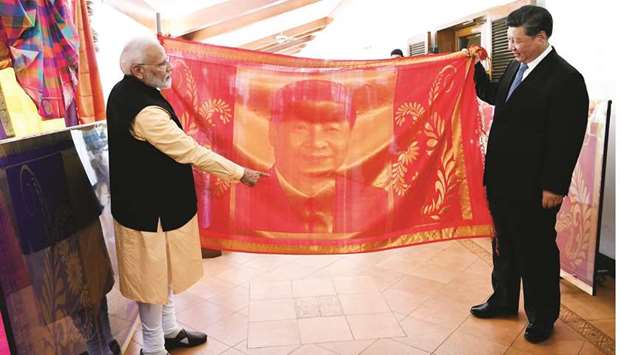
Prime Minister Narendra Modi gifts a silk shawl with an embossed image of Xi Jinping to the Chinese president in Mahabalipuram yesterday.
International

Summit will launch ‘new era’ for India, China: PM

Prime Minister Narendra Modi said yesterday that his summit with Chinese leader Xi Xinping would launch a “new era” between the neighbours who are seeking to overcome troublesome differences. Modi and Xi strolled along a pristine Bay of Bengal beach and held one-on-one talks overlooking the ocean before their delegations sat down to official negotiations at the historic resort town of Mahbalipuram, 50km south of Chennai. The two leaders are meeting for the second time in a year in a bid to ease tensions over border disputes, the troubled Kashmir region and China’s domination of trade between their huge economies. Modi said a summit in the Chinese city of Wuhan last year “gave increased stability and fresh momentum to our relationship”. “Our Chennai vision today has launched a new era of co-operation between our two countries,” he added as he launched the formal talks. Modi highlighted how the two had agreed last year to “prudently manage our differences and not to allow them to become disputes.” They agreed to “remain sensitive to each other’s concerns” so the relationship “will be a source of peace and stability in the world. All these are our big achievements and inspire us to work harder.” Modi did not mention the irritations between the two sides, saying only that he and Xi had “discussed important bilateral and global issues.” The buildup to the summit has been dominated by India’s move in August to end the autonomous status of Jammu and Kashmir. The scrapping of Article 370 of the constitution by New Delhi will see Kashmir’s Ladakh region – part of which is claimed by Beijing – turned into a separate Indian administrative territory. India has moved closer to the United States and its allies in seeking a counter-weight to China’s growing military shadow in the Asia-Pacific region. It has been infuriated by China’s diplomatic backing for Pakistan. But at talks on Friday, the leaders acknowledged the common fight against “terrorism”, Indian Foreign Secretary Vijay Gokhale said. Modi and Xi said “that radicalisation was a matter of concern to both, and that both would work together to see that radicalisation and terrorism did not affect the fabric of our multicultural, multi-ethnic, multi-religious societies”, Gokhale told reporters. China made no immediate comment on the summit. But the official Xinhua news agency said Xi received a “warm welcome” from Modi and they agreed their countries “should respect and learn from each other so as to jointly achieve common development and prosperity.” On commerce, India and China are both facing a protectionist US and want greater access to each other’s markets. India in particular is concerned by China’s $57bn surplus in their joint trade. Gokhale said the leaders talked about enhancing trade and investment, “and this also obviously included the issue of the trade deficit”. China in turn wants India to ignore Western security concerns on telecoms giant Huawei – already a big player in the Indian mobile sector – so that it can be a key part of India’s transformation to 5G communications. Huawei’s “contribution to India’s economic and social development is obvious to all,” China’s foreign ministry said this week, calling on India to make “independent and objective judgments and decisions”.

Gulf Times
Region

Call for focus on people’s problems

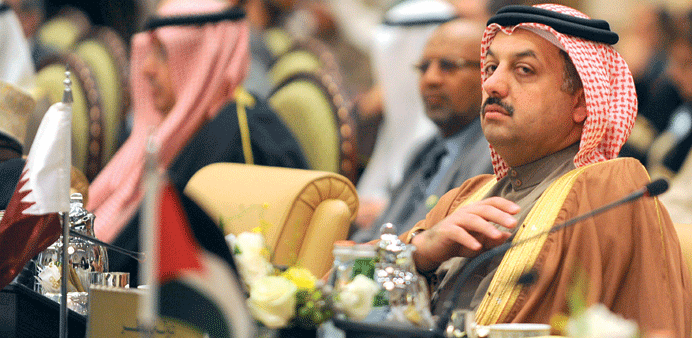
Qatar’s Minister of State for Foreign Affairs HE Dr Khalid bin Mohamed al-Attiyah attends the meeting of Arab foreign ministers in Riyadh yesterday. AFP/RiyadhA two-day economic summit that opens tomorrow in Saudi Arabia must break with tradition and tackle people’s aspirations in the wake of the Arab Spring uprisings, the Saudi foreign minister said. “Our meeting should not be mired in routine,” Prince Saud al-Faisal said at a meeting yesterday to prepare for the third Arab Economic and Social Development Summit. “The Arab world has faced these past two years upheavals of a political dimension... but we cannot ignore their economic dimension,” he added. The minister stressed that the summit must tackle “the problems and issues that concern the lives of our people. We must meet the aspirations of the people”. Poverty, unemployment and social inequalities were among the causes that triggered a Tunisian uprising in late 2010 that later spread to other Arab countries. Experts have warned the Arab world risks losing the fragile gains made by the uprisings, which brought to an end decades of iron-fisted rule by leaders in Tunisia, Egypt, Libya and Yemen. A recent economic report noted that unemployment in 2011 stood at 16% in Arab countries where 17mn people out of 300mn are jobless. At the same time inter-Arab investments stood at a mere $25bn across the region. The summit in Saudi Arabia is expected to discuss the amendment of an Arab convention on investments in a bid to bolster the role of the private sector, the minister said. The meeting would also examine means of drawing up new financial resources to support impoverished Arab states, he added. IMF first deputy managing director David Lipton told Tunisian businessmen in November that Arab countries in transition should push for reforms, encourage investment, boost productivity and create jobs. A World Bank-Gallup poll survey published on November 27 stressed the dire need for “social safety nets” to satisfy the socio-economic demands of the Arab Spring.