


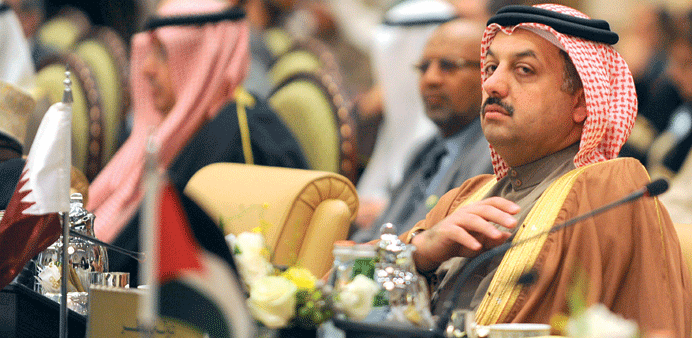
Qatar’s Minister of State for Foreign Affairs HE Dr Khalid bin Mohamed al-Attiyah attends the meeting of Arab foreign ministers in Riyadh yesterday.
AFP/Riyadh
A two-day economic summit that opens tomorrow in Saudi Arabia must break with tradition and tackle people’s aspirations in the wake of the Arab Spring uprisings, the Saudi foreign minister said.
“Our meeting should not be mired in routine,” Prince Saud al-Faisal said at a meeting yesterday to prepare for the third Arab Economic and Social Development Summit.
“The Arab world has faced these past two years upheavals of a political dimension... but we cannot ignore their economic dimension,” he added.
The minister stressed that the summit must tackle “the problems and issues that concern the lives of our people. We must meet the aspirations of the people”.
Poverty, unemployment and social inequalities were among the causes that triggered a Tunisian uprising in late 2010 that later spread to other Arab countries.
Experts have warned the Arab world risks losing the fragile gains made by the uprisings, which brought to an end decades of iron-fisted rule by leaders in Tunisia, Egypt, Libya and Yemen.
A recent economic report noted that unemployment in 2011 stood at 16% in Arab countries where 17mn people out of 300mn are jobless.
At the same time inter-Arab investments stood at a mere $25bn across the region.
The summit in Saudi Arabia is expected to discuss the amendment of an Arab convention on investments in a bid to bolster the role of the private sector, the minister said.
The meeting would also examine means of drawing up new financial resources to support impoverished Arab states, he added.
IMF first deputy managing director David Lipton told Tunisian businessmen in November that Arab countries in transition should push for reforms, encourage investment, boost productivity and create jobs.
A World Bank-Gallup poll survey published on November 27 stressed the dire need for “social safety nets” to satisfy the socio-economic demands of the Arab Spring.