Search - World Summit for Social Development

Friday, October 16, 2026 | Daily Newspaper published by GPPC Doha, Qatar.
Search Results for "World Summit for Social Development" (360 articles)

All words
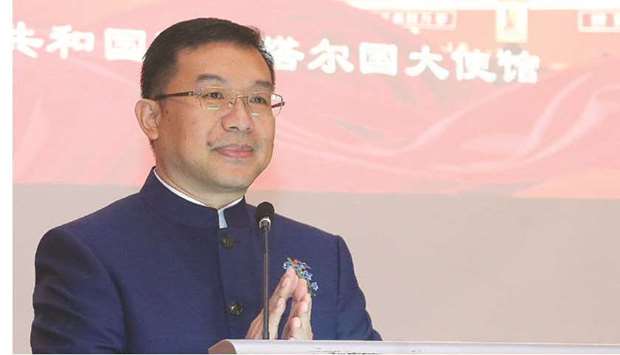
Zhou Jian, Ambassador of China to Qatar.
Opinion

China floats ‘a community of life for man and nature’

Recently, China, France and Germany held a video summit on climate change, and the US held the Leaders Summit on Climate. Leaders from nearly 40 countries, including China, attended the summit. How does China view the importance of global co-operation on climate change? Nowadays, climate change has posed increasingly severe challenges to human lives and development. In the past decade, global temperatures have risen by 1.2 degrees Celsius, the world’s largest iceberg has melted and broken apart, global sea level continues to rise, and hundreds of millions of people are at risk of losing their homeland.  The Covid-19 pandemic not only threatens global public health and economic development, but also slows the pace of our response to climate change. In the post-pandemic era, it has become a prominent question for the international community about how to fight the pandemic while ensuring economic recovery and addressing the challenge of climate change. At this critical juncture of history, President Xi Jinping attended the Leaders’ Climate Summit and delivered an important speech, proposed the concept of “a community of life for man and nature” for the first time, pointing out the right direction for global co-operation on climate change. Could you elaborate on President Xi’s concept of “a community of life for man and nature”? The concept of “a community of life for man and nature” is consistent with our national climate strategy we’ve been implementing; it can be concluded as 6 commitments: First, we must be committed to harmony between man and nature. We must treat nature as our most basic treasure, respect nature, protect the nature and follow the orders of nature. We should protect nature and preserve the environment like we protect our own eyes, and endeavour to foster a new relationship where man and nature coexist in harmony. Second, we must be committed to green development – green mountains are gold mountains. We need to seize the enormous opportunity in green transition, and promote the transformation and upgrading of economy, energy and industrial structures in order to guarantee a sound environment. It is also the most valuable source for sustainable economic and social development worldwide. Third, we must be committed to systemic governance. We need to follow the innate orders of the ecosystem and properly treat all elements and aspects of nature. This will enable an ecosystem with sound circulation and overall balance. Fourth, we must be committed to a people-centred approach. We need to look for ways to protect the environment, grow the economy, create jobs and remove poverty all at the same time so as to deliver social equity and justice in the course of a green transition, and increase people’s sense of benefit, happiness and security. Fifth, we must be committed to multilateralism. We need to work on the basis of international law, follow the principle of equity and justice, and focus on effective actions. We need to uphold the UN-centred international system, comply with the objectives and principles laid out in the UN Framework Convention on Climate Change and the Paris Agreement (UNFCCC), and strive to achieve the 2030 Agenda for Sustainable Development (SDA). Sixth, we must be committed to the principle of common but differentiated responsibilities. We need to give full recognition to developing countries’ contribution to climate actions and accommodate their particular difficulties and concerns. Developed countries need to increase climate ambition and actions, and at the same time, help developing countries and support them in financing, technology, and capacity building. Could you brief us on the measures China has taken in addressing climate change and promoting ecological progress in recent years? As a participant, contributor and leading partner in global ecological conservation, China is firmly striving to build a community of life for man and nature with practical actions.  China actively implements the Paris Agreement and is an advocate for global climate governance. China has achieved its carbon reduction target for 2020 ahead of schedule. Last September, China made the official announcement that we will peak carbon dioxide emissions before 2030 and achieve carbon neutrality before 2060 in the short period of 30 years. This makes China a country with the highest reduction in carbon intensity in the world, and it will have achieved the transition from carbon peak to carbon neutral in the shortest time in global history, which fully demonstrates our greatest determination and sense of responsibility in addressing climate change. China’s carbon-neutral vision could reduce global warming by 0.2 to 0.3 degrees Celsius, according to analysts. China is actively promoting ecological civilisation and is a practitioner of green development. Over the past 8 years, China has cut energy consumption per unit of GDP by nearly 25%, equivalent to a reduction in coal consumption of 1.27 billion tons. In the past 30 years, while 420 million hectares of forests have been destroyed globally, China’s forest and grassland area has increased by 33 million hectares. China is committed to promoting afforestation and counter-desertification, creating a miracle of “turning deserts into oasis”. Qiemo County in China’s Xinjiang Uyghur Autonomous Region, is located on the southern edge of the Taklimakan Desert. Nearly one third of the land was once desertified, and the desert was approaching the city centre with only 2 kilometres away. Today, a “green corridor” with a length of more than 20 kilometres and a width of 7 kilometres has been built here, significantly improving local ecology and living environment. What do you think Qatar and China have in common on climate change and other global environmental issues? On climate change and other global environmental governance, China and Qatar share similar views and philosophies. We both uphold the concept of green development. China has incorporated the concept of building a ecological civilisation into our Constitution. Qatar has made environment protection a focus of its “National Vision 2030” and is committed to building a low-carbon and sustainable World Cup in 2022. We both advocate the path of global co-operation. China has carried out South-South co-operation in various forms, such as initiating co-operation funds, and has done its best to help developing countries to enhance their capacity in coping with climate change. Qatar has also taken an active part in international co-operation on climate change.  In 2019, His Highness the Amir Sheikh Tamim bin Hamad al-Thani announced a contribution of $100 million to support small developing island states and the least developed countries to deal with climate change.  We both adhere to the principle of multilateralism. As one of the first signatories to the UN Framework Convention on Climate Change (UNFCCC), China is committed to the full implementation of the Paris Agreement, actively promoting global dialogue on climate policy and co-operation on green development, jointly building a fair, equitable and win-win global climate governance system. Qatar is also an important partner and has always been advocating co-operation in coping with climate change and playing a positive role in implementing the Paris Agreement. What kind of co-operation can China and Qatar carry out in addressing climate change in the next stage? As we say in China, “When people pull together, nothing is too heavy to be lifted.” Climate change is the mutual responsibility of both China and Qatar, and also an inherent part of China-Qatar strategic partnership. In the next stage, we will work together with solidarity and mutual assistance to fulfil our commitments, and offer our positive contributions to climate issues and environment challenges, and jointly promote global environmental governance.  China and Qatar should be practitioners of green development. We are glad to see that Chinese technology and Chinese solutions are becoming increasingly popular in Qatar’s green development. We have signed a co-operation agreement on the beautification projects of Doha, under which Yutong Bus Corporation will provide more than 1,000 new energy buses for the 2022 World Cup. China is ready to work with Qatar to build consensus on strengthening green governance and promoting sustainable development, expand co-operation in green infrastructure, green energy and green finance, and contribute to our sustainable economic and social development. China and Qatar should be advocates of multilateralism. We should support the United UN and other international organisations in playing their due roles in climate change, and play a constructive role in implementing the 2030 SDA, with international treaties such as Convention on Biological Diversity, the UNFCCC and the Paris Agreement as the legal basis. China will host COP15 Conference this October. We welcome Qatar to attend the conference and look forward to working together to enhance global governance on biodiversity. China and Qatar should be defenders of the principle of “common but differentiated responsibilities”, which is the cornerstone of global climate governance. China is ready to work with Qatar to further consolidate the principle, strengthen South-South co-operation on climate change, and provide financial, technological and capacity building support to developing countries, while opposing setting up green trade barriers.  Since the beginning of this year, I and colleagues from the Chinese embassy have participated in Qatar’s “Plant Million Trees” initiative many times and planted trees by ourselves. We believe that China-Qatar co-operation on climate change, like these trees, will grow stronger and spread its branches under the care of both sides, which will create a shelter for the development of our two countries and leave a clean and beautiful world for future generations.

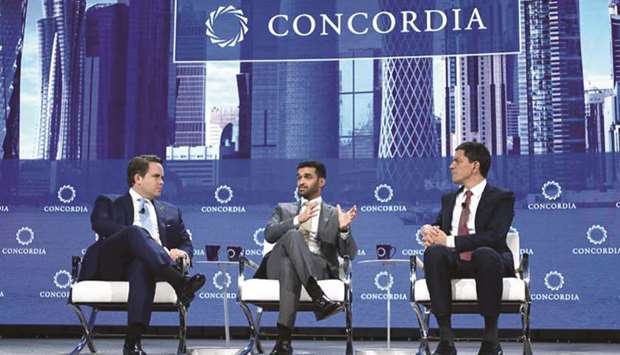
Hassan al-Thawadi with David Miliband and Matthew Swift during the panel discussion.
Qatar

SC secretary-general announces plans for global refugee initiative

Supreme Committee for Delivery & Legacy (SC) secretary-general Hassan al-Thawadi has announced that the SC is working with the International Rescue Committee (IRC) and FIFA to launch an international initiative aimed at supporting refugees and displaced people around the world.  The announcement was made during al-Thawadi’s participation in a panel discussion at the 2018 Concordia Annual Summit in New York City, US. A delegation from the SC, led by al-Thawadi, has taken part in the summit held on the sidelines of the 73rd session of the United Nations General Assembly, www.sc.qa reports. Along with al-Thawadi, the panel discussion on the role of mega-sporting events in facilitating sustainable development featured David Miliband, president and CEO of the IRC and former UK Secretary of State for Foreign and Commonwealth Affairs.  During the discussion, which was moderated by the co-founder, chairman and CEO of Concordia, Matthew Swift, al-Thawadi  highlighted how the 2022 FIFA World Cup is helping accelerate positive social change in Qatar and around the world.  “Qatar has always recognised the ability of the FIFA World Cup and the power of football in facilitating positive development, which is why we bid to host the tournament,” the SC secretary-general said. “We have utilised the tournament as a platform to launch several legacy programmes, including Generation Amazing, which works on developing leadership and life skills among youth in vulnerable communities in countries, including Pakistan, Nepal, Jordan, Lebanon and others. More than 250,000 participants have benefited from the programme since its launch.  “Building on this strong foundation we have built in facilitating sustainable social development, we are on course to launch an international initiative aimed at supporting refugees and displaced people around the world, in collaboration with the IRC and FIFA. We hope to announce the details of the initiative and the various activities it will undertake soon.”  Miliband reiterated the important platform the 2022 FIFA World Cup in Qatar can provide in shedding light on important social issues, including those facing the millions of refugees and displaced people around the world. He added that such mega-events provide an unprecedented opportunity to support resolving humanitarian issues, and help facilitate access to basic rights for people in areas including education, healthcare and training. Miliband also expressed his hopes for the SC to engage millions of fans on all five continents as partners in resolving the issues facing refugees and displaced people around the world. Al-Thawadi also highlighted, during the discussion, other ways in which the 2022 FIFA World Cup has helped facilitate positive social development, including the reforms witnessed by Qatar’s labour market. Alongside al-Thawadi, this year’s speakers at the Concordia Annual Summit include President of Brazil Michel Temer, President of Colombia Ivan Duque Márquez and CEO of the World Bank Kristalina Georgieva.

Gulf Times
Qatar

UN/ Director of the International Organizations Department at MOFA: Qatar continues to strengthen strategic partnership with UN, support multilateral action

His Excellency Director of the International Organizations Department at the Ministry of Foreign Affairs, Sheikha Hanouf bint Abdulrahman Al-Thani, affirmed that the State of Qatar's participation in the 81st session of the United Nations General Assembly (UNGA) aligns with its policy of supporting international multilateral action, enhancing the UN's role as a comprehensive umbrella for joint global efforts, and contributing to international responses to political, humanitarian, and development challenges.  In remarks to Qatar News Agency (QNA), Her Excellency noted that Qatar views the UNGA as a primary platform for dialogue and consultation among nations. She emphasized that Qatar's participation extends beyond presenting national positions to fostering mutual understanding, building strategic partnerships, and advancing initiatives that strengthen global responses to political, humanitarian, and development issues.  She explained that the relationship between Qatar and the UN has evolved into a multi-faceted strategic and institutional partnership, encompassing the Secretariat, UN agencies, funds, programs, and various offices. In recent years, this partnership has experienced significant institutional growth through enhanced strategic dialogue, cooperation frameworks, joint agreements, expanded financial contributions, joint program implementation, and the hosting of major international conferences.  Her Excellency added that the United Nations House in Doha, which opened in 2023 and houses 14 UN offices, solidifies this close partnership and Qatar's firm belief in multilateralism. This is achieved by strengthening coordination, cooperation, and the exchange of expertise, and by supporting the work of the UN in Qatar and the region, noting that the state is working to expand the scope of UN offices and entities it hosts, further enhancing the organization's presence and the effectiveness of its work in the region.  She highlighted 2025 as a milestone year in this partnership, during which Doha hosted the Second World Summit for Social Development with broad participation from heads of state and government, officials, international organizations, civil society, youth, and other stakeholders. The summit concluded with the adoption of the Doha Political Declaration, reaffirming global commitments to poverty eradication, promotion of decent work, social protection, social inclusion, and inclusive development. The Declaration was subsequently adopted by the UNGA in Resolution 80/5.  Furthermore, in December 2025, Qatar hosted the 11th session of the Conference of the States Parties to the United Nations Convention against Corruption, reflecting its support for international cooperation, strengthening institutional capacities, accountability, the rule of law, and combating corruption and transnational crime.  Her Excellency stressed that the partnership with the United Nations goes beyond hosting offices or providing financial support, focusing on translating shared priorities into sustainable avenues of cooperation through strategic dialogues, technical collaboration, capacity building, and joint programs and initiatives.  In this context, she highlighted that supporting Least Developed Countries (LDCs) remains a core pillar of Qatar's partnership with the UN, notably through the Doha Programme of Action for the Least Developed Countries for the Decade 2022-2031. Qatar committed USD 60 million to support the program's implementation, a pledge now materializing into practical initiatives to help LDCs address structural challenges, including food security, climate change, and economic shocks, while improving access to finance and technology.  She added that the High-Level Comprehensive Midterm Review of the Doha Programme of Action, scheduled to take place in Doha in March 2027, will serve as a vital milestone to assess progress, identify remaining challenges, and accelerate implementation during the second half of the decade.    HE Director of the International Organizations Department at the Ministry of Foreign Affairs, Sheikha Hanouf bint Abdulrahman Al-Thani emphasized that the partnership with the UN is closely aligned with Qatar's foreign policy priorities, rooted in supporting international peace and security, mediation, preventive diplomacy, humanitarian action, sustainable development, and promoting international dialogue and cooperation.  In this context, Her Excellency emphasized that the State of Qatar continues to support dialogue and the peaceful resolution of conflicts, driven by its conviction that conflict prevention and addressing their root causes are essential to building sustainable peace. Qatar's humanitarian cooperation with the UN integrates political, humanitarian, and development efforts by supporting emergency responses, protecting civilians, facilitating aid delivery, and strengthening community resilience, extending to counter-terrorism and capacity building through partnership with the United Nations Office of Counter-Terrorism (UNOCT). Upholding the principles of the UN Charter, Her Excellency noted that Qatar utilized the Organization's institutional mechanisms since the outset of the Iranian attacks against Qatari territory by constantly updating the UN Secretary-General and the President of the Security Council of relevant developments through official correspondence, reflecting its commitment to international frameworks and enabling the Security Council to fulfill its mandate in maintaining international peace and security, particularly in light of Security Council Resolution 2817 (2026), which strongly condemned the attacks on Qatar and neighboring countries and demanded their immediate cessation.  She pointed out that the 81st session convenes at a pivotal moment in the UN's history, amid global geopolitical shifts, ongoing institutional reform to enhance efficiency under the UN80 initiative, and preparations for leadership transition as Secretary-General Antonio Guterres completes his second term at the end of 2026.  Concluding her remarks to QNA, Her Excellency affirmed that Qatar will continue to actively engage with member states and UN entities throughout the 81st session, contributing to discussions on the Organization's future priorities and further deepening its strategic partnership with the UN to bolster multilateral responsiveness to global challenges.   

Qatar Chamber first vice-chairman Mohammed bin Towar al-Kuwari, speaking at the opening of the third session of the Living Independently Initiative.
Business

Qatar Chamber hosts ‘High-Level Arab Event on Persons with Disabilities, Entrepreneurship and Innovation’

The Qatar Chamber hosted the ‘High-Level Arab Event on Persons with Disabilities, Entrepreneurship, and Innovation’, which concluded Saturday in Doha.The event featured the ‘Third Session of the Living Independently Initiative for Persons with Disabilities’ and the ‘Arab Exhibition for Productive Families’ held on the sidelines of the recently held ‘Second World Summit for Social Development’.The event was held by the Union of Arab Chambers and the General Secretariat of the Arab League – Social Affairs Sector (Department of Social Development and Policies, Technical Secretariat of the Council of Arab Ministers of Social Affairs), in coordination with the UN Industrial Development Organisation (UNIDO) – Bahrain Office, and in collaboration with the Arab Academy for Science, Technology and Maritime Transport and the Arab Labour Organisation.The event was attended by Qatar Chamber first vice chairman Mohammed bin Towar al-Kuwari; Dr Maya Morsy, Minister of Social Solidarity and Chairperson of the Executive Bureau of the Council of Arab Ministers of Social Affairs; Mohammed bin Saleh al-Alawi, Minister of Social Development of Bahrain and chair of the 44th Session of the Council of Arab Ministers of Social Affairs; Dr Khaled Hanafy, secretary general of the Union of Arab Chambers; Ambassador Hossam Zaki, assistant secretary general and head of the Office of the secretary general of the League of Arab States;Wafaa Bani Mustafa, Minister of Social Development of Jordan; Mohammed Hassan al-Obaidli, director general of the Executive Bureau of the Council of Ministers of Labour and Social Affairs in the Gulf States; and Minister Plenipotentiary Tarek al-Nabulsi, director of the Department of Development and Social Policies at the League of Arab States.Attendees toured the exhibition, which showcased a variety of products made by people with disabilities, including accessories, handicrafts, silverware, wickerwork, traditional clothing, ceramics, and other handmade goods. The exhibition featured the participation of 25 exhibitors representing Qatar, Egypt, Jordan, Bahrain, Oman, Sudan, Palestine, Kuwait, Saudi Arabia, Mauritania, Morocco, Tunisia, Algeria, and Iraq.Speaking at the opening of the third session of the Living Independently Initiative, al-Kuwari emphasised that the initiative presents a valuable opportunity to enhance the integration of persons with disabilities into the labour market and to highlight the importance of supporting productive families while contributing to the growth, development, and sustainability of their enterprises.He added that Qatar pays great attention to persons with disabilities and seeks to enhance their effective participation in various areas of social, economic, and educational life, in line with the Qatar National Vision 2030. He emphasised that Qatar has adopted an integrated system of national legislation and policies that guarantee the rights of persons with disabilities, support their integration into society, and enable them to work and contribute to development.Al-Kuwari also underscored Qatar Chamber’s commitment to empowering productive families, promoting small entrepreneurship, and supporting initiatives that enhance the productive capabilities of families and home-based businesses. He noted that the Chamber strives to provide platforms that allow these families to showcase and market their products both locally and internationally.He further emphasised the chamber’s encouragement of integrating persons with disabilities into suitable jobs within the private sector, noting that this aligns with the efforts of other national entities working to promote inclusion and equal opportunity in the country.

(From right) Ashraf Abuissa, CEO and chairman of AbuIssa Holding; Sonya Janahi, vice president for Asia at the International Organisation of Employers (IOE); and Daan Wensing, CEO of IDH, during a panel discussion held during the Private Sector Forum of the Second World Summit for Social Development yesterday.
Qatar

Qatar’s private sector champions inclusive growth and global collaboration

Qatar’s private sector is positioning itself as a regional leader in inclusive employment, creative industries, and talent development, according to a prominent Qatari business leader.Speaking at the Private Sector Forum during the Second World Summit for Social Development yesterday, Ashraf Abuissa, CEO and chairman of AbuIssa Holding, said Qatar’s investment in technology and its hosting of global events, such as the Web Summit and Mobile Congress, were helping to build a thriving ecosystem for startups and innovation.“Qatar is becoming a regional headquarters for major companies and an incubator for startups,” he said, noting that the country’s inclusive employment practices extend to remote work opportunities for communities facing political or cultural restrictions.Abuissa also highlighted Qatar’s labour protections and talent development systems, describing how his company nurtures employees through fast-track programmes and continuous training.He also lauded the government’s Wage Protection System (WPS) and its proactive monitoring of labour rights.Sonya Janahi, vice president for Asia at the International Organisation of Employers (IOE), underscored the importance of public-private partnerships (PPPs) in avoiding unethical competition and economic burden.“Governments should not compete with the private sector. Instead, we must collaborate to create sustainable solutions,” she emphasised.Janahi also pointed to the growing role of corporate social responsibility (CSR): “Employers are giving back — supporting farmers, education, and healthcare systems. This is where social development happens.”Daan Wensing, CEO of IDH, described the private sector as a global catalyst, driving 80% of trade and generating millions of jobs. “We need to make growth more intentional—linking innovation with inclusivity, wages with well-being, and productivity with decent jobs,” he said.Wensing cited examples from the banana and tea sectors, where collective action among retailers, governments, and civil society helped close living wage gaps. “If we do this together, we can challenge the status quo and achieve more than we thought possible,” he added.

(From right) Ashraf Abuissa, CEO and chairman of AbuIssa Holding; Sonya Janahi, vice president for Asia at the International Organisation of Employers (IOE); and Daan Wensing, CEO of IDH, during a panel discussion held during the Private Sector Forum of the Second World Summit for Social Development yesterday.
Qatar

Qatar’s private sector champions inclusive growth and global collaboration

Qatar’s private sector is positioning itself as a regional leader in inclusive employment, creative industries, and talent development, according to a prominent Qatari business leader. Speaking at the Private Sector Forum during the Second World Summit for Social Development yesterday, Ashraf Abuissa, CEO and chairman of AbuIssa Holding, said Qatar’s investment in technology and its hosting of global events, such as the Web Summit and Mobile Congress, were helping to build a thriving ecosystem for startups and innovation. “Qatar is becoming a regional headquarters for major companies and an incubator for startups,” he said, noting that the country’s inclusive employment practices extend to remote work opportunities for communities facing political or cultural restrictions. Abuissa also highlighted Qatar’s labour protections and talent development systems, describing how his company nurtures employees through fast-track programmes and continuous training. He also lauded the government’s Wage Protection System (WPS) and its proactive monitoring of labour rights. Sonya Janahi, vice president for Asia at the International Organisation of Employers (IOE), underscored the importance of public-private partnerships (PPPs) in avoiding unethical competition and economic burden. “Governments should not compete with the private sector. Instead, we must collaborate to create sustainable solutions,” she emphasised. Janahi also pointed to the growing role of corporate social responsibility (CSR): “Employers are giving back—supporting farmers, education, and healthcare systems. This is where social development happens.” Daan Wensing, CEO of IDH, described the private sector as a global catalyst, driving 80% of trade and generating millions of jobs. “We need to make growth more intentional—linking innovation with inclusivity, wages with well-being, and productivity with decent jobs,” he said. Wensing cited examples from the banana and tea sectors, where collective action among retailers, governments, and civil society helped close living wage gaps. “If we do this together, we can challenge the status quo and achieve more than we thought possible,” he added. Ends


People retrieve bamboos from a damaged house following rains and floods during the monsoon season in Dera Allah Yar, district Jafferabad, Balochistan, Pakistan. (Reuters/File photo)
Opinion

Can humanity fix what it has broken?

On my first day in office as Colombia’s president just over 15 years ago, I met with the leaders of four indigenous peoples in the Sierra Nevada de Santa Marta – the Kogui, Arhuaco, Wiwa, and Kankuamo. As we stood together in the shadow of a magnificent mountain range next to the Caribbean Sea, the wisdom they imparted transformed how I viewed my responsibilities as a leader. It also changed how I saw our collective duty as transitory inhabitants of this increasingly bruised planet. I was given a wooden baton – a symbol of power – to remind me to strive toward two goals: peace among our citizens after 50 years of conflict, and peace with nature. The indigenous leaders warned me that our relationship with the natural world had been harmed, that nature was angry, and that we would suffer the consequences. Two weeks later, La Nina hit Colombia with devastating floods, and I spent the first two years of my administration supporting those affected and preparing for the next natural disaster. We now live in a world threatened by shattering storms – both physical and ideological. Just recently, flooding killed at least 1,006 people in Pakistan, with 2.5mn reportedly evacuated from Punjab and Sindh, regions that were also hit by colossal flooding in 2022. Disturbing attacks on multilateralism and the post-World War II institutional foundations of human rights are making matters worse. Our entire value system, it seems, is under siege. But as The Elders (a group of former leaders that I currently chair) recently stated, fatalism and cynicism are never options, no matter how relentless the crises we face may be. Multilateralism was developed precisely for times like these – to guide us through disagreements and disasters, with no exceptions. This November, two major summits aimed at tackling global problems will take place. The first is the second World Summit for Social Development. The first such summit 30 years ago brought together an unprecedented number of world leaders, marking a new chapter for multilateralism in the service of human development. The other summit next month, the UN Climate Change Conference (COP30) in Belém, Brazil, will address the existential crisis of global warming. As president of Colombia, I saw firsthand that when disaster strikes, the poor are always hit the hardest. That is why we created various institutions to co-ordinate assistance following the 2010 floods. Now, it is essential that all countries take heed of climate warnings and scale up their own resilience and adaptation policies. A timely new report from researchers at the University of Oxford and the UN Development Programme shines a spotlight on this issue. It finds that almost 80% of multidimensionally poor people – whose deprivations are measured beyond low incomes – across 108 developing countries, totaling 887mn individuals, live in regions exposed to at least one climate-related hazard (such as extreme heat, drought, flooding, or air pollution). The report also confirms that people in lower-middle-income countries confront more overlapping climate hazards than those in low-income or upper-middle-income countries. And while upper-middle-income countries have relatively fewer poor people, this cohort is still exposed to air pollution and flooding in particular. Such findings underscore the need for a just energy transition. To that end, Colombia introduced Latin America’s first carbon tax in 2016. Now, in the run-up to COP30, The Elders are calling for G20 countries to use their financial advantages to “turbocharge the implementation of the Paris Climate Agreement and the Global Biodiversity Framework.” At COP29 last year, world leaders committed to provide $300bn to fund such efforts, even though the total needed is closer to $1.3tn. Given the size of this gap, we welcome the International Court of Justice’s recent advisory opinion ruling that states are legally responsible for climate harms, particularly those caused by the fossil-fuel industry. I am reminded of a moment in 2011 when two civil servants in my government, Paula Caballero and Patti Londono, came to me with the idea of putting sustainability at the heart of development. Caballero and Londono planted the seed that eventually grew into the UN Sustainable Development Goals. I was happy to do what I could to support that agenda, and thanks to the multilateral framework that was in place ten years ago, the UN unanimously adopted the SDGs. The joy in that room will stay with me for the rest of my life. But the party is over. While flashes of hope remain – just this year, countries adopted a historic marine conservation treaty – the planet is hurting more than ever. Last month in New York, the Planetary Guardians presented the Planetary Health Check 2025 report, which confirmed that seven of nine planetary boundaries, including ocean acidification, have already been transgressed. Together, these nine boundaries form Earth’s operating system: the interconnected life-support processes that must remain within safe limits to keep humanity safe and the natural world resilient. With the Planetary Health Check warning of accelerating deterioration and the growing risk of reaching dangerous tipping points, we urgently need to improve our understanding of where and how both the planet and its people are suffering. That means reinvigorating efforts to support the interconnected agendas of climate action and poverty reduction. When I left office in 2018, I met again with the indigenous leaders who had entrusted their hopes to me. I tried to return the baton. But to my surprise, they asked me to keep it, and then articulated a new principle that the international community would do well to consider. They spoke of the spiritual bond between humans and nature: nothing can be taken without first asking for permission and giving something in return. We break this bond at our peril. Today, many connections are broken – between peoples and between humans and the planet. Our task in the years ahead is to restore them. – Project Syndicate Juan Manuel Santos, a former president of Colombia, is Chair of The Elders and received the 2016 Nobel Peace Prize.

Difi officials at Kazan global youth summit.
Qatar

Difi participates in Kazan global youth summit

The participation of Qatar Foundation’s Doha International Family Institute (Difi) at the Kazan Global Youth Summit in Tatarstan, Russian Federation, has resulted in the adoption of an action plan to effectively integrate technology into the lives of children and young adults.The summit resolutions which delved into critical topics around technology and youth policy are set to pave the way for establishing long-term co-operation programmes across the countries of the Islamic world, Brics and the Asia-Pacific region with the aim to support youth development efforts on a global scale.At the summit, Dr Sharifa al-Emadi, executive director Difi, referenced the results of the two studies conducted by the institute. The first study, conducted in co-operation with the World Innovation Summit for Health and the World Innovation Summit for Education and Hamad Bin Khalifa University, was titled 'Adolescent Overuse of Digital Technology'. The second study, carried out in collaboration with the Ministry of Education and Higher Education in Qatar, was titled 'Adolescents' Well-being in Qatar'.The studies revealed that parents spend an excessive amount of time on electronic devices, averaging 8-10 hours per day, while 29.64% of adolescents said they prefer spending their time on the internet rather than engaging with others, including family members.As for parents’ monitoring of their children’s online activity, 24% of them indicated that they regularly monitor their children’s online activity, while 35% responded that they often do so. In contrast, 41% of parents reported that they rarely monitor their children’s online and social media activities.Dr al-Emadi’s presentation on the topic of opportunities and challenges facing families in the digital world called for the need to enhance and develop work-family balance policies and empower the youth by providing them with economic and training opportunities. She concluded her presentation by urging research institutions and NGOs to collaborate with stakeholders to empower parents with the tools and skills needed to engage more effectively with their children. She also emphasised the importance of leveraging the positives of digital life by adopting relevant government policies and developing evidence-based parenting programs to better support future generations.

Gulf Times
Qatar

Development is linked to peace: FM

HE the Foreign Minister Dr Khalid bin Mohamed al-Attiyah presiding over the co-ordinating meeting of GCC foreign ministers at the headquarters of the GCC mission in New York on the sidelines of the 70th session of the UN General Assembly. The meeting addressed international and regional issues, and discussed the situation in Yemen, Syria, Iraq, Libya and the Palestinian cause. QNA/New YorkHE the Foreign Minister Dr Khalid bin Mohamed al-Attiyah said development cannot be achieved in the absence of peace, security and stability.He also said Qatar has made great strides in the process of sustainable development. Addressing the UN General Assembly Summit, al-Attiyah said: “We are relieved that the Post-2015 Development Agenda is in line with the economic, social and environmental dimensions of our National Vision 2030, which includes the basic pillars of sustainable development, particularly security, health, education, culture, and sports. “I would like to note here that since the 90s of the last century, Qatar took the initiative to invest in Qatari citizens. It was a forerunner in setting policies that ensure sustainable development for Qatari citizens; we have developed a comprehensive national strategy for development, which is aimed at transforming our country into a state capable of maintaining sustainable development and providing a high standard of living for both the present and future generations.” The Foreign Minister said the world has undergone profound changes since the launch of the Millennium Development Goals in 2005. While many goals have been achieved, many others have stalled. “Therefore, the international community is committing today once again to launch the new Post-2015 Development Agenda, in order to achieve security, stability, well-being and sustainable development for our countries and peoples, guided by lessons learned from our past experiences, forward-looking and ready to address current and potential challenges in shared responsibility while taking into account the differentiated burdens.“Ensuring success and achievement of the envisaged objectives of the Post-2015 Development Agenda make it imperative for the international community to tackle and find effective solutions to the obstacles that hinder the sustainable development process, be they political, structural or capacity-related, based on a practical and realistic perspective, that takes into account the priorities and needs of the developing and least developed countries in particularly, by providing all possible support to help these countries cope with the increasing marginalisation in the global economy and benefit from the scientific, economic and human potential available in our present day. “In this regard, we would like to stress the importance that national policies reflect the human and social side of development, by putting at the top of their priorities the development of strategies that meet the necessary needs of peoples and for the promotion of democracy and human rights, along with the realisation of transparency rules in addressing and fighting corruption in all its manifestations to achieve good governance, since the commitment to the principles of the rule of law and accountability is considered imperative for any development strategy. This approach was confirmed by the Congress on Crime Prevention and Criminal Justice, held in Doha in April.” Al-Attiyah said partnership and international co-operation remain the most important factor to ensure sustainable development, through the promotion of effective partnerships and co-operation between countries, as well as between the public and private sectors, and by giving civil society organisations and all groups of the society their envisaged roles in this area. “In this context, the development assistance provided by developed countries to developing or least-developed countries should be free from restrictions and separate from politicisation. Donor countries should enable these countries to achieve development, through the elaboration of policies that support their ability to produce all the basic needs for their people so as not to be haunted by poverty and dependence on others. Such policies must encourage the spirit of partnership and investment to raise the level of human development and support their ability to market their products to achieve sustainable development.” Al-Attiyah noted that Qatar over the past years has provided much development aid to many countries facing economic, humanitarian and natural disasters. This aid amounted in 2014 to approximately QR5.9bn, which represents 0.76% of the GDP of the country. This is in addition to technical assistance in the fields of education, health and other areas that correspond with the decisions of the Millennium Summit, he said. “In this context and stemming from Qatar’s keen and well-known interest in improving the quality of education and giving the opportunity to everyone to receive good-quality education and gain experience, we have sought to transfer this successful experience through development assistance and international co-operation in order to reduce the number of children deprived of basic education in various parts of the world, especially children living in conflict zones. The number of children benefiting from the Qatari initiative Educate A Child, which was launched in 2012 in conjunction with the Office of the UN High Commissioner for Refugees, has reached 6mn children, including 600 children from the brotherly Syrian people.” The Foreign Minister affirmed that the achievement of sustainable development at the various national, regional and international levels requires political will and sincerity of intentions with a true spirit of co-operation between states, adding that Qatar has been keen to assume its regional and international responsibilities towards achieving the MDGs and addressing positive cases.He referred to Qatar hosting the 18th Conference of the States Parties to the United Nations Framework Convention on Climate Change in 2012. He expressed the hope that the international community will succeed at the Paris Conference in reaching the new agreements being negotiated and that the agreement will reflect burden variation between developed and developing countries and will strengthen the capacity of developing countries to adapt to climate change. “To reaffirm our conviction that sustainable development cannot be achieved without achieving food security, HH the Emir Sheikh Tamim bin Hamad al-Thani  announced his initiative to establish the Global Alliance for Drylands to combat desertification and drought in all parts of the world, which will have a positive impact in achieving development beyond 2015,” the Minister stressed. Al-Attiyah expressed Qatar’s firm belief of the importance of the role of all segments of society in the achievement of development, saying Qatar has given special attention to youth.  “Qatar makes unremitting efforts for their advancement, making their role effective, and encouraging their initiative, and providing an appropriate enabling environment for them.” From this perspective and in order to engage young people in making decisions and policies that are of global interest to the world, Qatar took the initiative to hold the Youth Forum on Crime Prevention and Criminal Justice, which was held in Doha in April 2015, he said. The Minister underlined Qatar’s keen interest in the role of sport as a tool to promote social cohesion and solidarity, instil the values of equality and tolerance in the young generation, promote development, and achieve peace. This is because sport has positive effects on the economic, social and environmental dimensions of sustainable development, as well as contribution to the empowerment of young people. He added that Qatar also considers culture a key element for development, an important factor in social cohesion and integration, economic growth, the eradication of poverty and a contribution to the achievement of peace, security and the promotion of human rights.“Therefore, we have made great efforts to link cultural diversity, intercultural dialogue and development programmes in the belief that culture is of great importance in the overall development policies, whether in connection to education or the environment. “Finally, we emphasise that Qatar will continue to meet its obligations to the international community to achieve sustainable development by providing all the material or technical support it can.”

Gulf Times
Qatar

Arab Future Cities Summit to begin on April 7

The third edition of Arab Future Cities Summit 2014 will be hosted by the Ministry of Municipality and Urban Planning (MMUP) on April 7 and 8 at The Ritz-Carlton Doha. Representing MMUP, Dr Hossam Samir Ibrahim, Urban and Environmental Planning expert, will present the physical and spatial planning policy and strategy as part of the Municipality Spatial Development Plans in Qatar (MSDP), which seek to achieve the orderly planning and development of land and infrastructure in line with Qatar National Vision (QNV) 2030. A conference of more than 400 senior government officials, developers, engineers, architects and industry giants like Cisco, Huawei, Microsoft, Vodafone, Simplicity, Bosch, AGT International, Atkins, Ooredoo, Qatar Cool, Accela and many more, the summit is expected to deliver a concrete road map to Qatar’s ambitious projects lined up for the 2022 FIFA World Cup, QNV 2030 and beyond. The summit will include panel discussions, roundtable sessions, presentations, networking sessions and a showcase of solutions by 25-plus high-end international and local suppliers focused around innovative growth and technology for sustainable city development. Speaking on the three ages of smart cities lived through so far, Dan Hill, executive director of Future Cities and Best Practice at UK’s Future Cities Catapult, a leading global innovation centre, will share insights through his experience across projects in Sydney, Helsinki and Abu Dhabi, leading up to his present work on the interplay between core urban infrastructures, urban fabric and urban economies. This week, kick-starting the first phase of transformation into a smart corporation, Qatar General Electricity & Water Corporation (Kahramaa) will highlight smart grids, a way forward in modernising the electric grid system. Mohamed Nagib Omara, technical adviser to Kahramaa president Essa bin Hilal al-Kuwari, will speak on the corporation’s future grid plans to interact with smart homes and smart towns as well as on how it plans to integrate renewable energy and the utility grids, making the entire process sustainable. The summit will also offer an opportunity to learn from city promotion specialist Michael Charlton, who has consulted for five Olympics, two World Cups and one World Expo. The international director to Rio Negócios, Rio de Janeiro’s Investment Promotion Agency, Charlton will explore how such events can act as a platform for effective economic and social development, city and nation brand-building, attracting incremental foreign direct investment and tourism to ensure a sustainable legacy. Other guests sharing their expertise include Meshal al Shamari, director of Qatar Green Building Council; Sandra Baer, director, Public Sector Transformation and Outreach, Smart Cities Council, US; Muhannad Hammad, manager of the Drainage Networks Projects Department, Ashghal; and Loay Ghazaleh, adviser to the Undersecretary, Ministry of Public Works, Bahrain. “Qatar’s clear commitment to public spending, coupled with the most stable business environment in the region, makes it the ideal location to host a gathering of senior stakeholders committed to creating smarter cities,” said Charlene Corrin, conference producer at Expotrade Middle East, organisers of the summit.  

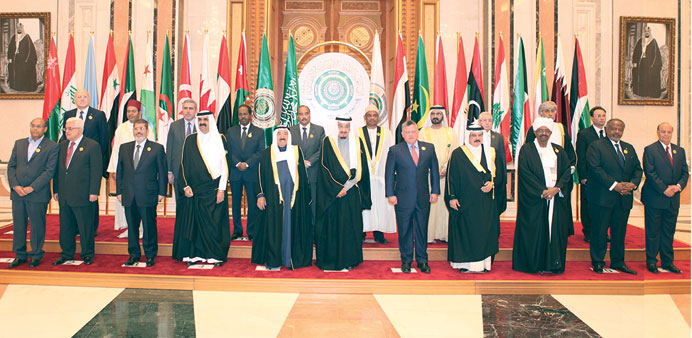
HH the Emir Sheikh Hamad bin Khalifa al-Thani with other Arab leaders at the third Arab Economic and Social Development summit in Riyadh yesterday
Region

Arab leaders urge co-operation at economic summit

AFP/Riyadh Arab leaders began a two-day economic summit in Riyadh yesterday, calling for the strengthening of mutual trade and co-operation in order to face challenges brought on by the Arab Spring uprisings. “We should achieve an Arab common market,” said Egyptian President Mohamed Mursi at the opening of the third Arab Economic and Social Development summit, urging Arab nations to “catch up” in the realm of free trade. “Very little has been done to improve trade between Arab countries,” which reportedly comprises no more than 10% of total Arab commerce. Saudi Crown Prince Salman bin Abdulaziz, who stood in for King Abdullah in hosting the summit, highlighted economic and social challenges facing the region and also pointed to weak inter-Arab trade. “The urgent development issues that face our countries are very difficult, including poverty, unemployment and disease. Efforts must be made to confront and eliminate them,” he said. “The level of trade between us does not match our ambitions.” Arab foreign ministers who met ahead of the summit prepared a draft agreement on inter-Arab investment, which if approved would allow a free flow of investments and capital between states, Saudi Finance Minister Ibrahim al-Assaf said, according to news reports yesterday. The 22 Arab states have a total population of more than 367mn, but total Arab gross domestic product represents no more than 3% of global gross domestic product. The Arab region sits on 62% of the world’s crude oil reserves and its oil-producing nations account for 32% of total global exports. The area is also home to 24% of the world’s natural gas reserves. But Arab gas exports represented only 5.8% of global exports in 2010.

Gulf Times
Qatar

Qatar, other GCC countries ‘best places’ for AI development

The Gulf is rapidly becoming a global hub for artificial intelligence (AI) development, driven by ambitious governments, low energy costs and long-term investment, venture capitalist Tala Al Jabri said on the sidelines of Web Summit Qatar 2026.In an exclusive interview, Al Jabri, founder and managing partner of Wyld VC, told Gulf Times that Qatar, Saudi Arabia and the UAE offer some of the world’s most favourable conditions for building AI companies. She cited visionary leadership, progressive policies, widespread adoption and substantial government-backed capital as key factors. “I think one of the best places to build in the world is this region, in Qatar, in Saudi Arabia and in the UAE. We have the most ambitious and visionary leaders in the world. We also have some of the most progressive policies and regulations that both promote innovation and protect data privacy and consumers,” Al Jabri said. She pointed out that the Gulf’s young population has embraced AI, making the region home to a generation of “AI-native” users. According to Al Jabri, adoption is strong across consumers, prosumers, and businesses while governments are pouring significant investment into the infrastructure needed to drive the next wave of AI development. “Some of the biggest facilities in the world outside of the US and China are being built here. We promote talent and diversity from all over the world. We welcome people who have a vision and support them strongly,” she said. Al Jabri highlighted the Gulf’s efforts to establish robust research and development (R&D) infrastructure, which she said complements the region’s ambition to attract global talent. “We are still new nations relative to the West, but we are putting in place and attracting some of the best talent in the world,” she said. Al Jabri, a regional technology investor, emphasised that safety and social stability also contribute to the region’s attractiveness for entrepreneurs. “Personally, as a citizen, I feel extremely safe. I leave my door unlocked, and my rights are respected. I feel very confident about living here.” When asked about the Gulf’s advantages in adopting advanced technologies, Al Jabri highlighted low energy costs, substantial infrastructure investment, and visionary, long-term thinking by governments. At the panel discussion, titled “Is the AI bubble about to burst?”, moderated by Gregg Carlstrom, Middle East correspondent for The Economist, Al Jabri explained the strengths and challenges facing investors and founders in the region. She described the regulatory framework as transparent, supportive, and aligned with the goal of transitioning from hydrocarbon-based economies to technology-driven growth. “This region ranks among the top globally in AI vibrancy,” she said, citing Stanford University’s index. “We have strong policy and regulation, ambitious governments, low energy costs, and ample capital to build infrastructure and invest in startups. “The top AI superpowers are still Silicon Valley and China. Other countries have strong talent too, but these two dominate. That’s where the Gulf needs to invest, by opening markets for regional founders and attracting top-tier talent from abroad,” Al Jabri said. She added that long-term capital gives the Gulf a unique advantage, saying: “Our strategy and vision extend for decades. We are transparent in how we evaluate our performance, economically and socially. Investors and founders can expect a stable regulatory environment and governments willing to work with them to build technologies locally”.It is learnt that the Gulf region has invested billions in AI infrastructure, government-led AI initiatives, and policies aimed at fostering a conducive environment for technology startups.While the Gulf may not yet match Silicon Valley or China in raw talent, Al Jabri said it offers a combination of stability, capital, and ambition that few other regions can match.She described the region’s AI efforts as building the “railways of the 21st century,” creating an environment designed to help visionaries and founders succeed.