
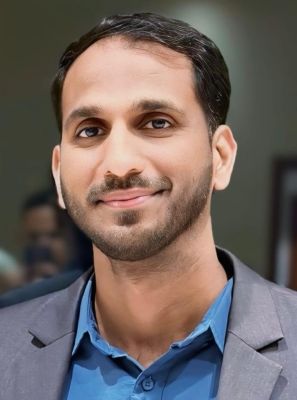


Moroccan artist and designer Artsi Ifrah believes beauty can offer hope in a world increasingly marked by conflict, hatred and suffering, arguing that preserving culture and celebrating human creativity are essential to safeguarding the values that make humanity unique.
“Beauty is the source of all hopes. Without beauty, there is no hope,” Ifrah told Gulf Times on the sidelines of his exhibition, Designed to Last, which opened at Doha Design District in Msheireb Downtown Doha on Wednesday.
“We see a lot of ugliness, hate, wars and pain. I try, in my own small place, to create beauty so people understand that we have hope. We can survive everything, and we will survive everything. I think true beauty is a good beginning,” he said.
Through his work, Ifrah seeks to create a space for reflection, emotion and optimism at a time when he believes humanity is facing difficult challenges. His approach draws on cultural heritage, traditional craftsmanship and personal memories, bringing the past into the present while exploring what can be preserved for future generations.
Organised by Doha Design District, powered by Msheireb Properties, the exhibition features 13 one-of-a-kind creations by Ifrah, founder and creative director of Marrakech-based Maison ARTC, alongside a series of his photographic works. It runs until November 5, with a public programme of talks scheduled during the exhibition.
Rather than following seasonal fashion trends, the exhibition explores why certain objects and creations remain meaningful over time, and how their value can extend beyond their physical form.

For Ifrah, the answer lies in the stories, emotions and cultural experiences they carry.“I’m not a fashion designer, I’m a culture designer,” he said, explaining the philosophy behind his work. “My practice is to preserve culture in a way that it will not be forgotten and will remain relevant for the future.”
He sees culture as a continuing relationship between generations, shaped by what people inherit from their parents and grandparents, what they experience in their own lives and what they pass on to those who follow.
In this sense, the title Designed to Last reflects an idea that goes beyond the durability of a garment. It considers how cultural knowledge, artisanal skills and collective memories can survive changing times and acquire new meaning without losing their connection to their origins.
“We live in a very fast world, and everything is very quickly disappearing. I think the only thing that doesn't disappear is culture,” Ifrah said.
The artist compared culture to a national flag, describing both as symbols of identity and pride that connect people to their origins. “When you think about culture and you think about a flag, it actually has the same meaning because we all take it and we are proud of it. And we know how it's coming, where it's coming from, and our heritage, the technique, humanity, artisans, how to do it, the practice of it and human values,” he said.
For Ifrah, preserving culture means safeguarding more than objects or visual traditions. It also involves recognising the knowledge, labour and human relationships behind them.
Traditional techniques, passed from one generation to another, represent accumulated experience and cultural understanding. When these practices are carried into contemporary creative work, they can remain relevant to new audiences rather than being confined to museums or historical records. This belief underpins his approach to fashion, in which garments become vehicles for cultural expression and storytelling.
Culture and creativity in the age of AI
Ifrah's emphasis on human creativity also reflects his concerns about the growing influence of artificial intelligence and technology.While technological advances are changing how people work and communicate, he believes culture retains a distinctly human dimension that cannot be replicated by machines.
“We live in a world of AI, where somehow we lose the value of humanity. Culture cannot be done by a computer. It cannot be done by robots. It can only be done through emotion, through human skin, through what we inherit from our grandfathers and mothers in our tribe,” he said.
His work seeks to reconnect people with that human dimension by encouraging them to consider the emotions and memories that objects evoke.A garment, in his view, can carry layers of meaning beyond its appearance. Its materials, construction and cultural references may recall a particular place, a family tradition or a collective experience. These associations can differ from one person to another, making the encounter between the work and its viewer an individual experience.
“I think it's a beautiful dialogue between the viewer and the piece, in what provokes the memory and what you remember from it, what makes the person emotional. Culture is also a lot of emotions,” he said.

This emotional connection is central to Designed to Last. Rather than presenting visitors with a single interpretation of the works, Ifrah wants them to discover their own associations and meanings.
His approach also challenges the idea that the value of fashion should be determined primarily by trends, novelty or mass production. By placing individuality and cultural memory at the centre of his practice, he encourages a more considered relationship with what people create, wear and preserve.
Thirteen creations, one artistic vision
The exhibition brings together 13 one-of-a-kind looks created and styled by Ifrah, accompanied by photographic works that expand on the ideas explored through the garments.
The selection was carefully considered to establish a visual narrative while allowing each piece sufficient space to engage with visitors.Ifrah said the creations were complex and required considerable time to develop and bring together. The photographs were also an important part of the presentation, helping to establish a dialogue between different aspects of his artistic practice.
“I wanted to embody the whole thing in a way that also feels light and not overwhelming, because it can be overwhelming,” he said.He described the number of pieces as appropriate for the space and the story he wanted to communicate, adding that the garments and photographs work together to create a cohesive experience.
“They are dancing very nicely in the space. They're telling the story that I want to tell, and also the photography. It's a beautiful dialogue,” he said.The exhibition reflects the broader practice of Maison ARTC, the cultural house he established in Marrakech. Working across fashion design, photography and styling, Ifrah creates unique pieces that bring Moroccan heritage into conversation with contemporary artistic expression.
The creations are handmade in Marrakech, drawing on antique fabrics and traditional techniques. Each piece is approached as an individual work rather than as part of a standardised collection, with artisanal craftsmanship and cultural references contributing to its identity.
For Ifrah, the process is inseparable from the meaning of the finished work. The materials and techniques connect contemporary creativity with the knowledge and traditions of previous generations, while the resulting pieces offer new ways of interpreting that heritage.
His approach places care, authenticity and individuality at the centre of the creative process, challenging conventional expectations of fashion and the pressure to produce work according to rapidly changing trends.
His work received international recognition when he won the Fashion Trust Arabia Award in 2022. His creations have also been exhibited at international venues, including the Victoria and Albert Museum in London and 10 Corso Como in Milan.

Why Doha matters
Ifrah sees Doha as a particularly appropriate setting for an exhibition centred on cultural preservation and identity.
He praised the city's emphasis on giving culture a platform and recognising its importance, saying this approach resonated with his own artistic philosophy.“I think Doha is the first place that comes to mind that moves culture, that preserves culture, that respects culture, that gives it the stage and gives it the importance of how it should be and why it should be kept,” he said.
“I have so much respect for this kind of approach, and I think this is the right place and the right moment to show it, especially in our fragile moment that we are living in.”
His comments reflect the connection he sees between the exhibition's central themes and the wider importance of cultural identity. For him, presenting work in Doha is not simply an opportunity to display garments and photographs but also a chance to engage with an audience in a city that places importance on cultural expression.
The exhibition invites visitors to consider how traditions can be preserved without remaining static, and how contemporary artistic practices can help carry inherited knowledge into the future. This is particularly relevant to Ifrah's belief that culture belongs to the present as much as to the past. Its continued relevance depends on people engaging with it, interpreting it and finding personal meaning in its expressions.
Ifrah wants visitors to experience the exhibition through their own emotions and interpretations rather than being directed towards a particular meaning.“I want them to be hopeful. I want them to be inspired in their own way. I want them to remember that it comes from somewhere. It's now, and it will stay,” Ifrah concluded.