
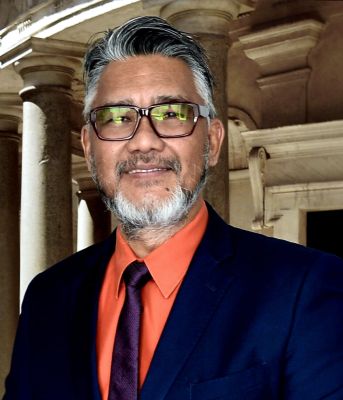


Establishing structured channels for hardware testing and investor collaboration could boost Qatar’s standing as a hub for regional technology expansion, a Doha-based engineer has said.
Speaking to Gulf Times on the sidelines of Maker Faire Rome – The European Edition, Randa Benazzouz said bringing working hardware prototypes into direct contact with Qatari institutions creates commercial clarity that software discussions alone cannot deliver.
“Seeing a working prototype gives people a tangible and immediate understanding of its value. Rather than asking them to imagine how an idea might function or benefit them based solely on a verbal explanation, a prototype allows them to experience its potential firsthand,” explained Benazzouz, who is also an entrepreneur with over 10 vears of experience in Qatar's technology sector.
“This practical demonstration communicates the concept more clearly, highlights its real-world applications, and helps people recognise its usefulness much faster than simply discussing the idea,” she said.
Benazzouz emphasised that connecting software with physical devices in healthcare, smart buildings, education, and agritech, among other applications, gives local decision-makers concrete tools to evaluate performance and reliability before committing capital investments.
Qatar’s research institutions, including Qatar Foundation (QF), the Qatar Research, Development, and Innovation (QRDI) Council, and Qatar Computing Research Institute (QCRI), continue to advance digital research, noted Benazzouz, who pointed out that moving lab prototypes into market-ready hardware products requires direct interaction between creators and industry partners.
“A Maker Faire framework could bring researchers into direct contact with potential customers and industry partners in Qatar. For example, someone developing a sensor could get practical feedback from a facility manager about installation and maintenance,” she said.
Benazzouz stressed that collaborations must continue beyond trade exhibitions through testing, advisory support, and ongoing partnerships between investors and researchers.
Trade bodies like the Italian Trade Agency (ITA) serve as key bridges connecting international startups with Qatari investors, Benazzouz explained, and suggested that the most effective starting point for institutional exchange is sending small, focused delegations centred on specific sector challenges in Qatar.
“The aim should be to leave with one or two concrete pilot proposals, named partners, and a clear next step for each delegate,” she noted.
Specific technologies showcased during Maker Faire Rome offer direct applications for Qatar.
Benazzouz cited an agricultural drone designed by Italian innovative startup Studio 5T to extend network connectivity in remote areas as a solution that could support Qatari farms and desert sites. She also highlighted robotics for mobility support and defence-related hardware innovations.
Besides commercial applications, Benazzouz noted that hands-on hardware exhibits inspire young people to pursue science, technology, engineering, and mathematics (STEM) fields.
“As an engineer and a mother, I would love to see children building solutions to challenges they recognise. Making something by themselves gives them confidence and makes engineering feel accessible,” she said, adding that events that display physical prototypes allow the youth to see the full life cycle of an idea, from problem identification to practical solution.
Studio 5T, a participant of Maker Faire Rome 2026, is an innovative Italian startup, tech community, and prototyping FabLab based in Rome. The company specialises in digital fabrication, rapid prototyping, IoT development, and Industry 4.0 training.
Maker Faire Rome – The European Edition, which runs until tomorrow (October 25), is an international annual event that celebrates innovation, technology, creativity, and the DIY maker movement.

