
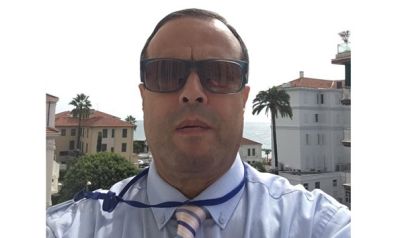




The Ministry of Culture has concluded the fifth edition of its Seminar Season with a session examining the historical preservation and authentication of the Prophetic Hadith, highlighting the importance of rigorous scholarship, digital technology and renewed approaches to Islamic heritage.
Held at Lusail University and presented by renowned Hadith scholar Dr Bashar Awad, the session was attended by His Excellency Sheikh Abdulrahman bin Hamad al-Thani, Minister of Culture, alongside academics, researchers and intellectuals.
Dr Awad traced the development of Hadith documentation, noting that recording began during the Prophet’s lifetime, with written documentation expanding in the first century AH and more systematic compilation, classification and indexing emerging in the second century.
He emphasised that authenticating Hadith requires careful examination of the chains of transmission (isnad), the text (matn), the reliability and precision of narrators, and the various routes through which a narration has been transmitted.
He cautioned against assuming that a Hadith is weak simply because it does not appear in the collections of Imam al-Bukhari and Imam Muslim. Assessing authenticity, he explained, requires a comprehensive understanding of Hadith scholars' methodologies and the practical application of established principles.
Comparing different transmission routes can reveal hidden defects or strengthen a narration when multiple chains support it, provided the relevant scholarly criteria are met. He also highlighted the importance of understanding the methodological context behind scholars’ assessments of individual narrators.
The discussion examined Sheikh Muhammad Nasir al-Din al-Albani's contributions to Hadith studies, with Dr Awad acknowledging his efforts to research and classify Prophetic traditions.
Highlighting the role of modern technology, Dr Awad said digitisation and the free availability of books online have expanded access to scholarly resources and facilitated the study and verification of Hadith.
He noted that reliable digital libraries and applications can help researchers consult sources and assess narrations more efficiently, while technological advances offer new opportunities to preserve and disseminate Islamic heritage.
Dr Awad also said he is working on a 45-volume encyclopaedia on Dirayah, the critical analysis of Hadith, and developing a digital platform called Tahqiq (Verification). Supervised by specialists, the platform will address both the theoretical foundations and practical application of Hadith authentication.
Meanwhile, poet and scholar Dr Hassan al-Ni'mah underlined the importance of continuing to study Islamic heritage while engaging with contemporary intellectual and scientific developments.
He highlighted the diverse approaches Muslim scholars developed throughout history, including Naql (transmission) and Naqd (critical analysis), which have shaped the examination of religious texts and advanced knowledge.
Dr al-Ni'mah stressed the need to present Islamic intellectual heritage in ways that enable younger generations to understand its significance and draw on its principles to address contemporary questions.
Keeping pace with scientific and intellectual progress does not require abandoning established religious foundations, he said, but it does call for developing more effective approaches to teaching, explaining, and communicating knowledge.
He also emphasised the importance of preserving Arab and Islamic history to safeguard cultural identity, strengthen awareness of civilisational roots, and ensure that the achievements of earlier scholars continue to inform future generations.
The fifth edition of the Ministry of Culture's Seminar Season ran from October 1 to 11, offering a programme of cultural and intellectual discussions designed to encourage dialogue and knowledge exchange among academics, researchers and intellectuals.
Participating institutions included the Arab Centre for Research and Policy Studies, Hamad Bin Khalifa University, and Lusail University, reflecting efforts to strengthen academic and cultural partnerships and broaden engagement with issues relating to heritage, knowledge, and contemporary thought.

