
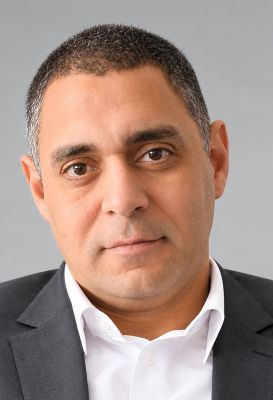



Qatar and China are set to deepen their strategic partnership across energy, investment, infrastructure, artificial intelligence, finance, and people-to-people exchanges, Chinese ambassador to Qatar, Cao Xiaolin, said yesterday evening, highlighting growing political co-ordination between Doha and Beijing amid ongoing regional and global challenges.
The envoy hosted a special reception on the occasion of the 77th anniversary of the founding of the People’s Republic of China, in the presence of HE the Minister of Transport Sheikh Mohamed bin Abdullah al-Thani;
Ambassador Ibrahim Yousif Abdullah Fakhro, director of the Protocol Department at the Ministry of Foreign Affairs; heads of diplomatic missions in Doha, ambassadors, members of the Chinese community in Qatar and other guests.
Addressing the reception, Cao placed China-Qatar relations at the centre of his remarks on Beijing’s international partnerships and its approach to the changing Middle East. He described mutual trust as a key foundation of bilateral ties, indicating that China would continue supporting Qatar’s sovereignty, independence, security and stability.
The envoy noted the increasing high-level contacts between the two countries. He said the Chinese President Xi Jinping and His Highness the Amir Sheikh Tamim bin Hamad Al-Thani had maintained frequent exchanges of letters since the beginning of this year, providing strategic guidance for the excellent bilateral relationship. Earlier in September, HE the Prime Minister and Foreign Minister Sheikh Mohamed bin
Abdulrahman al-Thani visited China, where he held talks with Chinese Premier Li Qiang and Foreign Minister Wang Yi on expanding co-operation in multiple fields.
Cao said Beijing intends to work with Doha to implement understandings reached by the two countries’ leaders and advance what he described as an increasingly important period for the China-Qatar strategic partnership.
Meanwhile, he said China is ready to align its development strategies with Qatar and pursue high-quality Belt and Road co-operation, with particular attention to two-way investments, traditional and new energy, infrastructure, artificial intelligence and finance. He also stressed the importance of maintaining long-term, stable energy co-operation while exploring opportunities for Chinese expertise in high-speed rail and Qatar’s broader railway and regional connectivity projects.
The envoy maintained that the emphasis on energy remains particularly significant to the bilateral relationship. At the same time, there is more room for co-operation in other emerging sectors such as AI and advanced infrastructure, noting efforts to broaden co-operation beyond traditional economic ties as part of a wider strategy for higher-quality and mutually beneficial co-operation.
The envoy stressed the importance of people-to-people relations, as China intends to expand exchanges with Qatar in culture, education and tourism, alongside co-operation in areas such as giant-panda conservation and research. He pointed out that stronger relations between the two countries would ultimately depend on closer connections between their peoples.
The envoy noted that regional security and diplomacy are among China’s major concerns, referring to the conflict affecting the Gulf region since February. Cao said China had called for a ceasefire, opposed unilateral military action and pursued diplomatic engagement with relevant parties. Accordingly, he appreciated Qatar’s diplomatic role, saying Beijing applauds Doha’s longstanding efforts to mediate regional disputes and promote peace.
He further linked China’s regional approach to President Xi’s proposal for a new Middle East security architecture based on dialogue, common security, development and stronger international co-ordination. He said that closer China-Qatar co-ordination could extend beyond economic relations into regional diplomacy and multilateral governance.
The reception presented China-Qatar relations as a partnership combining political trust, economic interdependence and diplomatic co-ordination. Against the backdrop of regional instability and shifting global economic conditions, Beijing’s message in Doha was that it sees Qatar as an important long-term partner — not only in energy and trade, but also in infrastructure, technology, investment, cultural exchange and efforts to promote regional stability.
Cao said: “Let’s work hand in hand to advance the China-Qatar strategic partnership to a new level, jointly implement the four global initiatives, promote the building of a community with a shared future for humanity, and make new contributions to peace and development in the world and in this region.”