



Qatar’s growing innovation landscape is increasingly serving as a catalyst for cross-border technology transfer and international entrepreneurial talent, a startup founder has said.
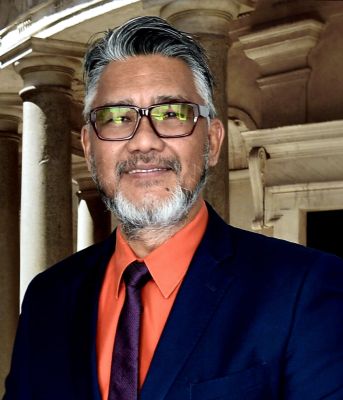
The country’s advanced digital infrastructure and structured incubation programmes are enabling international founders to establish deep-tech ventures locally rather than exporting talent elsewhere, said Arfaz Khan, founder and CTO of Qatar-built technology startup ARVIS.
“When you build a connected environment at this scale, you’re also creating a foundation for another layer of technology around it. Founders can build on that infrastructure and figure out what it should be able to understand, predict or improve,” Khan explained to Gulf Times.
Incubated at Qatar Science & Technology Park (QSTP), ARVIS was established by Khan, alongside co-founders Afnaz Khan and Muhammed Naseef. The team of electronics engineering and product design professionals from India developed Adaptive Building Intelligence (ABI) as an operational advisor for complex physical facilities, integrating directly with existing Building Management Systems (BMS), heating, ventilation, and air conditioning (HVAC) infrastructure, and environmental sensors to aggregate daily performance data.
Qatar’s ecosystem provided the ideal intersection between technical engineering backgrounds and real-world infrastructure deployment, noted Khan, who grew up in Saudi Arabia, then moved to India for engineering studies and spent a lot of time in Kerala.
“I moved to India, studied electronics engineering and eventually got into product design. Then I came to Qatar. What was different here was that I could suddenly see both sides at the same time.
“Qatar became the right place because it was the first place where my engineering background, my product-design thinking and the kind of infrastructure around me all started pointing at the same problem,” Khan said.
Khan pointed out that contrasting experiences between South Asian markets and Qatar highlight the distinct advantage of Doha’s highly sensorised real estate sector for emerging deep-tech companies.
“In Kerala, you don’t see the same level of connected building infrastructure everywhere, and systems like BMS are relatively less common. Then I came to Qatar and started seeing these huge buildings with sophisticated systems running behind them. By then I was working in product design, so I became curious about what was happening inside them. That question became the starting point for ARVIS,” Khan noted.
The collaboration between international technical talent and Qatari incubation hubs demonstrates how local institutional support turns global engineering skills into domestic technological assets, he emphasised.
“Through QSTP and the wider network around it, we’ve been able to have conversations with people who actually operate these systems and challenge our assumptions early. For deep-tech and infrastructure-tech, I think that access is what turns a big idea into something that can eventually scale,” Khan added.