



The transportation industry has transcended its traditional role as a mere service provider, transforming into a strategic catalyst for economic competitiveness and overall quality of life.
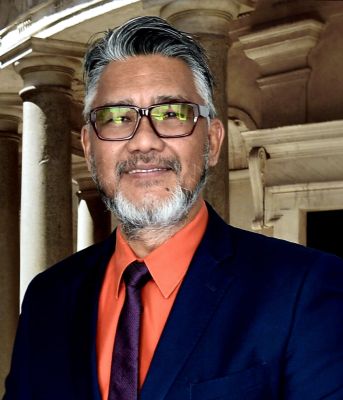
“Rather, it has grown beyond its original role – in an era where development is increasingly linked to efficiency, sustainability, and integration – and become a strategic industry and key driver of development, thereby contributing to enhanced economic competitiveness, improved efficiency across various industries, and a better quality of life,” HE the Undersecretary at the Ministry of Transport Mohammed Abdullah al-Maadeed emphasised yesterday.
He led the opening of the second edition of the Autonomous e-Mobility Forum (AEMOB), a three-day event hosted and strategically partnered by the Ministry of Transport (MoT) at the Qatar National Convention Centre (QNCC).
The event is organised by Just us & Otto.
The opening ceremony was attended by HE the Undersecretary at the Ministry of Municipality Ali bin Mohammed bin Ali al-Ali and HE the Undersecretary at the Ministry of Environment and Climate Change Abdulaziz bin Ahmad al-Mahmoud, alongside senior officials and transportation entity chiefs.
In his keynote address, HE al-Maadeed noted that the shift towards electric mobility and autonomous driving systems “stands out as a defining feature of the industry’s future”.
While this transformation opens up promising avenues, he pointed out that it also presents fundamental hurdles, including energy requirements, digital infrastructure readiness, safety, reliability, regulatory framework development, and the building of national capabilities to localise technologies.
Addressing these hurdles demands more than partial or isolated solutions, HE al-Maadeed stressed, noting that it requires a co-ordinated approach built on unconventional partnerships between governments, the private sector, and research institutions.
Guided by its leadership, the official said Qatar is moving ahead with building a sustainable transportation system.
The country has invested heavily in infrastructure over recent years, establishing modern road networks, a metro system, state-of-the-art public transit fleets, integrated ports, airports, and logistics zones, HE al-Maadeed noted.
Aligning with the Qatar Third National Development Strategy (NDS3), he stressed that national focus is now shifting from physical construction to maximising the utility of existing infrastructure.
HE al-Maadeed said this next phase involves expanding electric mobility, advancing digital infrastructure, implementing intelligent transportation systems, and preparing for the rollout of autonomous vehicles.
Following his speech, the official inaugurated and toured the accompanying exhibition with officials, inspecting the latest autonomous and e-mobility technologies on display.
The first day featured several panel discussions, including an MoT-led session on “Integration, Planning and Sustainability – A Future Look”.
The panel highlighted national efforts to build a smart, integrated transportation ecosystem using modern technologies to connect all modes of travel.
This year’s forum brought together more than 40 international and regional speakers, representing government, industry, academia, technology, research and the wider mobility ecosystem.
Across its two-day professional conference, the forum will feature more than 50 keynote sessions and panel discussions spanning 10 dedicated mobility and industry tracks, creating a multidisciplinary programme exploring autonomous and electric mobility through technology, policy, regulation, sustainability, infrastructure, research, public adoption and real-world implementation.
Building on its 2024 debut, AEMOB 2026 also includes a community programme featuring an SME Competition, Startup Showcase, and a 3-Minute Thesis Challenge aimed at providing additional platforms for entrepreneurs, start-ups, students, young professionals, and emerging innovators to engage with the mobility sector and contribute ideas to its future development.
The event hosts more than 20 exhibition spaces at the QNCC, bringing autonomous vehicles, electric mobility solutions, smart infrastructure technologies, and emerging innovations directly to delegates and visitors.